

Research Evolution and Thinking of Traditional Chinese Medicine Vocational Education Based on Knowledge Graph


Article Information
Abstract
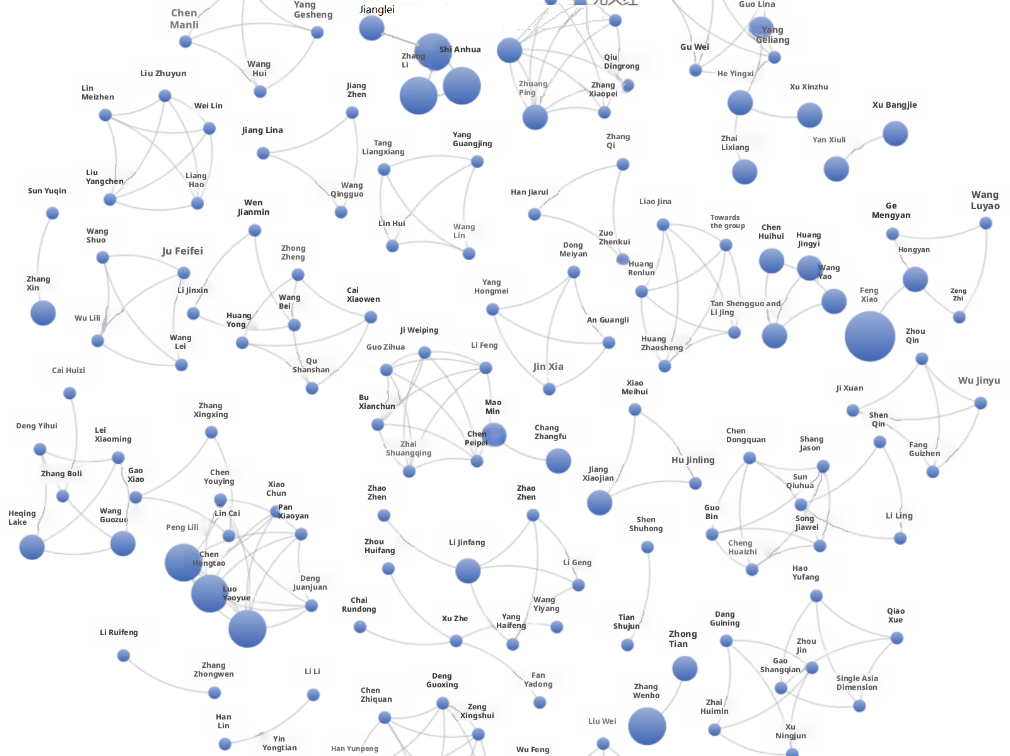
Objective: Through bibliometrics and knowledge graph visualization, this paper systematically analyzes the evolution and trends of traditional Chinese medicine (TCM) vocational education research. Methods: Literature was retrieved from CNKI, Wanfang, and VIP databases from inception to October 2025, using search terms including “traditional Chinese medicine,” “TCM theory,” “vocational education,” “vocational training,” and “skills education.” Visual analysis was performed using VOSviewer and the Bibliometrix R package. Results: Annual publications showed phased growth, peaking at 41 in 2022. Core author analysis identified Feng Xiao and Niu Yanhui as the most prolific authors (4 papers each), with a relatively dense collaboration network. Leading institutions included Hunan University of Chinese Medicine and Zhejiang Chinese Medical University, while Hunan and Beijing Universities excelled in article quality. The journals with the most articles were Journal of Traditional Chinese Medicine Management, Modern Distance Education of Chinese Medicine, and Health Vocational Education. Keyword co-occurrence and cluster analysis revealed research hotspots such as “continuing education,” “traditional Chinese medicine,” and “vocational education,” indicating a gradual shift from macro-level conceptual discussions toward specific pathway and mechanism design. Conclusion: TCM vocational education research has achieved considerable progress and attention. However, comprehensive reviews remain limited, and both the proportion of publications in high-level journals and international influence require enhancement. Future research should further integrate digital and intelligent methods to promote innovation and optimization of educational models.
Graphical Abstract
Keywords
Data Availability Statement
Funding
Conflicts of Interest
AI Use Statement
Ethical Approval and Consent to Participate
References
- Jing, G. A. O. (2019). Analysis on the Status and Countermeasures of Talent Cultivation and Professional Skill Appraisal in Higher Vocational Colleges of Traditional Chinese Medicine. DEStech Transactions on Social Science, Education and Human Science, (icesd).
[CrossRef] [Google Scholar] - Billett, S., & Le, A. H. (2024). Engaging young people in occupations served by vocational education: Case study from healthcare. International Journal for Research in Vocational Education and Training (IJRVET), 11(2), 200-222.
[CrossRef] [Google Scholar] - Sun, J. X., Yin, X. J., Zhang, C. H., Jin, X. J., Piao, M. G., Guo, J. P., ... & Quan, J. S. (2025). Innovation and Practice Research Examining the Teaching Model of a Pharmaceutics Course Under the Background of Industry–Education Integration. Journal of Chemical Education, 103(1), 223-230.
[CrossRef] [Google Scholar] - Yang, T., Wang, N., Zhang, S., Liu, Z., & Li, Y. (2023, December). Research on the influencing factors and cultivation strategies of traditional chinese medicine talents. In 2023 IEEE International Conference on Bioinformatics and Biomedicine (BIBM) (pp. 4681-4688). IEEE.
[CrossRef] [Google Scholar] - Zhao, Y., Li, J., & Liu, K. (2024). A knowledge graph perspective on research status, hot spots, and frontier trends of information technology education towards promoting educational policy in China. Education and Information Technologies, 29(4), 4673-4698.
[CrossRef] [Google Scholar] - Lim, J., Li, J., Zhou, M., Xiao, X., & Xu, Z. (2024). Machine learning research trends in traditional Chinese medicine: a bibliometric review. International Journal of General Medicine, 5397-5414.
[CrossRef] [Google Scholar] - Yang, D., Zhou, J., Shi, D., Pan, Q., Wang, D., Chen, X., & Liu, J. (2022). Research status, hotspots, and evolutionary trends of global digital education via knowledge graph analysis. Sustainability, 14(22), 15157.
[CrossRef] [Google Scholar] - Chan, K. (2016). The evolutional development of Traditional Chinese Medicine (TCM) outside the Chinese Mainland: Challenges, training, practice, research, and future development. World Journal of Traditional Chinese Medicine, 2(4), 6-28.
[CrossRef] [Google Scholar] - Li, Z., Li, C., Zhang, X., Tang, S., Yang, H., Cui, X., & Huang, L. (2020). Policies and problems of modernizing ethnomedicine in China: a focus on the Yi and Dai traditional medicines of Yunnan Province. Evidence‐based Complementary and Alternative Medicine, 2020(1), 1023297.
[CrossRef] [Google Scholar] - Lan, X., Jia, Q., Pang, F., Ding, H., Zeng, W., Tang, Y., ... & Chen, Q. (2026). Evidence-based nursing competence and its influencing factors among nurses in traditional Chinese medicine hospitals in Hunan province: a cross-sectional study. BMC nursing.
[CrossRef] [Google Scholar] - Maiga, Y., Moskatel, L. S., Diallo, S. H., Sangho, O., Dolo, H., Konipo, F., ... & Nizard, J. (2024). Assessing traditional medicine in the treatment of neurological disorders in Mali: prelude to efficient collaboration. BMC Complementary Medicine and Therapies, 24(1), 352.
[CrossRef] [Google Scholar] - Xie, Q., & Jin, A. (2017, December). Training Strategy of the International Talents in Chinese Medicine Under the Background of" The Belt and Road". In 4th International Conference on Education, Management, Arts, Economics and Social Science (ICEMAESS 2017) (pp. 506-510). Atlantis Press.
[CrossRef] [Google Scholar] - Hongjuan, Z., Yuansheng, G., & Luying, H. (2021). Innovative research on practical teaching of ideological and political course in higher vocational colleges of traditional Chinese medicine. Clausius Scientific Press, 11(1), 45-53.
[CrossRef] [Google Scholar] - Yang, S., Guo, J., Cai, D., Ye, J., Zhang, W., Zhang, Y., ... & Yu, S. (2025). “Digital Intelligence Application, Three Abilities Improvement”: Modernizing Acupuncture Education with Big Data and Virtual Reality at Chengdu University of Traditional Chinese Medicine. Medical Acupuncture, 37(2), 139-146.
[CrossRef] [Google Scholar] - Xu, S., & Yu, B. (2025). Research on the Path and Strategy of Traditional Chinese Medicine Talent Cultivation Based on Demand Orientation. Indian Journal of Pharmaceutical Education & Research, 59(2).
[CrossRef] [Google Scholar] - Zhang, X., & Qu, N. (2025, December). A Survey and Educational Strategies of Traditional Chinese Medicine Cultural Literacy among University Students. In 2025 International Conference on Educational Innovation and Information Technology (EIIT 2025) (pp. 278-287). Atlantis Press.
[CrossRef] [Google Scholar] - Lijun, S. U. N., Jianping, C. H. E. N., Huimin, X. I. A., & Huanyun, W. A. N. G. (2023). Exploration of the Construction of Curriculum Ideological and Political Education Based on Traditional Chinese Medicine Analysis. Pharmaceutical Education, 39(5), 36-38.
[Google Scholar] - Sai, L., & Xiao, Y. (2026). Research in the Training of Traditional Chinese Medicine Talents in the Whole Life Cycle Based on the Perspective of Needs. Asia Pacific Economic and Management Review, 3(1).
[CrossRef] [Google Scholar]
Cite This Article
TY  - JOUR
AU  - Dou, Wenjie
AU  - Jia, Qian
AU  - Li, Zepeng
PY  - 2026
DA  - 2026/03/10
TI  - Research Evolution and Thinking of Traditional Chinese Medicine Vocational Education Based on Knowledge Graph
JO  - Frontiers in Educational Innovation and Research
T2  - Frontiers in Educational Innovation and Research
JF  - Frontiers in Educational Innovation and Research
VL  - 2
IS  - 1
SP  - 8
EP  - 19
DO  - 10.62762/FEIR.2025.734785
UR  - https://www.icck.org/article/abs/FEIR.2025.734785
KW  - knowledge graph
KW  - traditional Chinese medicine
KW  - vocational education
KW  - continuing education
KW  - evolution
AB  - Objective: Through bibliometrics and knowledge graph visualization, this paper systematically analyzes the evolution and trends of traditional Chinese medicine (TCM) vocational education research. Methods: Literature was retrieved from CNKI, Wanfang, and VIP databases from inception to October 2025, using search terms including “traditional Chinese medicine,” “TCM theory,” “vocational education,” “vocational training,” and “skills education.” Visual analysis was performed using VOSviewer and the Bibliometrix R package. Results: Annual publications showed phased growth, peaking at 41 in 2022. Core author analysis identified Feng Xiao and Niu Yanhui as the most prolific authors (4 papers each), with a relatively dense collaboration network. Leading institutions included Hunan University of Chinese Medicine and Zhejiang Chinese Medical University, while Hunan and Beijing Universities excelled in article quality. The journals with the most articles were Journal of Traditional Chinese Medicine Management, Modern Distance Education of Chinese Medicine, and Health Vocational Education. Keyword co-occurrence and cluster analysis revealed research hotspots such as “continuing education,” “traditional Chinese medicine,” and “vocational education,” indicating a gradual shift from macro-level conceptual discussions toward specific pathway and mechanism design. Conclusion: TCM vocational education research has achieved considerable progress and attention. However, comprehensive reviews remain limited, and both the proportion of publications in high-level journals and international influence require enhancement. Future research should further integrate digital and intelligent methods to promote innovation and optimization of educational models.
SN  - 3068-5664
PB  - Institute of Central Computation and Knowledge
LA  - English
ER  -
@article{Dou2026Research,
  author = {Wenjie Dou and Qian Jia and Zepeng Li},
  title = {Research Evolution and Thinking of Traditional Chinese Medicine Vocational Education Based on Knowledge Graph},
  journal = {Frontiers in Educational Innovation and Research},
  year = {2026},
  volume = {2},
  number = {1},
  pages = {8-19},
  doi = {10.62762/FEIR.2025.734785},
  url = {https://www.icck.org/article/abs/FEIR.2025.734785},
  abstract = {Objective: Through bibliometrics and knowledge graph visualization, this paper systematically analyzes the evolution and trends of traditional Chinese medicine (TCM) vocational education research. Methods: Literature was retrieved from CNKI, Wanfang, and VIP databases from inception to October 2025, using search terms including “traditional Chinese medicine,” “TCM theory,” “vocational education,” “vocational training,” and “skills education.” Visual analysis was performed using VOSviewer and the Bibliometrix R package. Results: Annual publications showed phased growth, peaking at 41 in 2022. Core author analysis identified Feng Xiao and Niu Yanhui as the most prolific authors (4 papers each), with a relatively dense collaboration network. Leading institutions included Hunan University of Chinese Medicine and Zhejiang Chinese Medical University, while Hunan and Beijing Universities excelled in article quality. The journals with the most articles were Journal of Traditional Chinese Medicine Management, Modern Distance Education of Chinese Medicine, and Health Vocational Education. Keyword co-occurrence and cluster analysis revealed research hotspots such as “continuing education,” “traditional Chinese medicine,” and “vocational education,” indicating a gradual shift from macro-level conceptual discussions toward specific pathway and mechanism design. Conclusion: TCM vocational education research has achieved considerable progress and attention. However, comprehensive reviews remain limited, and both the proportion of publications in high-level journals and international influence require enhancement. Future research should further integrate digital and intelligent methods to promote innovation and optimization of educational models.},
  keywords = {knowledge graph, traditional Chinese medicine, vocational education, continuing education, evolution},
  issn = {3068-5664},
  publisher = {Institute of Central Computation and Knowledge}
}
Article Metrics
Publisher's Note
ICCK stays neutral with regard to jurisdictional claims in published maps and institutional affiliations.
Rights and Permissions
 Copyright © 2026 by the Author(s). Published by Institute of Central Computation and Knowledge. This article is an open access article distributed under the terms and conditions of the Creative Commons Attribution (CC BY) license (https://creativecommons.org/licenses/by/4.0/), which permits use, sharing, adaptation, distribution and reproduction in any medium or format, as long as you give appropriate credit to the original author(s) and the source, provide a link to the Creative Commons licence, and indicate if changes were made.


Portico
