Volume 2, Issue 1 (In Progress)


In Progress
Citations: 0, 0,  0   |   Viewed: 209, Download: 93

Table of Contents

Open Access | Review Article | 26 January 2026
Superhydrophobic Surface for Ice Mitigation: Mechanisms, Fabrication Strategies, and Applications
Journal of Advanced Materials Research | Volume 2, Issue 1: 14-39, 2026 | DOI: 10.62762/JAMR.2025.980268
Abstract
Superhydrophobic surfaces (SHS), characterized by low surface energy and minimal adhesion to liquids, have attracted extensive attention for applications such as self-cleaning, waterproofing, dust resistance, and corrosion protection. Beyond these traditional functions, the de-icing and anti-icing capabilities of SHS have recently garnered significant interest due to their inherent passive ice-shedding behavior. However, a comprehensive, mechanistic understanding of icing phenomena on SHS, along with effective strategies for improving ice-phobic performance, remains inadequately established. This review presents a systematic evaluation of passive and hybrid active–passive anti-icing and de... More >

Graphical Abstract
Superhydrophobic Surface for Ice Mitigation: Mechanisms, Fabrication Strategies, and Applications
Open Access | Perspective | 21 January 2026
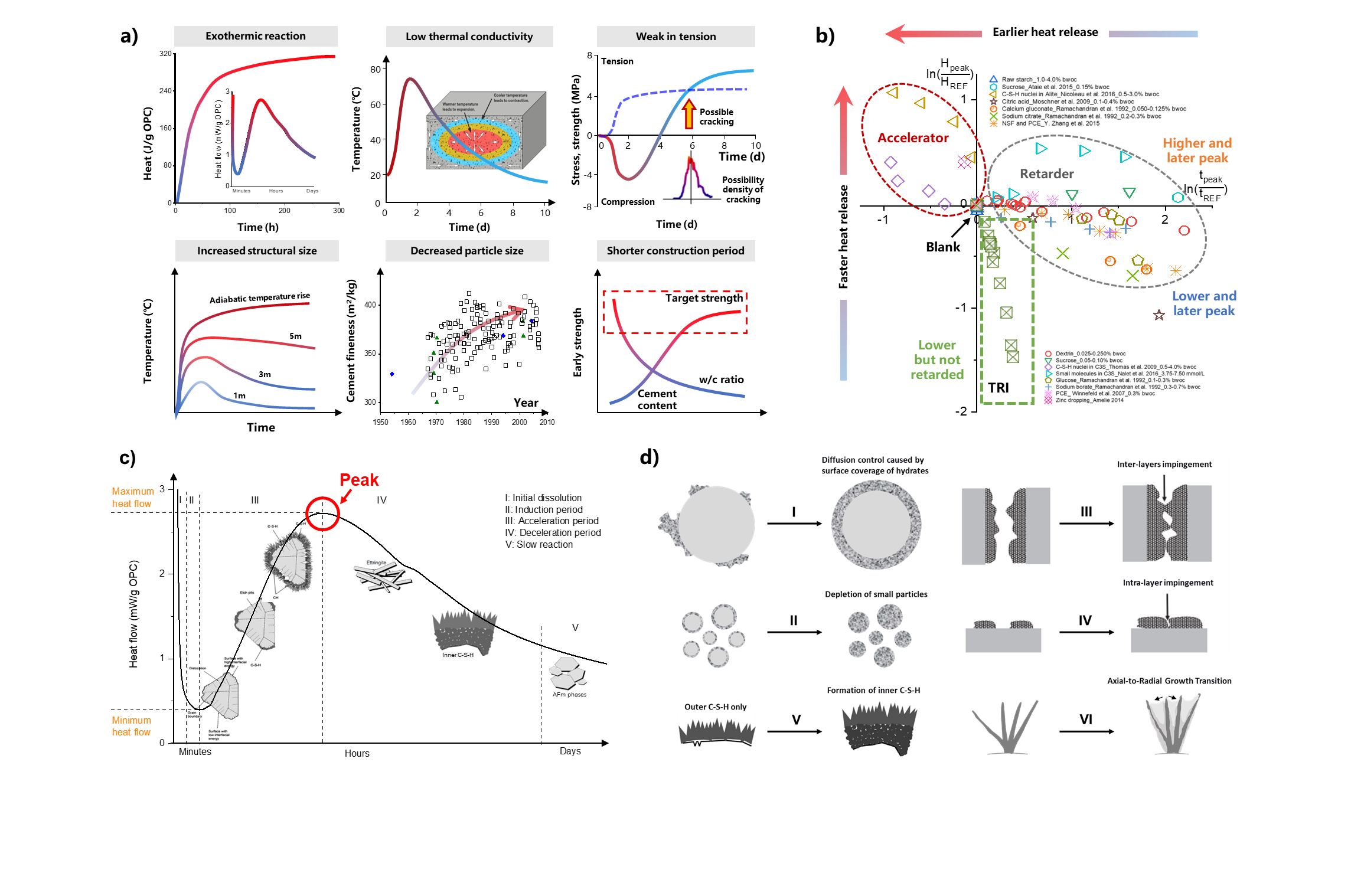
Mitigating Thermal Cracking in Mass Concrete with Temperature Rise Inhibitor: A Sustainable and Efficient Strategy
Journal of Advanced Materials Research | Volume 2, Issue 1: 8-13, 2026 | DOI: 10.62762/JAMR.2025.738370
Abstract
Thermal cracking poses a significant threat to the structural integrity and service life of mass concrete. The starch-based Temperature Rise Inhibitor (TRI) emerges as a sustainable and efficient bio-based solution that directly addresses the root cause - the intense heat release during early-age cement hydration. Unlike conventional chemical admixtures, TRI features a special "controlled dissolution" mechanism in the high-pH environment of cement paste. This characteristic ensures a continuous release of organic molecules that selectively inhibit the nucleation of calcium silicate hydrates (C-S-H) gel, the primary hydrates of cement hydration. Consequently, TRI significantly slow down the h... More >

Graphical Abstract
Mitigating Thermal Cracking in Mass Concrete with Temperature Rise Inhibitor: A Sustainable and Efficient Strategy
Open Access | Perspective | 15 January 2026
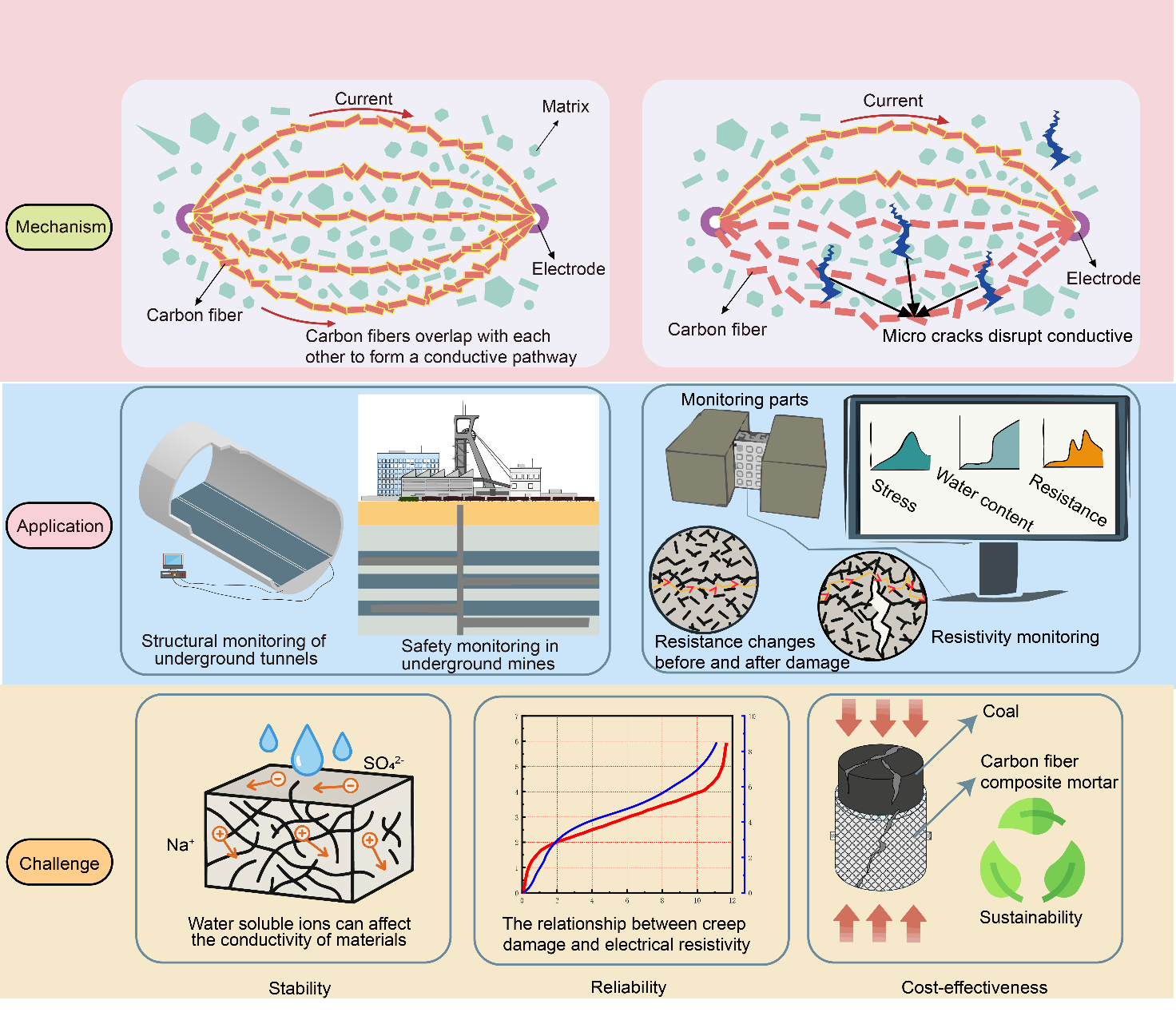
Shaping the Future of Underground Monitoring with Carbon-fiber Self-sensing Smart Materials
Journal of Advanced Materials Research | Volume 2, Issue 1: 1-7, 2026 | DOI: 10.62762/JAMR.2025.621965
Abstract
Amid global warming, energy shortages, and the increasing frequency of extreme climate events, the development of sustainable and intelligent underground infrastructure has become a critical strategy for addressing major societal challenges. Unlike surface structures, underground infrastructures are subjected to high stress, dynamic loading, and groundwater erosion. Under such conditions, traditional cement-based materials are prone to strength degradation, fatigue damage, and permeability failure, which significantly limits the service life and operational safety of underground constructions. Incorporating short carbon fibers into cement-based materials not only enhances their mechanical st... More >

Graphical Abstract
Shaping the Future of Underground Monitoring with Carbon-fiber Self-sensing Smart Materials