





Journal of Advanced Materials Research

Publishing Model:
ISSN:
ISSN: 3070-5851
Journal of Advanced Materials Research publishes high-quality research focused on the latest developments in materials science and engineering.
DOI Prefix: 10.62762/JAMR

Journal Metrics

-
Impact Factor
-
CiteScore

Recent Articles

Open Access | Review Article | 26 January 2026
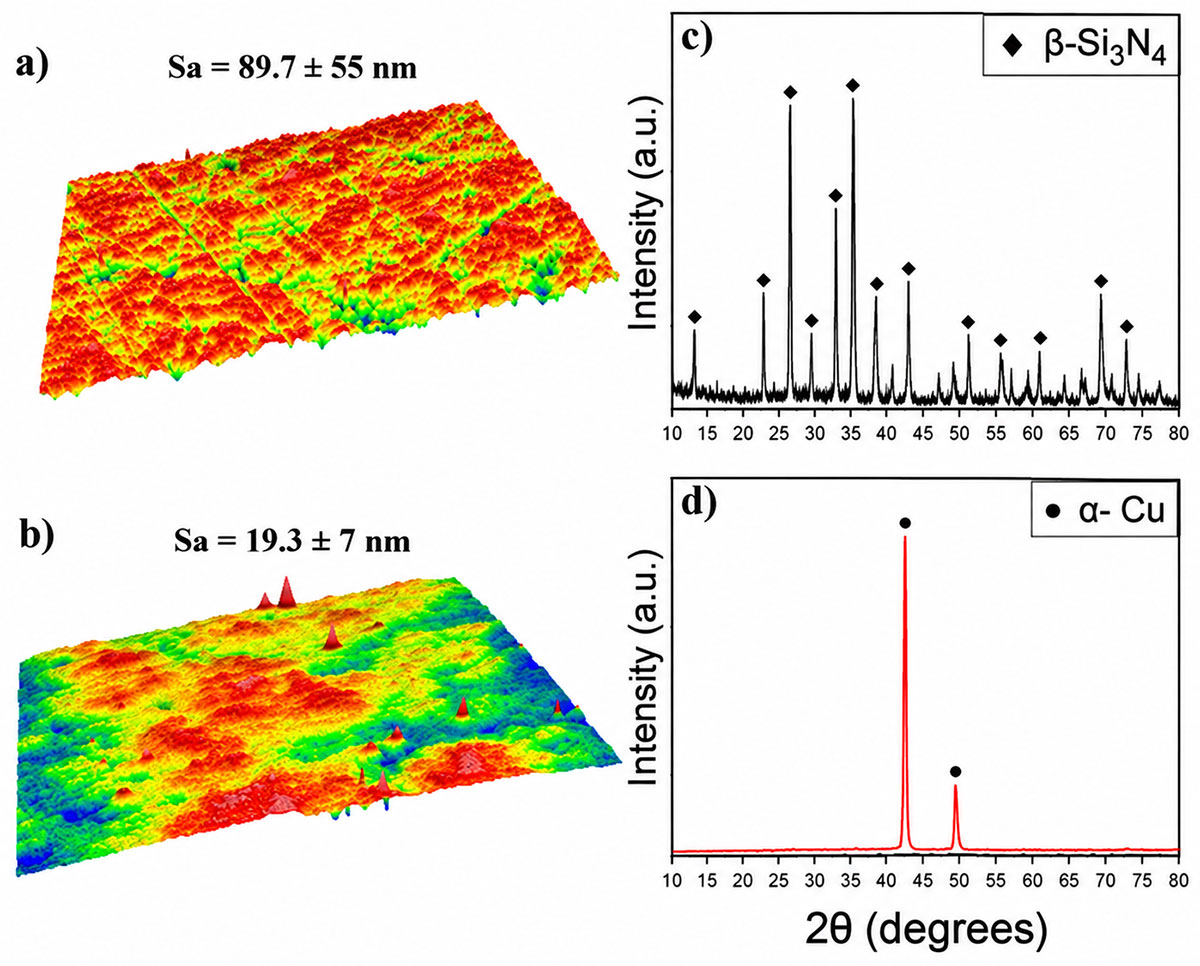
Superhydrophobic Surface for Ice Mitigation: Mechanisms, Fabrication Strategies, and Applications
Journal of Advanced Materials Research | Volume 2, Issue 1: 14-39, 2026 | DOI: 10.62762/JAMR.2025.980268
Abstract
Superhydrophobic surfaces (SHS), characterized by low surface energy and minimal adhesion to liquids, have attracted extensive attention for applications such as self-cleaning, waterproofing, dust resistance, and corrosion protection. Beyond these traditional functions, the de-icing and anti-icing capabilities of SHS have recently garnered significant interest due to their inherent passive ice-shedding behavior. However, a comprehensive, mechanistic understanding of icing phenomena on SHS, along with effective strategies for improving ice-phobic performance, remains inadequately established. This review presents a systematic evaluation of passive and hybrid active–passive anti-icing and de... More >

Graphical Abstract

Superhydrophobic Surface for Ice Mitigation: Mechanisms, Fabrication Strategies, and Applications
Open Access | Perspective | 21 January 2026
Mitigating Thermal Cracking in Mass Concrete with Temperature Rise Inhibitor: A Sustainable and Efficient Strategy
Journal of Advanced Materials Research | Volume 2, Issue 1: 8-13, 2026 | DOI: 10.62762/JAMR.2025.738370
Abstract
Thermal cracking poses a significant threat to the structural integrity and service life of mass concrete. The starch-based Temperature Rise Inhibitor (TRI) emerges as a sustainable and efficient bio-based solution that directly addresses the root cause - the intense heat release during early-age cement hydration. Unlike conventional chemical admixtures, TRI features a special "controlled dissolution" mechanism in the high-pH environment of cement paste. This characteristic ensures a continuous release of organic molecules that selectively inhibit the nucleation of calcium silicate hydrates (C-S-H) gel, the primary hydrates of cement hydration. Consequently, TRI significantly slow down the h... More >

Graphical Abstract
Mitigating Thermal Cracking in Mass Concrete with Temperature Rise Inhibitor: A Sustainable and Efficient Strategy
Open Access | Perspective | 15 January 2026
Shaping the Future of Underground Monitoring with Carbon-fiber Self-sensing Smart Materials
Journal of Advanced Materials Research | Volume 2, Issue 1: 1-7, 2026 | DOI: 10.62762/JAMR.2025.621965
Abstract
Amid global warming, energy shortages, and the increasing frequency of extreme climate events, the development of sustainable and intelligent underground infrastructure has become a critical strategy for addressing major societal challenges. Unlike surface structures, underground infrastructures are subjected to high stress, dynamic loading, and groundwater erosion. Under such conditions, traditional cement-based materials are prone to strength degradation, fatigue damage, and permeability failure, which significantly limits the service life and operational safety of underground constructions. Incorporating short carbon fibers into cement-based materials not only enhances their mechanical st... More >

Graphical Abstract

Shaping the Future of Underground Monitoring with Carbon-fiber Self-sensing Smart Materials
Open Access | Research Article | 29 December 2025
Lamellar Degradation Induced Brittle-ductile Transition of Polysynthetic Twinned TiAl
Journal of Advanced Materials Research | Volume 1, Issue 1: 56-68, 2025 | DOI: 10.62762/JAMR.2025.522742
Abstract
Intermetallic compounds including TiAl and NiAl suffer from an abrupt brittle-ductile transition at a critical temperature, limiting their higher temperature applications. Conventional viewpoints attribute this transition to thermally activated dislocation actions or dynamic recrystallization. Here, we discover a novel brittle-ductile transition mechanism in polysynthetic twinned TiAl, driven by lamellar degradation, which significantly deviates from the conventional mechanisms. The results demonstrate that the lamellar degradation is primarily caused by the \( \alpha_2 \rightarrow \gamma \) phase transformation at the brittle-ductile transition temperature, which stems from a non-monotonic... More >

Graphical Abstract
Lamellar Degradation Induced Brittle-ductile Transition of Polysynthetic Twinned TiAl
Open Access | Review Article | 26 December 2025
Metal-Organic Frameworks as Multifunctional Regulators for Zinc Anode Stability in Aqueous Energy Storage Systems
Journal of Advanced Materials Research | Volume 1, Issue 1: 37-55, 2025 | DOI: 10.62762/JAMR.2025.925427
Abstract
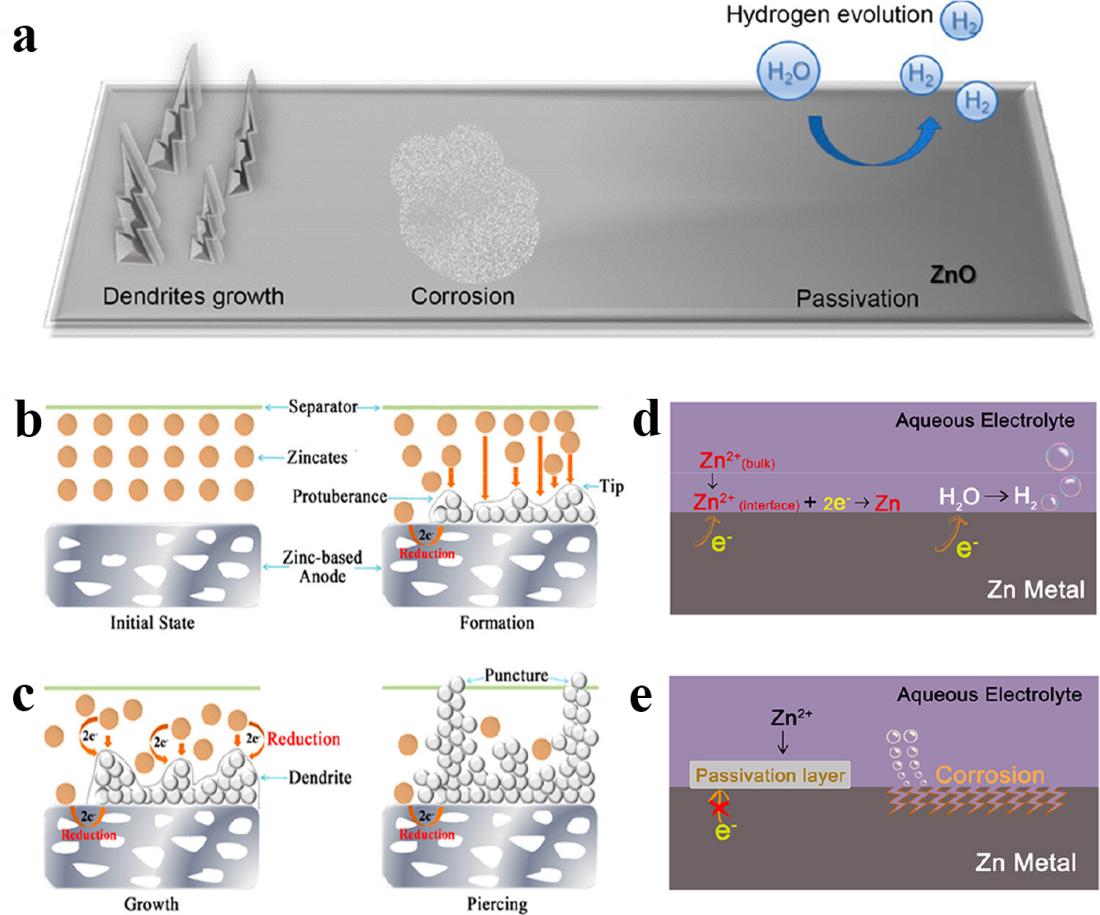
Aqueous zinc-ion batteries (AZIBs) are considered one of the most promising candidates for next-generation energy storage systems, owing to the high safety, low cost, high theoretical capacity (820 mAh g\(^{-1}\)), and environmental compatibility. However, the practical implementation of zinc metal anodes still faces challenges such as dendrite growth, hydrogen evolution reaction, and corrosion, which significantly restrict the cycling life and practical usability. To address these issues, metal-organic frameworks (MOFs) with tunable pore structures and ultrahigh specific surface areas have been widely employed for protecting zinc anodes. Therefore, this review systematically summarizes the... More >

Graphical Abstract
Metal-Organic Frameworks as Multifunctional Regulators for Zinc Anode Stability in Aqueous Energy Storage Systems
Open Access | Research Article | 22 December 2025
Muscle-Inspired Anisotropic Hydrogels via Pre-Stretching for Direction-Sensitive Human Motion Monitoring
Journal of Advanced Materials Research | Volume 1, Issue 1: 18-36, 2025 | DOI: 10.62762/JAMR.2025.941906
Abstract
Traditional hydrogels often exhibit disordered molecular structures, resulting in limited mechanical strength, toughness, and functionality, which restrict their practical applications. Here, we engineer an anisotropic $\mathrm{Zr^{4+}}$-crosslinked P(DMA-AA)-CMC hydrogel via pre-stretching to mimic muscle-like alignment. This strategy enhances mechanical strength (5.6 MPa along orientation axis, $1.8\times$ higher than perpendicular) and directional sensitivity through $\mathrm{Zr^{4+}}$-stabilized microstructural ordering. The sensor achieves 303\% $\Delta R/R_0$ at 100\% strain with $2.2\times$ higher sensitivity parallel to pre-stretch direction, enabling precise movement/orientation tra... More >

Graphical Abstract
Muscle-Inspired Anisotropic Hydrogels via Pre-Stretching for Direction-Sensitive Human Motion Monitoring
Open Access | Research Article | 20 December 2025
Highly Transparent Sm:LuAG Ceramics for Cladding Fabricated by Solid-state Reactive Sintering
Journal of Advanced Materials Research | Volume 1, Issue 1: 6-17, 2025 | DOI: 10.62762/JAMR.2025.567536
Abstract
In solid-state laser systems with nanosecond repetition rates and high energy, amplified spontaneous emission (ASE) and parasitic oscillation (PO) produced by the gain material can significantly impact the laser output. A well-designed cladding composite structure is an effective solution to absorb ASE and suppress PO. In this work, 5 at.% Sm:LuAG transparent ceramics, a promising cladding material for suppressors of PO at 1064 nm of Nd:LuAG lasers, have been prepared by solid-state reactive sintering at 1825 °C followed by hot isostatic pressing (HIP) post-treatment at 1750 °C. The influences of TEOS (tetraethyl orthosilicate) content on microstructure evolution, in-line transmittance of... More >

Graphical Abstract
Highly Transparent Sm:LuAG Ceramics for Cladding Fabricated by Solid-state Reactive Sintering
Open Access | Editorial | 12 December 2025
Inaugural Editorial of the Journal of Advanced Materials Research
Journal of Advanced Materials Research | Volume 1, Issue 1: 1-5, 2025 | DOI: 10.62762/JAMR.2025.579325
Abstract
This editorial introduces the inaugural issue of the Journal of Advanced Materials Research and presents its vision, scope, and mission in advancing sustainable and innovative materials research. More >

Journal Statistics

45
Authors
2
Countries / Regions
8
Articles
0
Citations
2025
Published Since
0
Special Issues
1,382
Article Views
539
Article Downloads
Journal of Advanced Materials Research
eISSN: 3070-5851
Crossref
Crossref
Member of Crossref
Visit Crossref →