


ICCK Journal of Image Analysis and Processing

Publishing Model:
ISSN:
ISSN: 3068-6679
The ICCK Journal of Image Analysis and Processing (JIAP) is a peer-reviewed, open-access journal dedicated to advancing fundamental theory, methodological innovation, and practical applications in image and video analysis, computer vision, and computational imaging.
DOI Prefix: 10.62762/JIAP

Journal Metrics

-
Impact Factor
-
CiteScore

Recent Articles

Open Access | Research Article | 03 June 2026
Comparative Study of Transfer Learning Strategies for Multi-Class Skin Lesion Classification: Architectures, Fine-Tuning, and Data Augmentation
ICCK Journal of Image Analysis and Processing | Volume 2, Issue 3: 153-167, 2026 | DOI: 10.62762/JIAP.2026.390206
Abstract
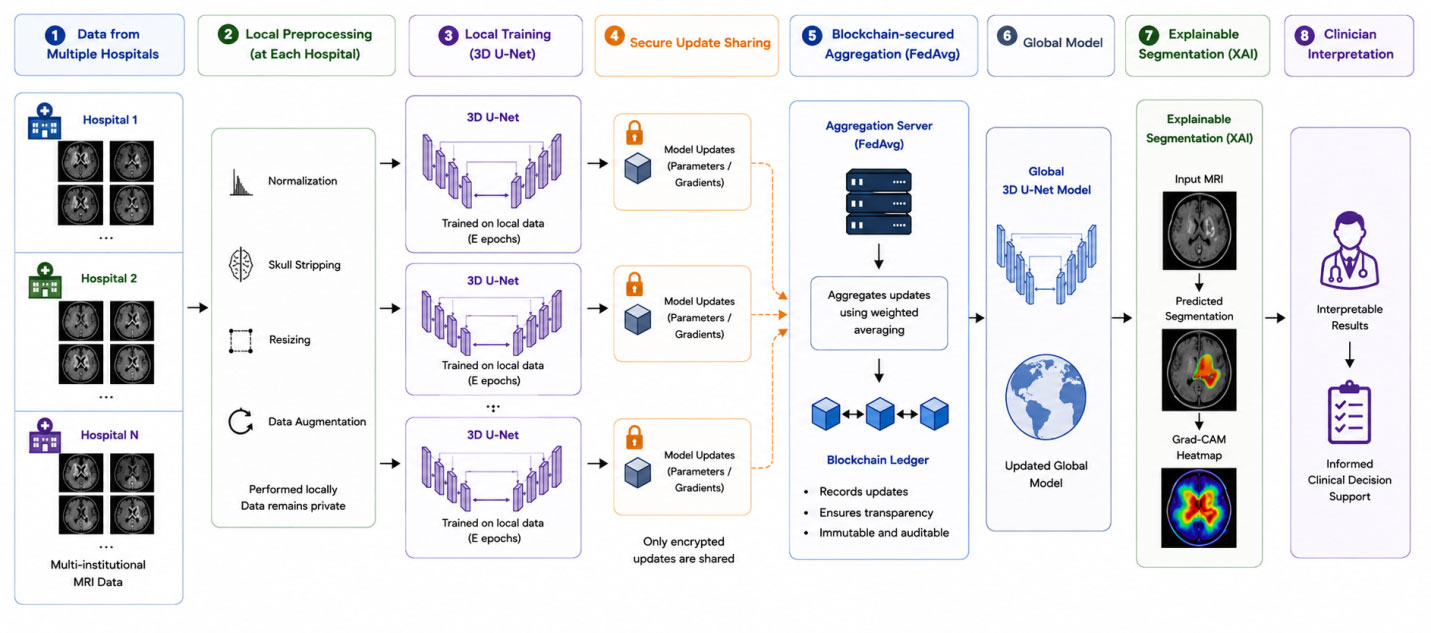
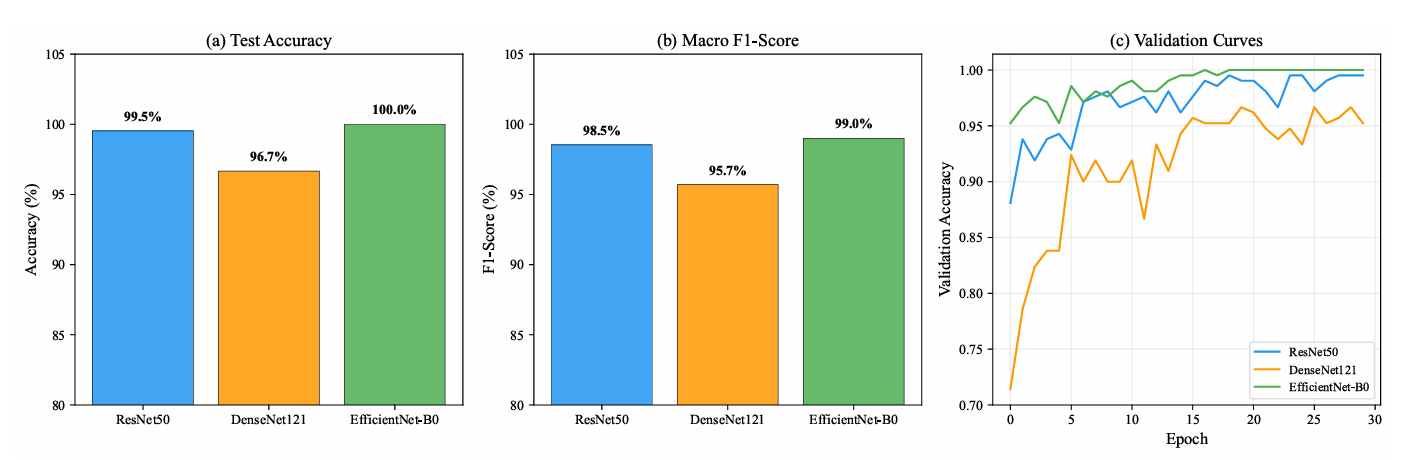
Skin lesion classification is critical in dermatological diagnosis, where early and accurate identification of malignant lesions can significantly improve patient outcomes. Deep learning approaches, particularly transfer learning with pre-trained CNNs, have demonstrated remarkable performance in automated dermoscopic image analysis. However, the optimal configuration of transfer learning components---including backbone architecture, fine-tuning strategy, and data augmentation intensity---remains an open question. In this paper, we present a systematic comparative study on the HAM10000 dataset, evaluating three CNN architectures (ResNet50, DenseNet121, EfficientNet-B0), three fine-tuning stra... More >

Graphical Abstract

Comparative Study of Transfer Learning Strategies for Multi-Class Skin Lesion Classification: Architectures, Fine-Tuning, and Data Augmentation
Open Access | Research Article | 01 June 2026
Maize Leaf Disease Classification Using a Hybrid Framework Integrated with Color and CNN-Derived Features
ICCK Journal of Image Analysis and Processing | Volume 2, Issue 3: 141-152, 2026 | DOI: 10.62762/JIAP.2026.176232
Abstract
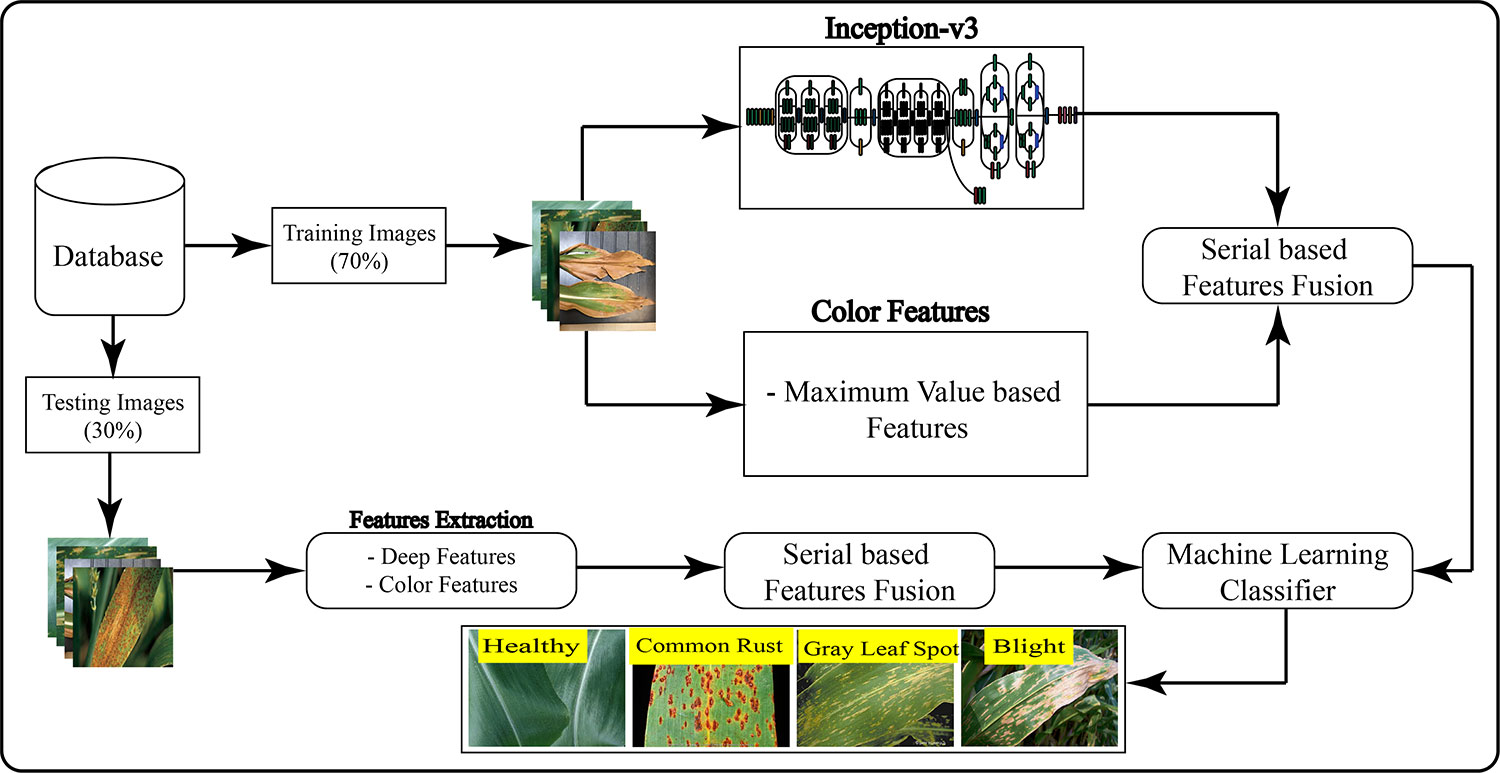
Early recognition of maize leaf disorders and applying precautionary measures on time may help to increase the yield and quality. This study introduces an architecture for the recognition and categorization of maize leaf diseases based on the deep Inception-v3 and maximum value-based color features. The core steps of the designed framework include data acquisition, feature extraction, fusion, and classification. The maize leaf image dataset is utilized, which is publicly available on Kaggle, comprising four classes. The deep learning features are collected by applying the transfer learning approach to the pre-trained Inception-v3 model. In addition to the deep features, maximum value-based c... More >

Graphical Abstract
Maize Leaf Disease Classification Using a Hybrid Framework Integrated with Color and CNN-Derived Features
Open Access | Research Article | 31 May 2026
Multi-Scale CSPResNet50 with Feature Pyramid Aggregation and SE Attention for Breast Cancer Histopathological Subtype Classification and Malignancy Detection
ICCK Journal of Image Analysis and Processing | Volume 2, Issue 3: 122-140, 2026 | DOI: 10.62762/JIAP.2026.746947
Abstract
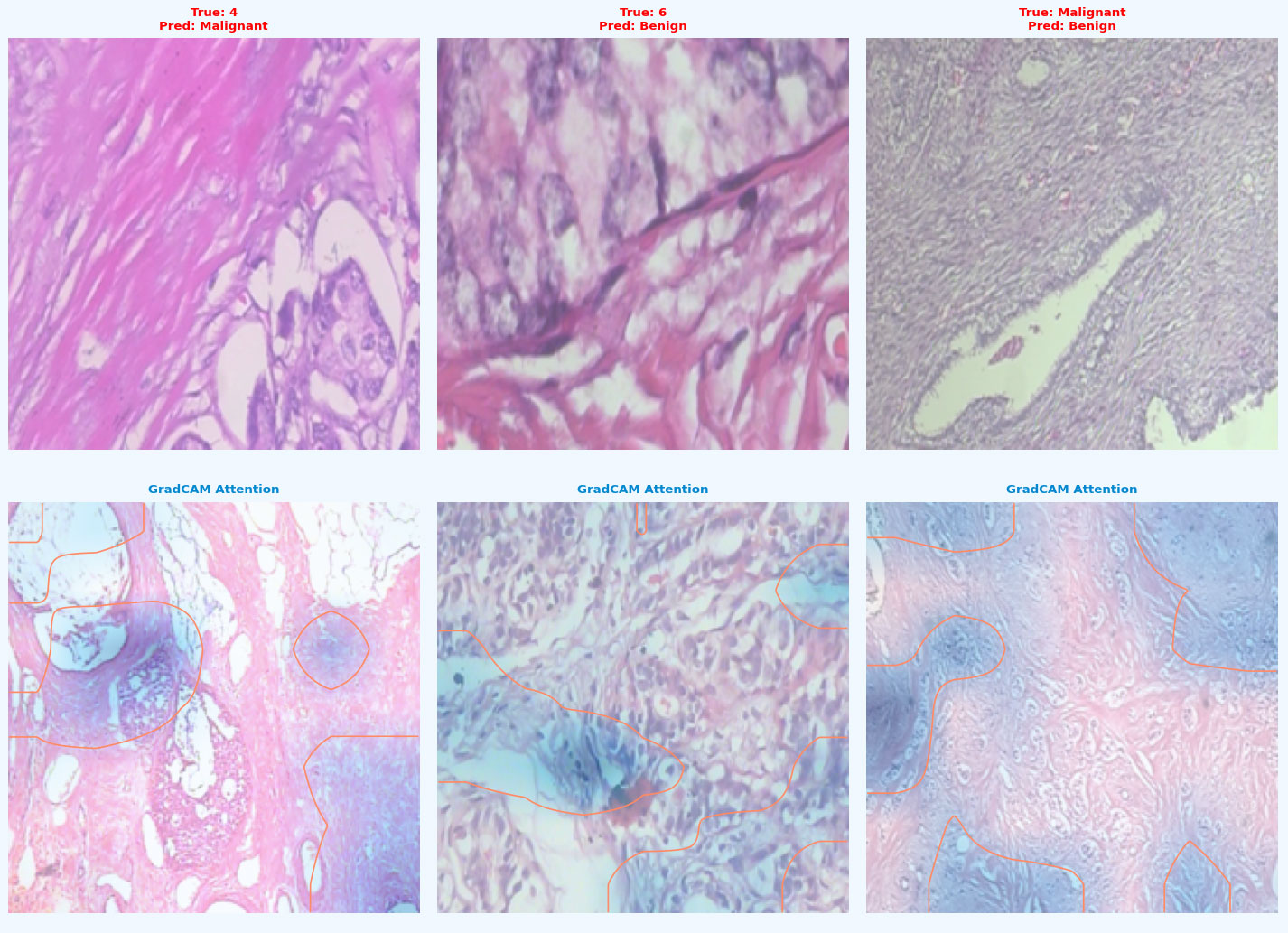
Breast cancer is a leading cause of cancer-related mortality worldwide, making accurate histopathological subtype discrimination critical for timely clinical intervention. Existing deep learning approaches often evaluate limited settings (binary or multi-class, single magnification), restricting comparative utility and clinical interpretability. This study proposes a unified Cross Stage Partial Network (CSPNet)-based framework for comprehensive classification on the BreaKHis dataset. A CSPResNet50 backbone pre-trained on ImageNet was extended with a multi-scale Feature Pyramid-style aggregation head, Squeeze-and-Excitation channel attention, dual Global Average and Max Pooling per scale (153... More >

Graphical Abstract
Multi-Scale CSPResNet50 with Feature Pyramid Aggregation and SE Attention for Breast Cancer Histopathological Subtype Classification and Malignancy Detection
Open Access | Retraction | 28 May 2026
Retraction Notice to "Adaptive Hyperspectral Direct Classification Method Based on Computational Spectral Imaging"
ICCK Journal of Image Analysis and Processing | Volume 2, Issue 2: 121-121, 2026 | DOI: 10.62762/JIAP.2026.612111
Abstract
This article [1] has been retracted at the request of the authors. After publication, the authors conducted a further verification of the experimental code and results. Regrettably, an error was discovered in the implementation of the adaptive encoding template optimization algorithm (Section~3.6), as a consequence of which the experimental results reported in the manuscript cannot be reproduced. As the reported results cannot be reproduced, the validity of the paper's main conclusions cannot be substantiated. The authors determined that retraction is the most responsible course of action in order to prevent misleading future research. All authors were contacted regarding this retraction. Di... More >
Open Access | Review Article | 09 May 2026
A Survey on Real-Time Adversarial Attack Detection and Robustness for Real-Time Systems
ICCK Journal of Image Analysis and Processing | Volume 2, Issue 2: 104-120, 2026 | DOI: 10.62762/JIAP.2026.481078
Abstract
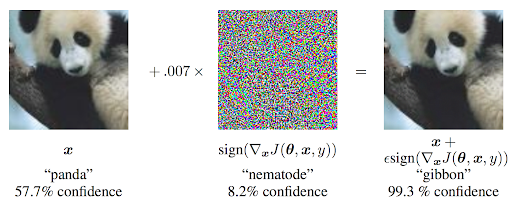
The use of deep neural networks in modern surveillance systems enables real-time object detection, facial recognition, and anomaly detection, but they remain vulnerable to adversarial attacks, creating critical security risks. This survey reviews detection methods tailored for real-time surveillance, categorizing domain-specific attacks including gradient-based methods (FGSM, PGD, C&W), physical patches, and temporal attacks on video data. We evaluate detection approaches across six categories: feature-based (LID, frequency analysis), reconstruction-based (autoencoders, GANs), auxiliary model-based, uncertainty-based (Bayesian Networks, MIAD), steganalysis-based, and attention-based (ViTGuar... More >

Graphical Abstract
A Survey on Real-Time Adversarial Attack Detection and Robustness for Real-Time Systems
Open Access | Research Article | 07 May 2026
RETRACTED: Adaptive Hyperspectral Direct Classification Method Based on Computational Spectral Imaging
ICCK Journal of Image Analysis and Processing | Volume 2, Issue 2: 92-103, 2026 | DOI: 10.62762/JIAP.2026.481080
Abstract
Hyperspectral image classification is a central task in remote sensing information extraction. Conventional approaches follow a reconstruct-then-classify paradigm, which entails large data volumes, high computational cost, and poor real-time performance. This paper presents an adaptive hyperspectral direct classification method based on computational spectral imaging. A Digital Micromirror Device (DMD) is used to spectrally encode and modulate the incident light, enabling direct output of two-dimensional spatial classification results without reconstructing the three-dimensional spectral data cube. First, a classification-oriented encoding template is designed via Fisher discriminant analys... More >

Graphical Abstract
RETRACTED: Adaptive Hyperspectral Direct Classification Method Based on Computational Spectral Imaging
Open Access | Research Article | 28 April 2026
Passive Image Forgery Detection Using Multiscale Weber Local Descriptor and SVM Classification
ICCK Journal of Image Analysis and Processing | Volume 2, Issue 2: 69-91, 2026 | DOI: 10.62762/JIAP.2026.490874
Abstract
Digital image manipulation has become increasingly prevalent with the widespread availability of editing tools, raising concerns regarding image authenticity in critical applications. This study presents a passive image forgery detection framework based on multiscale Weber Local Descriptor features extracted from chrominance components and classified using a Support Vector Machine. The proposed method operates without embedded authentication information and focuses on detecting both copy-move and splicing forgeries through texture-based analysis. Experiments were conducted on two benchmark datasets, CASIA v2.0 and MICC F2000, using ten-fold cross-validation. On the CASIA v2.0 dataset, the fr... More >

Graphical Abstract
Passive Image Forgery Detection Using Multiscale Weber Local Descriptor and SVM Classification
Open Access | Research Article | 19 April 2026
Enhancing Salient Object Detection (SOD) through Cross-Scale Interaction
ICCK Journal of Image Analysis and Processing | Volume 2, Issue 2: 53-68, 2026 | DOI: 10.62762/JIAP.2026.914908
Abstract
While deep learning architectures have driven substantial improvements in salient object detection (SOD), effectively handling objects of unpredictable scales and ambiguous categories remains a complex challenge. These issues are fundamentally tied to how networks process multi-level and multi-scale feature representations. To address this, a novel framework is presented that utilizes aggregate interaction modules to fuse spatial features from neighboring network tiers. By employing minimal up-sampling and down-sampling rates, this mechanism significantly minimizes the introduction of noise. Furthermore, self-interaction modules are embedded within each decoder unit to generate highly refine... More >

Graphical Abstract
Enhancing Salient Object Detection (SOD) through Cross-Scale Interaction

Journal Statistics

74
Authors
11
Countries / Regions
27
Articles
Scopus: 21
Citations
2024
Published Since
100,120
Article Views
15,906
Article Downloads
ICCK Journal of Image Analysis and Processing
eISSN: 3068-6679
Crossref
Crossref
Member of Crossref
Visit Crossref →