

ICCK Journal of Image Analysis and Processing

Publishing Model:
ISSN:
ISSN: 3068-6679
The ICCK Journal of Image Analysis and Processing (JIAP) is a peer-reviewed, open-access journal dedicated to advancing fundamental theory, methodological innovation, and practical applications in image and video analysis, computer vision, and computational imaging.
DOI Prefix: 10.62762/JIAP

Journal Metrics

-
Impact Factor
-
CiteScore

Recent Articles

Open Access | Research Article | 07 May 2026
RETRACTED: Adaptive Hyperspectral Direct Classification Method Based on Computational Spectral Imaging
ICCK Journal of Image Analysis and Processing | Volume 2, Issue 2: 92-103, 2026 | DOI: 10.62762/JIAP.2026.481080
Abstract
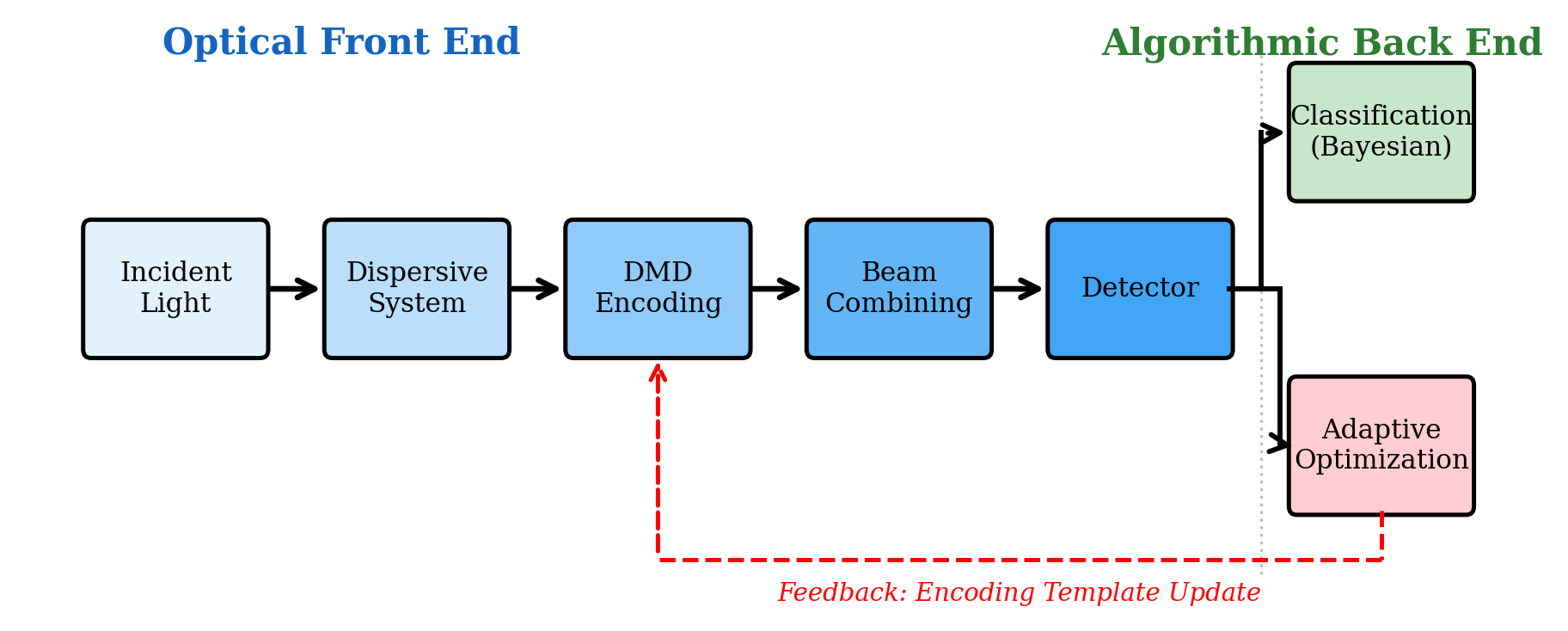
Hyperspectral image classification is a central task in remote sensing information extraction. Conventional approaches follow a reconstruct-then-classify paradigm, which entails large data volumes, high computational cost, and poor real-time performance. This paper presents an adaptive hyperspectral direct classification method based on computational spectral imaging. A Digital Micromirror Device (DMD) is used to spectrally encode and modulate the incident light, enabling direct output of two-dimensional spatial classification results without reconstructing the three-dimensional spectral data cube. First, a classification-oriented encoding template is designed via Fisher discriminant analys... More >

Graphical Abstract
RETRACTED: Adaptive Hyperspectral Direct Classification Method Based on Computational Spectral Imaging
Open Access | Research Article | 28 April 2026
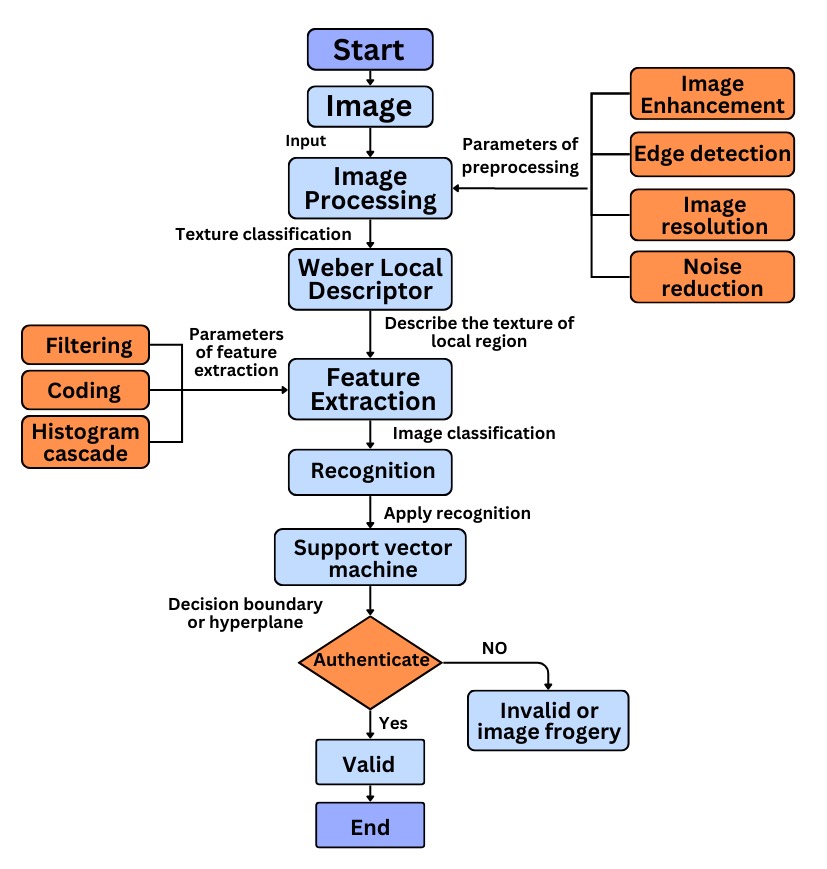
Passive Image Forgery Detection Using Multiscale Weber Local Descriptor and SVM Classification
ICCK Journal of Image Analysis and Processing | Volume 2, Issue 2: 69-91, 2026 | DOI: 10.62762/JIAP.2026.490874
Abstract
Digital image manipulation has become increasingly prevalent with the widespread availability of editing tools, raising concerns regarding image authenticity in critical applications. This study presents a passive image forgery detection framework based on multiscale Weber Local Descriptor features extracted from chrominance components and classified using a Support Vector Machine. The proposed method operates without embedded authentication information and focuses on detecting both copy-move and splicing forgeries through texture-based analysis. Experiments were conducted on two benchmark datasets, CASIA v2.0 and MICC F2000, using ten-fold cross-validation. On the CASIA v2.0 dataset, the fr... More >

Graphical Abstract
Passive Image Forgery Detection Using Multiscale Weber Local Descriptor and SVM Classification
Open Access | Research Article | 19 April 2026
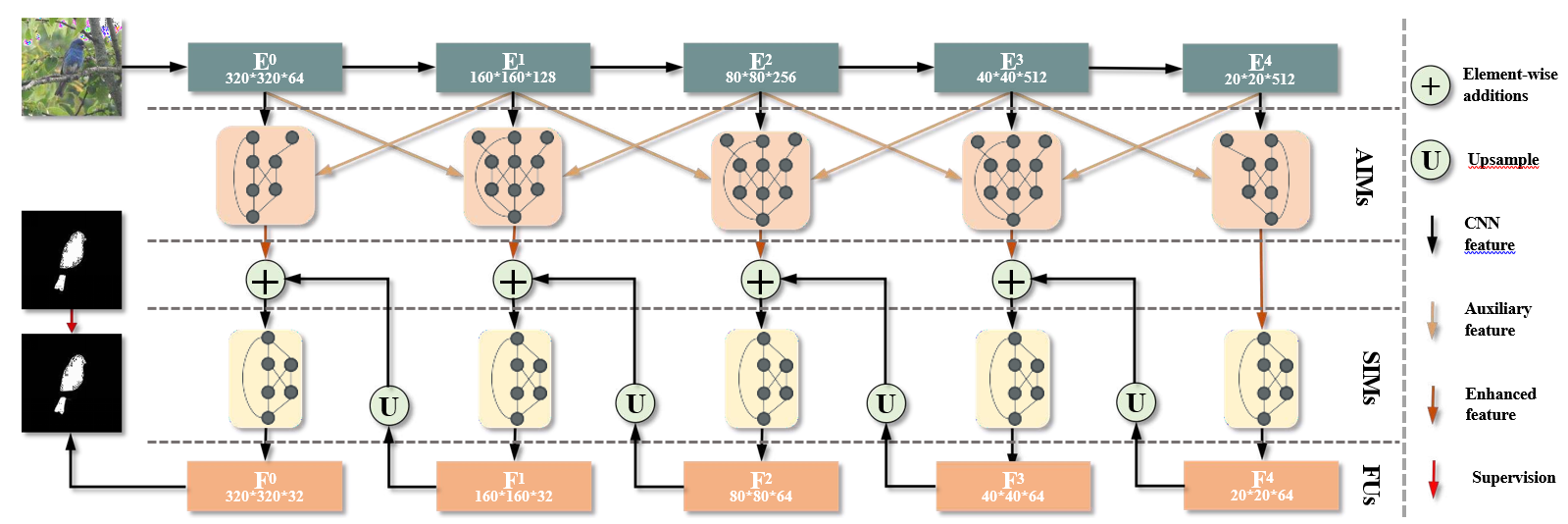
Enhancing Salient Object Detection (SOD) through Cross-Scale Interaction
ICCK Journal of Image Analysis and Processing | Volume 2, Issue 2: 53-68, 2026 | DOI: 10.62762/JIAP.2026.914908
Abstract
While deep learning architectures have driven substantial improvements in salient object detection (SOD), effectively handling objects of unpredictable scales and ambiguous categories remains a complex challenge. These issues are fundamentally tied to how networks process multi-level and multi-scale feature representations. To address this, a novel framework is presented that utilizes aggregate interaction modules to fuse spatial features from neighboring network tiers. By employing minimal up-sampling and down-sampling rates, this mechanism significantly minimizes the introduction of noise. Furthermore, self-interaction modules are embedded within each decoder unit to generate highly refine... More >

Graphical Abstract
Enhancing Salient Object Detection (SOD) through Cross-Scale Interaction
Open Access | Research Article | 31 March 2026 | Cited: Crossref logo  1 , Scopus 1
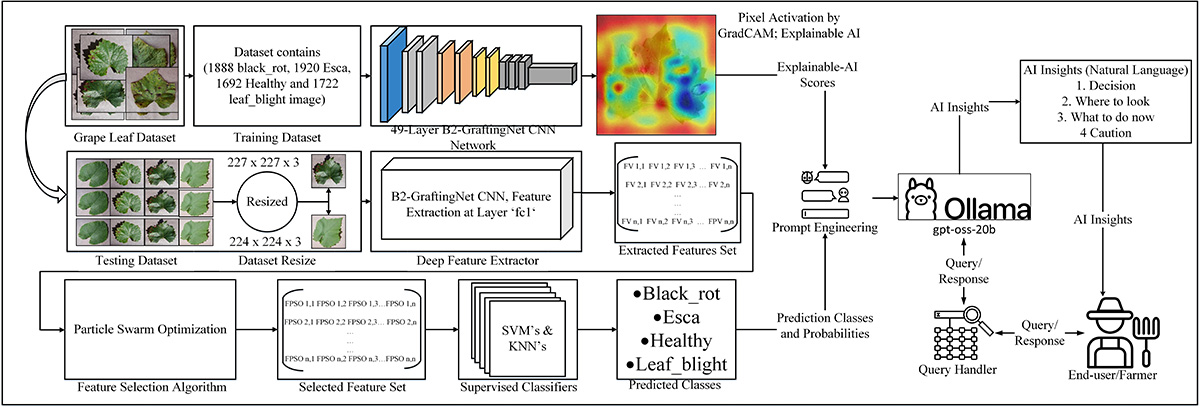
B2-GraftingNet: A Hybrid Deep-Machine Learning Framework with Explainable AI for Automated Grape Leaf Disease Detection
ICCK Journal of Image Analysis and Processing | Volume 2, Issue 1: 27-52, 2026 | DOI: 10.62762/JIAP.2026.937901
Abstract
Plant diseases increasingly threaten global agriculture due to climate change, yet manual diagnosis remains challenging. We introduce B2-GraftingNet, a lightweight deep-learning framework for automated grape-leaf disease detection that combines a VGG16 backbone with Inception-style blocks to learn robust multi-scale cues. Binary Particle Swarm Optimization selects the most informative features before classification. On the public Kaggle grape-leaf dataset, a cubic SVM classifier achieves 99.56% peak accuracy, surpassing standard pretrained CNNs (VGG16/VGG19: 34.04%, Xception: 97.95%, Darknet: 94.91%, ResNet-50: 98.44%) while being faster and lighter. For transparency, we incorporate Grad-CAM... More >

Graphical Abstract
B2-GraftingNet: A Hybrid Deep-Machine Learning Framework with Explainable AI for Automated Grape Leaf Disease Detection
Open Access | Research Article | 25 January 2026
Generalized $L_p$-Norm Based Non-Local Means Denoising
ICCK Journal of Image Analysis and Processing | Volume 2, Issue 1: 17-26, 2026 | DOI: 10.62762/JIAP.2025.744487
Abstract
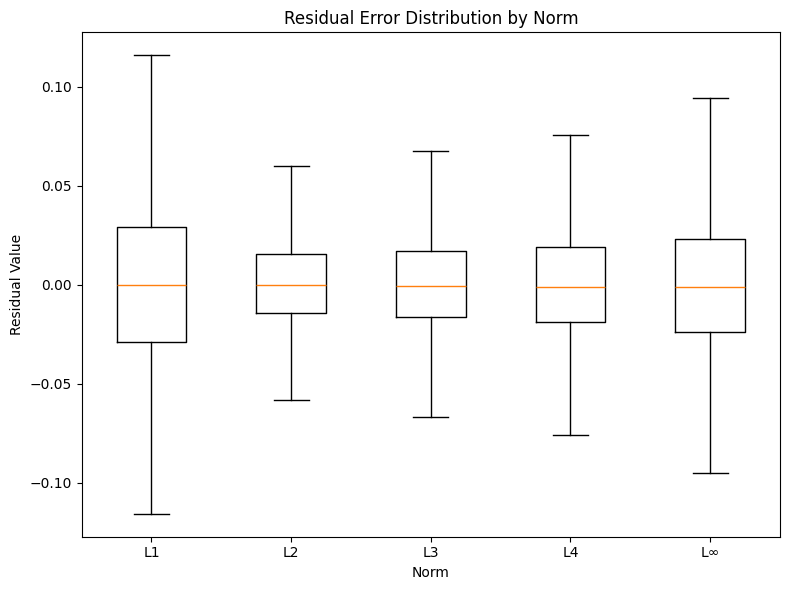
Non-local means (NL-means) is a state-of-the-art image denoising algorithm that leverages self-similarity by averaging similar patches weighted by the classic $L_2$-norm distance. In this work, we extend the similarity measure to arbitrary $L_p$-norms ($1 \le p \le \infty$) and investigate their impact on denoising performance. We implement and evaluate NL-means with $p = 1, 2, 3, 4, \infty$ and compare via quantitative metrics (MSE, MAE, PSNR, SSIM), residual analysis, and visual inspection. Experiments on the \emph{Lena} image corrupted with AWGN ($\sigma = 20$), a widely used benchmark setting in the denoising literature, show that while $L_2$-norm remains optimal overall, other norms off... More >

Graphical Abstract
Generalized $L_p$-Norm Based Non-Local Means Denoising
Open Access | Research Article | 21 January 2026
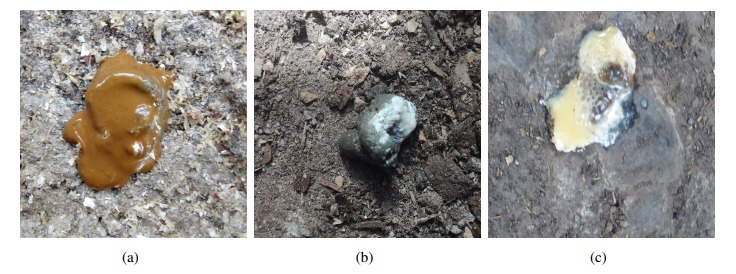
Embedded Electronic IoT System for Poultry Health Monitoring and AI-Powered Disease Detection from Feces
ICCK Journal of Image Analysis and Processing | Volume 2, Issue 1: 1-16, 2026 | DOI: 10.62762/JIAP.2025.569459
Abstract
Poultry farming plays a vital role in global food production, requiring efficient management to ensure productivity and animal welfare. Traditional methods, largely based on manual monitoring, are often inefficient, error-prone, and costly. With the rise of Internet of Things (IoT) technologies, intelligent systems now enable remote monitoring and management of environmental conditions, farm operations, and disease prevention. Platforms such as ThingSpeak allow for real-time data collection, processing, and visualization, offering a cost-effective solution for poultry farm management. By integrating sensors to measure temperature, humidity, air quality, and feeding, and by leveraging ThingSp... More >

Graphical Abstract
Embedded Electronic IoT System for Poultry Health Monitoring and AI-Powered Disease Detection from Feces
Open Access | Research Article | 18 December 2025 | Cited: Crossref logo  1 , Scopus 1
Interpretable Deep Learning for Diabetic Retinopathy Grading using Regression Activation Maps
ICCK Journal of Image Analysis and Processing | Volume 1, Issue 4: 196-209, 2025 | DOI: 10.62762/JIAP.2025.346328
Abstract
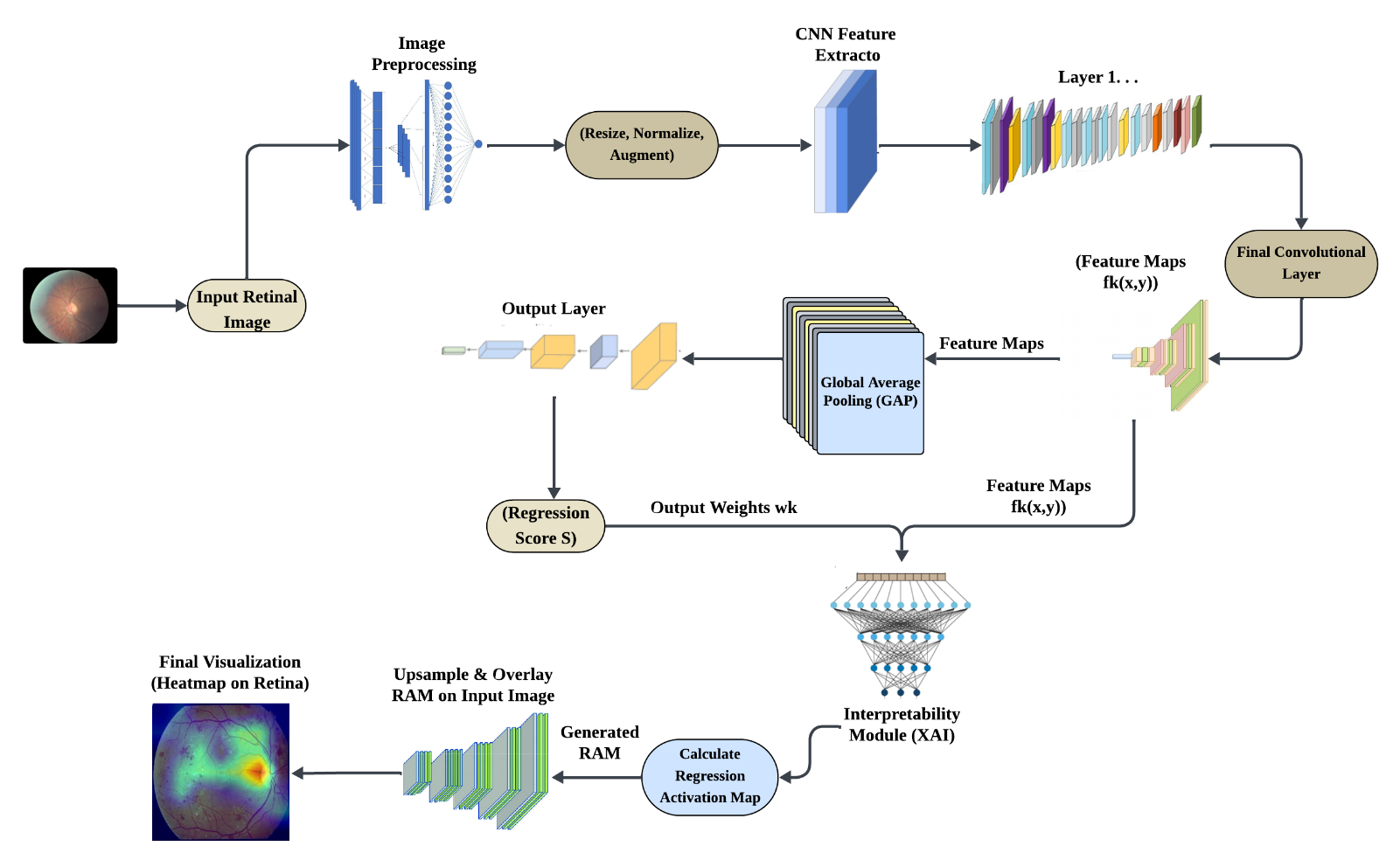
The escalating global prevalence of diabetes renders effective screening for Diabetic Retinopathy (DR) indispensable to prevent irreversible vision loss. Although deep learning models, particularly Convolutional Neural Networks (CNNs), attain diagnostic accuracy comparable to that of human experts, their black-box nature erodes clinical trust. To harmonize accuracy with interpretability, this paper proposes a novel CNN architecture that reformulates DR grading as a regression task. By substituting traditional dense layers with a Global Average Pooling (GAP) layer, our approach substantially reduces model complexity and training time while enabling the generation of Regression Activation Maps... More >

Graphical Abstract
Interpretable Deep Learning for Diabetic Retinopathy Grading using Regression Activation Maps
Open Access | Research Article | 15 December 2025
Fuzzy Logic-Based Mixed Noise Reduction in Ultrasound Images
ICCK Journal of Image Analysis and Processing | Volume 1, Issue 4: 184-195, 2025 | DOI: 10.62762/JIAP.2025.159583
Abstract
Ultrasound (US) imaging is widely employed in medical diagnostics due to its non-invasive nature and real-time imaging ability. The existence of mixed noise, consisting of Gaussian and speckle noise, significantly impairs image quality, hindering accurate diagnosis. This study introduces an advanced fuzzy logic-based technique for noise reduction to enhance US image quality while preserving essential structural information. The proposed approach utilizes a modified Gaussian membership function to improve the filtering process, ensuring adaptive noise reduction across varying noise levels. The system is evaluated on synthetic and clinical US images using diverse image quality assessment metri... More >

Graphical Abstract
Fuzzy Logic-Based Mixed Noise Reduction in Ultrasound Images

Journal Statistics

82
Authors
13
Countries / Regions
30
Articles
28
Scopus Citations
40% Cited
2024
Published Since
125,873
Article Views
21,647
Article Downloads
ICCK Journal of Image Analysis and Processing
eISSN: 3068-6679
Crossref
Crossref
Member of Crossref
Visit Crossref →