Volume 2, Issue 3 (In Progress)


In Progress
Citations: Crossref logo 0,   0   |   Viewed: 936, Download: 322

Table of Contents

Free Access | Letter | 28 September 2026
Fixed-Time Stabilization for a Class of Dynamical Systems and Its Application to a Chaotic System
Journal of Nonlinear Dynamics and Applications | Volume 2, Issue 3: 217-221, 2026 | DOI: 10.62762/JNDA.2026.507142
Abstract
In this letter, the fixed-time stabilization of a class of dynamical systems is investigated. By using a fixed-time stability lemma and feedback control, new algebraic criteria ensuring the fixed-time stabilization of the dynamical systems under consideration are established. The obtained results are then applied to stabilize a chaotic system, and numerical simulations demonstrate the effectiveness of the theoretical results. More >

Graphical Abstract
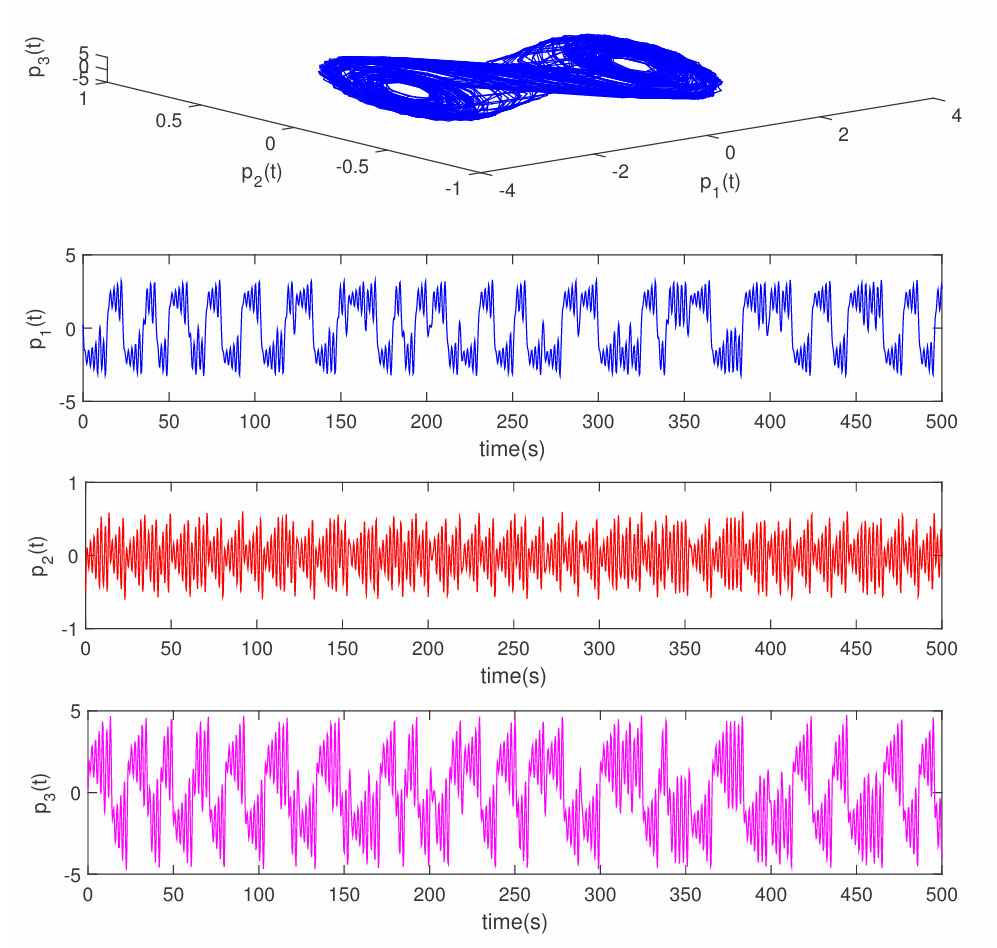
Fixed-Time Stabilization for a Class of Dynamical Systems and Its Application to a Chaotic System
Free Access | Research Article | 23 September 2026
The Return Map in the Class $\mathcal{O}_C$: Geometry, Dynamics, and Thickness Regularity
Journal of Nonlinear Dynamics and Applications | Volume 2, Issue 3: 192-216, 2026 | DOI: 10.62762/JNDA.2026.569839
Abstract
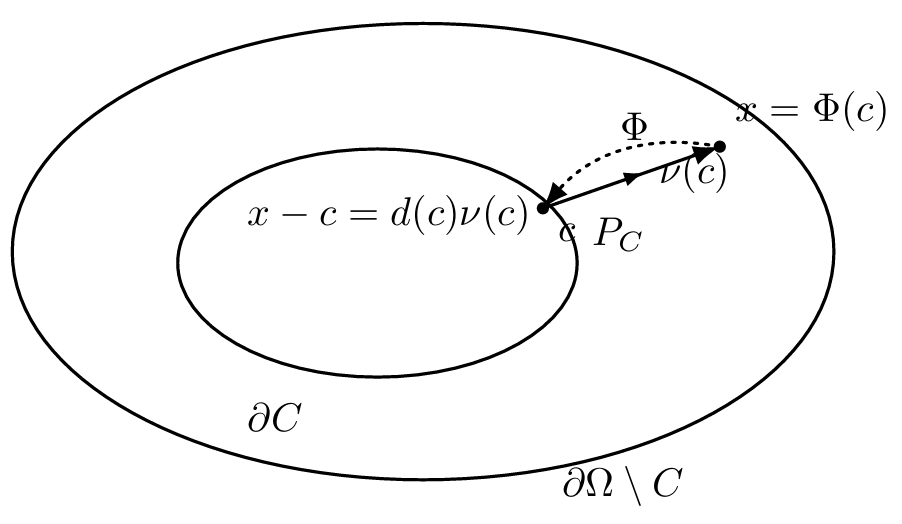
We study a geometrically defined return map associated with domains in the class $\mathcal O_C$, where a fixed convex core $C\subset\mathbb R^N$ is linked to the outer boundary $\partial\Omega$ through outward normal rays and a thickness function $d:\partial C\to(0,\infty)$. The radial map $\Phi(c)=c+d(c)\nu(c)$ is combined with a reciprocal map that follows the inward normal to $\partial\Omega$ back to its first intersection with the convex core. Their composition $F=\pi\circ\Phi:\partial C\to\partial C$ defines a geometrically generated discrete dynamical system on $\partial C$. Using the exact normal geometry of the radial parametrization, we derive the local quadratic-remainder formula $... More >

Graphical Abstract
The Return Map in the Class $\mathcal{O}_C$: Geometry, Dynamics, and Thickness Regularity
Free Access | Research Article | 20 September 2026
Formalism of a Treatment-Modulated Logistic Map for Breast Tumor Growth: Mathematical Formulation, Nonlinear Dynamics, and Clinically Inspired Simulation
Journal of Nonlinear Dynamics and Applications | Volume 2, Issue 3: 177-191, 2026 | DOI: 10.62762/JNDA.2026.825872
Abstract
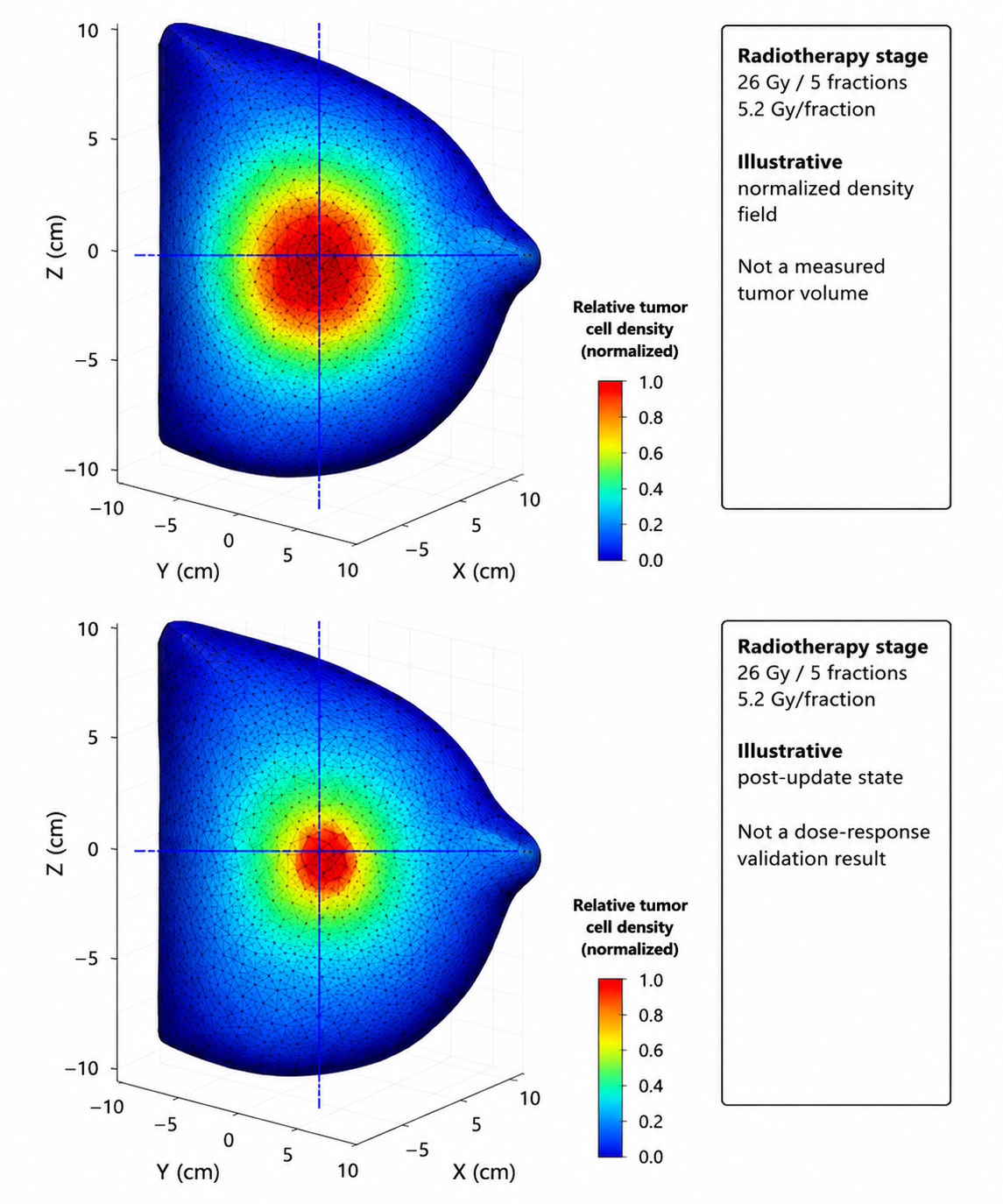
This study develops a treatment-modulated discrete framework for breast-tumor dynamics, emphasizing dimensional consistency, treatment dependence, and the distinction between scalar tumor burden and spatial tumor-density fields. Starting from the dimensional logistic growth law, treatment is introduced through a cycle-dependent survival factor. Normalization by the continuous carrying capacity $K_c$ yields the exact Euler update $y_{n+1}=S_n[y_n+g\Delta t_n y_n(1-y_n)]$, whereas the canonical non-autonomous map $x_{n+1}=r_nx_n(1-x_n)$, with $r_n=(1+g\Delta t_n)S_n$, is retained as a reduced nonlinear benchmark. This distinction prevents discretization-induced period-doubling and chaos from b... More >

Graphical Abstract
Formalism of a Treatment-Modulated Logistic Map for Breast Tumor Growth: Mathematical Formulation, Nonlinear Dynamics, and Clinically Inspired Simulation
Open Access | Research Article | 10 September 2026
Organizational Responsiveness in a Three-Dimensional Discrete Model of AI, ESG Disclosure, and Green Supply Chain Collaboration
Journal of Nonlinear Dynamics and Applications | Volume 2, Issue 3: 159-176, 2026 | DOI: 10.62762/JNDA.2026.451847
Abstract
Artificial intelligence (AI) investment, environmental, social, and governance (ESG) disclosure, and green supply chain collaboration increasingly operate as an interconnected corporate sustainability system, yet their relationships are commonly examined through static or approximately linear models. This study develops a bounded three-dimensional discrete nonlinear framework in which firms periodically adjust AI-investment maturity, ESG disclosure quality, and green supply chain collaboration in response to cross-domain benefits and self-limiting organizational costs. The model contributes by separating structural complementarity from organizational responsiveness, allowing the same long-ru... More >

Graphical Abstract
Organizational Responsiveness in a Three-Dimensional Discrete Model of AI, ESG Disclosure, and Green Supply Chain Collaboration
Free Access | Research Article | 10 August 2026
A Third-Order Variable Step Size Superclass of Block Backward Differentiation Formula for Efficient Solution of Highly Stiff Differential Systems
Journal of Nonlinear Dynamics and Applications | Volume 2, Issue 3: 143-158, 2026 | DOI: 10.62762/JNDA.2026.749084
Abstract
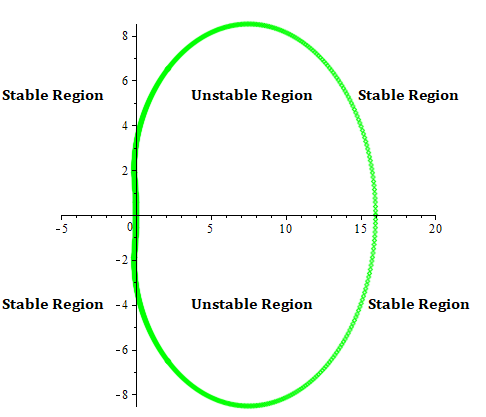
This paper develops a third-order fully implicit adaptive variable step-size superclass block backward differentiation formula (VSBBDF3) for the efficient numerical simulation of nonlinear stiff dynamical systems, including oscillatory, chaotic, and reaction-kinetics systems governed by ordinary differential equations. The method extends the classical block BDF framework through a structured superclass coefficient formulation while preserving full implicitness. By computing multiple solution approximations simultaneously within each block, the scheme enhances both stability and computational efficiency. An adaptive step-size strategy controls local truncation errors, enabling dynamic respons... More >

Graphical Abstract
A Third-Order Variable Step Size Superclass of Block Backward Differentiation Formula for Efficient Solution of Highly Stiff Differential Systems