Volume 2, Issue 2 (In Progress)


In Progress
Citations: Crossref logo 0,   0   |   Viewed: 1708, Download: 317

Table of Contents

Open Access | Research Article | 11 June 2026
Adaptive Risk Evaluation in FinTech Systems via Reinforcement-Based Continuous Policy Optimization
ICCK Journal of Software Engineering | Volume 2, Issue 2: 156-168, 2026 | DOI: 10.62762/JSE.2026.605759
Abstract
The key feature of FinTech software systems is the ability to accurately assess risk in real time, making decisions on high-volume streams of information that are associated with very low latency and are robust to concept drift, and able to be updated without disrupting services. This paper addresses the problem of adaptive risk scoring using a reinforcement learning approach by modeling the risk evaluation problem as a continuous-action Markov Decision Process and continuously optimizing the policy via streaming transactional, behavioral events and outcome driven reward feedback. In addition to the learning algorithm, we also view ARL-CPO as a deployable software architecture that separates... More >

Graphical Abstract
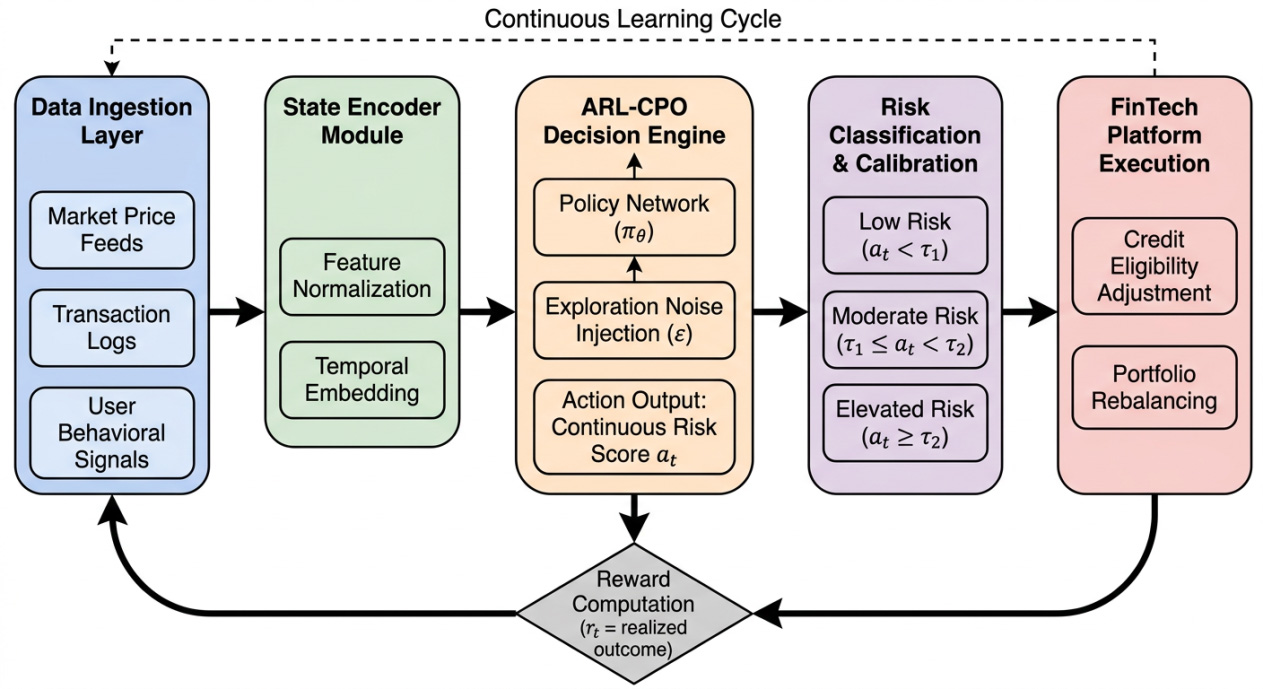
Adaptive Risk Evaluation in FinTech Systems via Reinforcement-Based Continuous Policy Optimization
Open Access | Research Article | 17 May 2026
Misclassification Analysis in Automated Bloom’s Taxonomy Classifiers: A Data-Centric Perspective on Educational Software
ICCK Journal of Software Engineering | Volume 2, Issue 2: 138-155, 2026 | DOI: 10.62762/JSE.2026.118512
Abstract
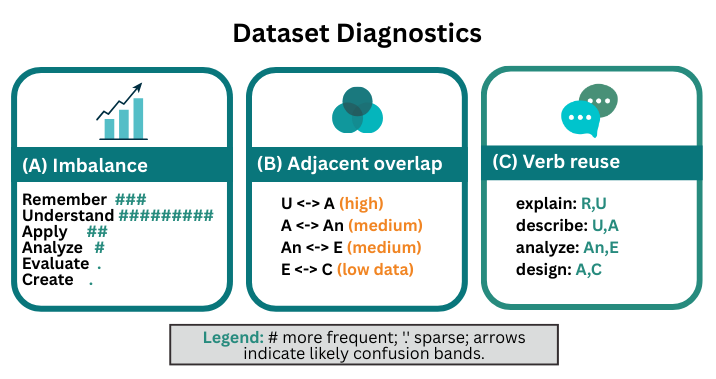
Automated classification of assessment questions according to Bloom’s taxonomy is increasingly used to support curriculum design and educational analytics. Many existing approaches rely heavily on instructional verbs as proxies for cognitive demand, despite longstanding concerns about their interpretive reliability. This paper adopts a data-centric perspective to examine why verb-centric Bloom-level classification remains fragile when applied to authentic multiple-choice question (MCQ) stems. The study is based on a custom, single-domain dataset of MCQ stems annotated according to the revised Bloom’s taxonomy, with intentional class imbalance preserved to reflect realistic assessment pra... More >

Graphical Abstract
Misclassification Analysis in Automated Bloom’s Taxonomy Classifiers: A Data-Centric Perspective on Educational Software
Open Access | Research Article | 12 May 2026
A Quantitative Framework for Return-on-Security-Investment (RoSI) in Secure Software Engineering: Integrating Probabilistic Risk, Lifecycle Dynamics, and Data-Driven Adaptation
ICCK Journal of Software Engineering | Volume 2, Issue 2: 121-137, 2026 | DOI: 10.62762/JSE.2026.472228
Abstract
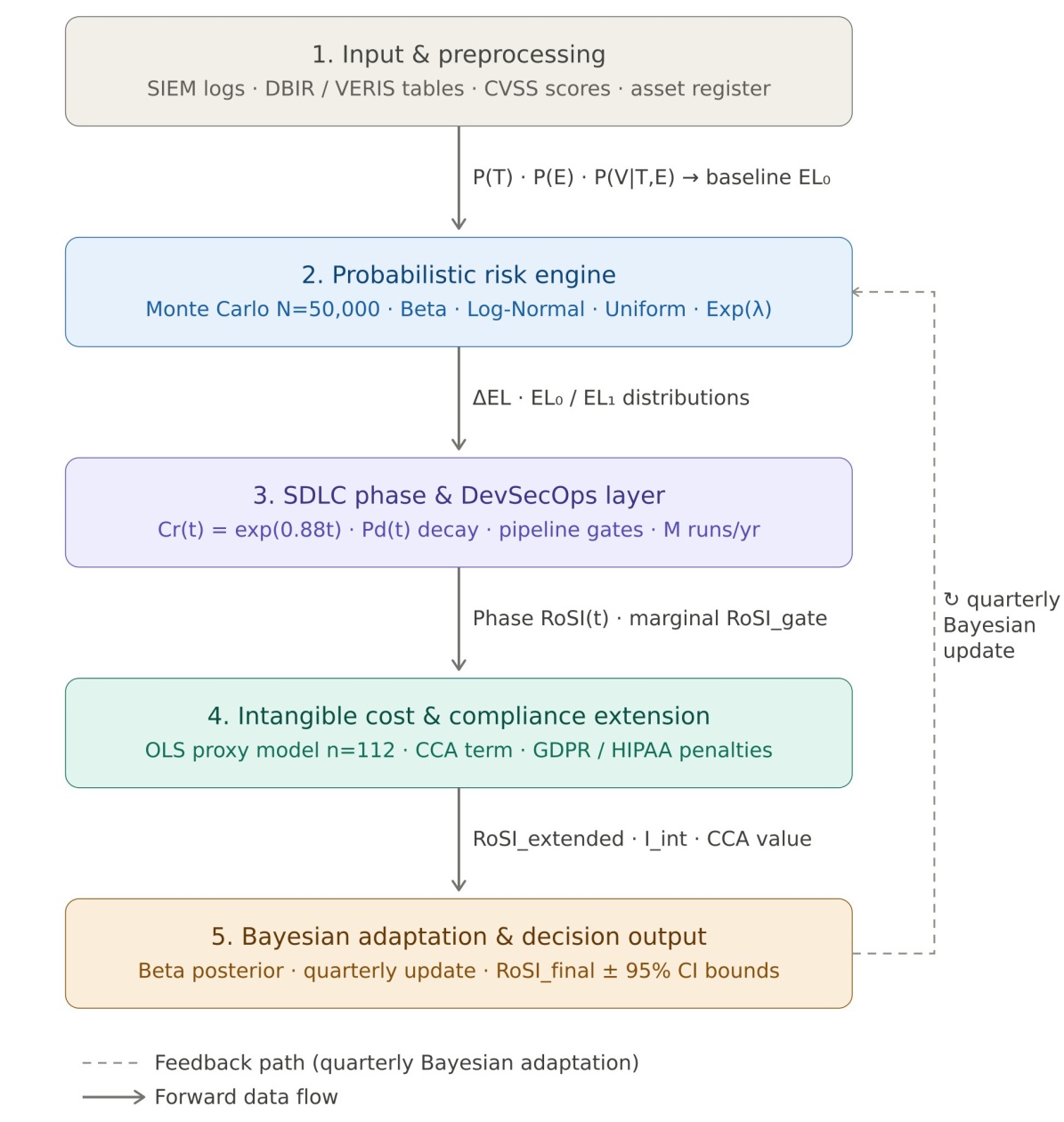
The concept of Return on Security Investment (RoSI) has evolved from a mere financial indicator into a comprehensive system for informed decision-making. Software-intensive organisations face mounting pressure to justify security expenditure in financially rigorous terms. Existing Return-on-Security-Investment (RoSI) models rely on deterministic approximations that ignore probability distributions over threats, temporal decay of vulnerability windows, and intangible cost categories. This paper presents a probabilistic RoSI framework grounded in the FAIR taxonomy that integrates: (i) expected-loss differentials with Bayesian updating; (ii) shift-left cost amplification across the software dev... More >

Graphical Abstract
A Quantitative Framework for Return-on-Security-Investment (RoSI) in Secure Software Engineering: Integrating Probabilistic Risk, Lifecycle Dynamics, and Data-Driven Adaptation
Open Access | Research Article | 09 May 2026
Mapping Traditional Software Non-Functional Requirements into the Machine Learning Context
ICCK Journal of Software Engineering | Volume 2, Issue 2: 102-120, 2026 | DOI: 10.62762/JSE.2026.908327
Abstract
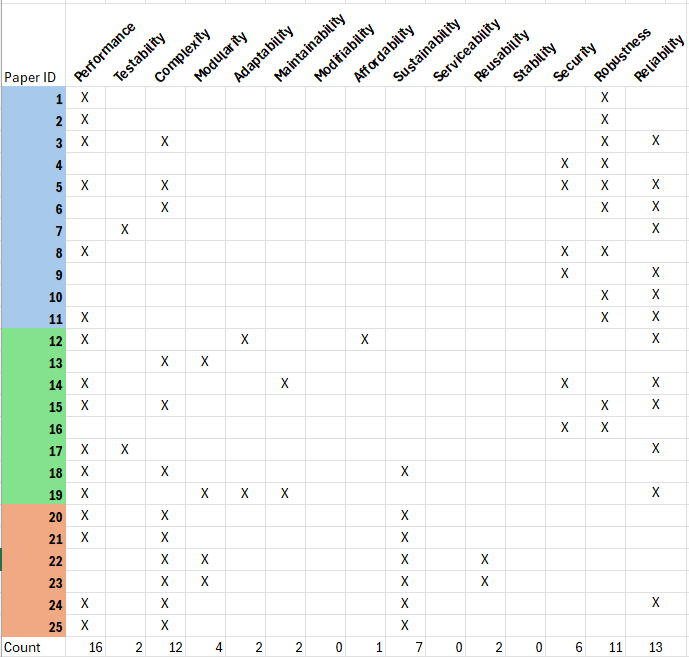
Non-Functional Requirements (NFRs) are quality-focused attributes of a system that impact functional components. There are 24 common NFR classes with some of the most used being performance, scalability, availability, reliability, and security. The implementations of these classes are ambiguous and describe the attributes on the behavior of software. Due to their nature, NFRs are typically realized through the specification and implementation of functional requirements. For traditional software systems, the NFR definitions are well known. However, in Machine Learning (ML), which has numerous applications across a multitude of domains, a current challenge is that traditional software non-func... More >

Graphical Abstract
Mapping Traditional Software Non-Functional Requirements into the Machine Learning Context
Open Access | Review Article | 22 April 2026
Electroluminescence Imaging–Driven Software Systems for Solar Cell Defect Detection
ICCK Journal of Software Engineering | Volume 2, Issue 2: 85-101, 2026 | DOI: 10.62762/JSE.2026.195385
Abstract
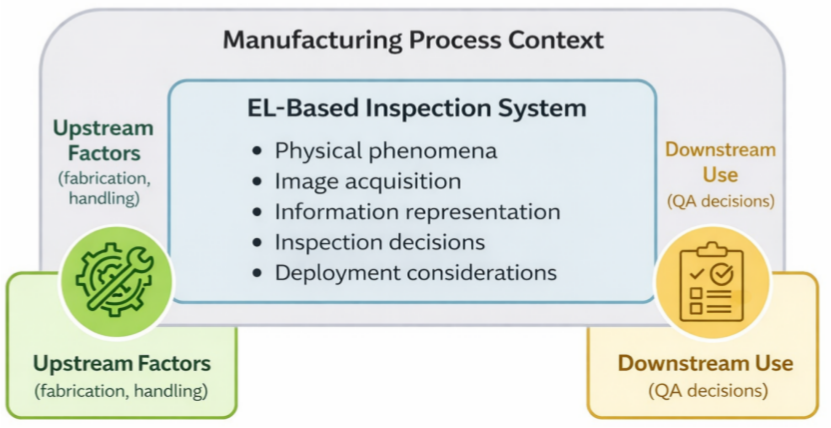
Electroluminescence imaging is widely used for detecting defects in solar cells. It reveals electrically active damage that remains invisible under conventional optical inspection. Most existing studies apply machine learning models to classify electroluminescence images and report performance mainly through accuracy scores. Inspection is often treated as an isolated prediction task, while physical defect mechanisms, sensing variability, representation bias, decision risk, and deployment constraints receive limited attention. As a result, strong benchmark results may not translate into reliable inspection outcomes in manufacturing environments. This paper presents a conceptual, non-systemati... More >

Graphical Abstract
Electroluminescence Imaging–Driven Software Systems for Solar Cell Defect Detection