Volume 1, Issue 2 (In Progress)


In Progress
Citations: 0, 0,  0   |   Viewed: 2271, Download: 609

Table of Contents

Open Access | Review Article | 22 December 2025
A Comprehensive Review of Diffusion Models, Gaussian Splatting and Their Integration in Augmented and Virtual Reality
Next-Generation Computing Systems and Technologies | Volume 1, Issue 2: 102-112, 2025 | DOI: 10.62762/NGCST.2025.477710
Abstract
The new progress in text-to-3D technology has greatly changed and improved the artificial intelligence (AI) applications in augmented and virtual reality (AR/VR) environments. Many different techniques in 2024-2025 like diffusion models, Gaussian splatting, and physics aware models have helped the text-to-3D much better by improving the visual fidelity, semantic coherence, and generation efficiency. Some models like Turbo3D, Dive3D and Instant3D are deigned to make the 3D generation faster by improving the working process of diffusion models. Other frameworks like LAYOUTDREAMER, PhiP-G and CompGS focus on creating scenes that are well organized and structured. Dream Reward and Coheren Dream... More >

Graphical Abstract
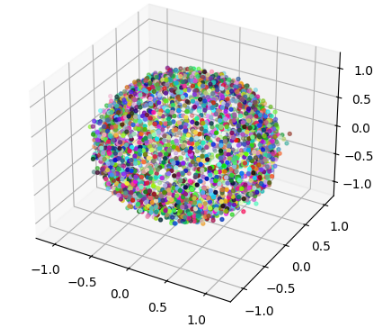
A Comprehensive Review of Diffusion Models, Gaussian Splatting and Their Integration in Augmented and Virtual Reality
Open Access | Research Article | 21 December 2025
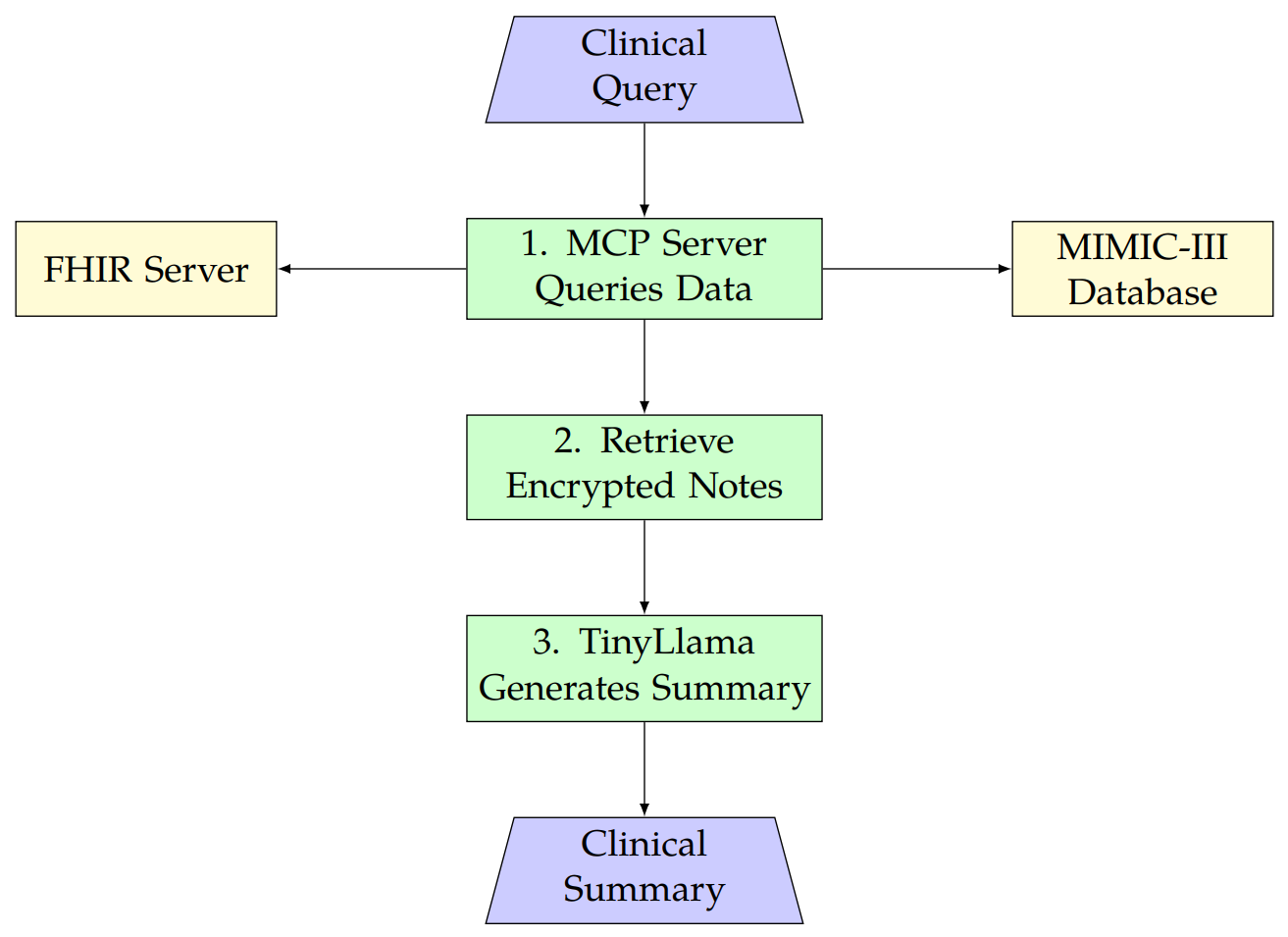
A Framework for Secure and Interoperable Clinical Summarization Using the Model Context Protocol: Integrating MIMIC-III and FHIR with TinyLlama
Next-Generation Computing Systems and Technologies | Volume 1, Issue 2: 91-101, 2025 | DOI: 10.62762/NGCST.2025.784852
Abstract
This research presents a new framework for clinical summarization that combines the TinyLlama model with MIMIC-III and FHIR data using the Model Context Protocol (MCP). Unlike cloud-based models like Med-PaLM, our approach uses local processing to cut costs and protect patient data with AES-256 encryption and strict access controls, meeting HIPAA and GDPR standards. It retrieves FHIR-compliant data from public servers (e.g., \texttt{hapi.fhir.org}) for interoperability across hospital systems. Tested on discharge summaries, it achieves ROUGE-L F1 scores of 0.96 for MIMIC-III and 0.84 for FHIR, beating baselines like BioBERT (0.61, p < 0.001) due to efficient preprocessing and MCP’s accurat... More >

Graphical Abstract
A Framework for Secure and Interoperable Clinical Summarization Using the Model Context Protocol: Integrating MIMIC-III and FHIR with TinyLlama
Open Access | Review Article | 14 December 2025
A Review on Privacy and Security in Dynamic Social Networks: Techniques, Challenges, and Future Directions
Next-Generation Computing Systems and Technologies | Volume 1, Issue 2: 79-90, 2025 | DOI: 10.62762/NGCST.2025.232051
Abstract
Owing to their dynamic user interactions, ever-changing structure, and real-time content changes, dynamic social networks pose significant privacy and security risks. The state of security and privacy-preserving techniques in these developing platforms is thoroughly examined in this study. We highlight the benefits and drawbacks of various approaches as we review recent studies on privacy-preserving tactics, security updates, and anonymisation methods. Important findings indicate that present approaches often fail in dynamic situations, even when they operate well in static network conditions. Beyond common problems, we also point out important security aspects influenced by hierarchical sys... More >

Graphical Abstract
A Review on Privacy and Security in Dynamic Social Networks: Techniques, Challenges, and Future Directions
Open Access | Research Article | 08 December 2025
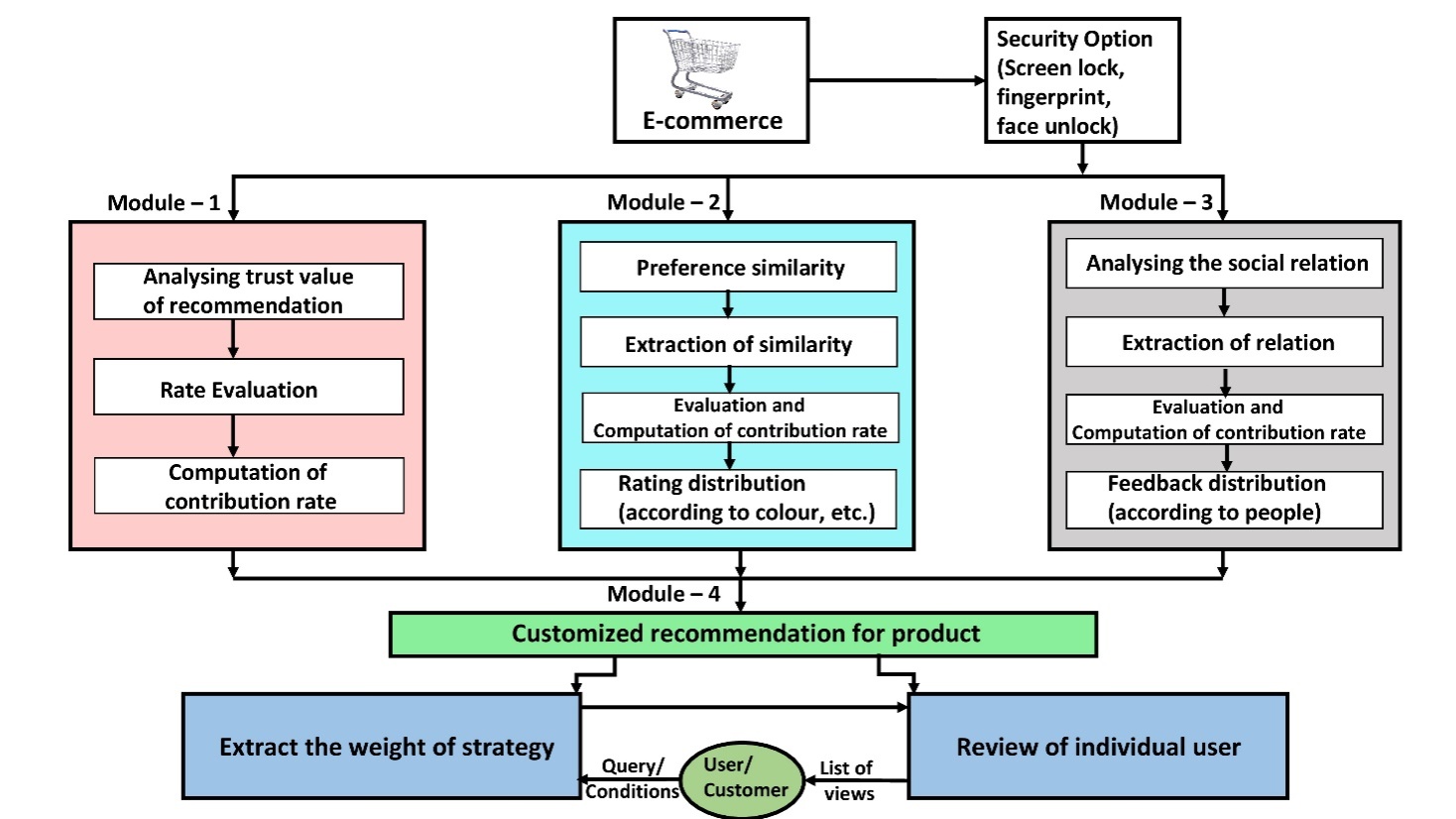
Dynamic Hybrid Recommendation Approach for Improving Accuracy in E-Commerce with Limited User Data
Next-Generation Computing Systems and Technologies | Volume 1, Issue 2: 62-78, 2025 | DOI: 10.62762/NGCST.2025.832339
Abstract
The 'Cold Start' problem, characterized by insufficient transaction history leading to inefficient personalization, represents one of the frequent challenges encountered in e-commerce systems. This issue, along with data sparsity resulting from limited product interactions, further complicates the reliability of conventional recommendation engines. The objective of this research is to design a novel hybridized recommendation system that enhances both security and suggestion accuracy by dynamically adapting to user interactions in digital environments. By leveraging contextual information and sequential user behavior patterns, the proposed method addresses gaps left by traditional recommender... More >

Graphical Abstract
Dynamic Hybrid Recommendation Approach for Improving Accuracy in E-Commerce with Limited User Data
Open Access | Research Article | 07 December 2025
AI-driven Data Management of Traditional Tunisian Nutritional Dishes: A Cultural Heritage Conservation
Next-Generation Computing Systems and Technologies | Volume 1, Issue 2: 54-61, 2025 | DOI: 10.62762/NGCST.2025.714702
Abstract
The potential loss of traditional Tunisian dishes threatens the sustainability of valuable cultural and nutritional traditions. To help preserve this rich heritage, a conversational AI system has been developed that employs advanced language processing and machine learning techniques to bring Tunisia’s culinary traditions to life in a digital space. Multilingual transformer models have been adapted to understand Tunisian dialects and combined with a detailed Food Heritage Knowledge Graph, allowing personalized, interactive access to authentic recipes and the stories behind them. A hybrid dialogue system operated by a chatbot has been implemented to ensure smooth, meaningful conversations t... More >

Graphical Abstract
AI-driven Data Management of Traditional Tunisian Nutritional Dishes: A Cultural Heritage Conservation