



ISSN: 3068-6652
Indexing: Scopus Indexed
The ICCK Transactions on Emerging Topics in Artificial Intelligence (TETAI) is a peer-reviewed international journal publishing papers on emerging theories and methodologies of Artificial Intelligence.
DOI Prefix: 10.62762/TETAI

Journal Metrics

-
Impact Factor
Indexed in: Scopus

Recent Articles

Open Access | Perspective | 27 March 2025 | Cited: Crossref logo  8 , Scopus 9
Beyond Hallucination: Generative AI as a Catalyst for Human Creativity and Cognitive Evolution
ICCK Transactions on Emerging Topics in Artificial Intelligence | Volume 2, Issue 1: 36-42, 2025 | DOI: 10.62762/TETAI.2025.657559
Abstract
This perspective examines the transformative role of generative artificial intelligence (AI) in augmenting human creativity and catalyzing cognitive evolution. Tracing its historical development from symbolic AI to transformer-based architectures, it contends that generative AI is not simply a computational tool but a cognitive partner that reconfigures our understanding of creativity, perception, and epistemology. The phenomenon of AI hallucination—often dismissed as mere error—is reframed as a window into the dynamics of both artificial and human cognition. Through technical and philosophical analysis, the paper addresses generative AI's impact across domains ranging from art and archi... More >

Open Access | Research Article | 15 March 2025 | Cited: Crossref logo  17 , Scopus 15
Scaling AI with Limited Labeled Data: A Self-Supervised Learning Approach
ICCK Transactions on Emerging Topics in Artificial Intelligence | Volume 2, Issue 1: 26-35, 2025 | DOI: 10.62762/TETAI.2025.607708
Abstract
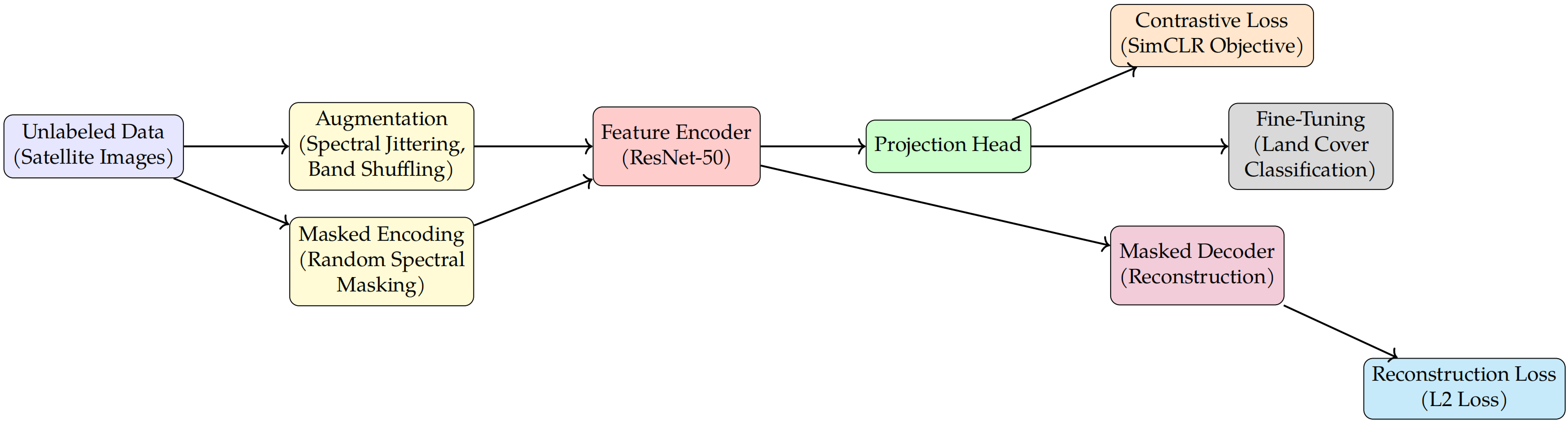
The scalability of modern AI is fundamentally limited by the availability of labeled data. While supervised learning achieves remarkable performance, it relies on large annotated datasets, which are expensive and time-consuming to acquire. This work explores self-supervised learning (SSL) as a promising solution to this challenge, enabling AI to scale effectively in data-scarce scenarios. This study demonstrates the effectiveness of the proposed SSL framework using the EuroSAT dataset, a benchmark for land cover classification where labeled data is limited and costly. The proposed approach integrates contrastive learning with multi-spectral augmentations, such as spectral jittering and band... More >

Graphical Abstract
Scaling AI with Limited Labeled Data: A Self-Supervised Learning Approach
Open Access | Research Article | 26 February 2025 | Cited: Crossref logo  3 , Scopus 3
NMRGen: A Generative Modeling Framework for Molecular Structure Prediction from NMR Spectra
ICCK Transactions on Emerging Topics in Artificial Intelligence | Volume 2, Issue 1: 16-25, 2025 | DOI: 10.62762/TETAI.2024.277656
Abstract
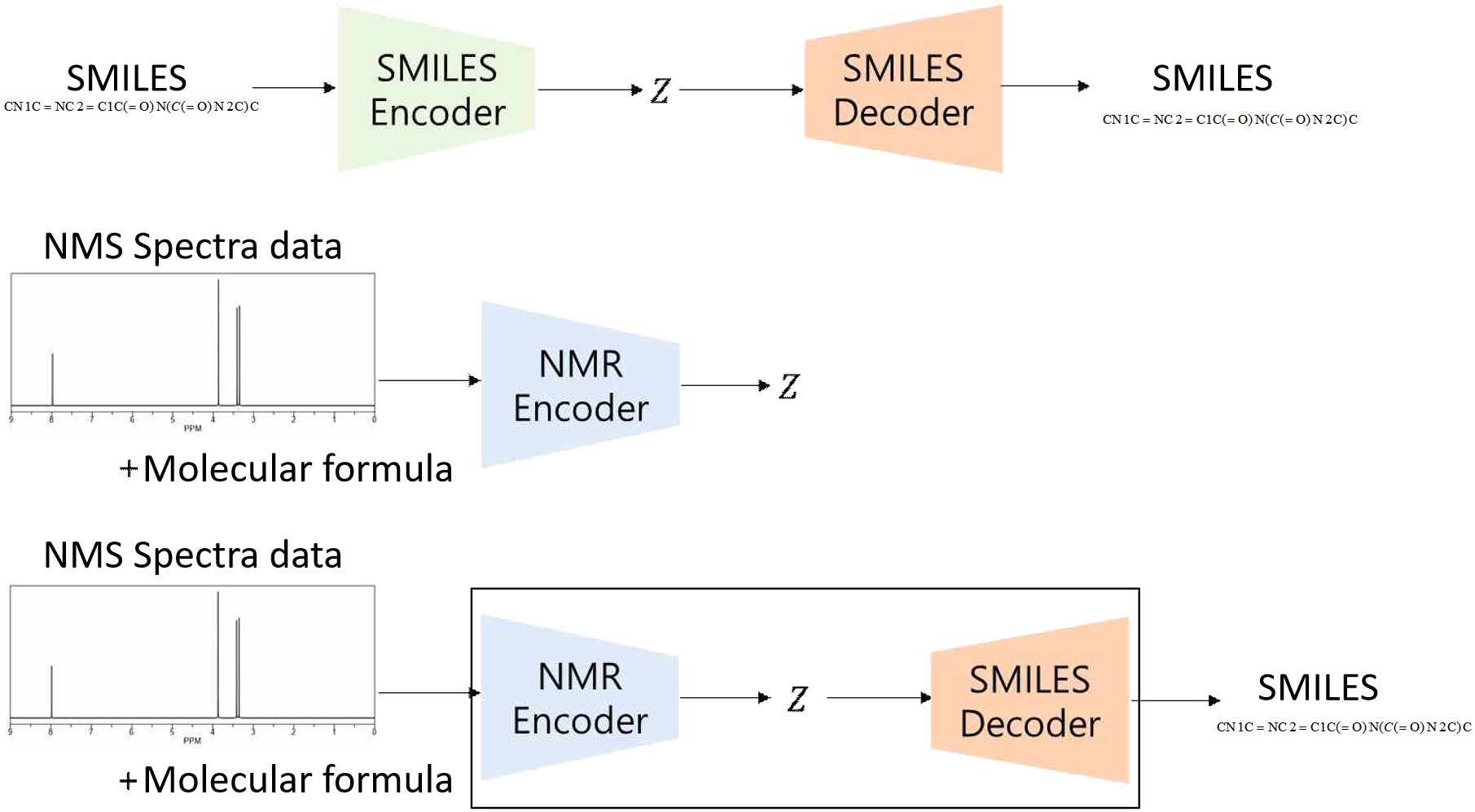
Interpreting NMR spectra to accurately predict molecular structures remains a significant challenge in chemistry due to the complexity of spectral data and the need for precise structural elucidation. This study introduces NMRGen, a generative modeling framework that predicts molecular structures from NMR spectra and molecular formulas. The framework combines a SMILES autoencoder (GRU-based encoder-decoder) and an NMR encoder (CNN and DNN layers) to map spectral data to molecular representations. The SMILES autoencoder compresses and reconstructs SMILES strings, while the NMR encoder processes NMR spectra to generate latent vectors aligned with those from the SMILES encoder. Experiments were... More >

Graphical Abstract
NMRGen: A Generative Modeling Framework for Molecular Structure Prediction from NMR Spectra
Open Access | Research Article | 16 February 2025 | Cited: Crossref logo  26 , Scopus 27
Short and Long-Term Renewable Electricity Demand Forecasting Based on CNN-Bi-GRU Model
ICCK Transactions on Emerging Topics in Artificial Intelligence | Volume 2, Issue 1: 1-15, 2025 | DOI: 10.62762/TETAI.2024.532253
Abstract
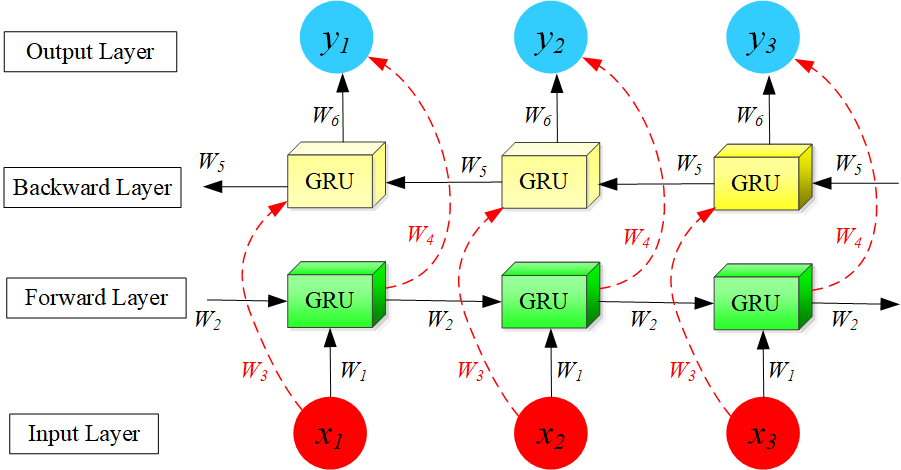
With the increasing global focus on renewable energy and the growing proportion of renewable power in the energy mix, accurate forecasting of renewable power demand has become crucial. This study addresses this challenge by proposing a multimodal information fusion approach that integrates time series data and textual data to leverage complementary information from heterogeneous sources. We develop a hybrid predictive model combining CNN and Bi-GRU architectures. First, time series data (e.g., historical power generation) and textual data (e.g., policy documents) are preprocessed through normalization and tokenization. Next, CNNs extract spatial features from both data modalities, which are... More >

Graphical Abstract
Short and Long-Term Renewable Electricity Demand Forecasting Based on CNN-Bi-GRU Model
Open Access | Research Article | 20 November 2024 | Cited: Crossref logo  5 , Scopus 10
Automated Early Diabetic Retinopathy Detection Using a Deep Hybrid Model
ICCK Transactions on Emerging Topics in Artificial Intelligence | Volume 1, Issue 1: 71-83, 2024 | DOI: 10.62762/TETAI.2024.305743
Abstract
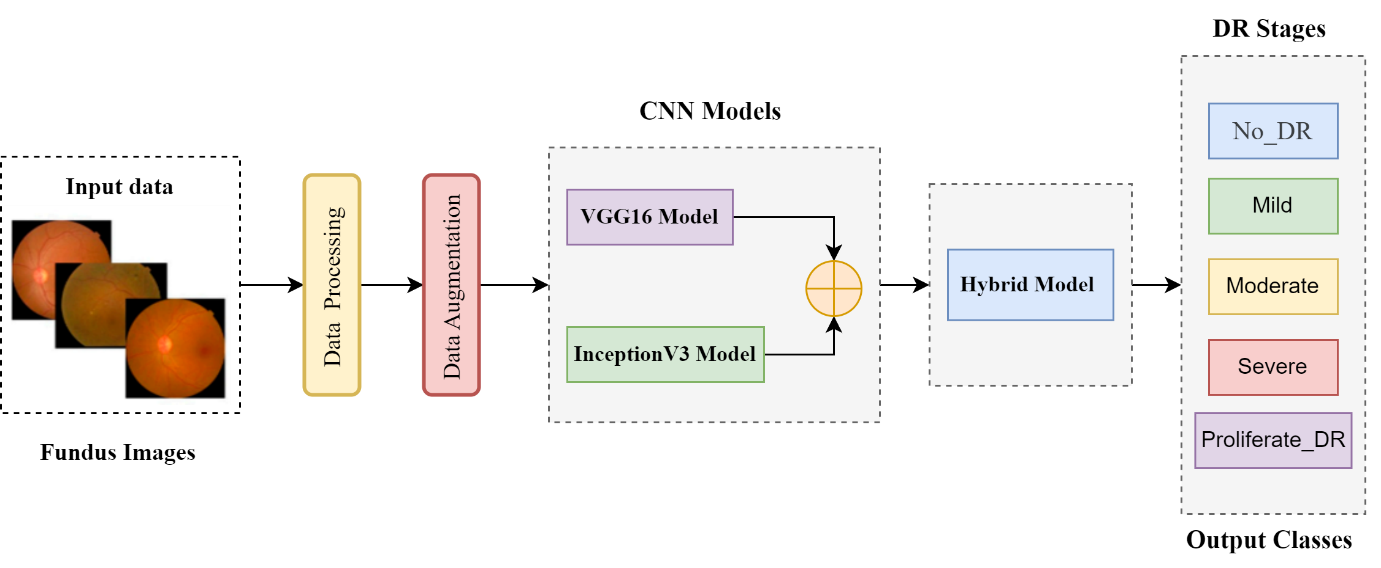
Recently, the primary reason for blindness in adults has been diabetic retinopathy (DR) disease. Therefore, there is an increasing demand for a real-time efficient classification and detection system for diabetic retinopathy (DR) to overcome fast-growing disease (DR). We introduced a novel deep hybrid model for automated diabetic retinopathy (DR) disease recognition and classification. Our model leverages the power of CNN architectures: Inception V3 and VGG16 models by combining their strengths to cater to exact requirements. VGG16 model efficiently captures fine features and wide-ranging features such as textures and edges, crucial for classifying initial signs of DR. Similarly, Inception V... More >

Graphical Abstract
Automated Early Diabetic Retinopathy Detection Using a Deep Hybrid Model
Code (Data) Available | Open Access | Research Article | 09 August 2024 | Cited: Crossref logo  6 , Scopus 9
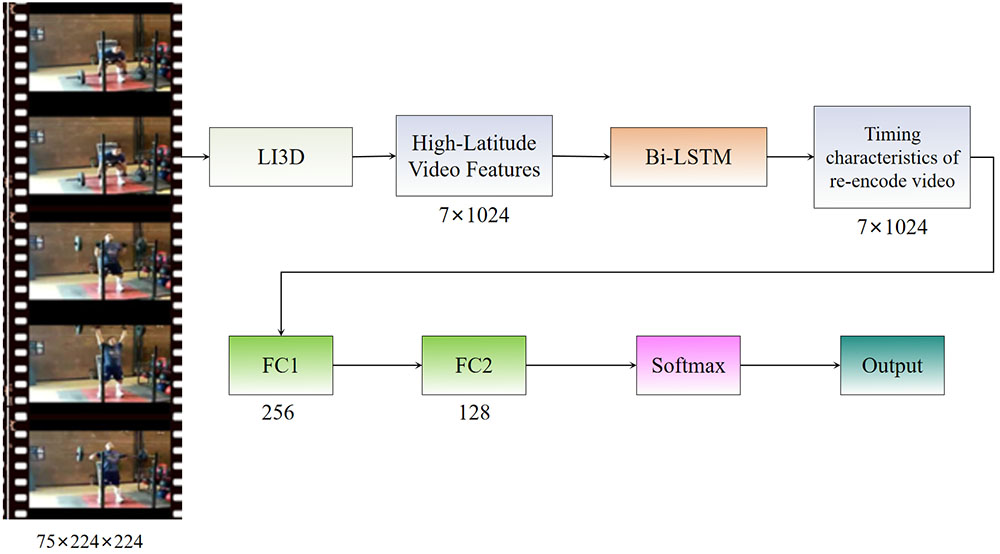
LI3D-BiLSTM: A Lightweight Inception-3D Networks with BiLSTM for Video Action Recognition
ICCK Transactions on Emerging Topics in Artificial Intelligence | Volume 1, Issue 1: 58-70, 2024 | DOI: 10.62762/TETAI.2024.628205
Abstract
This paper proposes an improved video action recognition method, primarily consisting of three key components. Firstly, in the data preprocessing stage, we developed multi-temporal scale video frame extraction and multi-spatial scale video cropping techniques to enhance content information and standardize input formats. Secondly, we propose a lightweight Inception-3D networks (LI3D) network structure for spatio-temporal feature extraction and design a soft-association feature aggregation module to improve the recognition accuracy of key actions in videos. Lastly, we employ a bidirectional LSTM network to contextualize the feature sequences extracted by LI3D, enhancing the representation capa... More >

Graphical Abstract
LI3D-BiLSTM: A Lightweight Inception-3D Networks with BiLSTM for Video Action Recognition
Open Access | Research Article | 29 May 2024 | Cited: Crossref logo  4 , Scopus 4
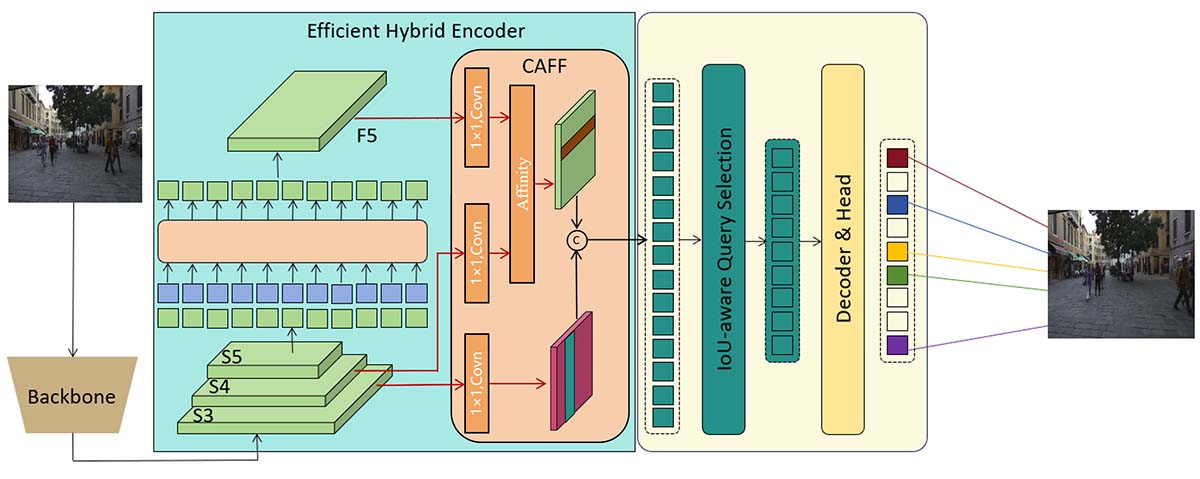
CT-DETR and ReID-Guided Multi-Target Tracking Algorithm in Complex Scenes
ICCK Transactions on Emerging Topics in Artificial Intelligence | Volume 1, Issue 1: 44-57, 2024 | DOI: 10.62762/TETAI.2024.240529
Abstract
In the era of rapid technological advancement, the demand for sophisticated Multi-Object Tracking (MOT) systems in applications such as intelligent surveillance and autonomous navigation has become increasingly critical.~However, existing models often struggle with accuracy and efficiency in densely populated or dynamically complex environments. Addressing these challenges, we introduce a novel deep learning-based MOT model that incorporates the latest CT-DETR detection technology and an advanced ReID module for improved pedestrian tracking. Experimental results demonstrate the model's superior performance in accurately identifying and tracking multiple targets across varied scenarios, signi... More >

Graphical Abstract
CT-DETR and ReID-Guided Multi-Target Tracking Algorithm in Complex Scenes
Open Access | Research Article | 21 May 2024 | Cited: Crossref logo  7 , Scopus 14
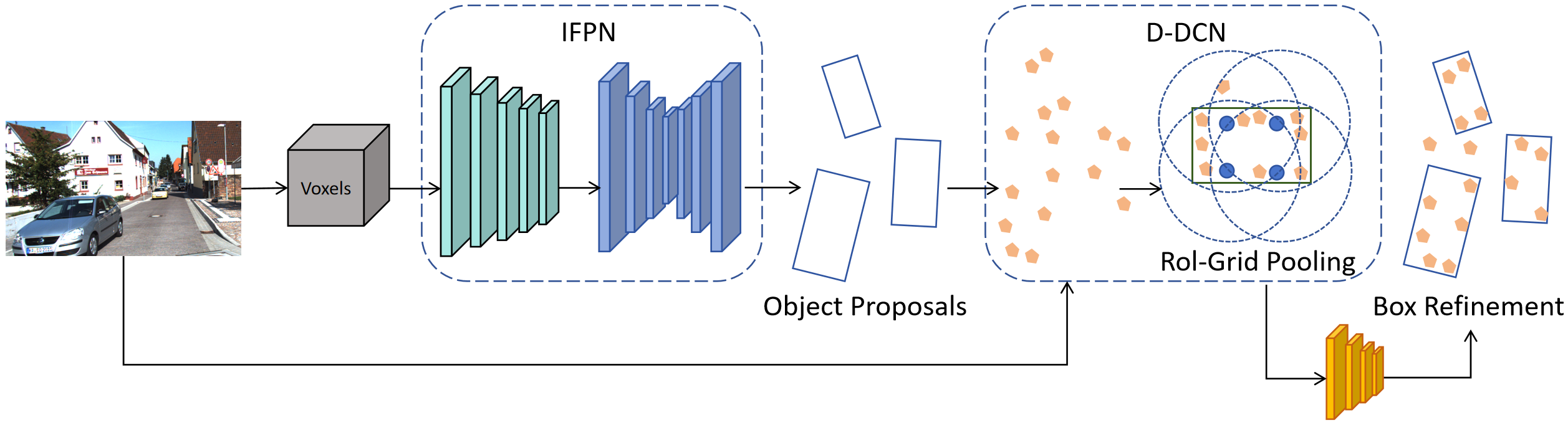
Improved Object Detection Algorithm Based on Multi-scale and Variability Convolutional Neural Networks
ICCK Transactions on Emerging Topics in Artificial Intelligence | Volume 1, Issue 1: 31-43, 2024 | DOI: 10.62762/TETAI.2024.115892
Abstract
This paper proposes an improved object detection algorithm based on a dynamically deformable convolutional network (D-DCN), aiming to solve the multi-scale and variability challenges in object detection tasks. First, we review traditional methods in the field of object detection and introduce the current research status of improved methods based on multi-scale and variability convolutional neural networks. Then, we introduce in detail our proposed improved algorithms, including an improved feature pyramid network and a dynamically deformable network. In the improved feature pyramid network, we introduce a multi-scale feature fusion mechanism to better capture target information at different... More >

Graphical Abstract
Improved Object Detection Algorithm Based on Multi-scale and Variability Convolutional Neural Networks

Journal Statistics

112
Authors
21
Countries / Regions
42
Articles
238
Scopus Citations
78.6% Cited
2024
Published Since
237,971
Article Views
45,877
Article Downloads
ICCK Transactions on Emerging Topics in Artificial Intelligence
eISSN: 3068-6652
Crossref
Crossref
Member of Crossref
Visit Crossref →