



ISSN: 3068-6652
Indexing: Google Scholar, Dimensions, Lens, ResearchGate, OpenAlex, WorldCat
The ICCK Transactions on Emerging Topics in Artificial Intelligence (TETAI) is a peer-reviewed international journal publishing papers on emerging theories and methodologies of Artificial Intelligence.
DOI Prefix: 10.62762/TETAI

Journal Metrics

-
Impact Factor
-
CiteScore

Recent Articles

Open Access | Research Article | 21 May 2025 | Cited: Crossref logo  3 , Scopus 5
Anomaly Detection and Risk Early Warning System for Financial Time Series Based on the WaveLST-Trans Model
ICCK Transactions on Emerging Topics in Artificial Intelligence | Volume 2, Issue 2: 68-80, 2025 | DOI: 10.62762/TETAI.2025.191759
Abstract
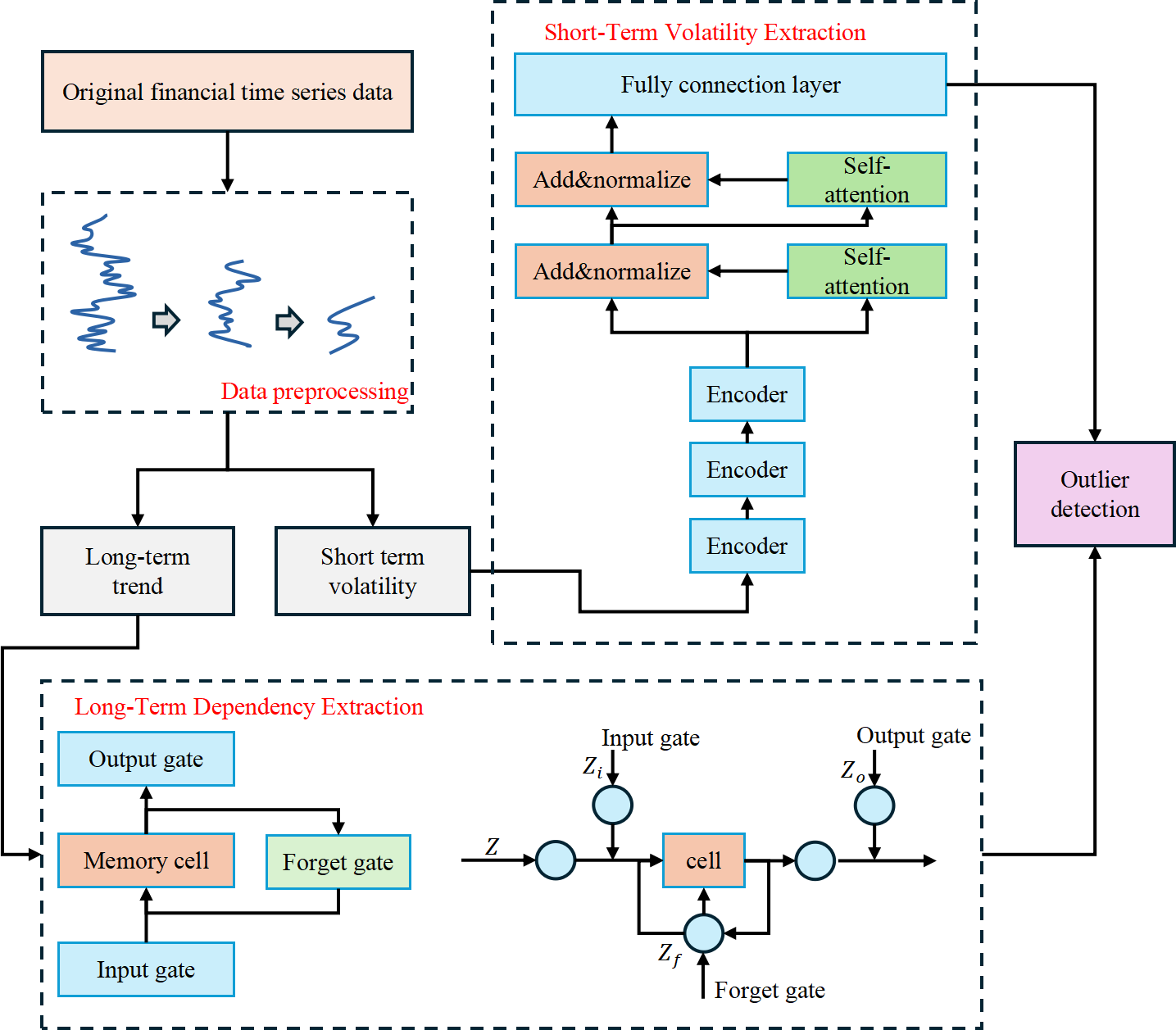
Abnormal fluctuations in financial markets may signal significant risks or market manipulation, so efficient time series anomaly detection methods are crucial for risk management. However, traditional statistical methods (e.g., ARIMA, GARCH) are difficult to adapt to the nonlinear and multi-scale characteristics of financial data, while single deep learning models (e.g., LSTM, Transformer) have limitations in capturing long-term trends and short-term fluctuations. In this paper, we propose WaveLST-Trans, a financial time series anomaly detection model based on the combination of wavelet transform (WT), LSTM and Transformer. The model first uses wavelet transform to perform multi-scale decomp... More >

Graphical Abstract

Anomaly Detection and Risk Early Warning System for Financial Time Series Based on the WaveLST-Trans Model
Open Access | Research Article | 15 April 2025 | Cited: Crossref logo  2 , Scopus 1
RETRACTED: Graph-Driven Multimodal Feature Learning Framework for Apparent Personality Assessment
ICCK Transactions on Emerging Topics in Artificial Intelligence | Volume 2, Issue 2: 57-67, 2025 | DOI: 10.62762/TETAI.2025.279350
Abstract
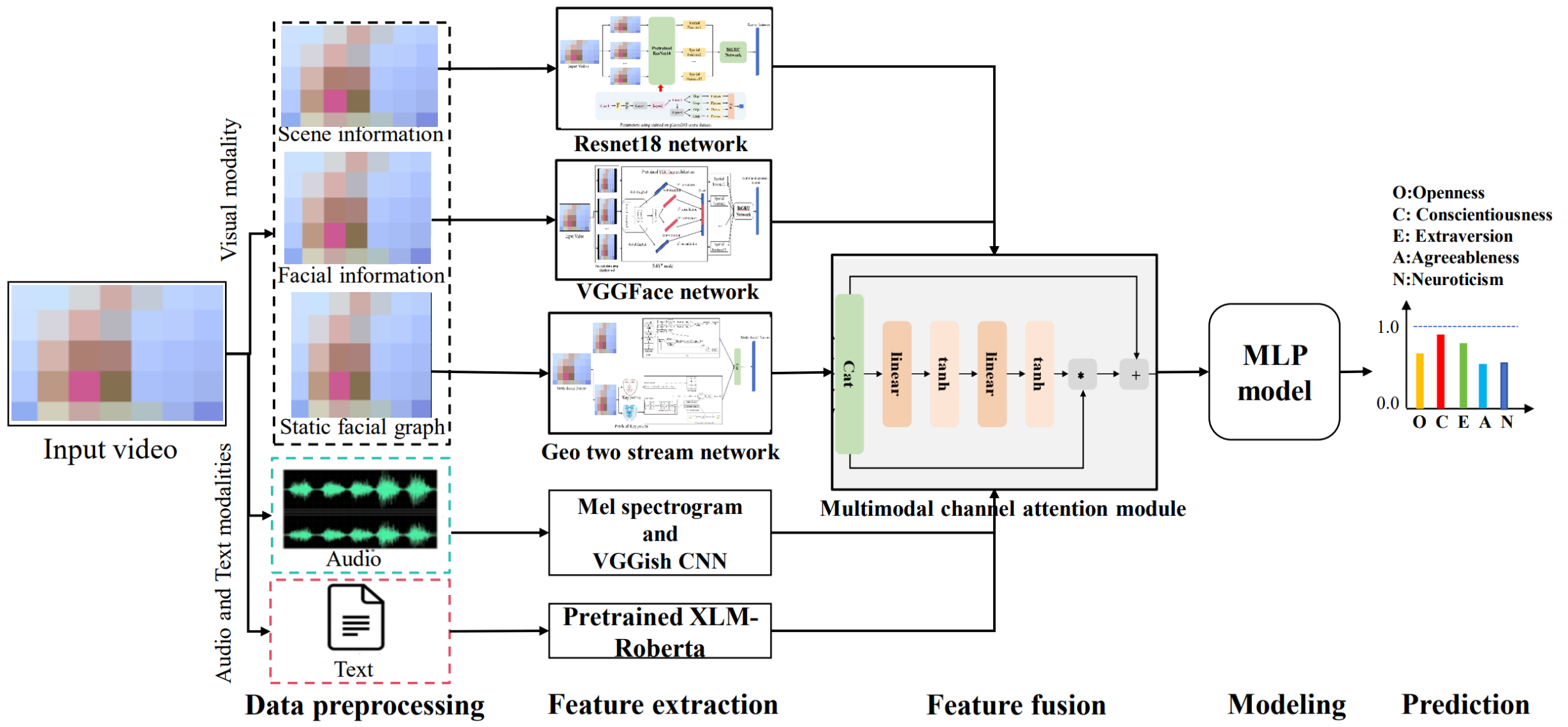
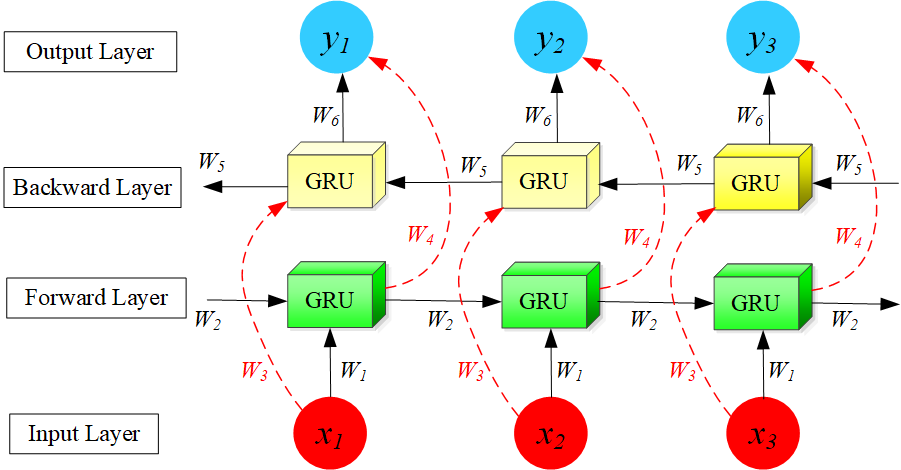
Predicting personality traits automatically has emerged as a challenging problem in computer vision. This paper introduces an innovative multimodal feature learning framework for personality analysis in short video clips. For visual processing, we construct a facial graph and design a Geo-based two-stream network incorporating an attention mechanism, leveraging both Graph Convolutional Networks (GCN) and Convolutional Neural Networks (CNN) to capture static facial expressions. Additionally, ResNet18 and VGGFace networks are employed to extract global scene and facial appearance features at the frame level. To capture dynamic temporal information, we integrate a BiGRU with a temporal attentio... More >

Graphical Abstract

RETRACTED: Graph-Driven Multimodal Feature Learning Framework for Apparent Personality Assessment
Open Access | Research Article | 28 March 2025 | Cited: Crossref logo  7 , Scopus 9
NLP and AI for Public Health Intelligence: Automating Disease Surveillance from Unstructured Data
ICCK Transactions on Emerging Topics in Artificial Intelligence | Volume 2, Issue 1: 43-56, 2025 | DOI: 10.62762/TETAI.2025.222799
Abstract
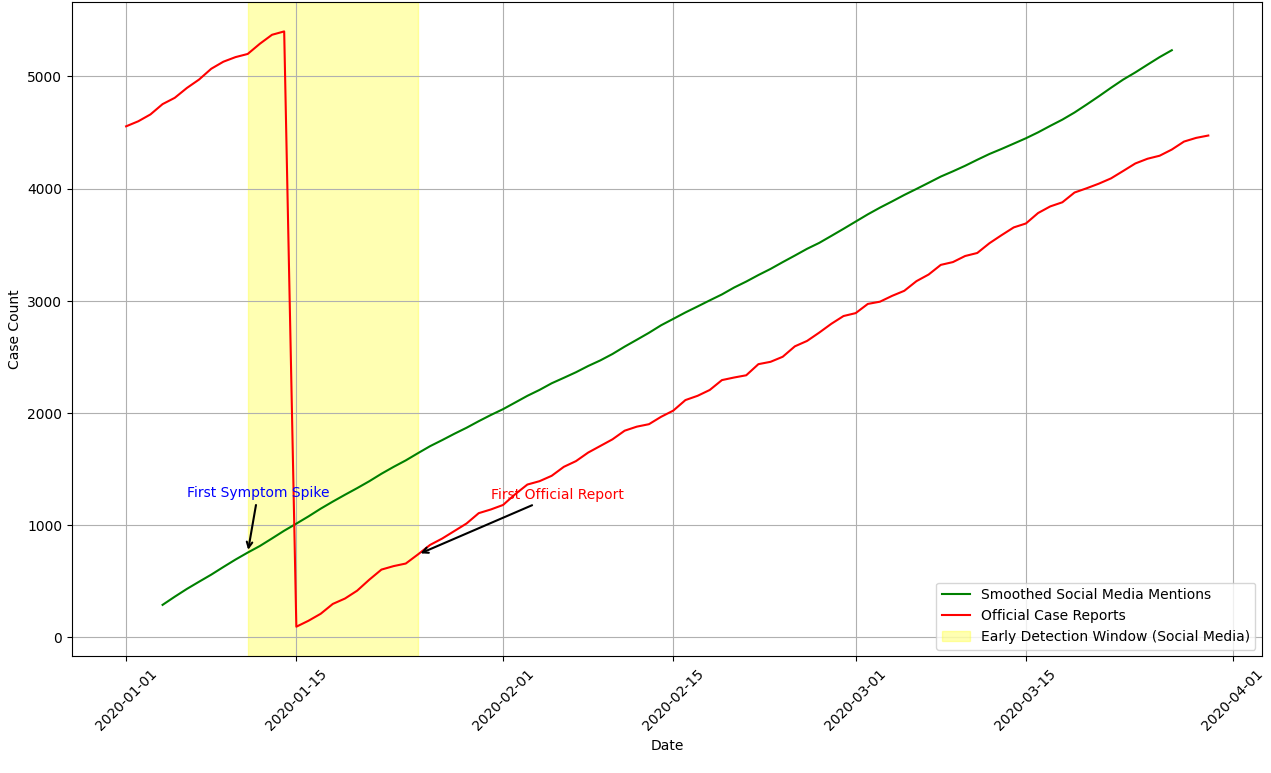
Public health surveillance is crucial for early disease detection, outbreak prediction, and epidemic response. However, traditional surveillance systems primarily rely on structured clinical data, limiting their capacity to capture emerging health threats from diverse and unstructured sources. This study explores the integration of Natural Language Processing (NLP) and Artificial Intelligence (AI) to automate disease surveillance by analyzing unstructured data, including electronic health records (EHRs), social media posts, news reports, and online health forums. Leveraging state-of-the-art NLP techniques—such as transformer-based language models, named entity recognition (NER), sentiment... More >

Graphical Abstract
NLP and AI for Public Health Intelligence: Automating Disease Surveillance from Unstructured Data
Open Access | Perspective | 27 March 2025 | Cited: Crossref logo  4 , Scopus 6
Beyond Hallucination: Generative AI as a Catalyst for Human Creativity and Cognitive Evolution
ICCK Transactions on Emerging Topics in Artificial Intelligence | Volume 2, Issue 1: 36-42, 2025 | DOI: 10.62762/TETAI.2025.657559
Abstract
This perspective examines the transformative role of generative artificial intelligence (AI) in augmenting human creativity and catalyzing cognitive evolution. Tracing its historical development from symbolic AI to transformer-based architectures, it contends that generative AI is not simply a computational tool but a cognitive partner that reconfigures our understanding of creativity, perception, and epistemology. The phenomenon of AI hallucination—often dismissed as mere error—is reframed as a window into the dynamics of both artificial and human cognition. Through technical and philosophical analysis, the paper addresses generative AI's impact across domains ranging from art and archi... More >
Open Access | Research Article | 15 March 2025 | Cited: Crossref logo  14 , Scopus 11
Scaling AI with Limited Labeled Data: A Self-Supervised Learning Approach
ICCK Transactions on Emerging Topics in Artificial Intelligence | Volume 2, Issue 1: 26-35, 2025 | DOI: 10.62762/TETAI.2025.607708
Abstract
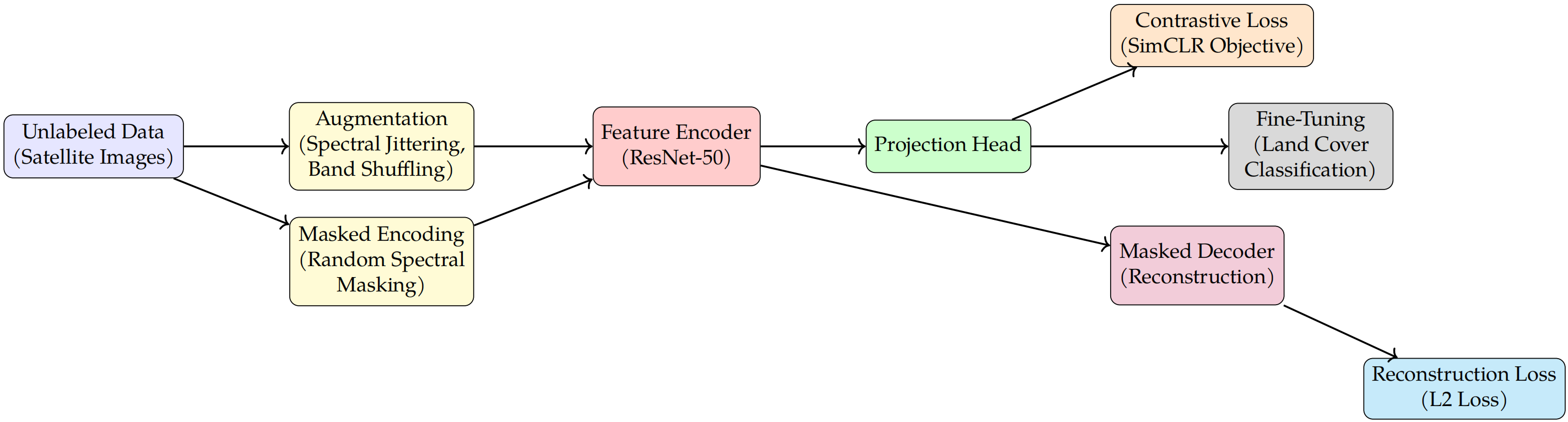
The scalability of modern AI is fundamentally limited by the availability of labeled data. While supervised learning achieves remarkable performance, it relies on large annotated datasets, which are expensive and time-consuming to acquire. This work explores self-supervised learning (SSL) as a promising solution to this challenge, enabling AI to scale effectively in data-scarce scenarios. This study demonstrates the effectiveness of the proposed SSL framework using the EuroSAT dataset, a benchmark for land cover classification where labeled data is limited and costly. The proposed approach integrates contrastive learning with multi-spectral augmentations, such as spectral jittering and band... More >

Graphical Abstract

Scaling AI with Limited Labeled Data: A Self-Supervised Learning Approach
Open Access | Research Article | 26 February 2025 | Cited: Crossref logo  2 , Scopus 3
NMRGen: A Generative Modeling Framework for Molecular Structure Prediction from NMR Spectra
ICCK Transactions on Emerging Topics in Artificial Intelligence | Volume 2, Issue 1: 16-25, 2025 | DOI: 10.62762/TETAI.2024.277656
Abstract
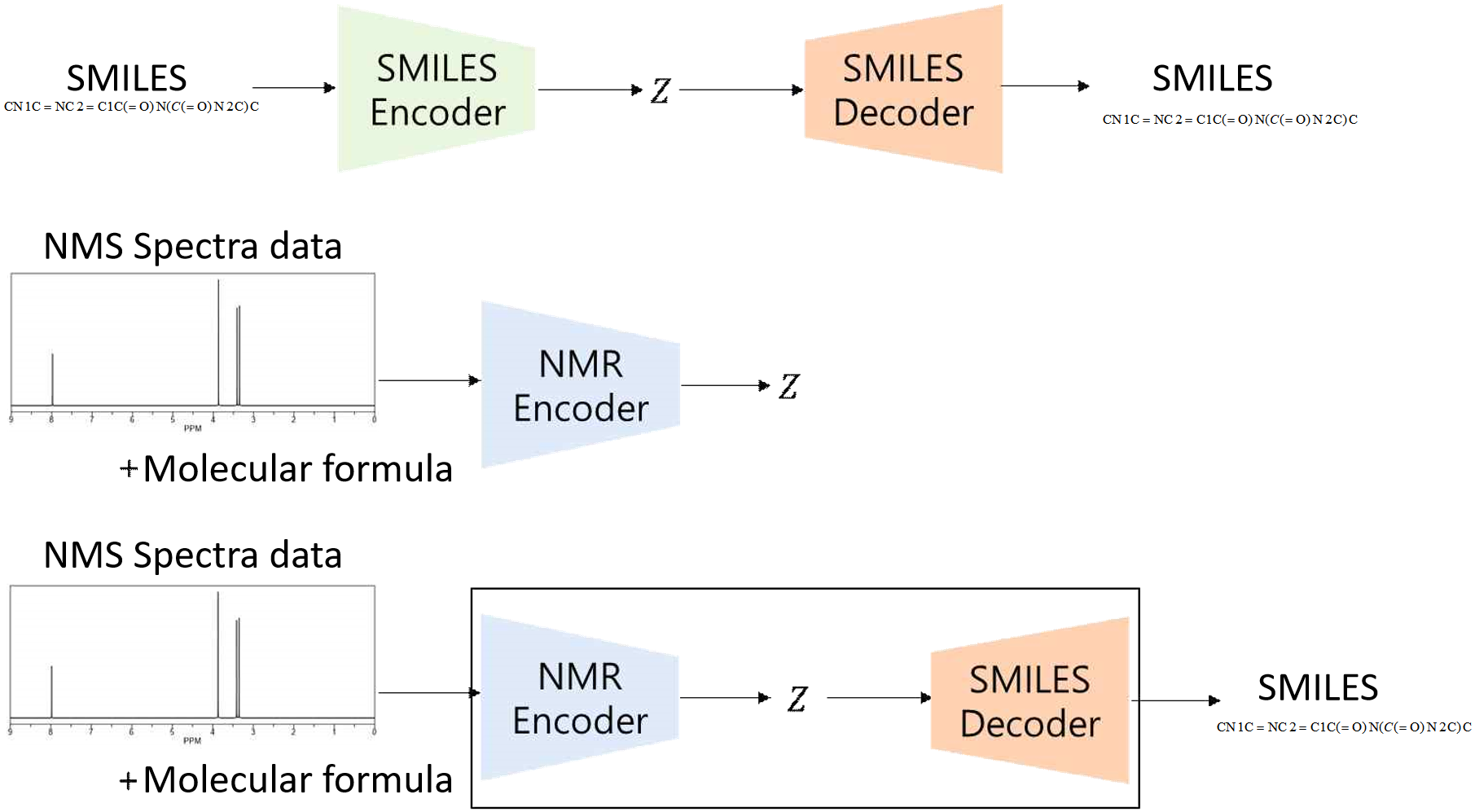
Interpreting NMR spectra to accurately predict molecular structures remains a significant challenge in chemistry due to the complexity of spectral data and the need for precise structural elucidation. This study introduces NMRGen, a generative modeling framework that predicts molecular structures from NMR spectra and molecular formulas. The framework combines a SMILES autoencoder (GRU-based encoder-decoder) and an NMR encoder (CNN and DNN layers) to map spectral data to molecular representations. The SMILES autoencoder compresses and reconstructs SMILES strings, while the NMR encoder processes NMR spectra to generate latent vectors aligned with those from the SMILES encoder. Experiments were... More >

Graphical Abstract
NMRGen: A Generative Modeling Framework for Molecular Structure Prediction from NMR Spectra
Open Access | Research Article | 16 February 2025 | Cited: Crossref logo  21 , Scopus 21
Short and Long-Term Renewable Electricity Demand Forecasting Based on CNN-Bi-GRU Model
ICCK Transactions on Emerging Topics in Artificial Intelligence | Volume 2, Issue 1: 1-15, 2025 | DOI: 10.62762/TETAI.2024.532253
Abstract
With the increasing global focus on renewable energy and the growing proportion of renewable power in the energy mix, accurate forecasting of renewable power demand has become crucial. This study addresses this challenge by proposing a multimodal information fusion approach that integrates time series data and textual data to leverage complementary information from heterogeneous sources. We develop a hybrid predictive model combining CNN and Bi-GRU architectures. First, time series data (e.g., historical power generation) and textual data (e.g., policy documents) are preprocessed through normalization and tokenization. Next, CNNs extract spatial features from both data modalities, which are... More >

Graphical Abstract

Short and Long-Term Renewable Electricity Demand Forecasting Based on CNN-Bi-GRU Model
Open Access | Research Article | 20 November 2024 | Cited: Crossref logo  5 , Scopus 9
Automated Early Diabetic Retinopathy Detection Using a Deep Hybrid Model
ICCK Transactions on Emerging Topics in Artificial Intelligence | Volume 1, Issue 1: 71-83, 2024 | DOI: 10.62762/TETAI.2024.305743
Abstract
Recently, the primary reason for blindness in adults has been diabetic retinopathy (DR) disease. Therefore, there is an increasing demand for a real-time efficient classification and detection system for diabetic retinopathy (DR) to overcome fast-growing disease (DR). We introduced a novel deep hybrid model for automated diabetic retinopathy (DR) disease recognition and classification. Our model leverages the power of CNN architectures: Inception V3 and VGG16 models by combining their strengths to cater to exact requirements. VGG16 model efficiently captures fine features and wide-ranging features such as textures and edges, crucial for classifying initial signs of DR. Similarly, Inception V... More >

Graphical Abstract

Automated Early Diabetic Retinopathy Detection Using a Deep Hybrid Model

Journal Statistics

98
Authors
20
Countries / Regions
37
Articles
Scopus: 190
Citations
2024
Published Since
206,086
Article Views
38,373
Article Downloads
ICCK Transactions on Emerging Topics in Artificial Intelligence
eISSN: 3068-6652
Crossref
Crossref
Member of Crossref
Visit Crossref →