Volume 2, Issue 3


Volume 2, Issue 3 (September, 2025) – 5 articles
Citations: Crossref logo 16,   15   |   Viewed: 11813, Download: 3024

Table of Contents

Free Access | Research Article | 25 August 2025 | Cited: Crossref logo  5 , Scopus 3
DT-NeRF: A Diffusion and Transformer-Based Optimization Approach for Neural Radiance Fields in 3D Reconstruction
ICCK Transactions on Intelligent Systematics | Volume 2, Issue 3: 190-202, 2025 | DOI: 10.62762/TIS.2025.874668
Abstract
This paper proposes a Diffusion Model-Optimized Neural Radiance Field (DT-NeRF) method, aimed at enhancing detail recovery and multi-view consistency in 3D scene reconstruction. By combining diffusion models with Transformers, DT-NeRF effectively restores details under sparse viewpoints and maintains high accuracy in complex geometric scenes. Experimental results demonstrate that DT-NeRF significantly outperforms traditional NeRF and other state-of-the-art methods on the Matterport3D and ShapeNet datasets, particularly in metrics such as PSNR, SSIM, Chamfer Distance, and Fidelity. Ablation experiments further confirm the critical role of the diffusion and Transformer modules in the model's p... More >

Graphical Abstract
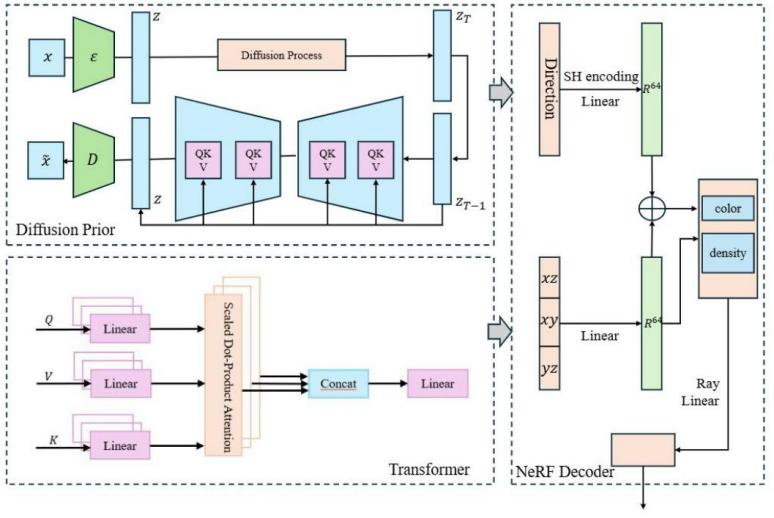
DT-NeRF: A Diffusion and Transformer-Based Optimization Approach for Neural Radiance Fields in 3D Reconstruction
Free Access | Review Article | 17 August 2025 | Cited: Crossref logo  1 , Scopus 1
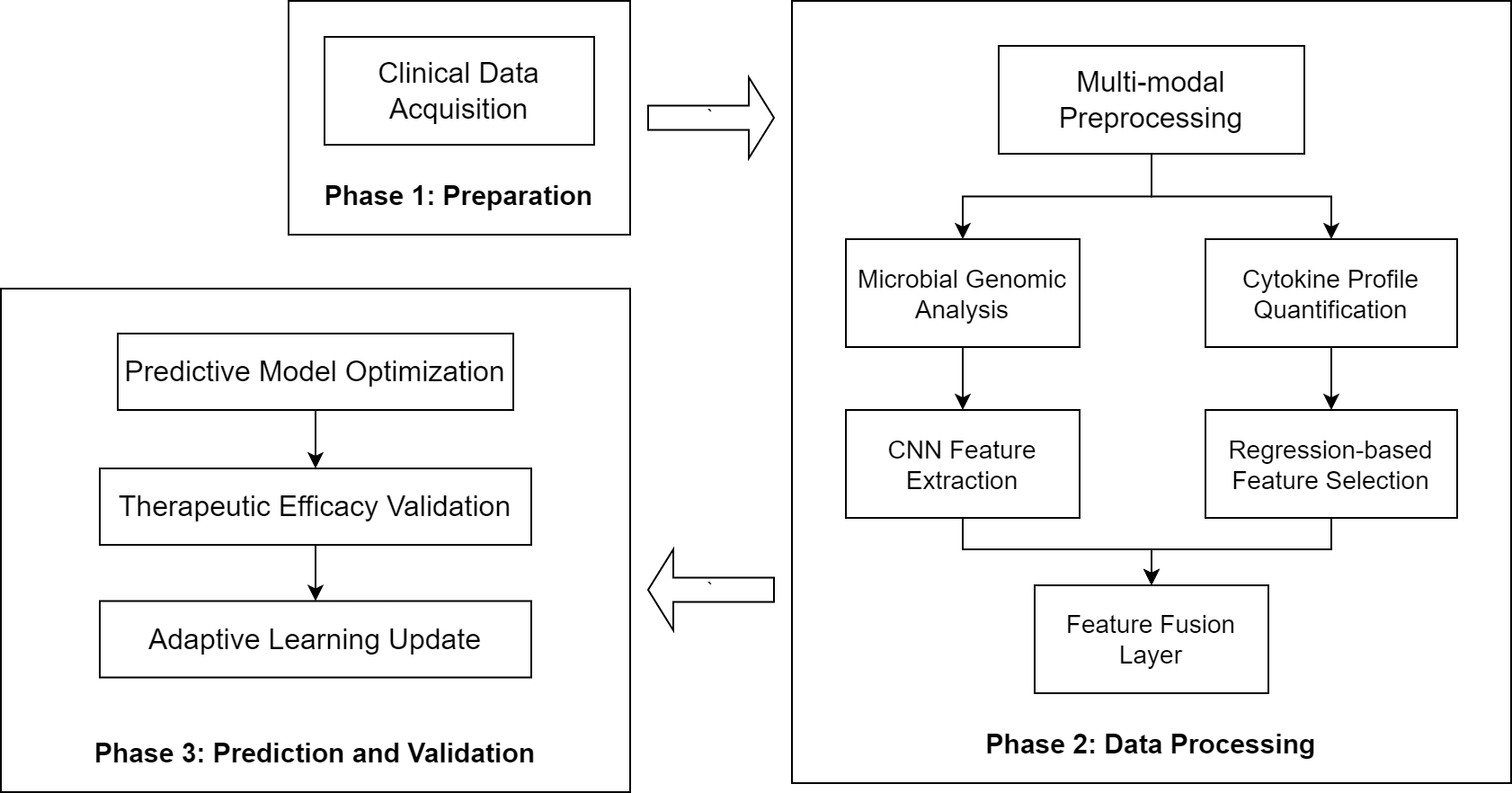
Artificial Intelligence in Chronic Pelvic Inflammatory Disease Management: A Comprehensive Review of Integrated Diagnostic Frameworks and Adaptive Therapeutic Systems
ICCK Transactions on Intelligent Systematics | Volume 2, Issue 3: 169-189, 2025 | DOI: 10.62762/TIS.2025.511235
Abstract
Chronic Pelvic Inflammatory Disease (CPID) poses significant challenges to women's health, necessitating advanced management strategies. This paper provides a comprehensive review of intelligent system architectures applied to PID health management, with emphasis on algorithmic design, cross-domain model adaptation, and system-level integration for diagnosis, treatment personalization, and long-term monitoring. By synthesizing Bayesian probabilistic frameworks with ensemble Machine Learning architectures and deep neural network models, we systematically evaluate AI-driven solutions for PID pathophysiology analysis, multimodal diagnostic imaging, therapeutic efficacy prediction, and patient-s... More >

Graphical Abstract
Artificial Intelligence in Chronic Pelvic Inflammatory Disease Management: A Comprehensive Review of Integrated Diagnostic Frameworks and Adaptive Therapeutic Systems
Free Access | Research Article | 27 July 2025 | Cited: Crossref logo  2 , Scopus 2
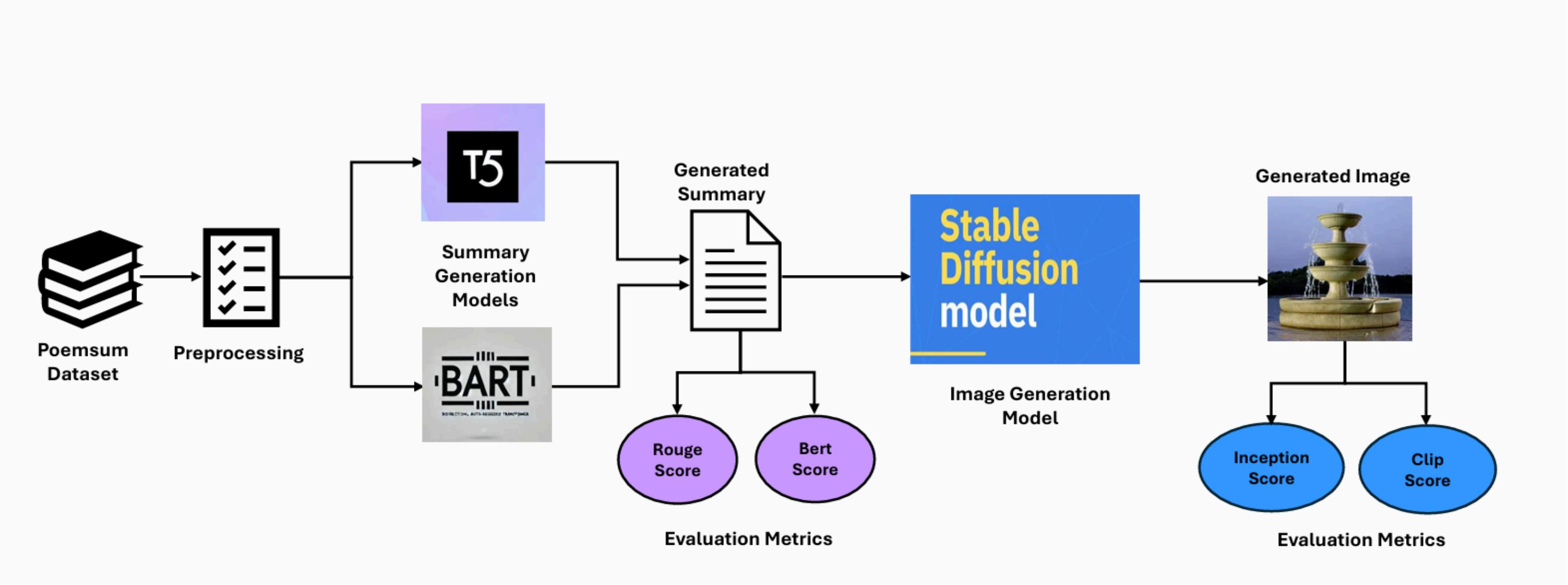
Capturing Poetic Essence: Text Summarization and Visual Generation via Multimodal
ICCK Transactions on Intelligent Systematics | Volume 2, Issue 3: 160-168, 2025 | DOI: 10.62762/TIS.2025.405393
Abstract
Multimodal intelligent systems that integrate natural language processing with generative visual synthesis represent a frontier in intelligent information processing. This work addresses the design and evaluation of such a pipeline, using poetic content as a stress-test domain due to its high density of figurative language and abstract semantics. Building upon the PoemSum dataset, we construct a two-stage multimodal pipeline: first employing transformer-based models (BART and T5) for abstractive summarization, then leveraging Stable Diffusion for visual synthesis from the generated summaries. The summarization stage focuses on figurative interpretation that captures metaphorical and symbolic... More >

Graphical Abstract
Capturing Poetic Essence: Text Summarization and Visual Generation via Multimodal
Free Access | Research Article | 11 July 2025 | Cited: Crossref logo  6 , Scopus 7
Multi-UAV Cooperative Task Allocation Based on Multi-strategy Clustering Ant Colony Optimization Algorithm
ICCK Transactions on Intelligent Systematics | Volume 2, Issue 3: 149-159, 2025 | DOI: 10.62762/TIS.2025.409447
Abstract
To address the issues of low solving efficiency and susceptibility to local optima in multi-unmanned aerial vehicle (multi-UAV) task allocation algorithms within urban areas, this study constructs a task allocation model aiming to minimize economic costs for material delivery and reduce the urgency of rescue task demands. A multi-strategy clustering ant colony optimization algorithm (KMACO) is proposed for solution. Specifically, the K-means clustering method is utilized to partition the number of rescue tasks assigned to each UAV. In the ant colony optimization algorithm, a pheromone update strategy and a random evolution strategy are introduced to guide population search directions, thereb... More >

Graphical Abstract
Multi-UAV Cooperative Task Allocation Based on Multi-strategy Clustering Ant Colony Optimization Algorithm
Free Access | Research Article | 09 July 2025 | Cited: Crossref logo  2 , Scopus 2
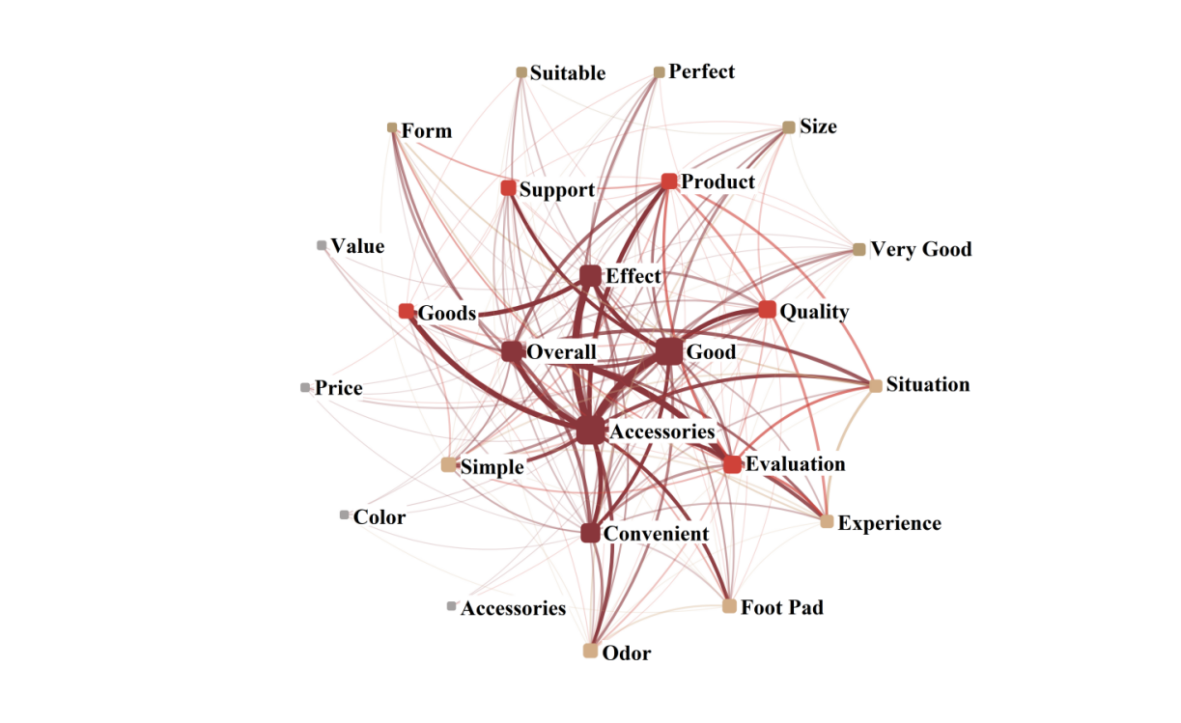
Topic Mining and Sentiment Analysis for Consumer Reviews of Automotive Spare Parts on E-commerce Platforms
ICCK Transactions on Intelligent Systematics | Volume 2, Issue 3: 137-148, 2025 | DOI: 10.62762/TIS.2025.106283
Abstract
Consumer satisfaction in automotive spare parts e-commerce is shaped by multidimensional factors that are difficult to quantify through conventional survey methods. This paper presents an intelligent text mining framework that integrates multiple machine learning and natural language processing techniques to systematically extract and analyze consumer sentiment from 1,236 validated Taobao reviews. Specifically, TF-IDF (Term Frequency-Inverse Document Frequency) is employed for discriminative keyword extraction, semantic network analysis is applied to model inter-word relational structures, and LDA (Latent Dirichlet Allocation) topic modeling is used to discover latent thematic patterns, ide... More >

Graphical Abstract
Topic Mining and Sentiment Analysis for Consumer Reviews of Automotive Spare Parts on E-commerce Platforms