



ISSN: 3069-0692
ICCK Transactions on Mobile and Wireless Intelligence is a peer-reviewed international journal that focuses on the convergence of mobile systems, wireless communication technologies, and intelligent computing solutions.
DOI Prefix: 10.62762/TMWI

Journal Metrics

-
Impact Factor
-
CiteScore

Recent Articles

Free Access | Research Article | 09 April 2026
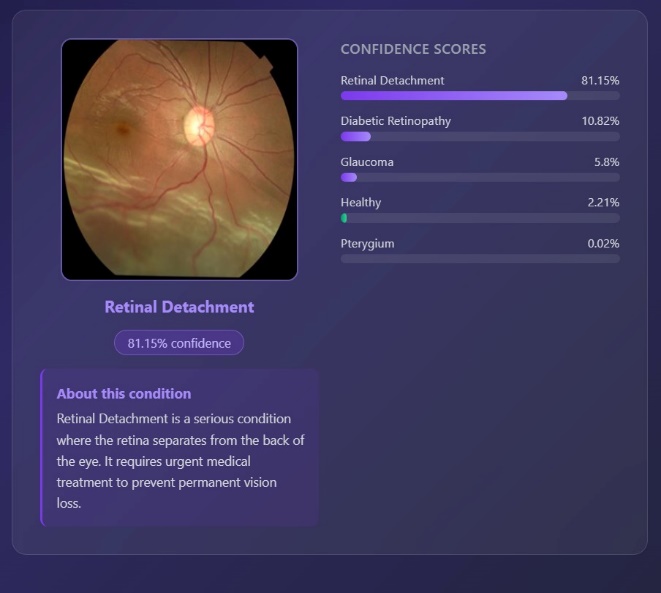
An Intelligent and Secure Application for Early Detection of Eye Disease
ICCK Transactions on Mobile and Wireless Intelligence | Volume 2, Issue 1: 44-55, 2026 | DOI: 10.62762/TMWI.2026.590606
Abstract
This paper presents a deep learning-based intelligent web application for the early detection of eye diseases using retinal fundus images. The dataset used in this study consists of 4,216 retinal fundus images collected from Kaggle, representing multiple eye disease categories. Multiple deep learning architectures, including CNN, DenseNet, InceptionV3, and ResNet, were evaluated and compared with a proposed modified MobileNetV2 architecture. The proposed architecture enhances the baseline MobileNetV2 by optimizing feature extraction and classification layers for improved performance in multi-class eye disease detection. Experimental results show that the proposed model achieved an overall cl... More >

Graphical Abstract
An Intelligent and Secure Application for Early Detection of Eye Disease
Free Access | Research Article | 21 March 2026
A Decentralised Multi-Agent DRL-based Approach for Pedestrian and Vehicle Traffic Signals Controlling Systems Optimisation
ICCK Transactions on Mobile and Wireless Intelligence | Volume 2, Issue 1: 31-43, 2026 | DOI: 10.62762/TMWI.2025.878487
Abstract
Urban traffic congestion is a major issue that negatively affects mobility efficiency, environmental sustainability and road safety. Many recent methods for controlling traffic signals have used methods based on deep reinforcement learning (DRL) and provided positive results. However, it focused primarily on vehicle flow and have not taken into account pedestrian dynamics due to inherent difficulty related to accurately sensing all pedestrians. As a result of these limitations, recent advances in sixth-generation (6G) localisation technology will provide new opportunities to provide precise, low-latency tracking of pedestrians at signalized intersections, allowing for improved control of ped... More >

Graphical Abstract
A Decentralised Multi-Agent DRL-based Approach for Pedestrian and Vehicle Traffic Signals Controlling Systems Optimisation
Free Access | Research Article | 14 February 2026
An Intelligent Smart Parking Framework Using Machine Learning–Based Automatic License Plate Recognition for Enhanced Security
ICCK Transactions on Mobile and Wireless Intelligence | Volume 2, Issue 1: 21-30, 2026 | DOI: 10.62762/TMWI.2026.886184
Abstract
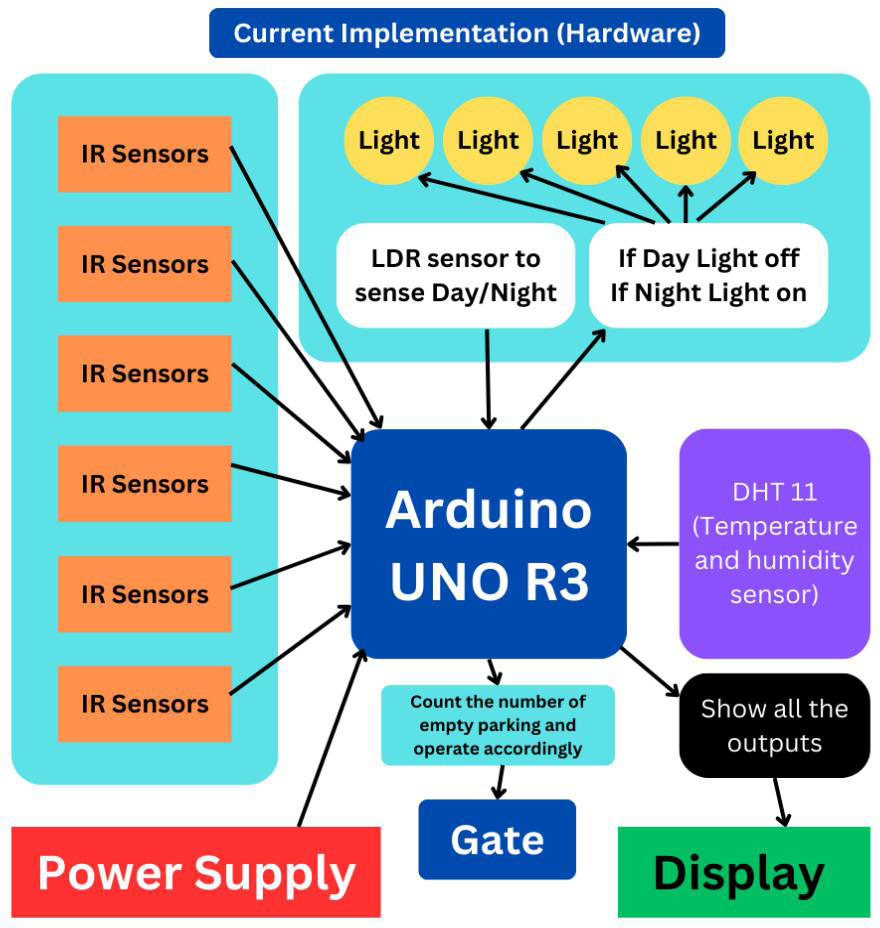
Urban parking inefficiency has become a critical challenge in modern cities, leading to increased traffic congestion, higher fuel consumption, and greater environmental impact. This paper proposes an intelligent smart parking management system that integrates hardware sensing, machine learning, and computer vision to enable real-time parking monitoring and automated vehicle identification. The system combines infrared sensors, camera modules, and microcontroller-based control with vision-based parking space detection and automatic license plate recognition (ALPR). Experimental results demonstrate that the parking space detection module achieves an accuracy of 93.97%, while the license plate... More >

Graphical Abstract
An Intelligent Smart Parking Framework Using Machine Learning–Based Automatic License Plate Recognition for Enhanced Security
Free Access | Review Article | 01 January 2026 | Cited: Crossref logo  1
Exploring the Spectrum Frontier: Comparative Analysis of RF, mmWave, and THz Communication for 6G and Beyond
ICCK Transactions on Mobile and Wireless Intelligence | Volume 2, Issue 1: 1-20, 2026 | DOI: 10.62762/TMWI.2025.996592
Abstract
Wireless communication technologies are becoming increasingly important in today's rapidly developing technological world. The widespread use of the Internet, the popularity of smartphones and other mobile devices, and the rise in industrial applications have all contributed to the start of a new wireless communication technology revolution. As a result, 6th generation (6G) wireless communication technology is intended to provide enhanced performance features such as faster speeds, larger bandwidths, lower latency, higher connection density, and improved reliability. mmWave-band communications are already having a vital impact on 5G. Similarly, communications in the TeraHertz (THz)-band will... More >

Graphical Abstract
Exploring the Spectrum Frontier: Comparative Analysis of RF, mmWave, and THz Communication for 6G and Beyond
Free Access | Research Article | 05 August 2025
Performance Analysis of Relay-Based Communication for FANET in 5G and Beyond
ICCK Transactions on Mobile and Wireless Intelligence | Volume 1, Issue 1: 40-47, 2025 | DOI: 10.62762/TMWI.2025.498166
Abstract
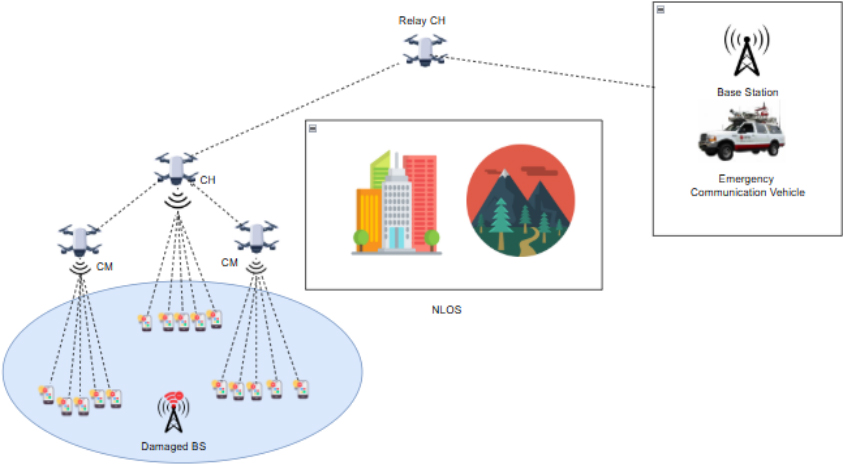
Unmanned aerial vehicles (UAVs) have great potential in 5G and 6G networks due to their communication capabilities, low-cost, and adaptable deployment opportunities. The use of multiple Unmanned Aerial Vehicles (UAV) systems is a more cost-effective and operationally efficient approach compared to using a single UAV system. Compared to a large UAV, flying ad hoc networks (FANETs) with small UAVs have many advantages. This UAV-based architecture typically uses clusters of UAVs, where the UAV acts as a cluster head (CH), collecting information from other UAVs and sending it to the emergency communication vehicle (ECV). Although this model works well in open areas, Non-line-of-sight (NLoS) issu... More >

Graphical Abstract
Performance Analysis of Relay-Based Communication for FANET in 5G and Beyond
Free Access | Research Article | 03 August 2025 | Cited: Crossref logo  1 , Scopus 1
A Robust Resource Allocation Method for Energy Efficient Device to Device (D2D) Communication
ICCK Transactions on Mobile and Wireless Intelligence | Volume 1, Issue 1: 32-39, 2025 | DOI: 10.62762/TMWI.2025.764788
Abstract
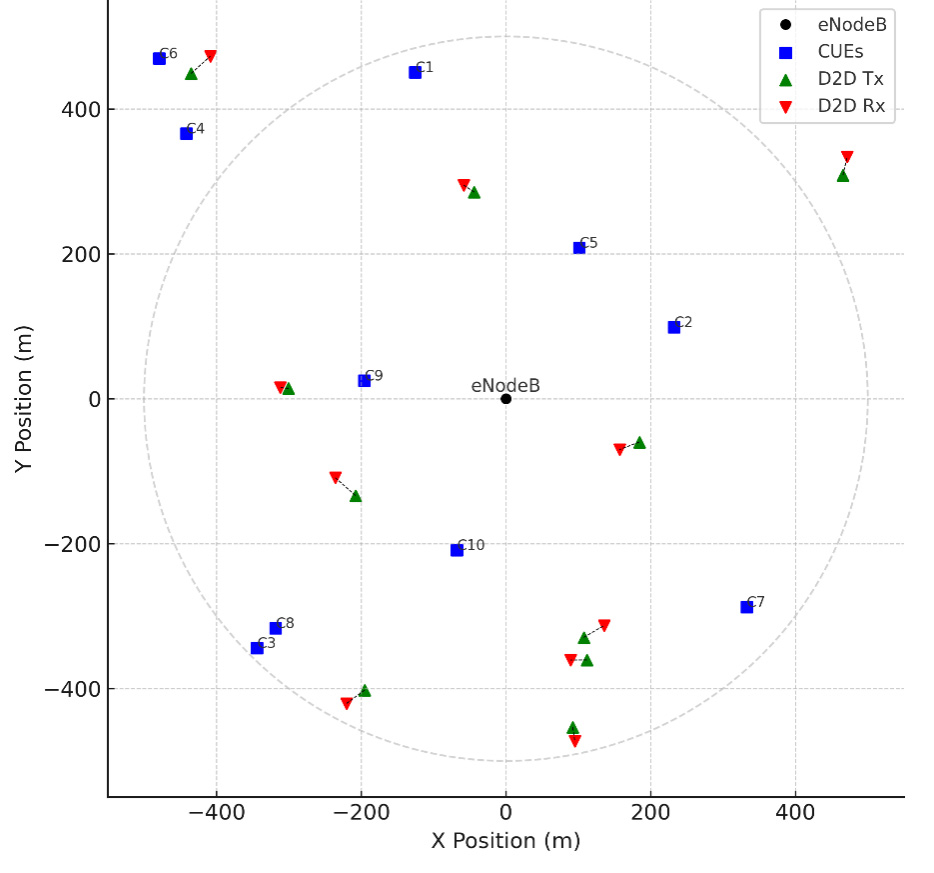
Device-to-Device (D2D) communication serves as a pivotal technology in the evolution of cellular networks, presenting opportunities to markedly improve spectral efficiency, minimize latency, and optimize energy consumption through direct interactions between user devices. Nonetheless, the implementation of spectrum reuse by D2D pairs presents significant interference challenges, particularly in underlay communication contexts. This paper presents a robust and energy-efficient resource allocation mechanism utilizing a polynomial-time proportional fair (PF) scheduling algorithm. The framework provides minimum rate assurances for cellular users while adaptively distributing multiple resource bl... More >

Graphical Abstract
A Robust Resource Allocation Method for Energy Efficient Device to Device (D2D) Communication
Free Access | Review Article | 28 July 2025
Computer Vision-Powered 6G Networks: Technologies, Applications, and Challenges
ICCK Transactions on Mobile and Wireless Intelligence | Volume 1, Issue 1: 19-31, 2025 | DOI: 10.62762/TMWI.2025.159776
Abstract
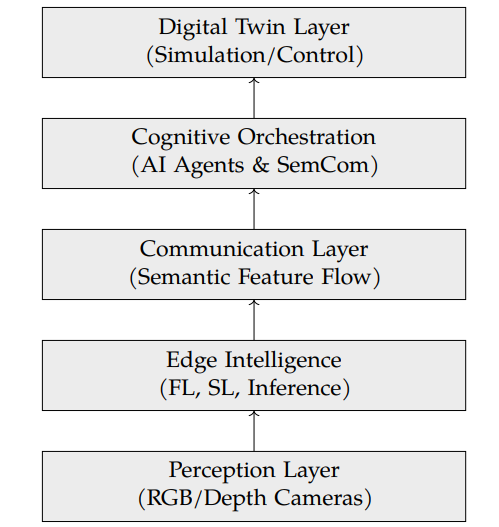
Aiming to move from conventional throughput-centric paradigms to intelligent, context-aware systems able of perception and autonomous decision-making, sixth-generation (6G) wireless networks is seeking. Driven by recent developments in deep learning and edge artificial intelligence, computer vision (CV) proves to be a key enabler for such perceptive 6G systems. This paper offers a thorough overview bringing together the scattered terrain of CV-enabled 6G technologies. It benchmarks current models against major 6G performance criteria, evaluates architectural paradigms including federated and split learning, and presents a disciplined taxonomy of use cases. This study also notes the possibili... More >

Graphical Abstract
Computer Vision-Powered 6G Networks: Technologies, Applications, and Challenges
Free Access | Research Article | 26 July 2025 | Cited: Scopus 1
Design of Ultra-Wideband (UWB) Microstrip Patch Antenna for Biomedical Telemetry Applications
ICCK Transactions on Mobile and Wireless Intelligence | Volume 1, Issue 1: 11-18, 2025 | DOI: 10.62762/TMWI.2025.250467
Abstract
The emergence of ultra-wideband (UWB) technology, following the FCC’s allocation of the 3.1-10.6 GHz spectrum for unlicensed use, has significantly advanced short-range wireless communication, particularly in biomedical telemetry. This paper proposes a compact UWB microstrip patch antenna (32×32×1.6 mm³) designed for biomedical applications such as brain tumor detection, cancer screening, and health monitoring. The antenna incorporates a miniaturized radiating patch with stair-step and serrated slot structures, as well as a defected ground configuration to enhance impedance bandwidth and reduce electromagnetic interference. It achieves effective operation across the 2.48-10.8 GHz range... More >

Graphical Abstract
Design of Ultra-Wideband (UWB) Microstrip Patch Antenna for Biomedical Telemetry Applications

Journal Statistics

24
Authors
2
Countries / Regions
9
Articles
Scopus: 2
Citations
2025
Published Since
22,614
Article Views
6,033
Article Downloads
ICCK Transactions on Mobile and Wireless Intelligence
eISSN: 3069-0692
Crossref
Crossref
Member of Crossref
Visit Crossref →