
ICCK

Wahab Khan

Department of Computer Science, University of Science and Technology, Bannu, Khyber Pakhtunkhwa, Pakistan

Section 01

Academic Profile

No academic profile information available at the moment.

Section 02

Editorial Roles

This user currently does not serve as an editor for any ICCK journals.

Section 03

ICCK Publications

Open Access | Research Article | 14 July 2025 | Cited: Crossref logo  1 , Scopus 1
Enhancing Sentiment Analysis of Roman Urdu Using Augmentation Techniques and Deep Learning Models
ICCK Transactions on Advanced Computing and Systems | Volume 1, Issue 3: 164-179, 2025 | DOI: 10.62762/TACS.2025.190575
Abstract
Roman Urdu sentiment analysis faces significant challenges due to transliteration inconsistencies, informal language usage, and the lack of labeled datasets. This study proposes a novel framework that addresses these challenges by combining advanced data preprocessing techniques and data augmentation strategies such as synonym replacement, back-translation, and random word insertion. These methods enhance dataset diversity, improving the model’s generalization ability. A rich Roman Urdu dataset was collected from diverse sources, including social media platforms (Facebook, Twitter, YouTube), blogs, forums, and e-commerce sites, to capture a wide range of user opinions. Three deep learning... More >

Graphical Abstract
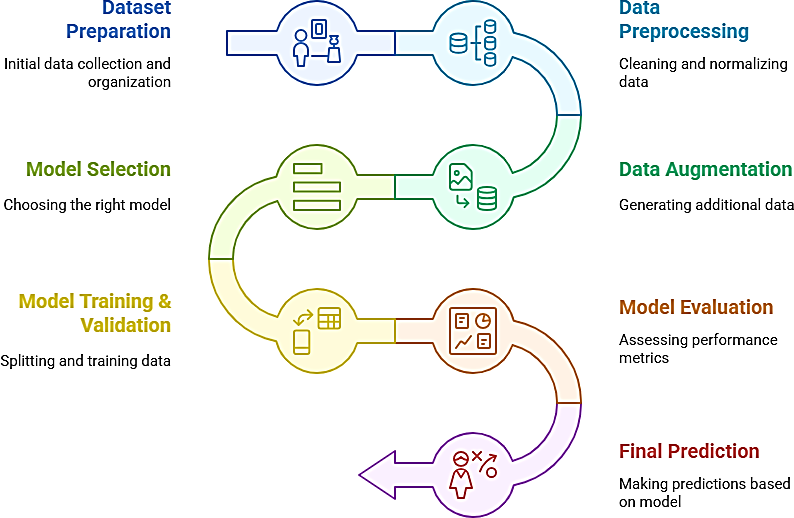
Enhancing Sentiment Analysis of Roman Urdu Using Augmentation Techniques and Deep Learning Models
Open Access | Research Article | 30 June 2025 | Cited: Scopus 1
Comparison of Machine Learning and Deep Learning Models for Part-of-Speech Tagging
ICCK Transactions on Advanced Computing and Systems | Volume 1, Issue 2: 106-116, 2025 | DOI: 10.62762/TACS.2025.493945
Abstract
Part-of-speech (POS) tagging—the automatic assignment of grammatical categories to every token in a text corpus—is a foundational preprocessing step for AI-driven language applications such as machine translation, sentiment analysis, and information retrieval. For morphologically complex, low-resource languages such as Pashto, the scarcity of annotated data and standardised tools makes this task particularly challenging. This paper presents a systematic comparative evaluation of six machine learning (ML) and deep learning (DL) algorithms—Support Vector Machine (SVM), Decision Tree (DT), Random Forest (RF), K-Nearest Neighbor (KNN), Multi-Layer Perceptron (MLP), and Naïve Bayes (NB)—... More >

Graphical Abstract
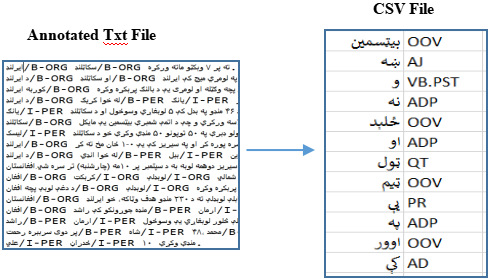
Comparison of Machine Learning and Deep Learning Models for Part-of-Speech Tagging