

Aerospace Engineering Communications

Publishing Model:
ISSN:
ISSN: pending
Aerospace Engineering Communications is a peer-reviewed journal dedicated to the dissemination of high-quality research in all areas of aerospace engineering, including aerodynamics, propulsion, structures, materials, avionics, and space systems.
DOI Prefix: 10.62762/AEC

Journal Metrics

-
Impact Factor
-
CiteScore

Recent Articles

Open Access | Research Article | 11 March 2026
Data-Driven RUL Prediction of CMAPSS Jet Engines: A Swarm Intelligence-Optimized Transformer Approach
Aerospace Engineering Communications | Volume 1, Issue 2: 57-67, 2026 | DOI: 10.62762/AEC.2026.464396
Abstract
Remaining useful life (RUL) prediction is a core task in prognostics and health management. While Transformers excel at modeling long-range temporal dependencies, their performance is highly sensitive to hyperparameters, and improper splitting of sliding-window samples can introduce data leakage. We propose a Sparrow Search Algorithm (SSA)-optimized Transformer for CMAPSS RUL prediction, adopting an engine-wise split for leakage-aware model selection and using validation RMSE as the fitness function to guide SSA-based hyperparameter optimization. On the FD001 test set, the model achieves RMSE $13.79$, MAE $10.00$, $R^2=0.88$, and a NASA score of $356.26$. The prediction curves and residual d... More >

Graphical Abstract
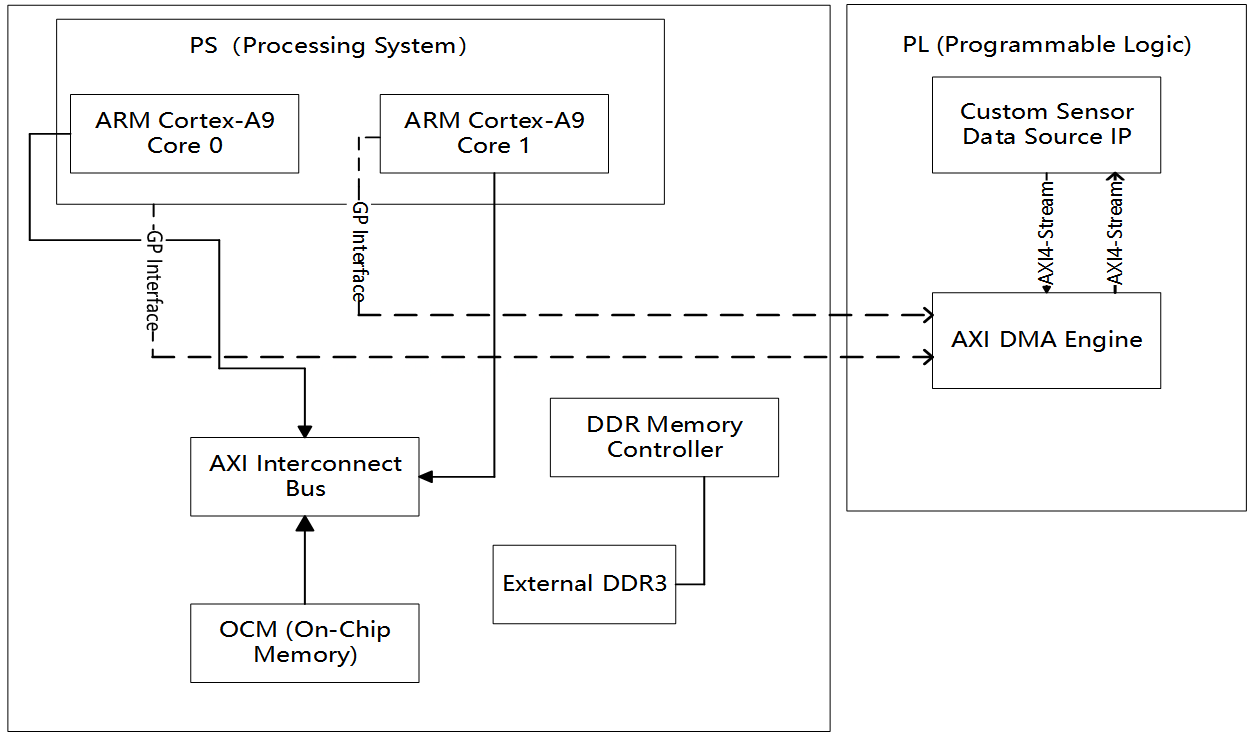
Data-Driven RUL Prediction of CMAPSS Jet Engines: A Swarm Intelligence-Optimized Transformer Approach
Open Access | Research Article | 19 February 2026
Robust Imbalanced Learning for Aero-Engine Bearing Anomaly Detection via a Hybrid SMOTE-BLS Framework
Aerospace Engineering Communications | Volume 1, Issue 1: 47-56, 2026 | DOI: 10.62762/AEC.2026.599020
Abstract
The operational reliability of aeroengines is vital to civil aviation safety; however, bearings and other key components are prone to failure under harsh operating conditions. In real-world monitoring data, severe class imbalance often leads conventional fault diagnosis methods to be biased toward majority classes, limiting their ability to identify critical faults. To address this issue, this paper proposes a robust anomaly detection framework that integrates the Synthetic Minority Oversampling Technique (SMOTE) with a Broad Learning System (BLS). SMOTE is first applied to generate synthetic fault samples in the feature space, thereby balancing the data distribution and reducing bias. The b... More >

Graphical Abstract
Robust Imbalanced Learning for Aero-Engine Bearing Anomaly Detection via a Hybrid SMOTE-BLS Framework
Open Access | Research Article | 29 January 2026 | Cited: 1 , Scopus 1
Self-Learning Control under Practical Actuation
Aerospace Engineering Communications | Volume 1, Issue 1: 36-46, 2026 | DOI: 10.62762/AEC.2025.320719
Abstract
This paper develops a general and implementation friendly stability framework for self-learning control (SLC) laws of the form $u(t)=k_1(t)u(t-\tau)+k_2 v(t)$. Uniform ultimate boundedness is established for a class of general linear plants under two engineering actuator assumptions: (i) smoothness and (ii) saturation with maximum value. These assumptions are reasonable for practical systems and yield an explicit bound, which converts the delay learning mechanism into a nominal (delay-free) controller plus a bounded perturbation injection. The most notable feature of SLC is its simplicity of structure coupled with excellent performance. It is compatible with traditional algorithms and can e... More >

Graphical Abstract
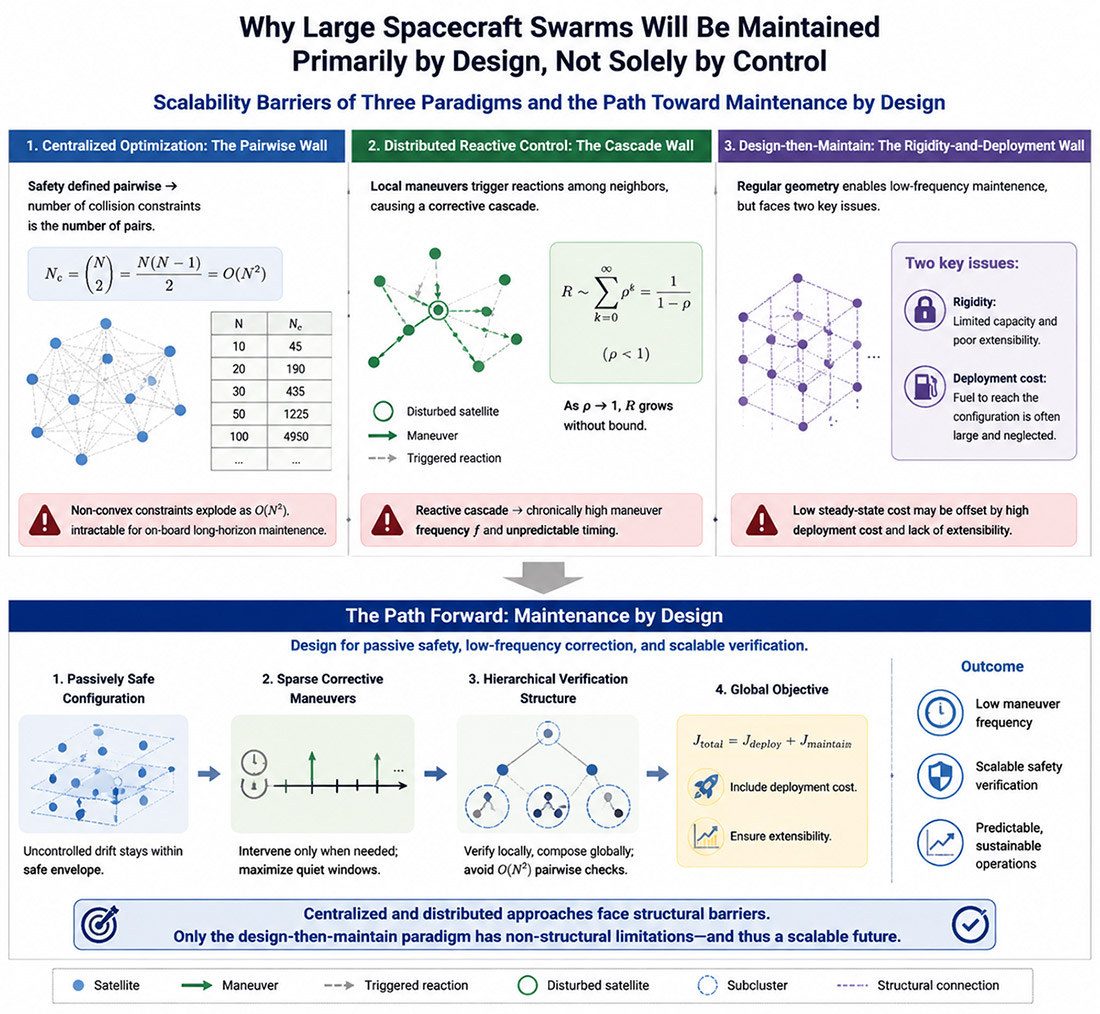
Self-Learning Control under Practical Actuation
Open Access | Research Article | 25 January 2026
Adaptive Finite-Time Attitude Control Based on Time-Varying Sliding Mode
Aerospace Engineering Communications | Volume 1, Issue 1: 28-35, 2026 | DOI: 10.62762/AEC.2025.182476
Abstract
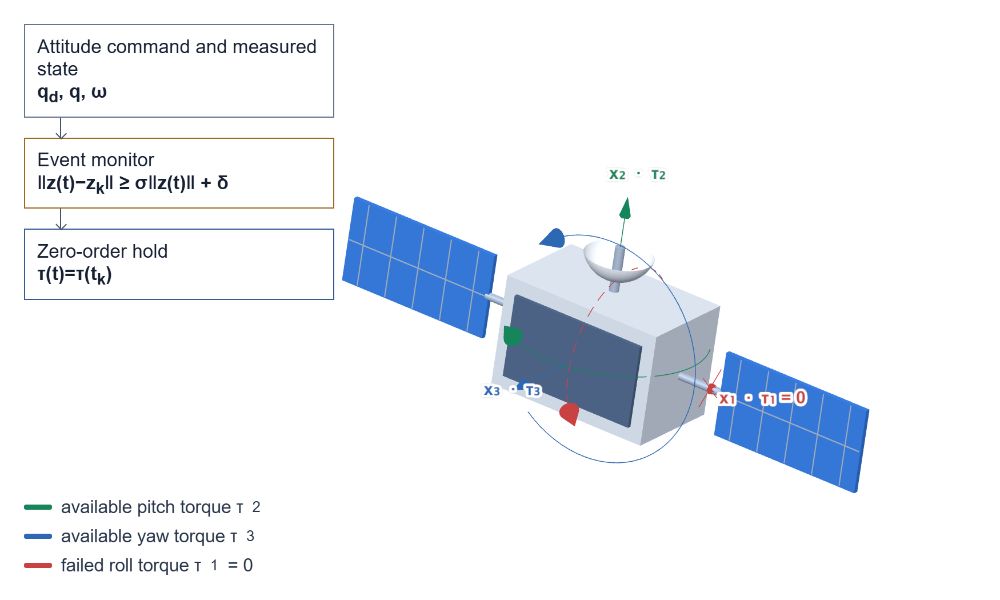
This study investigates the finite-time attitude tracking problem of spacecraft. We employ finite-time control methods to develop a novel adaptive controller. The controller utilizes a time-varying non-singular adaptive fast terminal sliding mode. The time-varying sliding mode dynamically adjusts the sliding surface morphology. This adjustment enables precise control performance tuning. Additionally, adaptive methods estimate the upper bound of generalized disturbances. This estimation reduces the computational load of the controller. The proposed controller demonstrates high robustness against external disturbances and inertia uncertainties. Lyapunov methods prove the stability of the contr... More >

Graphical Abstract
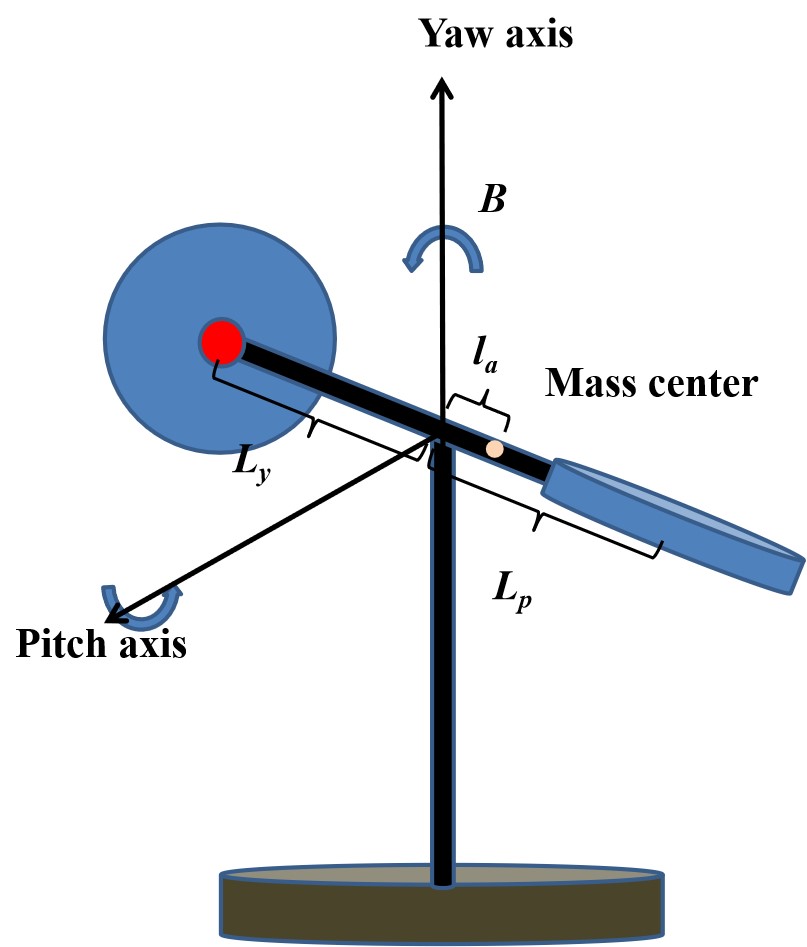
Adaptive Finite-Time Attitude Control Based on Time-Varying Sliding Mode
Open Access | Review Article | 24 January 2026
A Review of Fixed-Wing Unmanned Aerial Vehicle Formation Research
Aerospace Engineering Communications | Volume 1, Issue 1: 3-27, 2026 | DOI: 10.62762/AEC.2025.339037
Abstract
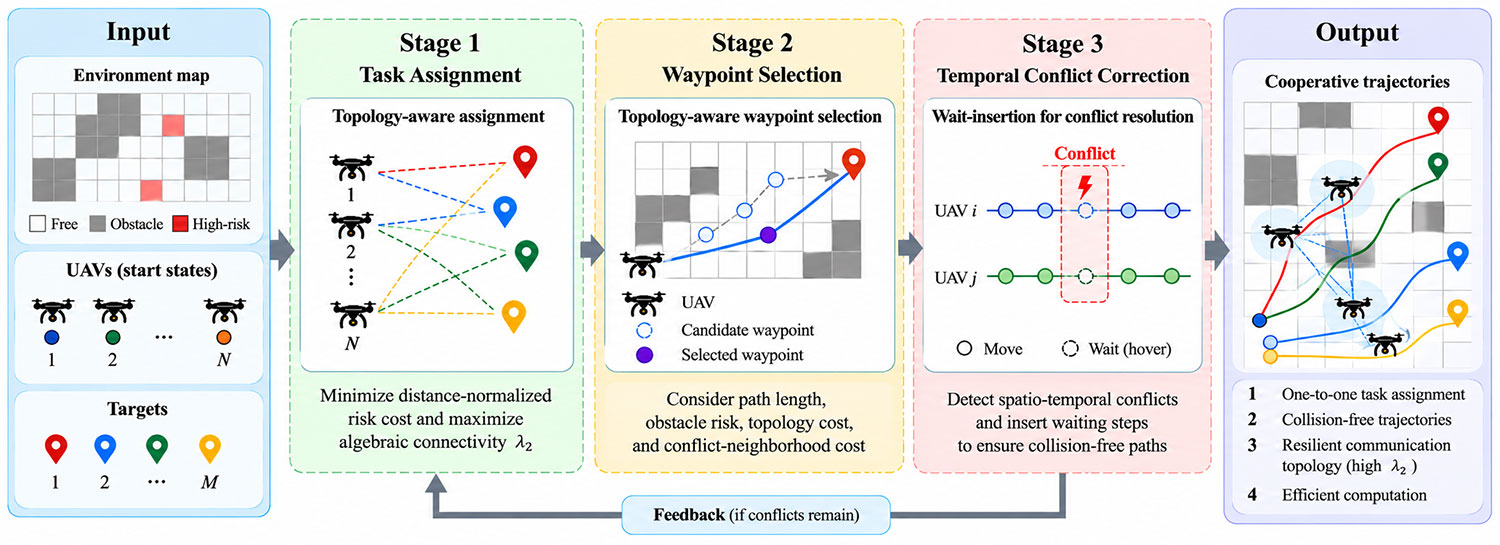
Fixed-wing unmanned aerial vehicle (UAV) formation technology, as a crucial research direction in multi-agent system cooperative control, while facing constraints in multiple areas, has demonstrated broad application prospects in military reconnaissance, disaster monitoring, agricultural plant protection and other fields in recent years. This paper systematically reviews the key technological systems of fixed-wing UAV formation control, including formation configuration design, communication topology, cooperative control algorithms, navigation positioning and obstacle avoidance strategies. By analyzing the latest research progress, the performance differences between centralized and distribu... More >

Graphical Abstract
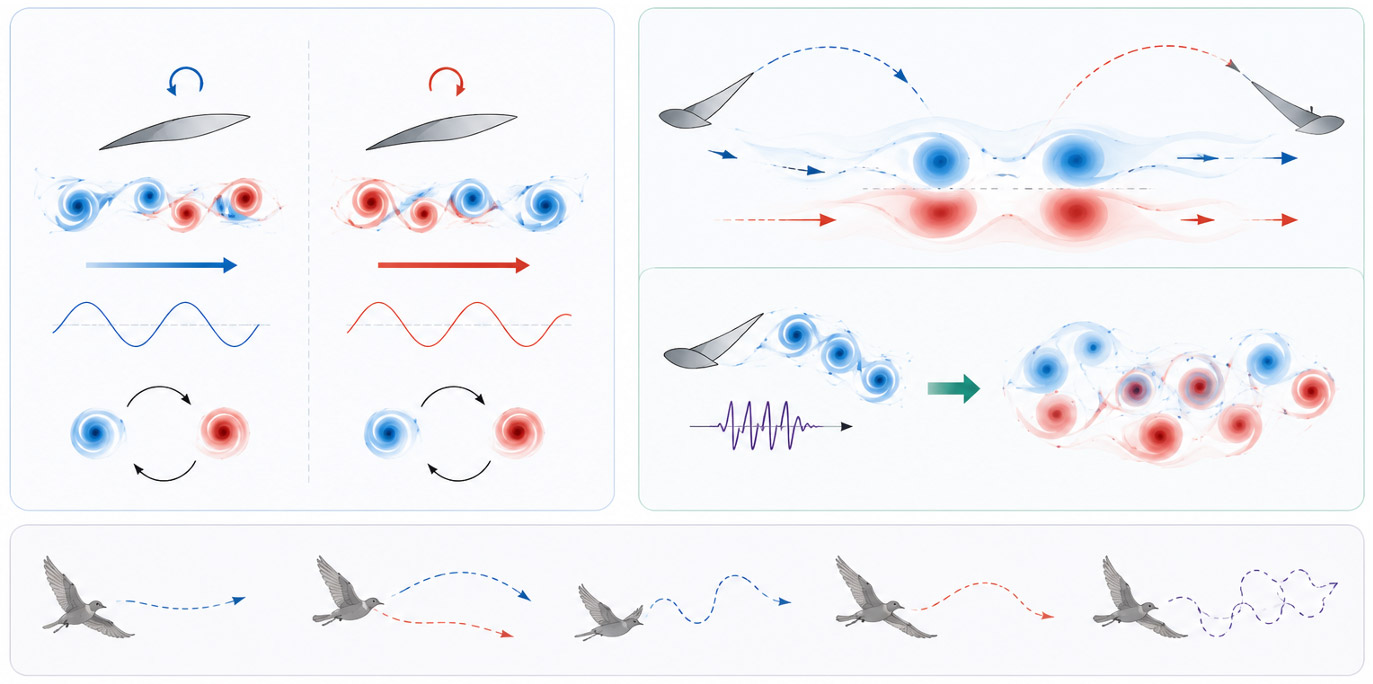
A Review of Fixed-Wing Unmanned Aerial Vehicle Formation Research
Open Access | Editorial | 22 November 2025
Charting the Future of Aerospace
Aerospace Engineering Communications | Volume 1, Issue 1: 1-2, 2026 | DOI: 10.62762/AEC.2025.971687
Abstract
Inaugural Editorial: A welcome message from the Editor-in-Chief of Aerospace Engineering Communications. More >

Journal Statistics

19
Authors
2
Countries / Regions
6
Articles
1
(Scopus: 1)
Citations
2025
Published Since
0
Special Issues
2,320
Article Views
745
Article Downloads
Aerospace Engineering Communications
eISSN: pending
Crossref
Crossref
Member of Crossref
Visit Crossref →