Volume 2, Issue 2, Reservoir Science
Volume 2, Issue 2, 2026
Submit Manuscript Edit a Special Issue
Article QR Code
Article QR Code
Scan the QR code for reading
Popular articles
Reservoir Science, Volume 2, Issue 2, 2026: 81-96

Open Access | Research Article | 28 February 2026
A Comparative Study on Drag Reduction Methods for Continental Shale Drilling in the Fuxing Block, Southeastern Sichuan Basin
1 Technology Development Department, Sinopec Jianghan Engineering Company, Wuhan 430024, China
2 Drilling Company No.1 of Sinopec Jianghan Petroleum Engineering Co., Ltd., Qianjiang 433123, China
* Corresponding Author: Ye Yang, [email protected]
ARK: ark:/57805/rs.2025.790790
Received: 28 December 2025, Accepted: 07 February 2026, Published: 28 February 2026  
Abstract
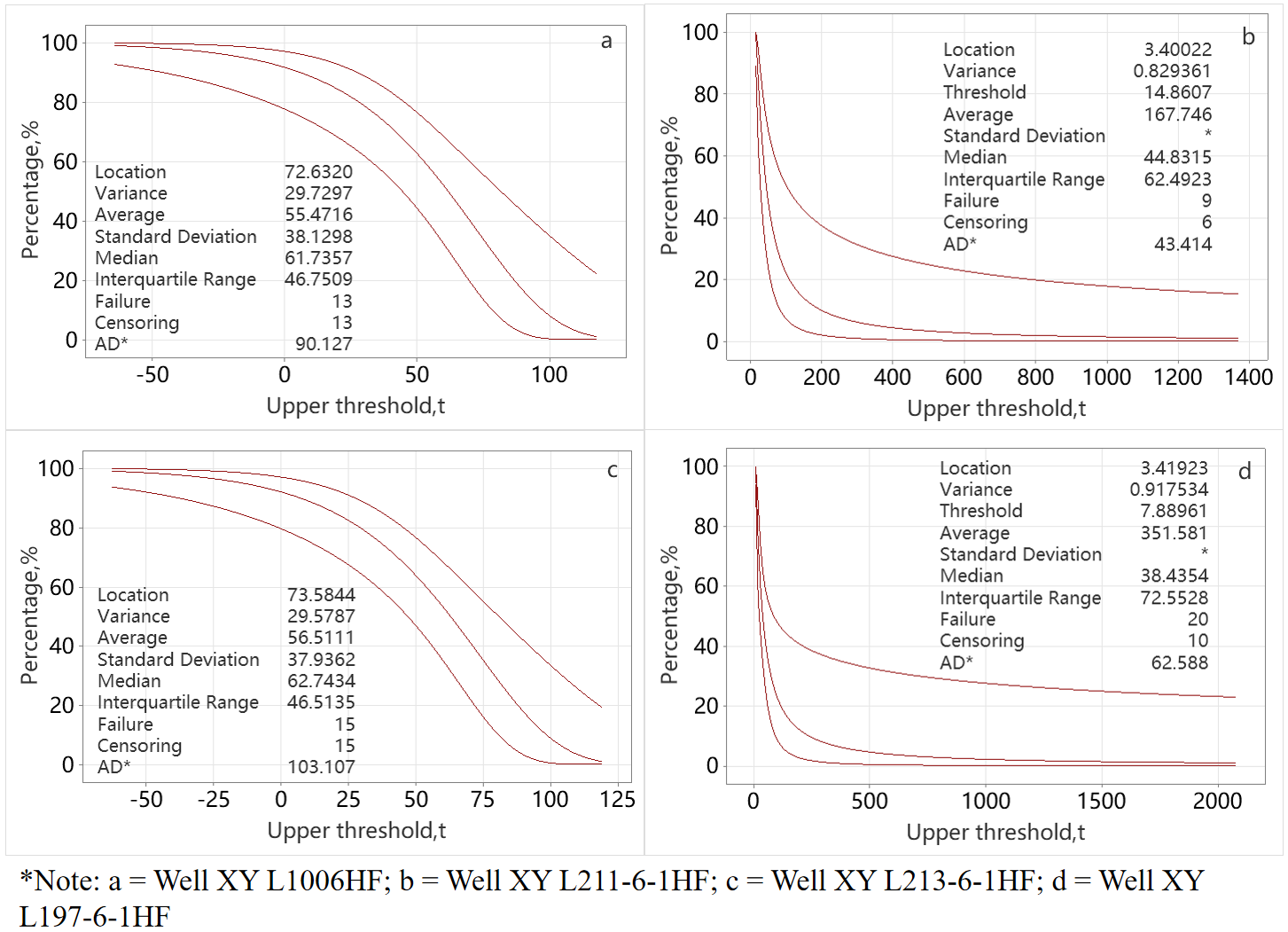
Extended-reach horizontal wells in continental shale formations of the Fuxing Block, southeastern Sichuan Basin, face prominent challenges, including drag and torque exceeding 50 metric tons and difficulties in weight-on-bit (WOB) transfer. Continental shale is characterized by high porosity, high permeability, distinct amphiphilic properties, and rapid performance degradation of oil-based drilling fluids (OBDF). These features lead to the formation of thick filter cakes and compacted cuttings beds, which further exacerbate abnormal drag. Existing research often focuses on single technical aspects, lacking integrated, full-cycle multi-factor coupling analysis. Based on field data from 14 drilled wells in the block, this study standardizes key factors through data preprocessing, quantifies process weights using the Analytic Hierarchy Process (AHP) model, and fits censored drag data via the Reliability Analysis model. Results indicate that design optimization contributes most significantly to drag reduction (weight: 0.5499). The critical failure drag for encapsulated lubricants is identified as 61.74 t. For wells with horizontal sections exceeding 2500 m, the application of floating casing technology enhances drag control reliability.

Graphical Abstract
A Comparative Study on Drag Reduction Methods for Continental Shale Drilling in the Fuxing Block, Southeastern Sichuan Basin

Keywords
continental shale
horizontal well
drag/torque
AHP model
reliability analysis model

Data Availability Statement
Data will be made available on request.

Funding
This work was supported by the China Petrochemical Shale Gas “Ten Dragons” Science and Technology Research Project under Grant P18051.

Conflicts of Interest
Yunfeng Hu is affiliated with the Technology Development Department, Sinopec Jianghan Engineering Company, Wuhan 430024, China; Ye Yang is affiliated with the Drilling Company No.1 of Sinopec Jianghan Petroleum Engineering Co., Ltd., Qianjiang 433123, China. The authors declare that these affiliations had no influence on the study design, data collection, analysis, interpretation, or the decision to publish, and that no other competing interests exist.

AI Use Statement
The authors declare that no generative AI was used in the preparation of this manuscript.

Ethical Approval and Consent to Participate
Not applicable.

References
  1. Wang, B., Sun, J., Shen, F., Li, W., & Zhang, W. (2020). Mechanism of wellbore instability in continental shale gas horizontal sections and its water-based drilling fluid countermeasures. Natural Gas Industry B, 7(6), 680-688.
    [CrossRef]   [Google Scholar]
  2. Lv, J., Zhang, F., & An, M. (2025). Frictional Stability of Deep Longmaxi Shale in the Southern Sichuan Basin: In Situ Temperature and Pressure Effects on Injection-Induced Seismicity. Rock Mechanics and Rock Engineering, 58(9), 10199-10214.
    [CrossRef]   [Google Scholar]
  3. Zhang, L., He, X., Li, X., Li, K., He, J., Zhang, Z., ... & Liu, W. (2022). Shale gas exploration and development in the Sichuan Basin: Progress, challenge and countermeasures. Natural Gas Industry B, 9(2), 176-186.
    [CrossRef]   [Google Scholar]
  4. Swai, R. E. (2020). A review of molecular dynamics simulations in the designing of effective shale inhibitors: application for drilling with water-based drilling fluids. Journal of Petroleum Exploration and Production Technology, 10(8), 3515-3532.
    [CrossRef]   [Google Scholar]
  5. Wang, X., Ni, H., Shor, R., & Wang, R. (2021). A model-based optimization and control method of slide drilling operations. Journal of Petroleum Science and Engineering, 198, 108203.
    [CrossRef]   [Google Scholar]
  6. Epelle, E. I., & Gerogiorgis, D. I. (2020). A review of technological advances and open challenges for oil and gas drilling systems engineering. AIChE Journal, 66(4), e16842.
    [CrossRef]   [Google Scholar]
  7. Foroud, T., Baradaran, A., & Seifi, A. (2018). A comparative evaluation of global search algorithms in black box optimization of oil production: A case study on Brugge field. Journal of Petroleum Science and Engineering, 167, 131-151.
    [CrossRef]   [Google Scholar]
  8. Zou, C., Zhao, Q., Dong, D., Yang, Z., Qiu, Z., Liang, F., ... & Hu, Z. (2017). Geological characteristics, main challenges and future prospect of shale gas. Journal of Natural Gas Geoscience, 2(5-6), 273-288.
    [CrossRef]   [Google Scholar]
  9. Bai, J., Wang, S., Xu, Q., Luo, Z., Zhang, Z., Lai, K., & Wu, J. (2023). Intelligent real-time predicting method for rock characterization based on multi-source information integration while drilling. Bulletin of Engineering Geology and the Environment, 82(4), 150.
    [CrossRef]   [Google Scholar]
  10. Zhang, K., Wang, C., Tan, F., & Sun, M. (2025). The research progress on shale oil geological analysis driven by big data: Multisource integration methods, key applications, and technical challenges. Advances in Resources Research, 5(4), 2702-2742.
    [CrossRef]   [Google Scholar]
  11. Zhong, R., Johnson, R. L., & Chen, Z. (2019, November). Using machine learning methods to identify coals from drilling and logging-while-drilling LWD data. In SPE/AAPG/SEG Asia Pacific Unconventional Resources Technology Conference (p. D012S021R002). URTEC.
    [CrossRef]   [Google Scholar]
  12. Zang, C., Lu, Z., Ye, S., Xu, X., Xi, C., Song, X., ... & Pan, T. (2022). Drilling parameters optimization for horizontal wells based on a multiobjective genetic algorithm to improve the rate of penetration and reduce drill string drag. Applied Sciences, 12(22), 11704.
    [CrossRef]   [Google Scholar]
  13. Feng, Q., Li, R., Jia, Y., & Liang, Z. (2025). Big data and artificial intelligence-based optimization of petroleum exploration and reservoir modeling: Intelligent pathways for enhancing efficiency and accuracy. Advances in Resources Research, 5(2), 477-495.
    [CrossRef]   [Google Scholar]
  14. Ding, M. (2024, July). Geological characteristics and main controlling factors of the tight sandstone in the Lianggaoshan formation of the Jurassic in the Sichuan Basin. In Fifth International Conference on Geology, Mapping, and Remote Sensing (ICGMRS 2024) (Vol. 13223, pp. 35-39). SPIE.
    [CrossRef]   [Google Scholar]
  15. Li, W., Yue, H., Sun, Y., Guo, Y., Wu, T., Zhang, N., & Chen, Y. (2021). Development evaluation and optimization of deep shale gas reservoir with horizontal wells based on production data. Geofluids, 2021(1), 4815559.
    [CrossRef]   [Google Scholar]
  16. Yang, S., Deng, S., Zhang, Y., Yan, X., Hao, H., Wang, C., & Wang, L. (2023). Research on nano inhibition and plugging potassium amine polysulfonate drilling fluid system to prevent Wellbore instability in deep complex formations. Petroleum Chemistry, 63(3), 336-354.
    [CrossRef]   [Google Scholar]
  17. Li, Y. F., Xu, X. F., Wu, X. H., Zhou, Y., & Pan, J. Y. (2023, September). Development and Application of Friction and Torque Reduction Tools for Extended Reach Well. In International Field Exploration and Development Conference (pp. 771-779). Singapore: Springer Nature Singapore.
    [CrossRef]   [Google Scholar]
  18. Wang, Q., Zhang, L., & Hu, J. (2018). Real-time risk assessment of casing-failure incidents in a whole fracturing process. Process Safety and Environmental Protection, 120, 206-214.
    [CrossRef]   [Google Scholar]
  19. Xiang, J., Wang, X., Lou, W., Wang, X., Zhao, C., & Zhang, F. (2024). Quantitative analysis and modeling of transient cuttings transport impact on drill string mechanics in extended reach drilling. Processes, 13(1), 35.
    [CrossRef]   [Google Scholar]
  20. Hosseini, S., Ghanbarzadeh, A., & Hashemi, A. (2014). Optimization of dogleg severity in directional drilling oil wells using particle swarm algorithm. Journal of Chemical and Petroleum Engineering, 48(2), 139-151.
    [CrossRef]   [Google Scholar]
  21. Zhou, S. S., Song, J. J., Xu, P., He, M., Xu, M. B., & You, F. C. (2023). A review on tribology, characterization and lubricants for water-based drilling fluids. Geoenergy Science and Engineering, 229, 212074.
    [CrossRef]   [Google Scholar]
  22. Kanan, M., Al-Nabulsi, D., Alsayed, M., Saleh, Y., Assaf, R., Scelba, G., & Khamis, N. I. (2024). An analytic hierarchy process multi-criteria decision-making model to evaluate renewable energy sources in Palestinian territories. Operational Research in Engineering Sciences: Theory and Applications, 7(1).
    [Google Scholar]
  23. Zhang, Y., Wang, Y., Ding, H., Li, Y., & Bai, Y. (2019). Deep well construction of big data platform based on multi-source heterogeneous data fusion. International Journal of Internet Manufacturing and Services, 6(4), 371-388.
    [CrossRef]   [Google Scholar]
  24. Zhang, H., Yang, S., Liu, D., Li, Y., Luo, W., & Li, J. (2020). Wellbore cleaning technologies for shale-gas horizontal wells: Difficulties and countermeasures. Natural Gas Industry B, 7(2), 190-195.
    [CrossRef]   [Google Scholar]
  25. Yu, X., Wang, H., Liang, T., Huang, Q., Fan, X., Zhang, Y., ... & Cheremisin, A. (2024, June). Study on the Mechanism of Wellbore Instability in Complex Shale Formations Considering Fault Influence: A Case Study of Fushan Oilfield. In ARMA US Rock Mechanics/Geomechanics Symposium (p. D022S024R012). ARMA.
    [CrossRef]   [Google Scholar]

Cite This Article
APA Style
Hu, Y., & Yang, Y. (2026). A Comparative Study on Drag Reduction Methods for Continental Shale Drilling in the Fuxing Block, Southeastern Sichuan Basin. Reservoir Science, 2(2), 81–96. https://doi.org/10.62762/RS.2025.790790
Export Citation
RIS Format
Compatible with EndNote, Zotero, Mendeley, and other reference managers
RIS format data for reference managers
TY  - JOUR
AU  - Hu, Yunfeng
AU  - Yang, Ye
PY  - 2026
DA  - 2026/02/28
TI  - A Comparative Study on Drag Reduction Methods for Continental Shale Drilling in the Fuxing Block, Southeastern Sichuan Basin
JO  - Reservoir Science
T2  - Reservoir Science
JF  - Reservoir Science
VL  - 2
IS  - 2
SP  - 81
EP  - 96
DO  - 10.62762/RS.2025.790790
UR  - https://www.icck.org/article/abs/RS.2025.790790
KW  - continental shale
KW  - horizontal well
KW  - drag/torque
KW  - AHP model
KW  - reliability analysis model
AB  - Extended-reach horizontal wells in continental shale formations of the Fuxing Block, southeastern Sichuan Basin, face prominent challenges, including drag and torque exceeding 50 metric tons and difficulties in weight-on-bit (WOB) transfer. Continental shale is characterized by high porosity, high permeability, distinct amphiphilic properties, and rapid performance degradation of oil-based drilling fluids (OBDF). These features lead to the formation of thick filter cakes and compacted cuttings beds, which further exacerbate abnormal drag. Existing research often focuses on single technical aspects, lacking integrated, full-cycle multi-factor coupling analysis. Based on field data from 14 drilled wells in the block, this study standardizes key factors through data preprocessing, quantifies process weights using the Analytic Hierarchy Process (AHP) model, and fits censored drag data via the Reliability Analysis model. Results indicate that design optimization contributes most significantly to drag reduction (weight: 0.5499). The critical failure drag for encapsulated lubricants is identified as 61.74 t. For wells with horizontal sections exceeding 2500 m, the application of floating casing technology enhances drag control reliability.
SN  - 3070-2356
PB  - Institute of Central Computation and Knowledge
LA  - English
ER  - 
BibTeX Format
Compatible with LaTeX, BibTeX, and other reference managers
BibTeX format data for LaTeX and reference managers
@article{Hu2026A,
  author = {Yunfeng Hu and Ye Yang},
  title = {A Comparative Study on Drag Reduction Methods for Continental Shale Drilling in the Fuxing Block, Southeastern Sichuan Basin},
  journal = {Reservoir Science},
  year = {2026},
  volume = {2},
  number = {2},
  pages = {81-96},
  doi = {10.62762/RS.2025.790790},
  url = {https://www.icck.org/article/abs/RS.2025.790790},
  abstract = {Extended-reach horizontal wells in continental shale formations of the Fuxing Block, southeastern Sichuan Basin, face prominent challenges, including drag and torque exceeding 50 metric tons and difficulties in weight-on-bit (WOB) transfer. Continental shale is characterized by high porosity, high permeability, distinct amphiphilic properties, and rapid performance degradation of oil-based drilling fluids (OBDF). These features lead to the formation of thick filter cakes and compacted cuttings beds, which further exacerbate abnormal drag. Existing research often focuses on single technical aspects, lacking integrated, full-cycle multi-factor coupling analysis. Based on field data from 14 drilled wells in the block, this study standardizes key factors through data preprocessing, quantifies process weights using the Analytic Hierarchy Process (AHP) model, and fits censored drag data via the Reliability Analysis model. Results indicate that design optimization contributes most significantly to drag reduction (weight: 0.5499). The critical failure drag for encapsulated lubricants is identified as 61.74 t. For wells with horizontal sections exceeding 2500 m, the application of floating casing technology enhances drag control reliability.},
  keywords = {continental shale, horizontal well, drag/torque, AHP model, reliability analysis model},
  issn = {3070-2356},
  publisher = {Institute of Central Computation and Knowledge}
}

Article Metrics
Citations:

Crossref

0

Scopus

0

Web of Science

0
Article Access Statistics:
Views: 65
PDF Downloads: 12

Publisher's Note
ICCK stays neutral with regard to jurisdictional claims in published maps and institutional affiliations.

Rights and Permissions
CC BY Copyright © 2026 by the Author(s). Published by Institute of Central Computation and Knowledge. This article is an open access article distributed under the terms and conditions of the Creative Commons Attribution (CC BY) license (https://creativecommons.org/licenses/by/4.0/), which permits use, sharing, adaptation, distribution and reproduction in any medium or format, as long as you give appropriate credit to the original author(s) and the source, provide a link to the Creative Commons licence, and indicate if changes were made.
Reservoir Science

Reservoir Science

ISSN: 3070-2356 (Online)

Email: [email protected]

Portico

Portico

All published articles are preserved here permanently:
https://www.portico.org/publishers/icck/