3D Holography Advertisement On Vehicle Using IoT
Research Article  ·  Published: 08 May 2025
Issue cover
ICCK Transactions on Sensing, Communication, and Control
Volume 2, Issue 2, 2025: 85-94
Research Article Free to Read

3D Holography Advertisement On Vehicle Using IoT

1 Electronic Engineering Department, Sir Syed University of Engineering and Technology (SSUET), Karachi, Pakistan
2 Electronic Engineering Department, Usman Institute of Technology, Karachi, Pakistan
3 Department of Electrical, Electronics and Computer Engineering, University of Catania, 95125 Catania, Italy
* Corresponding Author: Faizan Zahid, [email protected]
Volume 2, Issue 2
You have access to this article · Limited-Time Free Access

Abstract

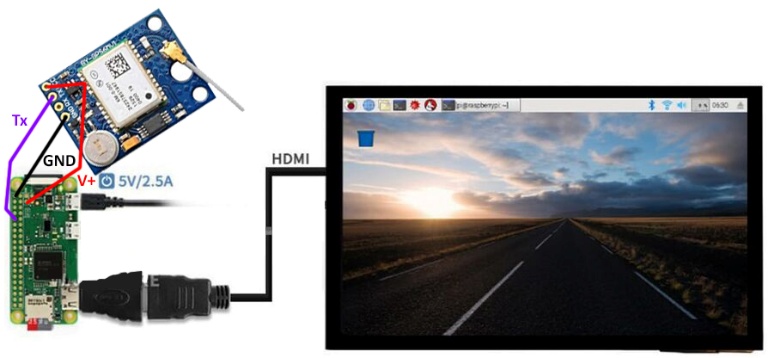
3D holographic displays on vehicles are a new out-of-home (OOH) advertisement technology offering an interactive and dynamic means of engaging consumers. They enhance advertisement visibility and viewer interaction through the projection of colorful, three-dimensional images in public areas. An Internet of Things (IoT) based holographic advertisement system is presented, integrating remote content management and personalized advertising control. The system includes an Android application that allows users to select and schedule ads displayed on moving vehicles. A GPS module provides real-time vehicle tracking, supporting security and targeted advertisements. Cloud-based storage ensures remote access and data management, allowing content updates from any location. By combining holography, IoT, and cloud computing, this approach modernizes traditional advertisement methods with a scalable, high-technology alternative suitable for contemporary digital marketing.

Graphical Abstract

3D Holography Advertisement On Vehicle Using IoT

Keywords

3D (dimensional) hologram Out-Of-Home (OOH) advertisement GPS internet of thing (IoT) interfacing cloud native

Data Availability Statement

Data will be made available on request.

Funding

This work was supported without any funding.

Conflicts of Interest

The authors declare no conflicts of interest.

Ethical Approval and Consent to Participate

Not applicable.

References

  1. Haleem, A., Javaid, M., Singh, R. P., Suman, R., & Rab, S. (2022). Holography and its applications for industry 4.0: An overview. Internet of Things and Cyber-Physical Systems, 2, 42-48.
    [CrossRef] [Google Scholar]
  2. Blanche, P.-A. (2021). Holography, and the future of 3D display. Light: Advanced Manufacturing, 2(4), 446-459.
    [CrossRef] [Google Scholar]
  3. Carmigniani, J., Furht, B., Anisetti, M., Ceravolo, P., Damiani, E., & Ivkovic, M. (2011). Augmented reality technologies, systems and applications. Multimedia tools and applications, 51(1), 341-377.
    [CrossRef] [Google Scholar]
  4. Ramlie, M. K., Rani, M. K. A. A., Udang, M., & Shuib, A. S. (2016). the Effectiveness of 3D Hologram As a New Advertising Medium in Klang Valley, Malaysia. e-BANGI, 11(1), 259-267.
    [Google Scholar]
  5. Shi, L., Li, B., Kim, C., Kellnhofer, P., & Matusik, W. (2021). Towards real-time photorealistic 3D holography with deep neural networks. Nature, 591(7849), 234-239.
    [CrossRef] [Google Scholar]
  6. Peng, Y., Choi, S., Padmanaban, N., & Wetzstein, G. (2020). Neural holography with camera-in-the-loop training. ACM Transactions on Graphics (TOG), 39(6), 1-14.
    [CrossRef] [Google Scholar]
  7. Than, M. H., Pham, M. M., & Pham, H. T. T. (2018, June). Pyramid hologram in projecting medical images. In International Conference on the Development of Biomedical Engineering in Vietnam (pp. 421-426). Singapore: Springer Singapore.
    [CrossRef] [Google Scholar]
  8. Geng, J. (2013). Three-dimensional display technologies. Advances in optics and photonics, 5(4), 456-535.
    [CrossRef] [Google Scholar]
  9. Wakunami, K., Hsieh, P. Y., Oi, R., Senoh, T., Sasaki, H., Ichihashi, Y., ... & Yamamoto, K. (2016). Projection-type see-through holographic three-dimensional display. Nature communications, 7(1), 12954.
    [CrossRef] [Google Scholar]
  10. Tahara, T., Quan, X., Otani, R., Takaki, Y., & Matoba, O. (2018). Digital holography and its multidimensional imaging applications: a review. Microscopy, 67(2), 55-67.
    [CrossRef] [Google Scholar]
  11. Tsang, P. W. M., Poon, T. C., Zhang, Y., & Ferraro, P. (2022). Digital holography: Applications and emerging technologies. Frontiers in Photonics, 3, 1073297.
    [CrossRef] [Google Scholar]
  12. Patel, D., & Bhalodiya, P. (2019, November). 3D holographic and interactive artificial intelligence system. In 2019 International conference on smart systems and inventive technology (ICSSIT) (pp. 657-662). IEEE.
    [CrossRef] [Google Scholar]
  13. Tay, S., Blanche, P. A., Voorakaranam, R., Tunç, A. V., Lin, W., Rokutanda, S., ... & Peyghambarian, N. (2008). An updatable holographic three-dimensional display. Nature, 451(7179), 694-698.
    [CrossRef] [Google Scholar]
  14. Bernritter, S. F., Ketelaar, P. E., & Sotgiu, F. (2021). Behaviorally targeted location-based mobile marketing. Journal of the academy of marketing science, 49(4), 677-702.
    [CrossRef] [Google Scholar]
  15. Wilson, R. T. (2023). Out-of-home advertising: a systematic review and research agenda. Journal of Advertising, 52(2), 279-299.
    [CrossRef] [Google Scholar]
  16. Dhanne, B., Srinivas, A., & Subramanya Chari, K. (2021, July). IoT-based vehicle tracking and monitoring using raspberry pi. In Journal of Physics: Conference Series (Vol. 1964, No. 6, p. 062016). IOP Publishing.
    [CrossRef] [Google Scholar]
  17. Pi, D., Liu, J., & Wang, Y. (2022). Review of computer-generated hologram algorithms for color dynamic holographic three-dimensional display. Light: Science & Applications, 11(1), 231.
    [CrossRef] [Google Scholar]
  18. Al-Fuqaha, A., Guizani, M., Mohammadi, M., Aledhari, M., & Ayyash, M. (2015). Internet of Things: A survey on enabling technologies, protocols, and applications. IEEE Communications Surveys & Tutorials, 17(4), 2347-2376.
    [CrossRef] [Google Scholar]

Cited By (2)

  1. Liangliang Li, Guihua Liu, Feng Xu, Wenjin Liao, Wenjie Zhao. Mamba-enhanced multi-view stereo: Geometry-aware feature fusion and 3D cost volume regularization. Applied Soft Computing, 2026 , 195 .
    [CrossRef]
  2. Xue-Bo Jin, Ye-Qing Wang, Jian-Lei Kong, Yu-Ting Bai, Ting-Li Su. AttSCNs: A Bayesian-Optimized Hybrid Model with Attention-Guided Stochastic Configuration Networks for Robust GPS Trajectory Prediction. Entropy, 2025 , 27 (11).
    [CrossRef]
* Citation data provided by Crossref Cited-by.

Cite This Article

APA Style
Farooq, F., Masood, R. J., Khan, M. A, Israr, A., & Zahid, F. (2025). 3D Holography Advertisement On Vehicle Using IoT. ICCK Transactions on Sensing, Communication, and Control, 2(2), 85-94. https://doi.org/10.62762/TSCC.2024.554721
Export Citation
RIS Format
Compatible with EndNote, Zotero, Mendeley, and other reference managers
TY  - JOUR
AU  - Farooq, Fahad
AU  - Masood, Rana Javed
AU  - Khan, Muhammad Aamir
AU  - Israr, Amber
AU  - Zahid, Faizan
PY  - 2025
DA  - 2025/05/08
TI  - 3D Holography Advertisement On Vehicle Using IoT
JO  - ICCK Transactions on Sensing, Communication, and Control
T2  - ICCK Transactions on Sensing, Communication, and Control
JF  - ICCK Transactions on Sensing, Communication, and Control
VL  - 2
IS  - 2
SP  - 85
EP  - 94
DO  - 10.62762/TSCC.2024.554721
UR  - https://www.icck.org/article/abs/TSCC.2024.554721
KW  - 3D (dimensional) hologram
KW  - Out-Of-Home (OOH) advertisement
KW  - GPS
KW  - internet of thing (IoT) interfacing
KW  - cloud native
AB  - 3D holographic displays on vehicles are a new out-of-home (OOH) advertisement technology offering an interactive and dynamic means of engaging consumers. They enhance advertisement visibility and viewer interaction through the projection of colorful, three-dimensional images in public areas. An Internet of Things (IoT) based holographic advertisement system is presented, integrating remote content management and personalized advertising control. The system includes an Android application that allows users to select and schedule ads displayed on moving vehicles. A GPS module provides real-time vehicle tracking, supporting security and targeted advertisements. Cloud-based storage ensures remote access and data management, allowing content updates from any location. By combining holography, IoT, and cloud computing, this approach modernizes traditional advertisement methods with a scalable, high-technology alternative suitable for contemporary digital marketing.
SN  - 3068-9287
PB  - Institute of Central Computation and Knowledge
LA  - English
ER  - 
BibTeX Format
Compatible with LaTeX, BibTeX, and other reference managers
@article{Farooq20253D,
  author = {Fahad Farooq and Rana Javed Masood and Muhammad Aamir Khan and Amber Israr and Faizan Zahid},
  title = {3D Holography Advertisement On Vehicle Using IoT},
  journal = {ICCK Transactions on Sensing, Communication, and Control},
  year = {2025},
  volume = {2},
  number = {2},
  pages = {85-94},
  doi = {10.62762/TSCC.2024.554721},
  url = {https://www.icck.org/article/abs/TSCC.2024.554721},
  abstract = {3D holographic displays on vehicles are a new out-of-home (OOH) advertisement technology offering an interactive and dynamic means of engaging consumers. They enhance advertisement visibility and viewer interaction through the projection of colorful, three-dimensional images in public areas. An Internet of Things (IoT) based holographic advertisement system is presented, integrating remote content management and personalized advertising control. The system includes an Android application that allows users to select and schedule ads displayed on moving vehicles. A GPS module provides real-time vehicle tracking, supporting security and targeted advertisements. Cloud-based storage ensures remote access and data management, allowing content updates from any location. By combining holography, IoT, and cloud computing, this approach modernizes traditional advertisement methods with a scalable, high-technology alternative suitable for contemporary digital marketing.},
  keywords = {3D (dimensional) hologram, Out-Of-Home (OOH) advertisement, GPS, internet of thing (IoT) interfacing, cloud native},
  issn = {3068-9287},
  publisher = {Institute of Central Computation and Knowledge}
}

Article Metrics

Citations
Views
3953
PDF Downloads
538

Publisher's Note

ICCK stays neutral with regard to jurisdictional claims in published maps and institutional affiliations.

Rights and Permissions

Institute of Central Computation and Knowledge (ICCK) or its licensor holds exclusive rights to this article under a publishing agreement with the author(s) or other rightsholder(s); author self-archiving of the accepted manuscript version of this article is solely governed by the terms of such publishing agreement and applicable law.
ICCK Transactions on Sensing, Communication, and Control
ISSN: 3068-9287 (Online) | ISSN: 3068-9279 (Print)
Portico
Preserved at
Portico