Volume 1, Issue 3 (In Progress)


In Progress
Citations: 0, 0,  0   |   Viewed: 2220, Download: 1226

Table of Contents

Open Access | Research Article | 31 December 2025
Transformer Enabled ResNet Based Automated Skin Cancer Detection System
Biomedical Informatics and Smart Healthcare | Volume 1, Issue 3: 149-154, 2025 | DOI: 10.62762/BISH.2025.444143
Abstract
Early diagnosis plays a critical role in the successful skin cancer treatment. To classify skin lesions as benign or malignant, this study suggested a deep learning-enabled method that combines a Transformer module with ResNet50. At first ResNet50, a powerful convolutional neural network, to extract the image features and then enhance the model with a Transformer layer to improve the model accuracy is used. The final model is fine-tuned to achieve better accuracy. This approach shows improved classification results compared to the traditional model. The results signify that combining CNN-based feature extraction with Transformer-enabled global attention suggestively improves skin lesion clas... More >

Graphical Abstract
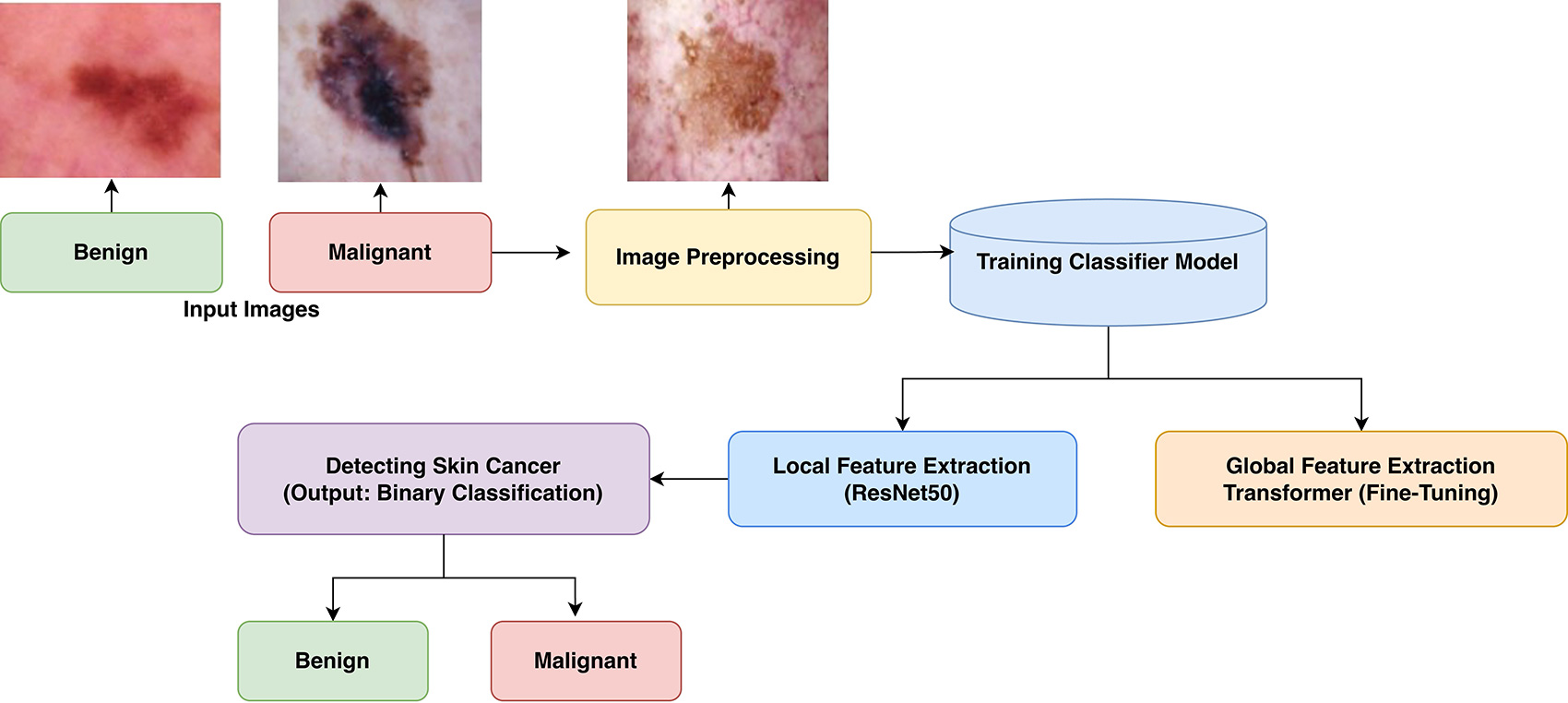
Transformer Enabled ResNet Based Automated Skin Cancer Detection System
Open Access | Research Article | 28 December 2025
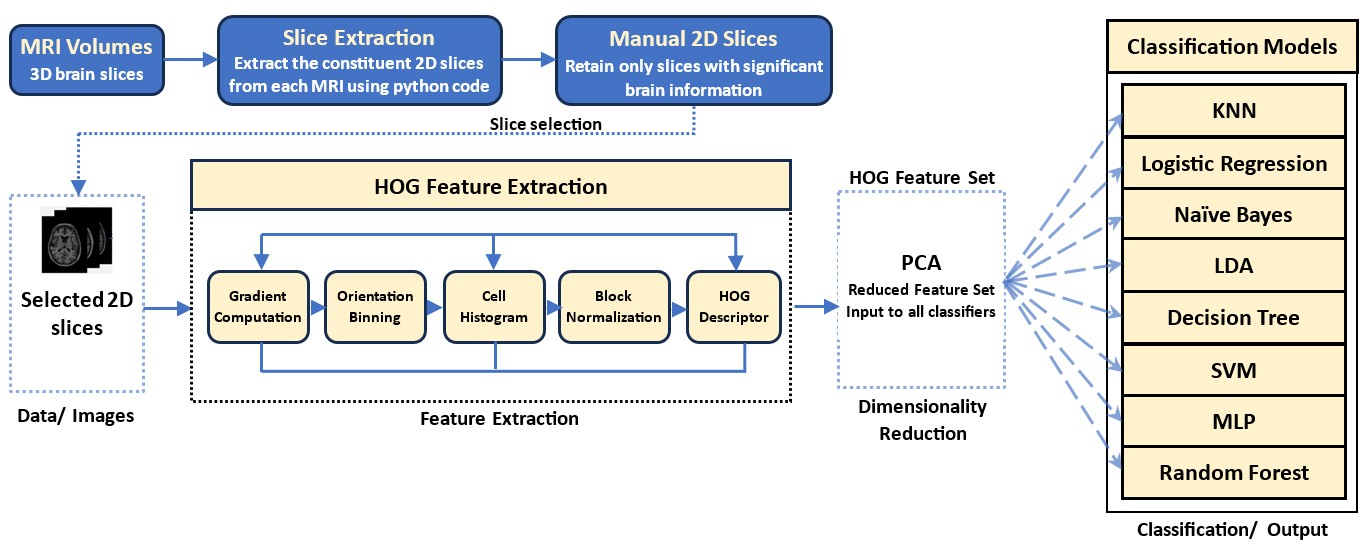
Empirical Analysis of the Performance of Machine Learning Algorithms in Classifying 2D MR Images from PCA Reduced HOG and LBP Features
Biomedical Informatics and Smart Healthcare | Volume 1, Issue 3: 138-148, 2025 | DOI: 10.62762/BISH.2025.993395
Abstract
This study investigates the role of feature extraction and dimensionality reduction techniques in addressing high-dimensional image data, with a particular focus on Alzheimer's disease classification using 2D magnetic resonance imaging (MRI). Histogram of Oriented Gradients (HOG) and Local Binary Patterns (LBP) are employed to extract discriminative features from MRI images; however, due to the high dimensionality of the extracted features, dimensionality reduction is required. Principal Component Analysis (PCA) is utilized to reduce feature dimensionality while preserving most of the relevant information, as reflected in the improved performance of the underlying machine learning (ML) class... More >

Graphical Abstract
Empirical Analysis of the Performance of Machine Learning Algorithms in Classifying 2D MR Images from PCA Reduced HOG and LBP Features
Open Access | Research Article | 23 December 2025
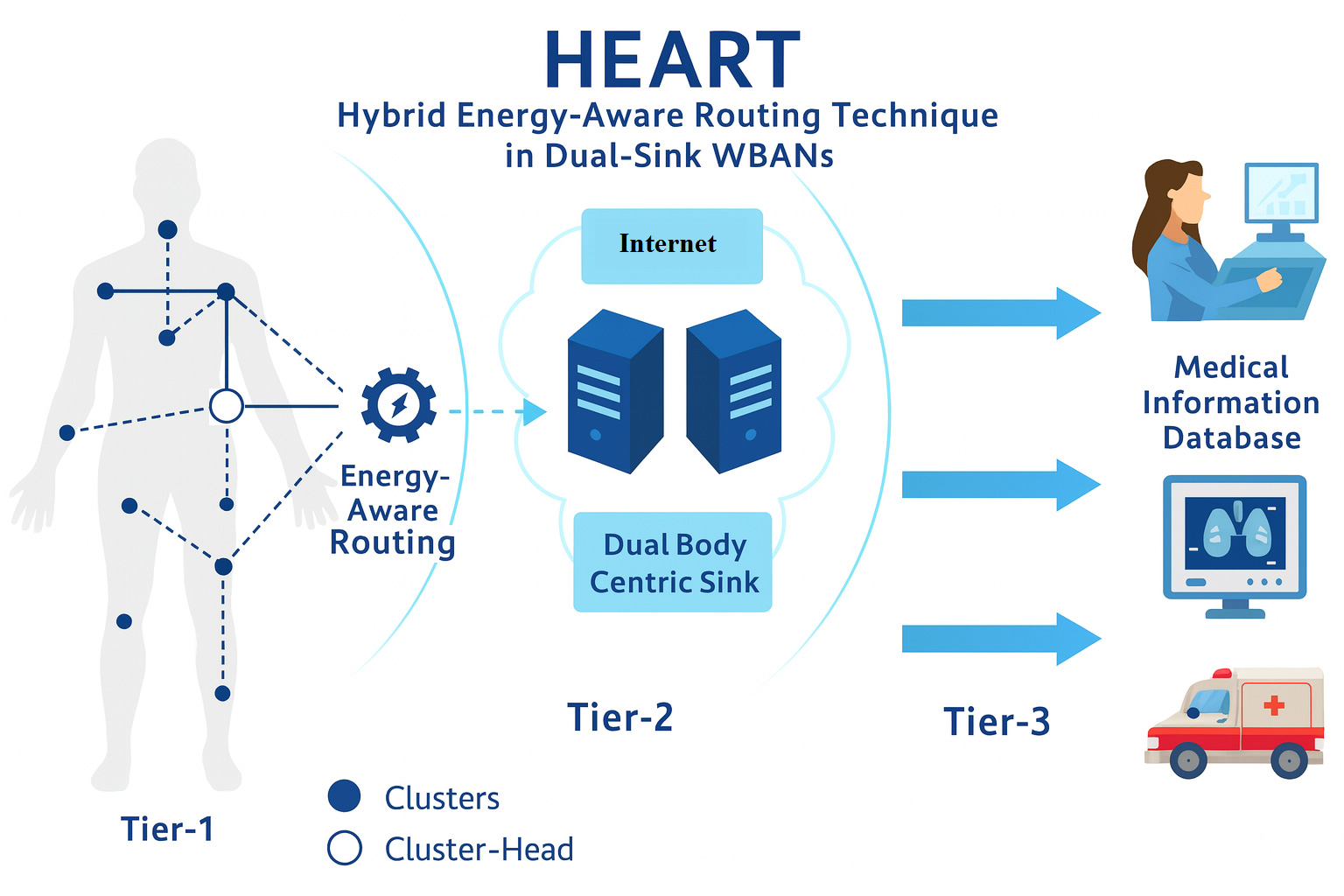
HEART: Hybrid Energy-Aware Routing Technique for Dual-Sink Body Area Networks in Smart Healthcare IoT Systems
Biomedical Informatics and Smart Healthcare | Volume 1, Issue 3: 118-137, 2025 | DOI: 10.62762/BISH.2025.212535
Abstract
The rapid evolution of the Internet of Medical Things (IoMT) has enabled pervasive patient monitoring through Wireless Body Area Networks (WBANs). However, energy depletion, high path-loss, link instability, and latency remain major barriers to achieving reliability in real-time healthcare applications. Existing schemes, such as Distance Aware Relaying Energy-efficient (DARE) and Link Aware and Energy Efficient Scheme for Body Area Networks (LAEEBA), mitigate individual constraints, distance and link quality respectively, but lack holistic optimization across energy, distance, and reliability dimensions. This paper proposes HEART (Hybrid Energy-Aware Routing Technique), a dual-sink, clusteri... More >

Graphical Abstract
HEART: Hybrid Energy-Aware Routing Technique for Dual-Sink Body Area Networks in Smart Healthcare IoT Systems
Open Access | Research Article | 17 December 2025
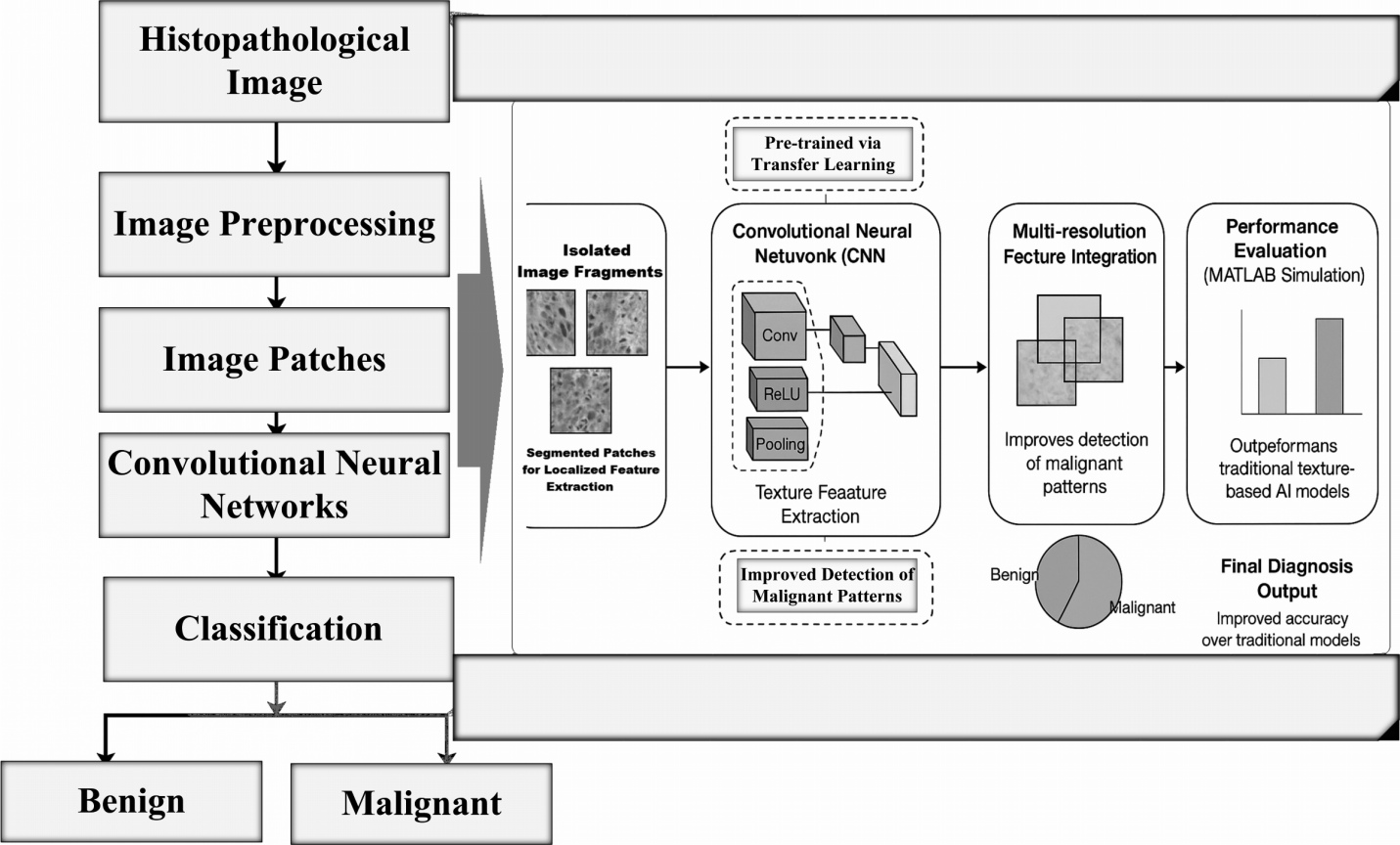
Breast Cancer Image Classification into Benign and Malignant using an Intelligent CNN Framework
Biomedical Informatics and Smart Healthcare | Volume 1, Issue 3: 98-117, 2025 | DOI: 10.62762/BISH.2025.936105
Abstract
Breast cancer is one of the most prevalent and life-threatening diseases among women worldwide. Accurate diagnosis from histopathological biopsy samples is essential, yet manual examination is time-consuming and subject to inter-observer variability, particularly given the shortage of trained pathologists alongside the increasing number of cases. Deep learning, especially Convolutional Neural Networks (CNNs), has emerged as a powerful tool for classifying medical images by automatically extracting discriminative features from raw data. In this study, we investigate the use of the publicly available Breast Cancer Histopathological (BreakHis) image database, which contains benign and malignant... More >

Graphical Abstract
Breast Cancer Image Classification into Benign and Malignant using an Intelligent CNN Framework
Open Access | Review Article | 07 November 2025
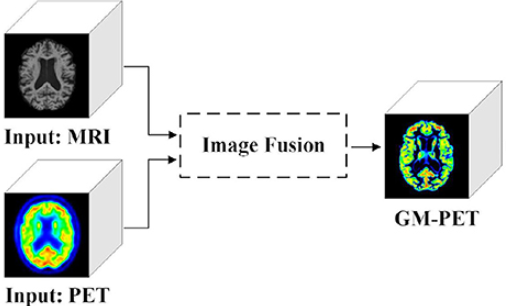
A Recent Survey on Multi-modal Medical Image Fusion
Biomedical Informatics and Smart Healthcare | Volume 1, Issue 3: 89-97, 2025 | DOI: 10.62762/BISH.2025.414869
Abstract
Fusion of multi-modal medical images has transformed healthcare by overcoming the limitations of single-modality imaging, where modalities such as CT, MRI, PET, and SPECT provide complementary information. This review systematically traces the evolution of multi-modal medical image fusion from conventional mathematical models to state-of-the-art artificial intelligence (AI) techniques. We examine the transition from classical approaches---such as multiscale transformations, wavelet decompositions, and sparse representation---to modern deep learning methods, including convolutional neural networks, generative adversarial networks, and transformer architectures. Key limitations of existing met... More >

Graphical Abstract
A Recent Survey on Multi-modal Medical Image Fusion