Volume 2, Issue 1


Volume 2, Issue 1 (March, 2026) – 5 articles
Citations: Crossref logo 0,   0   |   Viewed: 7159, Download: 909

Table of Contents

Open Access | Research Article | 27 March 2026
Automated Brain Tumor Analysis from MRI Using Deep Learning
Biomedical Informatics and Smart Healthcare | Volume 2, Issue 1: 62-78, 2026 | DOI: 10.62762/BISH.2026.687557
Abstract
Accurate brain tumor classification from MRI remains essential for computer-assisted diagnosis, yet manual interpretation is time-consuming and variable. This study presents an EfficientNet-B0-based convolutional neural network for multi-class classification of glioma, meningioma, pituitary tumors, and no-tumor cases. The model was trained and evaluated on a public MRI dataset of 7023 images using a strict patient-level split to ensure unbiased assessment. A fixed EfficientNet-B0 backbone with a lightweight classification head reduces overfitting while maintaining stable learning. Performance was assessed via accuracy, precision, recall, F1-score, and specificity. The model achieved class-wi... More >

Graphical Abstract
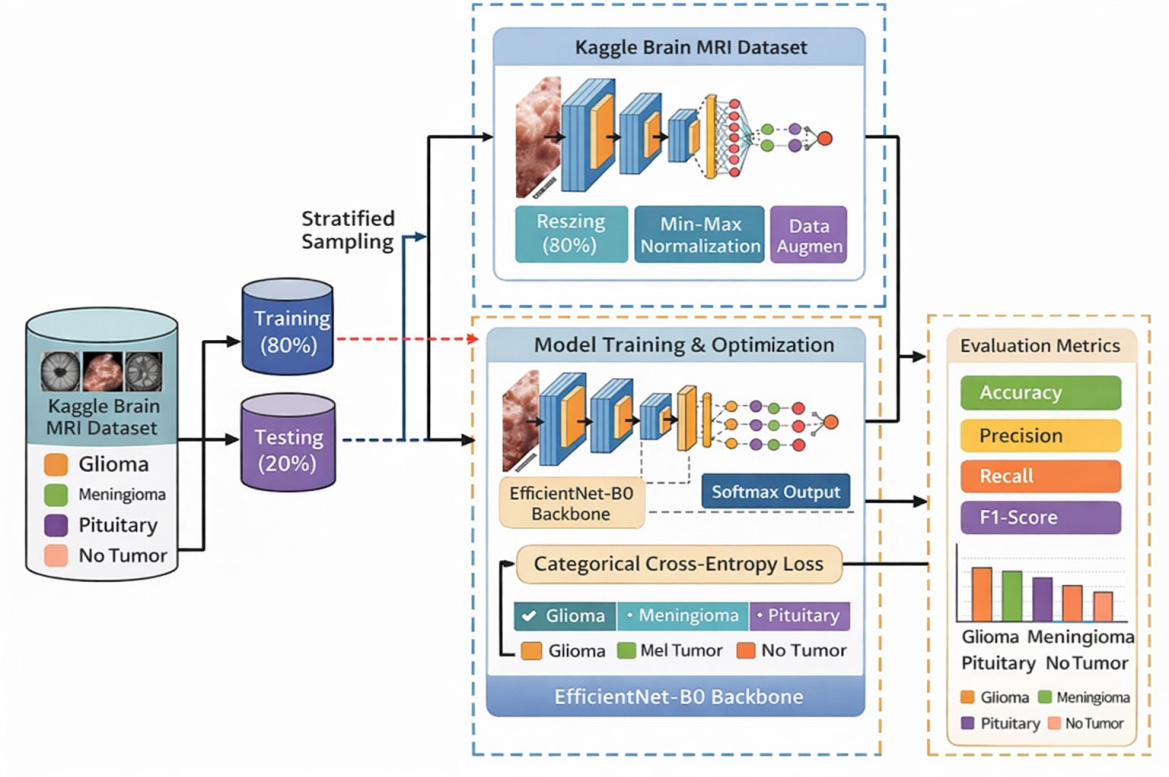
Automated Brain Tumor Analysis from MRI Using Deep Learning
Open Access | Research Article | 21 March 2026
A Data-driven Framework for Modeling Environmental Exposure Mixtures, Biological Aging Acceleration, and Chronic Disease Risk in U.S. Adults
Biomedical Informatics and Smart Healthcare | Volume 2, Issue 1: 38-61, 2026 | DOI: 10.62762/BISH.2026.503823
Abstract
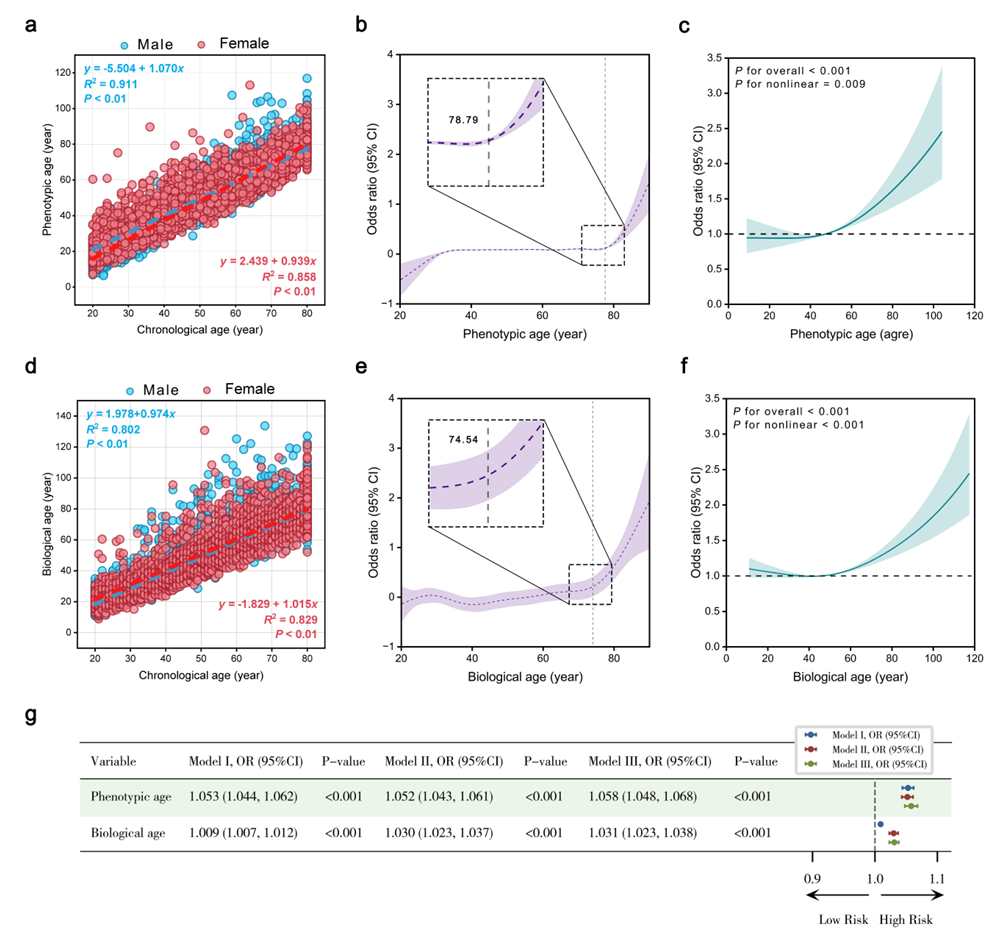
Environmental exposure biomarkers (EEBs) reflect the internal burden of pollutants, yet the joint effects of multiple exposures on biological aging and chronic disease risk remain insufficiently characterized. We analyzed 8,582 adults from the 2013-2016 National Health and Nutrition Examination Survey (NHANES). Mixed exposure was characterized using 74 EEBs. Phenotypic age acceleration and biological age acceleration were used as aging outcomes. Weighted quantile sum (WQS) regression, Bayesian kernel machine regression (BKMR), and LASSO regression were applied to identify key exposure components associated with aging acceleration. Logistic and Cox regression models were then used to evaluate... More >

Graphical Abstract
A Data-driven Framework for Modeling Environmental Exposure Mixtures, Biological Aging Acceleration, and Chronic Disease Risk in U.S. Adults
Open Access | Research Article | 12 March 2026
Bridging Predictive Modeling and Clinical Interpretability: An Explainable AI Approach to Parkinson’s Disease Detection
Biomedical Informatics and Smart Healthcare | Volume 2, Issue 1: 20-37, 2026 | DOI: 10.62762/BISH.2026.470997
Abstract
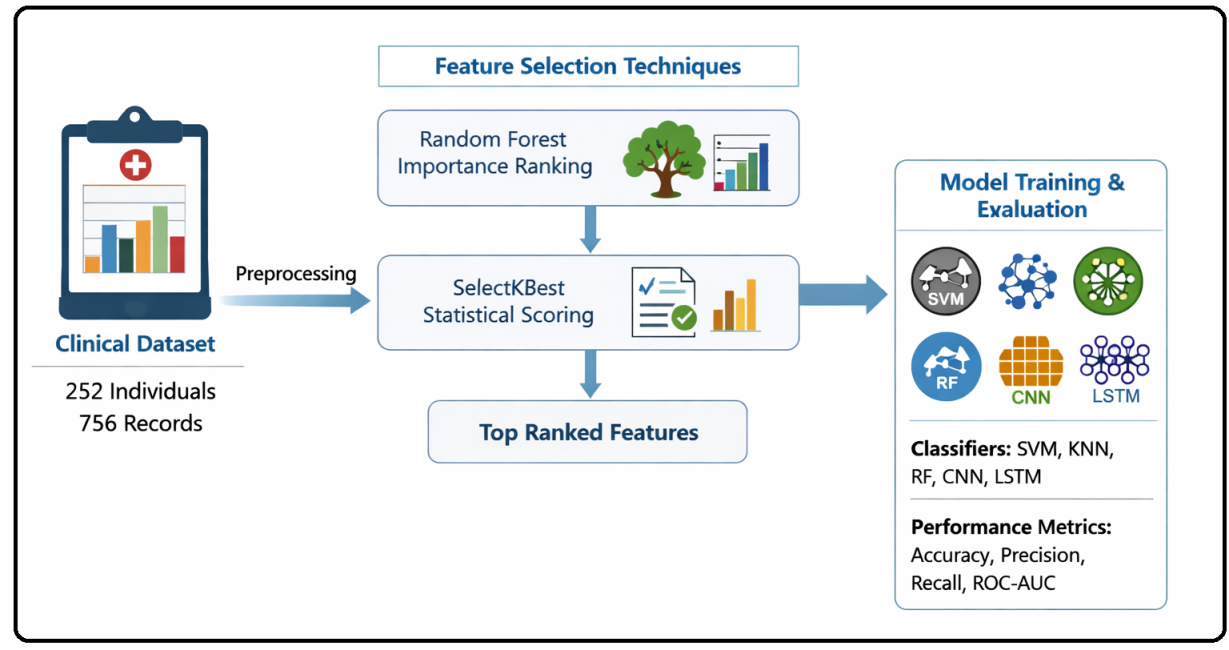
Parkinson’s disease (PD) is the second most common neurodegenerative disorder worldwide, predominantly affecting older adults. Early detection is crucial, as subtle motor and non-motor symptoms frequently overlap with other conditions, often resulting in delayed diagnosis. Many existing models rely on costly and less accessible imaging modalities such as MRI or PET scans, limiting their applicability in resource-constrained settings where only routine clinical data are available. This study develops interpretable AI models for early PD detection using structured clinical variables, incorporating feature selection techniques. Feature selection was conducted via Random Forest (RF) importance... More >

Graphical Abstract
Bridging Predictive Modeling and Clinical Interpretability: An Explainable AI Approach to Parkinson’s Disease Detection
Open Access | Research Article | 10 March 2026
A Tongue Image Dataset with Pathological Annotations for AI-assisted Diagnosis in Traditional Chinese Medicine
Biomedical Informatics and Smart Healthcare | Volume 2, Issue 1: 5-19, 2026 | DOI: 10.62762/BISH.2026.303296
Abstract
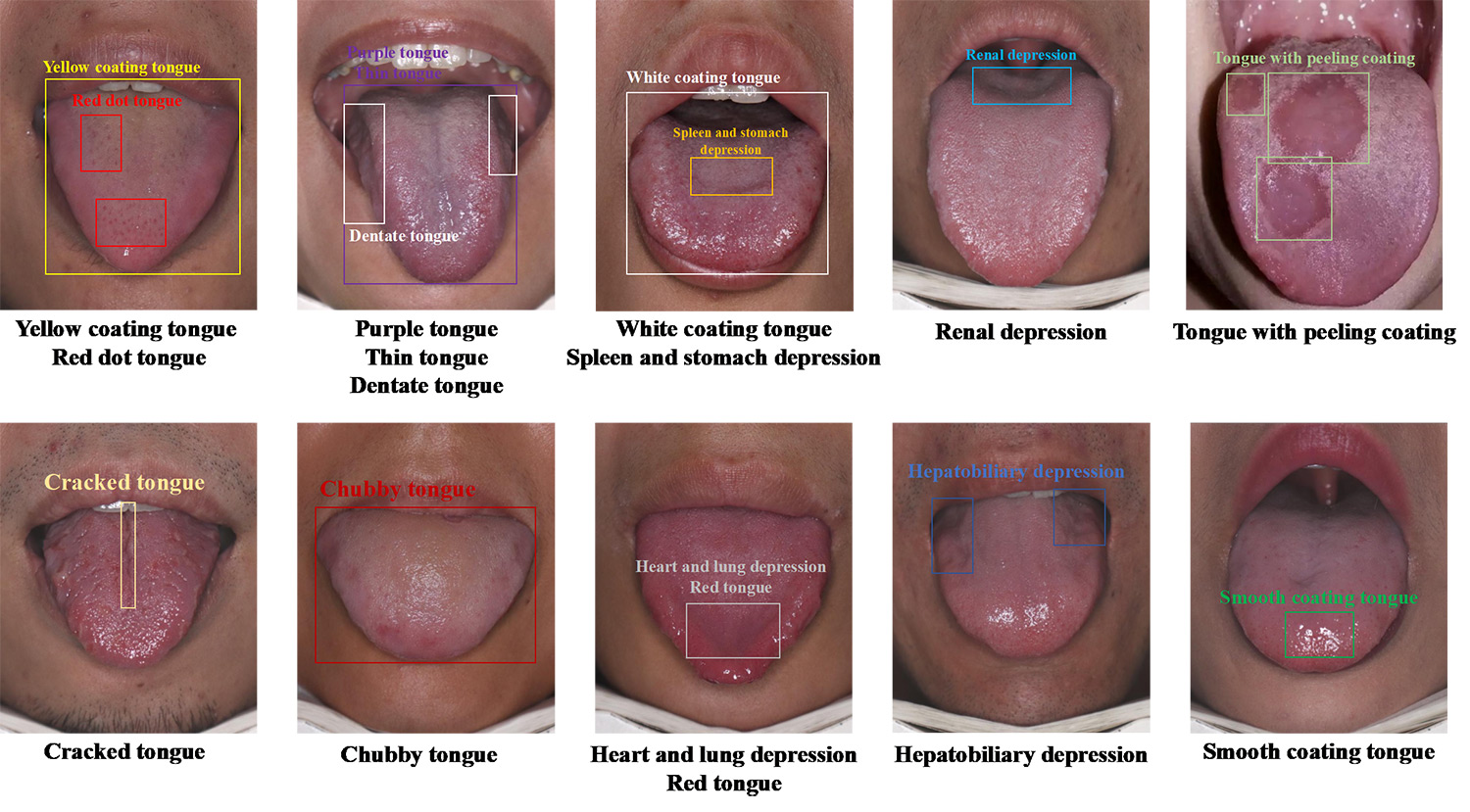
Tongue diagnosis is a core component of Traditional Chinese Medicine (TCM) with important clinical application value, yet its standardization is severely hampered by the subjectivity of manual interpretation and the lack of unified imaging acquisition protocols. Worse still, the scarcity of large-scale annotated datasets has become a key bottleneck restricting the development of artificial intelligence (AI)-assisted TCM tongue diagnosis technology. To address these critical issues, this study constructs a high-quality standardized dataset dedicated to AI-driven TCM tongue diagnosis research. The dataset contains 6,719 high-resolution tongue images collected under strictly standardized condit... More >

Graphical Abstract
A Tongue Image Dataset with Pathological Annotations for AI-assisted Diagnosis in Traditional Chinese Medicine
Open Access | Editorial | 02 February 2026
Saliency Object Detection-Based Medical Image Fusion: Future Directions for Smart Healthcare Systems
Biomedical Informatics and Smart Healthcare | Volume 2, Issue 1: 1-4, 2026 | DOI: 10.62762/BISH.2025.918243
Abstract
Saliency Object Detection-Based Medical Image Fusion concentrates on the most prominent anatomical parts that naturally attract attention. The process begins with a two-step pipeline. First, it identifies the salient regions those structures most critical to a diagnostic decision. These highlighted areas are then fed into a guided-filtering framework. This work blends them with complementary information from a second imaging modality, such as CT and MRI. The method uses total variation regularization to suppress noise while preserving edges. A saliency-based weighting scheme ensures that every key detail is retained. The result is a single, high-quality image that carries the full diagnostic... More >