Volume 2, Issue 3 (In Progress)


In Progress
Citations: Crossref logo 0,   0   |   Viewed: 2112, Download: 616

Table of Contents

Open Access | Research Article | 24 September 2026
ATR-FTIR Spectral Characteristics and Their Application to the Classification of Cultivated Karst Soils in Shilin County
Digital Intelligence in Agriculture | Volume 2, Issue 3: 179-190, 2026 | DOI: 10.62762/DIA.2026.518539
Abstract
To enable rapid, non-destructive analysis and functional classification of karst calcareous soils in Shilin County, Kunming, this study acquired mid-infrared attenuated total reflectance Fourier-transform infrared (ATR-FTIR) spectra in the 4000-900\cmi{} range from 409 soil samples. After standardized preprocessing, the samples were preliminarily partitioned into four spectral groups by K-means clustering, and a partial least squares discriminant analysis (PLS-DA) model was constructed. Variable importance in projection (VIP) scores were further used to identify key spectral features distinguishing the classes. The spectra were dominated by peaks at 3620, 1650, and 1020\cmi{}, and no obvious... More >

Graphical Abstract
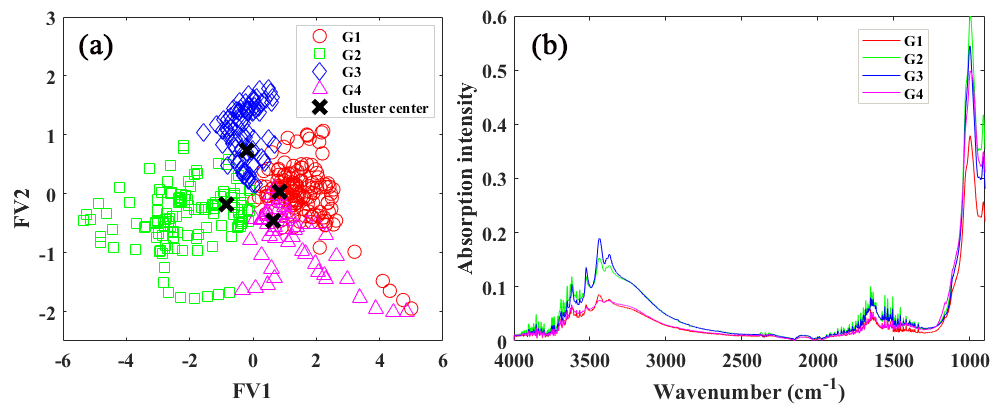
ATR-FTIR Spectral Characteristics and Their Application to the Classification of Cultivated Karst Soils in Shilin County
Open Access | Research Article | 23 September 2026
Construction and Application Performance of a Smart Farm Technology System for Plateau Cold-Season Vegetables: A Case Study in Huangzhong District, Qinghai Province, China
Digital Intelligence in Agriculture | Volume 2, Issue 3: 168-178, 2026 | DOI: 10.62762/DIA.2026.880326
Abstract
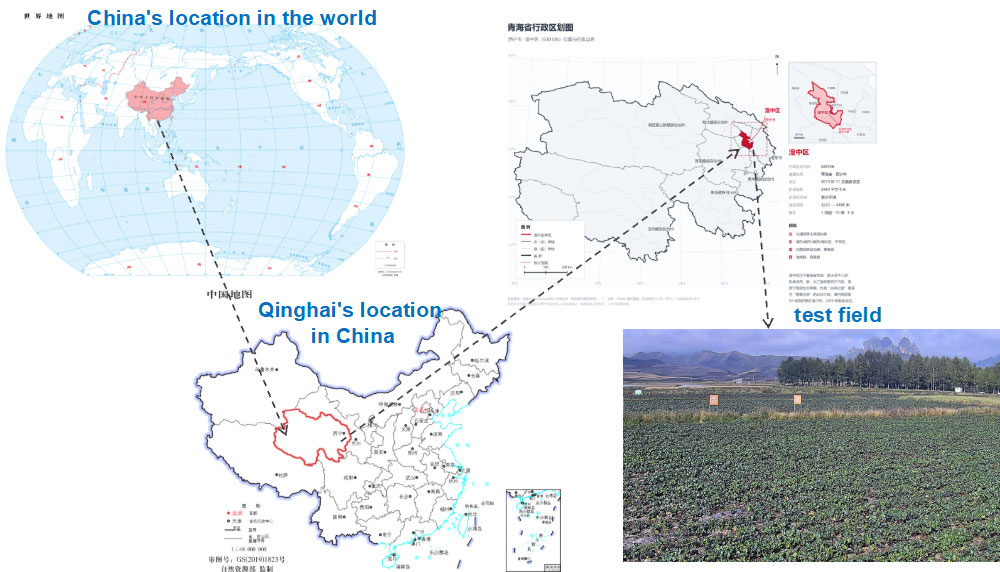
Open-field vegetable production in the cold plateau regions of Northwest China faces labor shortages, extensive management, meteorological risks, and inefficient use of agricultural inputs. Taking a 6.67 ha smart farm in Huangzhong District, Xining, Qinghai Province, China, as a case study, this study developed a four-tier smart agriculture system comprising perception, transmission, platform, and application layers. The system integrates agricultural Internet of Things (IoT) monitoring, BeiDou Navigation Satellite System (BDS)-based intelligent machinery, precision water and fertilizer management, and a big-data decision-making platform, all adapted to plateau conditions. Field trials and o... More >

Graphical Abstract
Construction and Application Performance of a Smart Farm Technology System for Plateau Cold-Season Vegetables: A Case Study in Huangzhong District, Qinghai Province, China
Open Access | Research Article | 22 September 2026
A Big Data-Driven Hybrid Ensemble Learning Framework for Crop Yield Prediction in Low-Productivity Districts
Digital Intelligence in Agriculture | Volume 2, Issue 3: 158-167, 2026 | DOI: 10.62762/DIA.2026.295683
Abstract
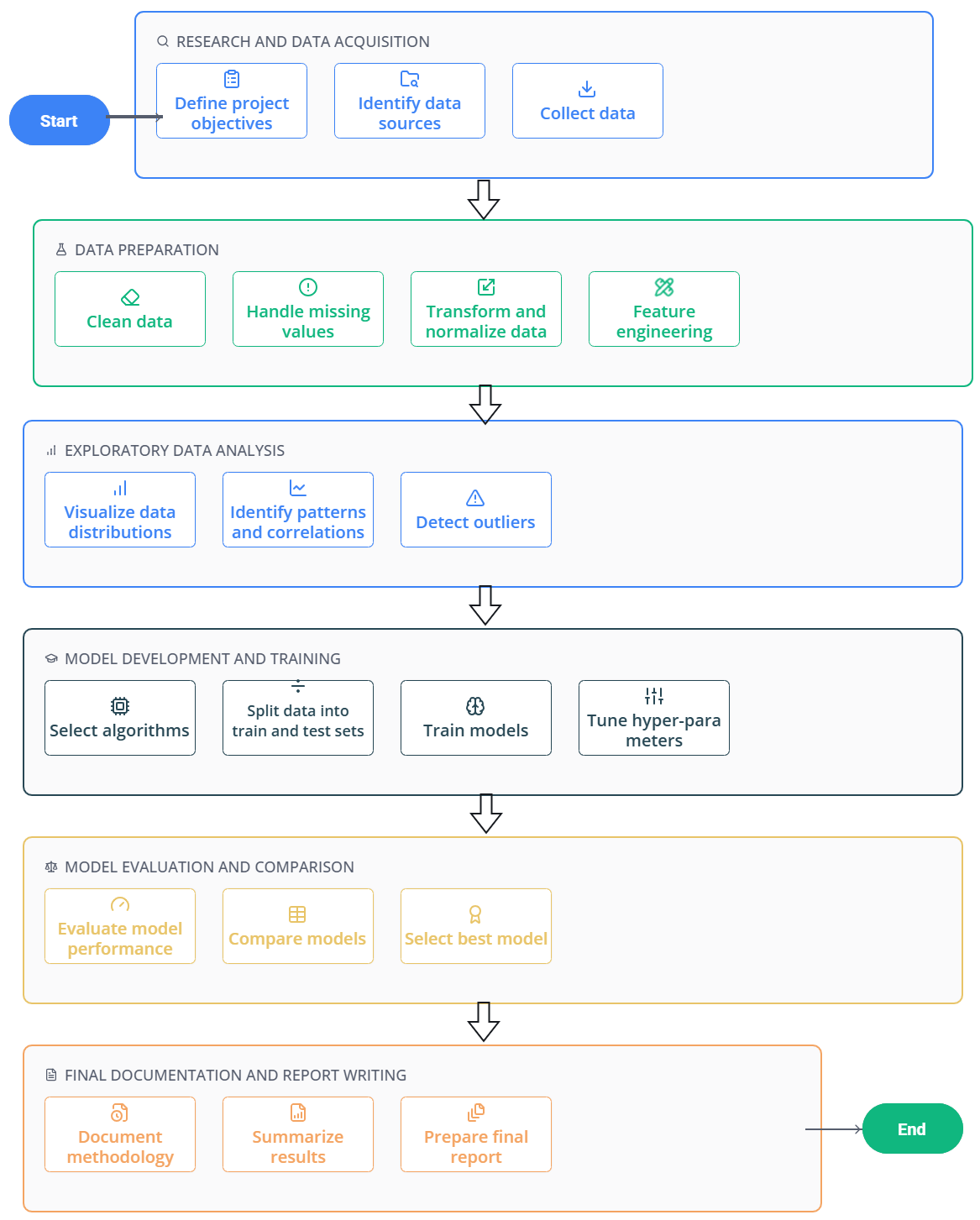
Low-productivity agricultural belts in India face the compounding realities of land fragmentation, erratic weather, and heterogeneous soils, which together limit harvest outcomes. Precision agriculture and big data analytics together offer an innovative solution that turns large volumes of heterogeneous data into actionable agronomic intelligence. This study proposes a big-data-driven crop yield prediction (CYP) framework tailored to low-productivity districts in India. The architecture combines soil and climatic analytics with data warehousing, machine learning (four base regressors and voting-based hybrid ensembles), and a preprocessing pipeline designed for compatibility with distributed... More >

Graphical Abstract
A Big Data-Driven Hybrid Ensemble Learning Framework for Crop Yield Prediction in Low-Productivity Districts
Open Access | Review Article | 20 September 2026
Machine Learning and Deep Learning in Agriculture: A PRISMA Systematic Review of Architectures, Applications, and Open Science Practices (2019–2026)
Digital Intelligence in Agriculture | Volume 2, Issue 3: 126-157, 2026 | DOI: 10.62762/DIA.2026.703096
Abstract
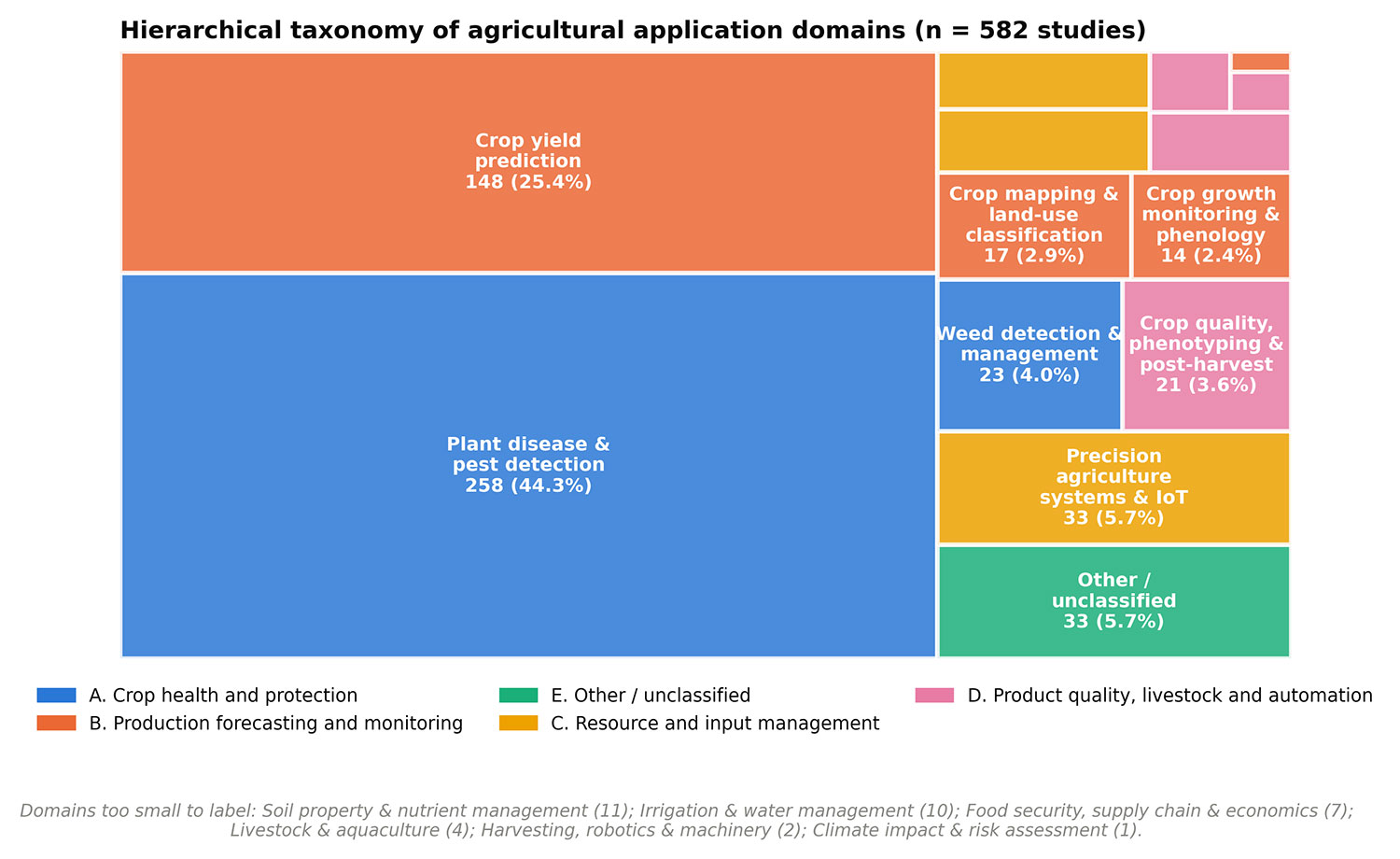
Agriculture faces growing pressures from food insecurity, climate change, and resource scarcity, increasing demand for scalable analytical tools. This PRISMA 2020-compliant systematic review synthesised 582 peer-reviewed studies on machine learning (ML) and deep learning (DL) in agriculture published between January 2019 and March 2026, with 430 retrieved full texts forming the analytic subsample. Publication volume increased from 6 papers in 2019 to 251 in 2025, corresponding to a compound annual growth of approximately 86%. Convolutional backbones remained dominant (57.2%), while Transformer-based models increased from 14.3% in 2022 to 41.2% in 2025. South and East Asia contributed 59.3% o... More >

Graphical Abstract
Machine Learning and Deep Learning in Agriculture: A PRISMA Systematic Review of Architectures, Applications, and Open Science Practices (2019–2026)
Open Access | Research Article | 24 August 2026
Model-Based Design and Evaluation of a Multi-Variable Hybrid Predictive Control Loop for Precision Fertigation Using Multi-Sensor Data Fusion
Digital Intelligence in Agriculture | Volume 2, Issue 3: 114-125, 2026 | DOI: 10.62762/DIA.2026.947445
Abstract
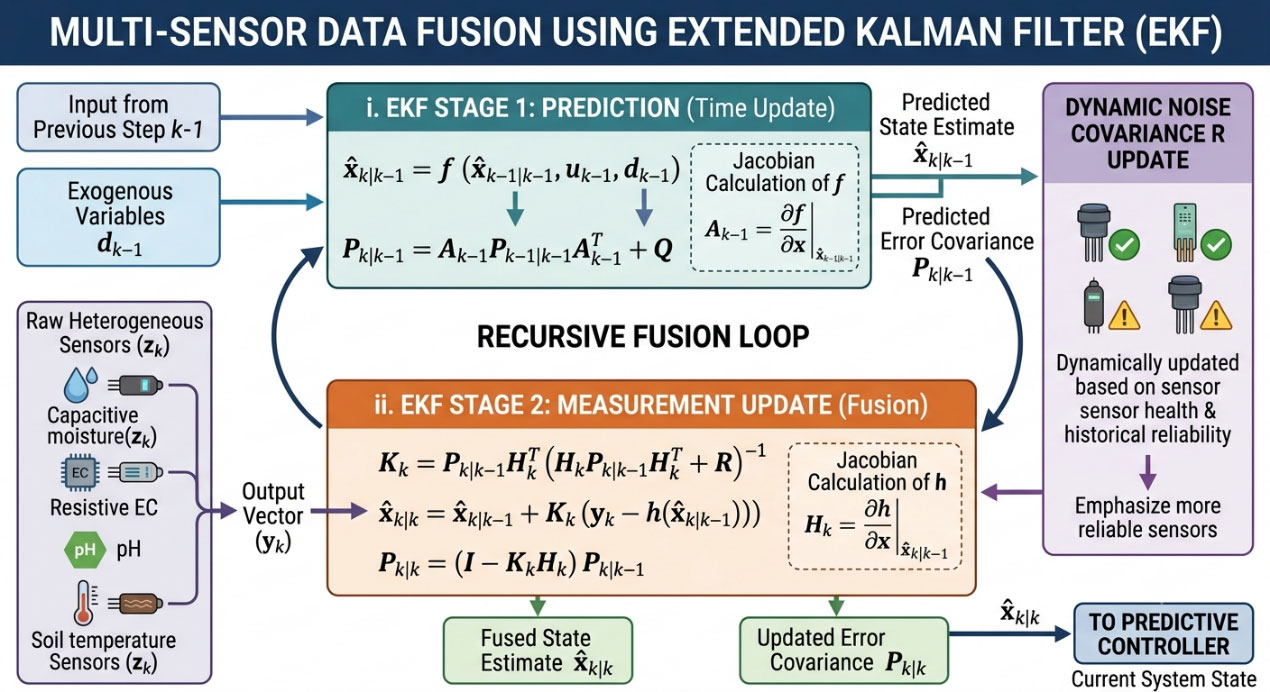
Efficient water and nutrient management remains a major challenge in modern agriculture due to rising fertilizer costs, global water scarcity, and environmental concerns such as groundwater contamination from nutrient leaching. Conventional fertigation typically relies on uniform application rates that neglect spatial and temporal root-zone variability, resulting in inefficient resource utilization. To address these limitations, this study proposes and evaluates an automated Multi-Variable Hybrid Predictive Control (HPC) framework for precision fertigation. The system captures the highly nonlinear dynamics of rapid soil moisture changes and slower nutrient transport using a multi-variable st... More >

Graphical Abstract
Model-Based Design and Evaluation of a Multi-Variable Hybrid Predictive Control Loop for Precision Fertigation Using Multi-Sensor Data Fusion