Volume 2, Issue 3 (In Progress)


In Progress
Citations: Crossref logo 0,   0   |   Viewed: 1774, Download: 625

Table of Contents

Open Access | Research Article | 17 August 2026
Transition-Metal Doping and Biaxial Strain Tune Magnetism and Electronic Structure in Two-Dimensional GaN: A First-Principles Study
Journal of Advanced Materials Research | Volume 2, Issue 3: 236-250, 2026 | DOI: 10.62762/JAMR.2026.353789
Abstract
Pristine two-dimensional (2D) GaN is non-magnetic, which limits its direct use in semiconductor spintronics. Here, first-principles calculations were used to screen 3d transition-metal substitution (TM = Sc-Zn) at 6.25 at.% and 9.375 at.% and to evaluate biaxial strain from \(-3%\) to \(3%\). Co substitution produced the most favorable magnetic semiconductor response among the screened dopants. The two concentrations yielded magnetic moments of \(8.00\) and \(12.00\) \(\mu_B\) per supercell and band gaps of \(0.80\) and \(0.55\) eV, respectively. Biaxial strain preserved the magnetic order while tuning the band gaps. In the \(6.25\) at.% Co-doped system, the gap reached \(0.89\) eV at \(2%\)... More >

Graphical Abstract
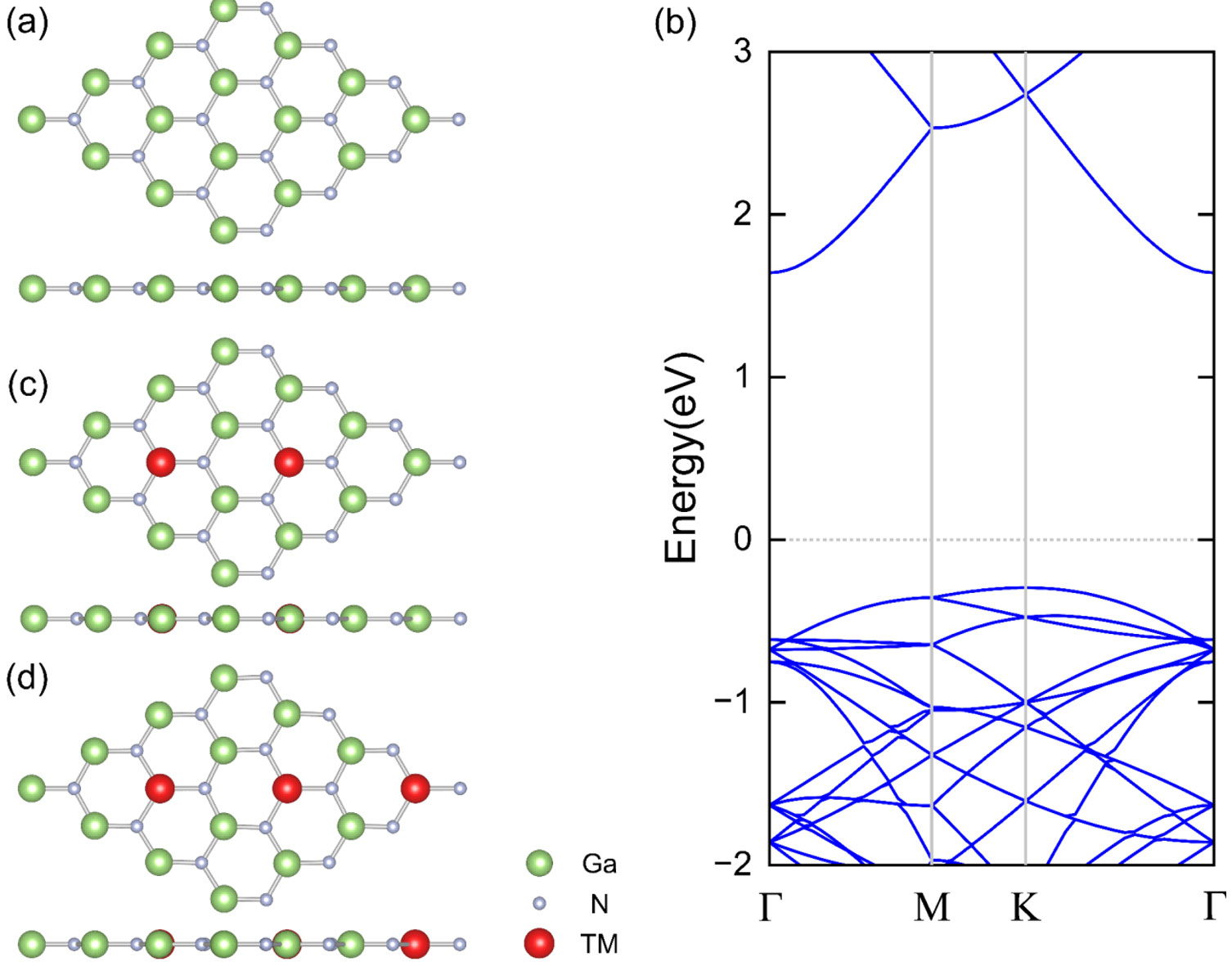
Transition-Metal Doping and Biaxial Strain Tune Magnetism and Electronic Structure in Two-Dimensional GaN: A First-Principles Study
Open Access | Review Article | 03 August 2026
Hydrogen Storage Behavior of Ti-Based High-Entropy Alloys: A Review
Journal of Advanced Materials Research | Volume 2, Issue 3: 214-235, 2026 | DOI: 10.62762/JAMR.2026.769952
Abstract
Titanium-based high-entropy alloys (HEAs) have emerged as promising solid-state hydrogen storage materials owing to their structural stability, tunable thermodynamics, and rapid kinetics. This review systematically examines the hydrogen storage behaviour of Ti-based HEAs across three structural categories: body-centered cubic (BCC) single-phase alloys, C14 Laves phase alloys, and multiphase systems containing CsCl-type structures. The high-entropy effect, severe lattice distortion, sluggish diffusion, and cocktail effect collectively enable these alloys to overcome key limitations of conventional materials, including difficult activation, poor reversibility, and insufficient cycling stabilit... More >

Graphical Abstract
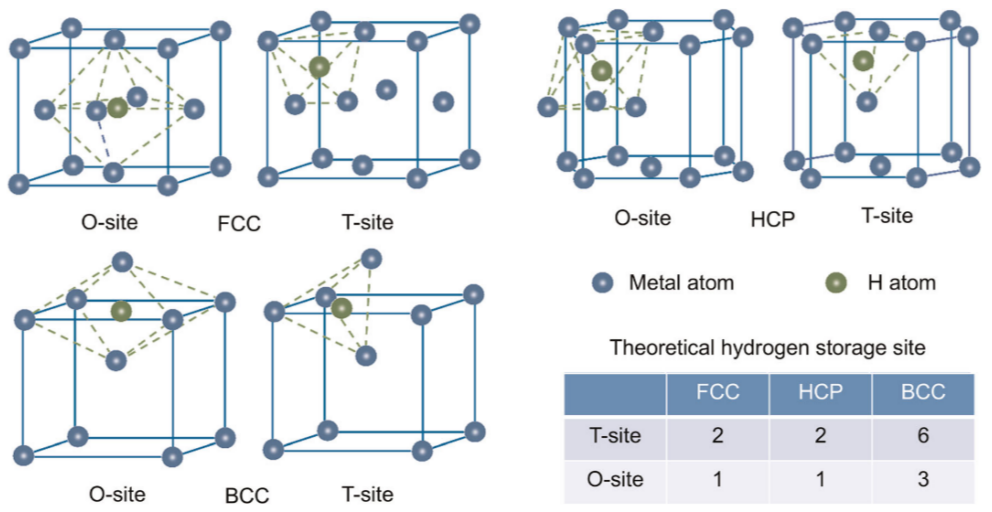
Hydrogen Storage Behavior of Ti-Based High-Entropy Alloys: A Review
Open Access | Review Article | 27 July 2026
Layered Protective Interfacial Materials for Zinc Anodes in Aqueous Batteries: A Review
Journal of Advanced Materials Research | Volume 2, Issue 3: 195-213, 2026 | DOI: 10.62762/JAMR.2026.360343
Abstract
Aqueous zinc-ion batteries (AZIBs) are promising for large-scale energy storage due to their high safety, low cost, and environmental friendliness. However, their practical application is hindered by severe parasitic side reactions and uncontrollable dendrite growth on zinc anodes, leading to rapid performance degradation. Constructing an artificial interphase layer (AIL) on the zinc surface has emerged as an effective strategy to isolate the electrolyte and regulate interfacial electrochemistry. Among various candidates, layered materials (LMs) with two-dimensional structures offer intrinsic advantages-including tunable interlayer channels, mechanical flexibility, and high surface areas—t... More >

Graphical Abstract
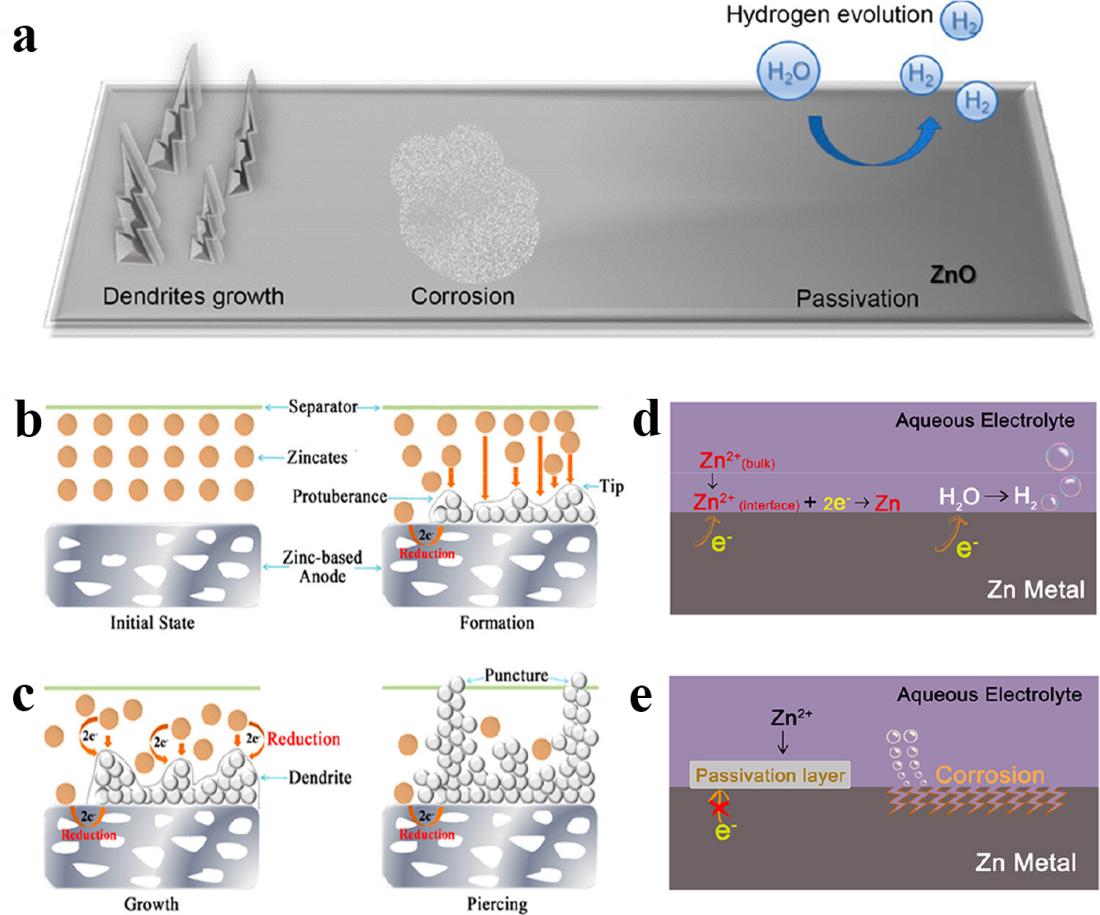
Layered Protective Interfacial Materials for Zinc Anodes in Aqueous Batteries: A Review
Open Access | Research Article | 06 July 2026
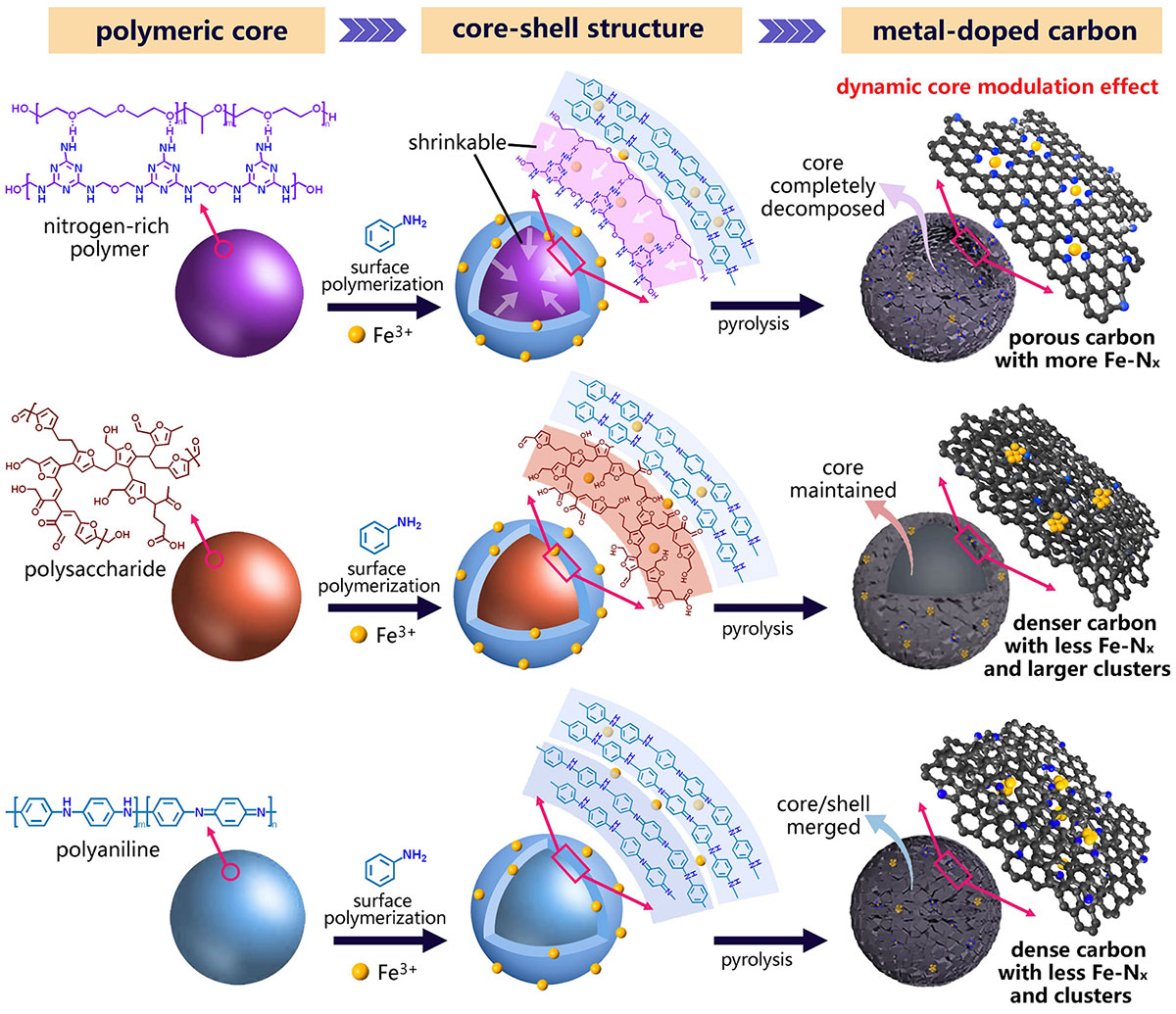
A Dynamic Core Modulation Strategy for Enhancing Active Sites of Polymer-Derived Carbon Electrocatalysts
Journal of Advanced Materials Research | Volume 2, Issue 3: 169-194, 2026 | DOI: 10.62762/JAMR.2026.894537
Abstract
Polymer-derived carbons have emerged as efficient and economical electrocatalysts for energy-related reactions such as oxygen reduction and hydrogen evolution. However, their performance often faces an inherent trade-off between porosity and electronic conductivity, necessitating precise regulation of composition and structure at the molecular level. To enhance the formation of accessible active sites, we construct a series of core@polyaniline precursors with systematically varied organic cores (a nitrogen-rich polymer (NPS), polysaccharide (GluS), and polyaniline (PANI) itself). Metals ions are introduced during the shell polymerization. The resultant core-shell precursors were then subject... More >

Graphical Abstract
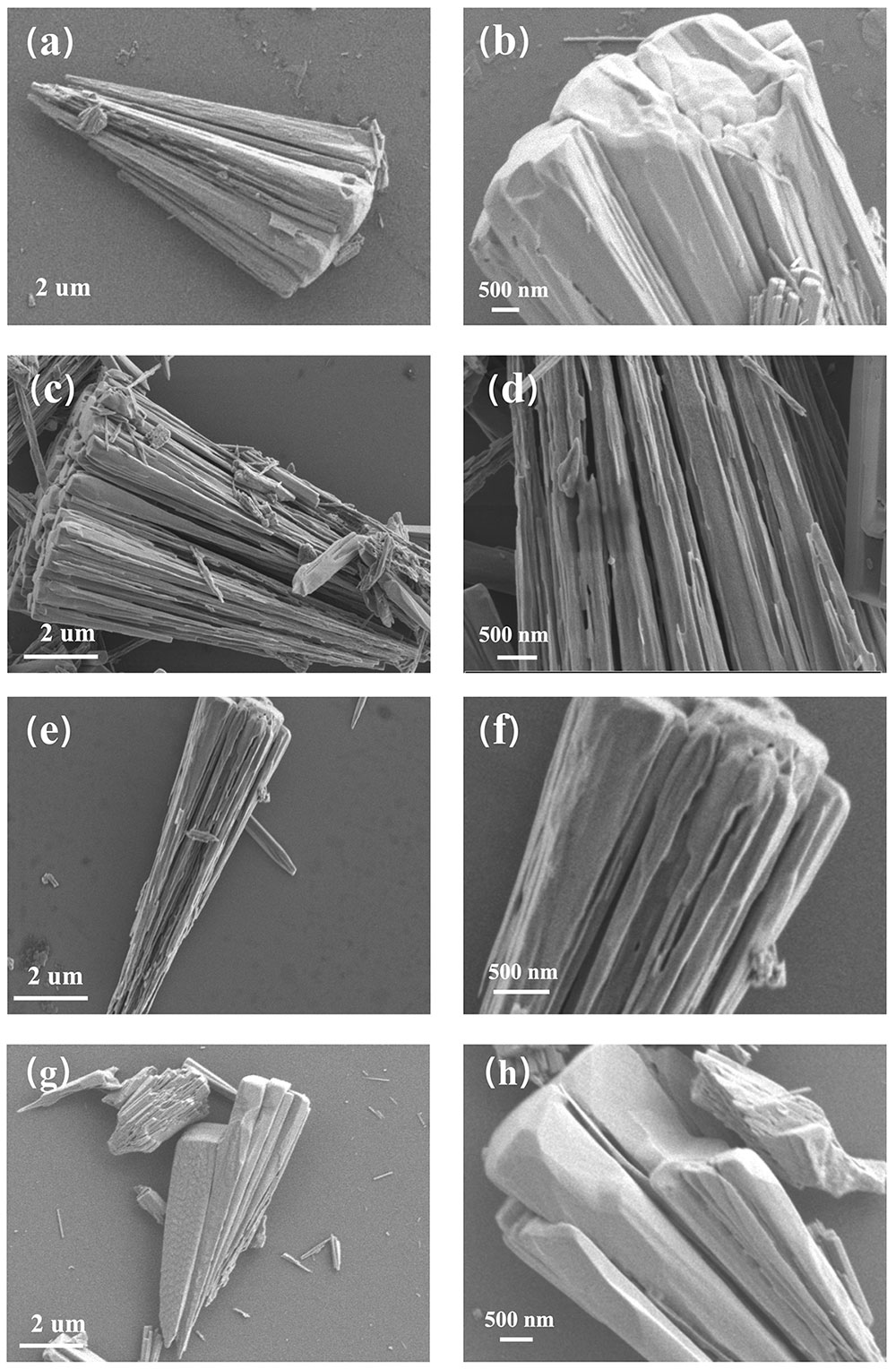
A Dynamic Core Modulation Strategy for Enhancing Active Sites of Polymer-Derived Carbon Electrocatalysts