

Journal of Reliable and Secure Computing

Publishing Model:
ISSN:
ISSN: 3070-6424
The Journal of Reliable and Secure Computing (JRSC) is an international peer-reviewed journal dedicated to advancing research and practice in reliable, trustworthy, and secure computing.
DOI Prefix: 10.62762/JRSC

Journal Metrics

-
Impact Factor
-
CiteScore

Recent Articles

Open Access | Research Article | 21 September 2026
Paying for Trust at the Edge: Secure, Lightweight, Deadline-Aware Named Data Networking for Edge-Cloud Compute Orchestration
Journal of Reliable and Secure Computing | Volume 2, Issue 3: 212-232, 2026 | DOI: 10.62762/JRSC.2026.615829
Abstract
Edge nodes are among the most resource-constrained components of computing infrastructure, yet security verification competes directly with application execution for limited compute resources. In Named Data Networking (NDN), each retrieved object carries a producer signature whose verification consumes edge CPU cycles, while existing cryptographic and orchestration studies rarely quantify its impact on service reliability. This paper develops SLED, a secure edge--cloud framework over NDN that incorporates a Security Verification Engine (SVE) into the edge compute budget, explicitly coupling verification occupancy with named-function execution. SLED combines DACSIR, which prices verification... More >

Graphical Abstract
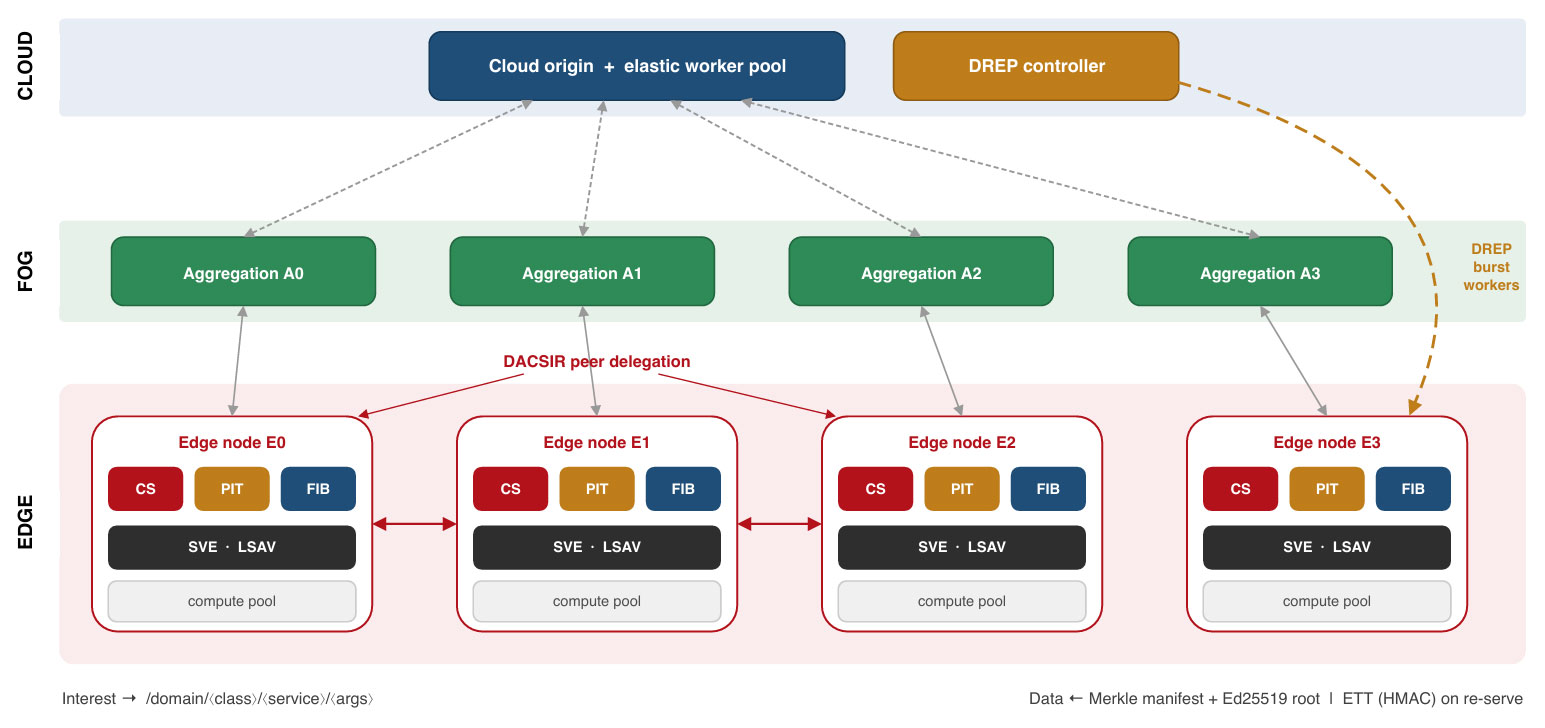
Paying for Trust at the Edge: Secure, Lightweight, Deadline-Aware Named Data Networking for Edge-Cloud Compute Orchestration
Open Access | Review Article | 20 September 2026
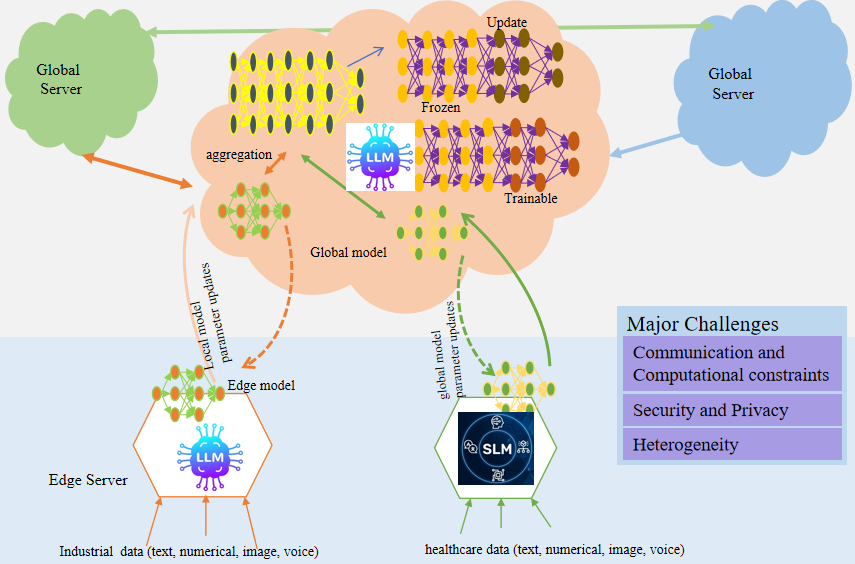
Federated Fine-Tuning of Large Language Models on Resource-Constrained Clients: Technical Approaches, Resource Costs, and Applicability
Journal of Reliable and Secure Computing | Volume 2, Issue 3: 194-211, 2026 | DOI: 10.62762/JRSC.2026.225854
Abstract
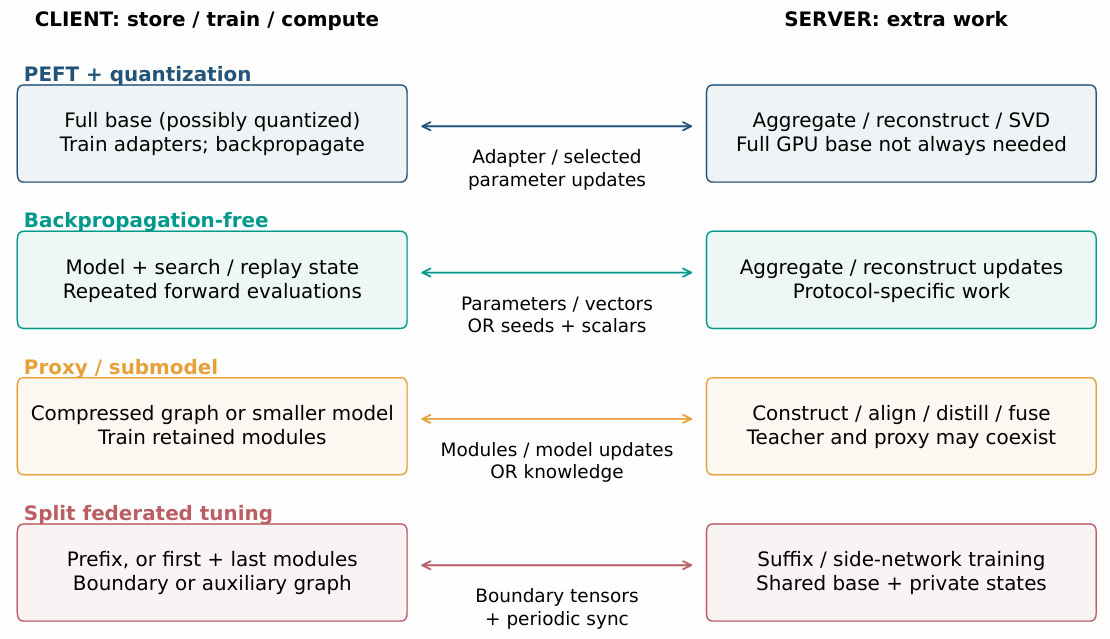
Federated fine-tuning adapts language models to distributed data and is widely adopted as a privacy-preserving alternative to centralized training, yet constrained clients must still store model weights and training states, execute updates, and communicate with a server. This review examines four composable routes---parameter-efficient and quantized adaptation, backpropagation-free adaptation, proxy or submodel adaptation, and split federated adaptation---through a common framework that traces the objects each endpoint retains, exchanges, and discloses. When a client retains the complete base, reducing adapter state leaves a base-storage floor; boundary communication depends on input dimensi... More >

Graphical Abstract

Federated Fine-Tuning of Large Language Models on Resource-Constrained Clients: Technical Approaches, Resource Costs, and Applicability
Open Access | Research Article | 19 September 2026
TrustCompute: Result Validation, Reputation-Aware Scheduling and Quality-Based Payments for Outsourced LoRA Fine-Tuning
Journal of Reliable and Secure Computing | Volume 2, Issue 3: 179-193, 2026 | DOI: 10.62762/JRSC.2026.867713
Abstract
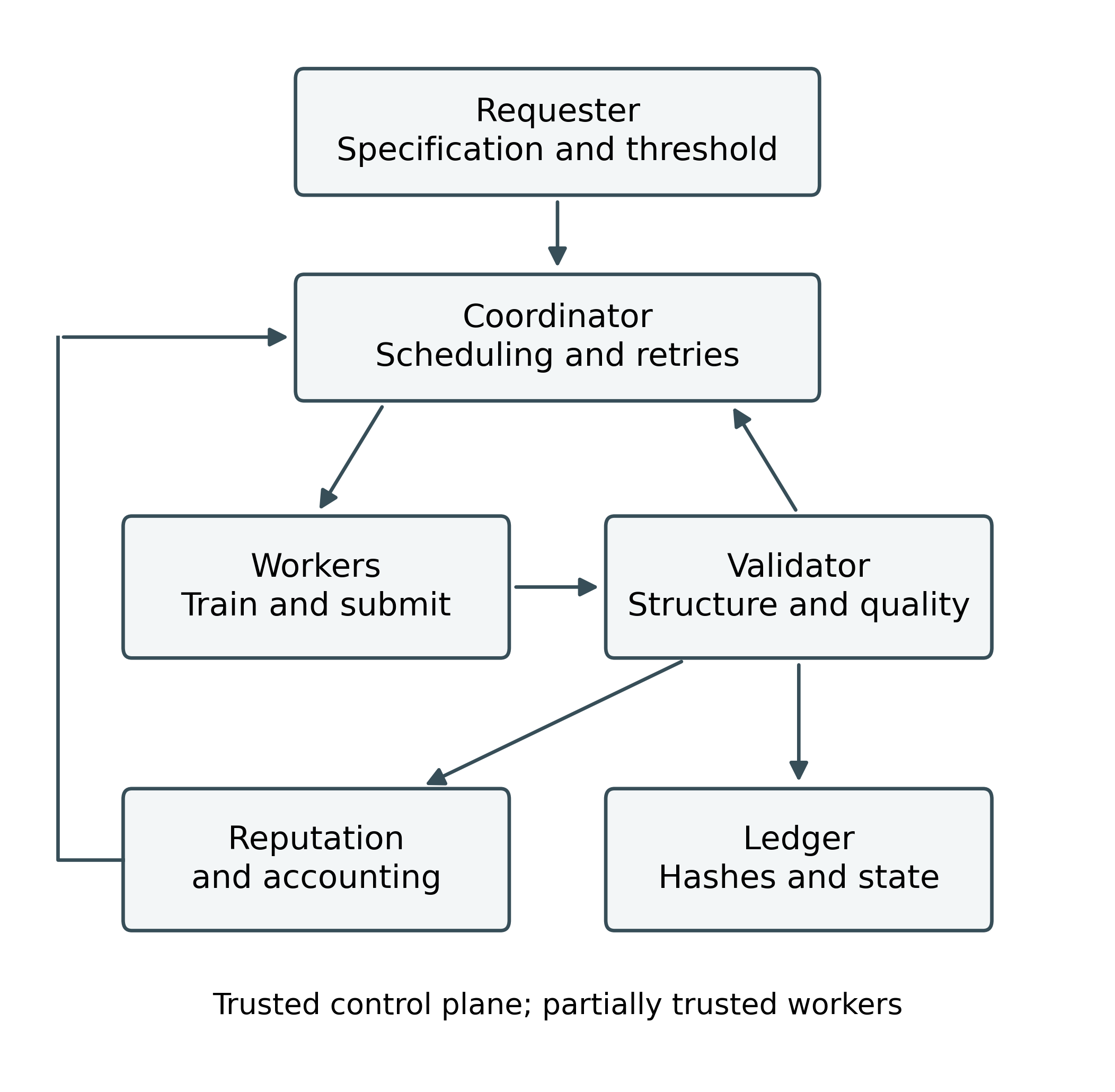
Outsourced model fine-tuning requires reliable task allocation, result validation, and incentives for quality. We present TrustCompute, a compute-sharing platform integrating two-stage adapter verification, reputation-aware scheduling, quality-based payments, and auditable ledger records for LoRA fine-tuning. Our evaluation combines synthetic workloads, real GPU-based fine-tuning, and a local Ethereum Virtual Machine (EVM) environment. Across 440 validation cases, all 400 invalid submissions were rejected and all 40 valid submissions were accepted. With 50% unreliable workers, reputation-aware scheduling achieved 100% task completion and reduced the mean failed-attempt time by 89% relative t... More >

Graphical Abstract

TrustCompute: Result Validation, Reputation-Aware Scheduling and Quality-Based Payments for Outsourced LoRA Fine-Tuning
Open Access | Research Article | 21 July 2026
Data Governance and Policy Support for Secure AI-Driven Corporate Digital Transformation
Journal of Reliable and Secure Computing | Volume 2, Issue 3: 164-178, 2026 | DOI: 10.62762/JRSC.2026.326448
Abstract
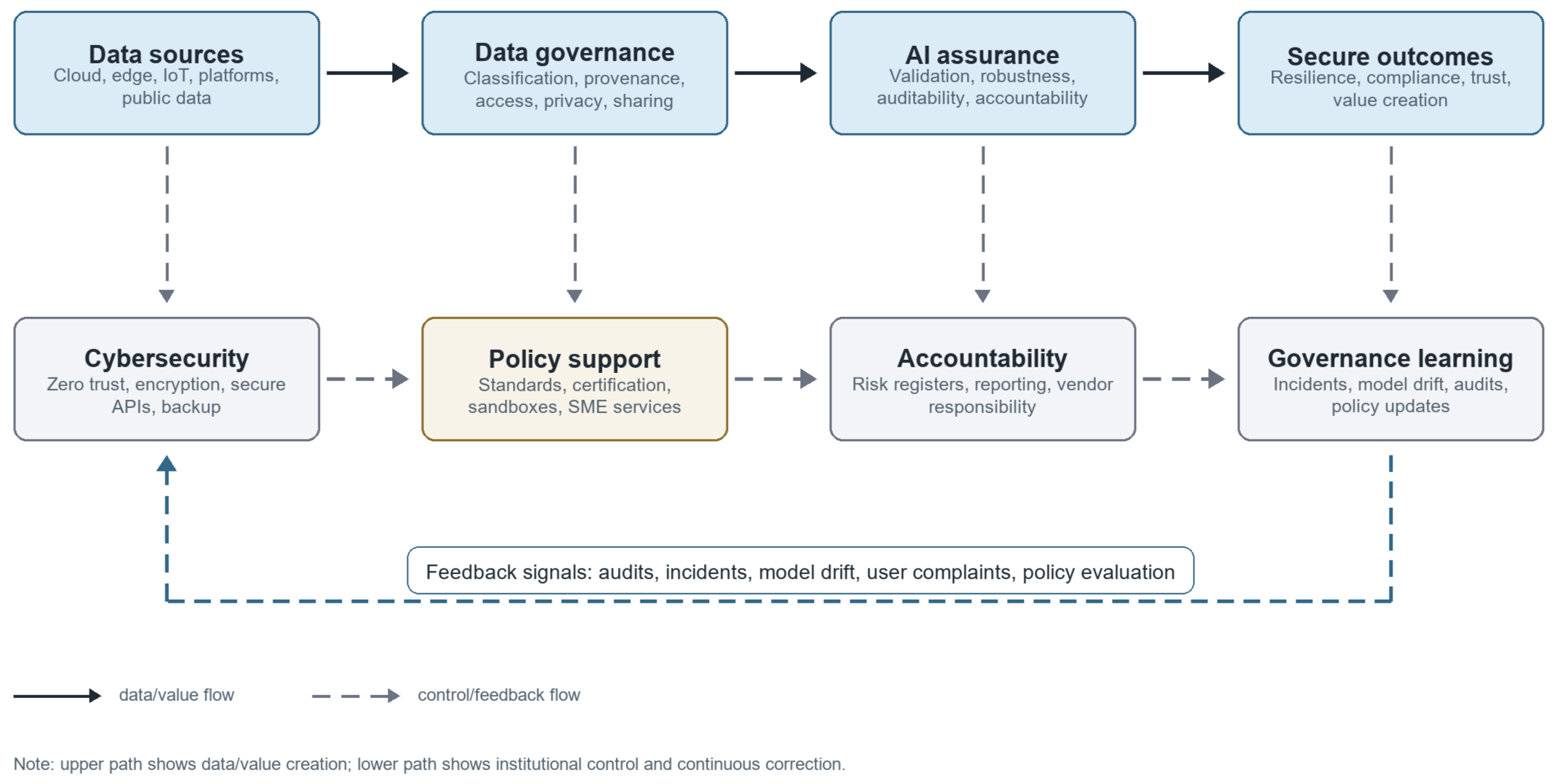
Artificial intelligence is becoming a core engine of corporate digital transformation, but its value depends first on secure, reliable, and accountable data and model infrastructures. As firms combine cloud platforms, edge devices, IoT sensors, digital twins, platform data, and algorithmic decision systems, they also expand the attack surface, privacy exposure, model security risk, and compliance burden. This paper develops a security-aware data and AI governance framework for AI-driven corporate digital transformation. It positions the framework as a unified governance model rather than a narrow extension of data management: data governance controls data classification, provenance, access,... More >

Graphical Abstract
Data Governance and Policy Support for Secure AI-Driven Corporate Digital Transformation
Open Access | Editorial | 28 June 2026
Editorial: Sustainable Computing, Federated Intelligence, and Authentication Security
Journal of Reliable and Secure Computing | Volume 2, Issue 2: 161-163, 2026 | DOI: 10.62762/JRSC.2026.266725
Abstract
This editorial introduces the four articles published in Volume 2, Issue 2 of the Journal of Reliable and Secure Computing, covering sustainable blockchain architectures, federated learning with large language models at the edge, and cryptanalysis of authentication protocols for maritime and drone environments. More >
Open Access | Commentary | 19 June 2026
Comments on CSAP-IoD: A Chaotic Map-Based Secure Authentication Protocol for Internet of Drones
Journal of Reliable and Secure Computing | Volume 2, Issue 2: 156-160, 2026 | DOI: 10.62762/JRSC.2026.503368
Abstract
Recently, Zahednejad and Gao (2025 Journal of Information Security and Applications, Elsevier, https://doi.org/10.1016/j.jisa.2025.104083,) identified key compromise impersonation (KCI) in both, a two-factor, and a three-factor authentication protocols for IoT devices. They further proposed a lightweight authentication scheme designed to mitigate the identified KCI threats. Subsequently, Zhang et al. (2025, IEEE Transactions on Information Forensics and Security, https://doi.org/10.1109/TIFS.2025.3599678) introduced a chaotic map-based authentication protocol for the Internet of Drones, claiming that their design is resilient to a wide range of security attacks. Earlier, Kumari et al. (2019)... More >
Open Access | Review Article | 17 June 2026
A Comprehensive Survey on Robustness and Privacy in Federated Learning Meets Large Language Model at Edge
Journal of Reliable and Secure Computing | Volume 2, Issue 2: 111-155, 2026 | DOI: 10.62762/JRSC.2026.942513
Abstract
Large Language Models (LLMs) have revolutionized natural language processing, yet their deployment is hindered by data, computation, and privacy constraints. Federated Learning (FL) offers a promising solution by enabling collaborative, privacy-preserving training across distributed devices, while the push for low-latency on-device intelligence further drives LLM integration into FL and edge settings—posing new challenges in heterogeneity and resource limits. This survey comprehensively reviews the integration of LLMs with federated learning, termed FLM, and its deployment at the edge, with particular emphasis on the robustness, privacy, and trustworthiness challenges that emerge across th... More >

Graphical Abstract

A Comprehensive Survey on Robustness and Privacy in Federated Learning Meets Large Language Model at Edge
Open Access | Research Article | 14 June 2026
Cryptanalysis of an Authentication Protocol for Edge-Centric Maritime Transportation Systems
Journal of Reliable and Secure Computing | Volume 2, Issue 2: 104-110, 2026 | DOI: 10.62762/JRSC.2026.765456
Abstract
With the rapid development of edge computing and intelligent maritime transportation systems, secure authentication and key agreement protocols have become essential for protecting communications among maritime entities and edge devices. Recently, Mahmood et al. proposed an authentication protocol for edge-centric maritime transportation systems, claiming that their scheme can resist various security attacks while ensuring efficient communication. However, practical maritime environments still face many security threats. In addition, edge infrastructures usually have limited resources. Therefore, authentication protocols require rigorous security evaluation. In this paper, we perform a crypt... More >

Journal Statistics

50
Authors
14
Countries / Regions
19
Articles
34
Scopus Citations
42.1% Cited
2025
Published Since
41,427
Article Views
10,084
Article Downloads
Journal of Reliable and Secure Computing
eISSN: 3070-6424
Crossref
Crossref
Member of Crossref
Visit Crossref →