




ISSN: 3068-6652
Indexing: Scopus Indexed
The ICCK Transactions on Emerging Topics in Artificial Intelligence (TETAI) is a peer-reviewed international journal publishing papers on emerging theories and methodologies of Artificial Intelligence.
DOI Prefix: 10.62762/TETAI

Journal Metrics

-
Impact Factor
Indexed in: Scopus

Recent Articles

Open Access | Research Article | 27 September 2026
Text Localization and Recognition of Chinese Characters in Natural Scenes Based on Improved Faster Region-Based Convolutional Neural Network
ICCK Transactions on Emerging Topics in Artificial Intelligence | Volume 3, Issue 3: 202-217, 2026 | DOI: 10.62762/TETAI.2026.620822
Abstract
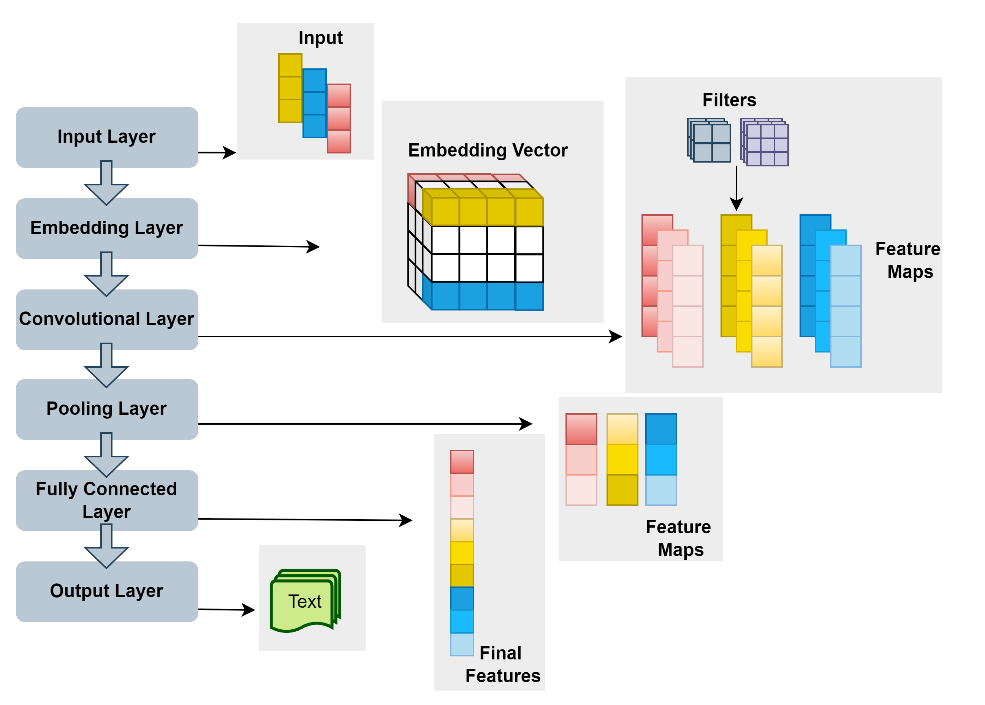
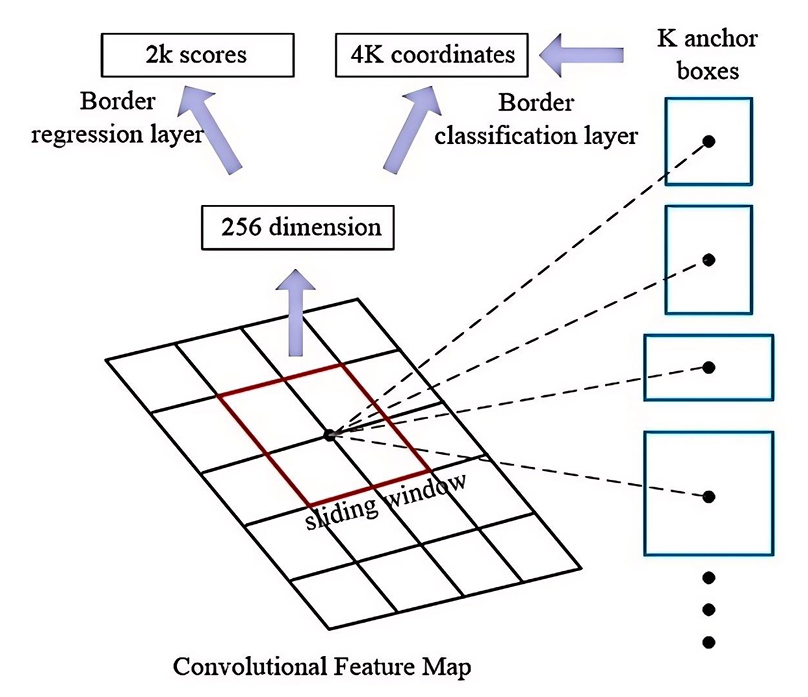
To solve the problems faced by Chinese character recognition, such as complex shapes and diverse structures, this paper adopts the Visual Geometry Group 16 (VGG-16) model for feature extraction and introduces a two-layer bidirectional Long Short-Term Memory (LSTM) network. It improves the Faster Region-based Convolutional Neural Network (Faster R-CNN) by using a Region Proposal Network (RPN) to extract candidate boxes and adjust the positions of candidate regions. The improved model, namely Faster BLSTM-CNN, is tested through three types of experiments: validation of feature extraction effectiveness, comparative analysis of the algorithm before and after improvement, and comparison with trad... More >

Graphical Abstract
Text Localization and Recognition of Chinese Characters in Natural Scenes Based on Improved Faster Region-Based Convolutional Neural Network
Open Access | Research Article | 22 September 2026
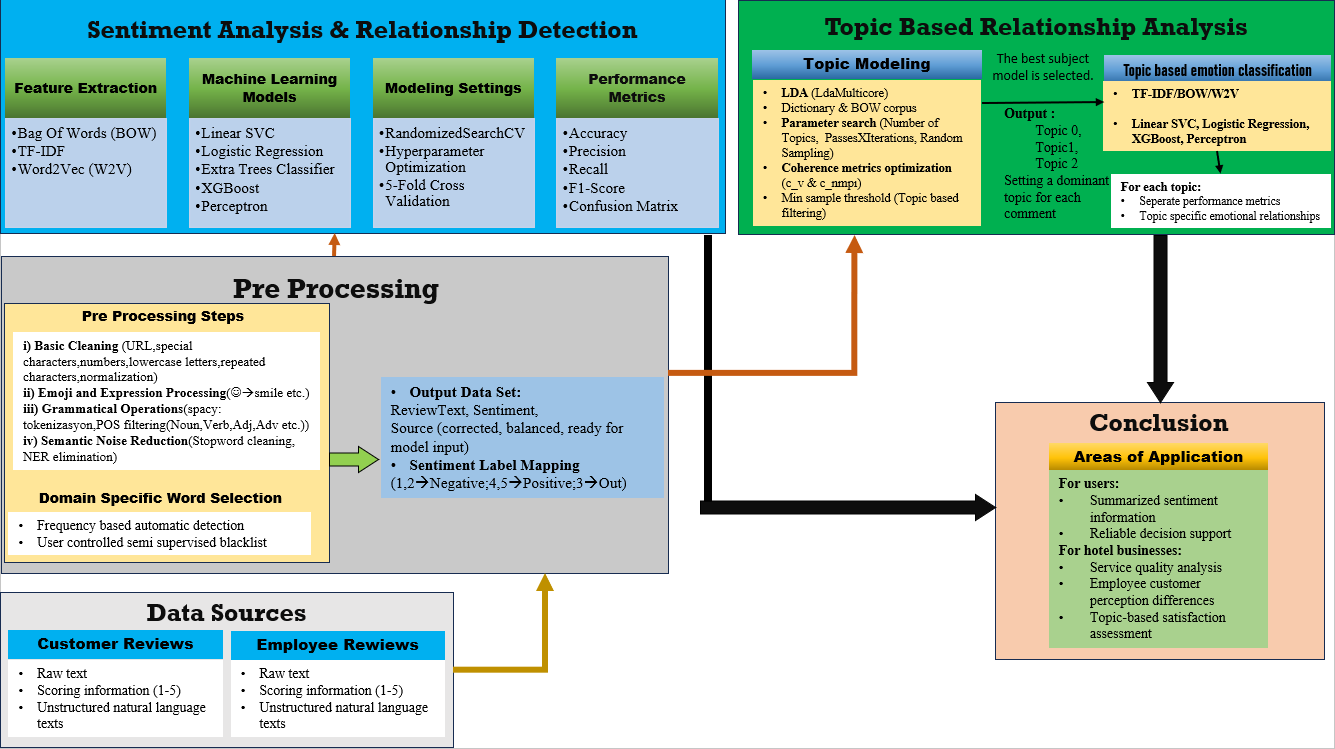
Detecting Sentiment Analysis Correlation Between Hotel Employee and Customer Reviews Using Machine Learning Algorithms
ICCK Transactions on Emerging Topics in Artificial Intelligence | Volume 3, Issue 3: 188-201, 2026 | DOI: 10.62762/TETAI.2026.991738
Abstract
Analyzing heterogeneous online reviews from multiple stakeholder groups represents an emerging challenge in AI-driven service intelligence. This study proposes a two-stage sentiment correlation detection framework and applies it to customer and employee reviews of the Istanbul Marriott \c{S}i\c{s}li hotel. During dataset construction, a semi-supervised domain-specific blacklisting approach was developed alongside standard preprocessing steps to improve sentiment signal quality. In the first phase, customer and employee reviews were treated as separate datasets, and 5-fold cross-validation was applied using TF-IDF, BOW, and Word2Vec representations with multiple classifiers, achieving 99.8% a... More >

Graphical Abstract
Detecting Sentiment Analysis Correlation Between Hotel Employee and Customer Reviews Using Machine Learning Algorithms
Open Access | Research Article | 06 August 2026 | Cited: Scopus 2
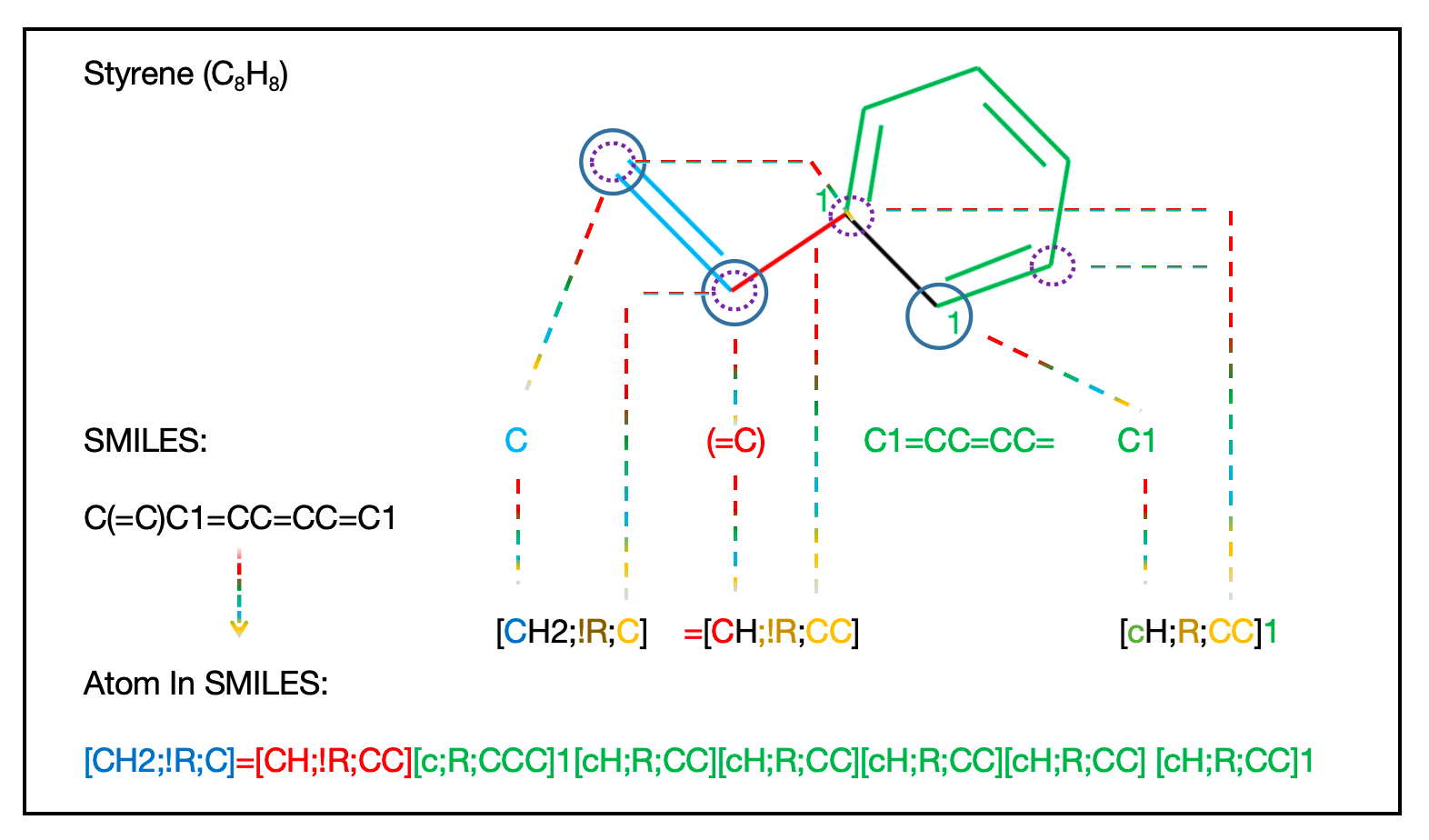
Ensemble Model with BERT, RoBERTa and XLNet for Molecular Property Prediction
ICCK Transactions on Emerging Topics in Artificial Intelligence | Volume 3, Issue 3: 170-187, 2026 | DOI: 10.62762/TETAI.2026.604672
Abstract
Molecular property prediction is a fundamental task in drug discovery and materials science, yet most high-performing approaches depend on large-scale pretraining that demands substantial computational resources. This work proposes a pretraining-free ensemble framework that trains multiple Transformer-based architectures—BERT, RoBERTa, and XLNet—from random initialization using the Atom-in-SMILES (AIS) molecular representation, which provides richer atomic-level semantics than conventional SMILES. The three Transformer encoders are coupled with BiLSTM prediction heads and integrated via a BaggingRegressor to reduce variance and improve generalization. Experiments on the ZINC250k and ZINC... More >

Graphical Abstract
Ensemble Model with BERT, RoBERTa and XLNet for Molecular Property Prediction
Open Access | Perspective | 01 June 2026 | Cited: Crossref logo  1
Ethical Concerns in Medical and Health-Related AI
ICCK Transactions on Emerging Topics in Artificial Intelligence | Volume 3, Issue 3: 160-169, 2026 | DOI: 10.62762/TETAI.2026.613827
Abstract
This perspective introduces the range of ethical concerns entailed by the widespread adoption of AI, particularly as they impact human health. It begins by (1) illustrating risks associated with all large-scale AI systems, then moves to (2) corporate and governmental applications of AI that affect human health. It overviews the ways (3) that patient usage of AI has affected human health; (4) that “passive” medical AI (like recording documents) and (5) “active” medical AI (like diagnosing and prescribing) may affect human health. It concludes with (6) reflections on reporting, responsibility, and regulation, wherein international cooperation and governance systems appear essential for... More >
Open Access | Research Article | 26 May 2026 | Cited: Crossref logo  1 , Scopus
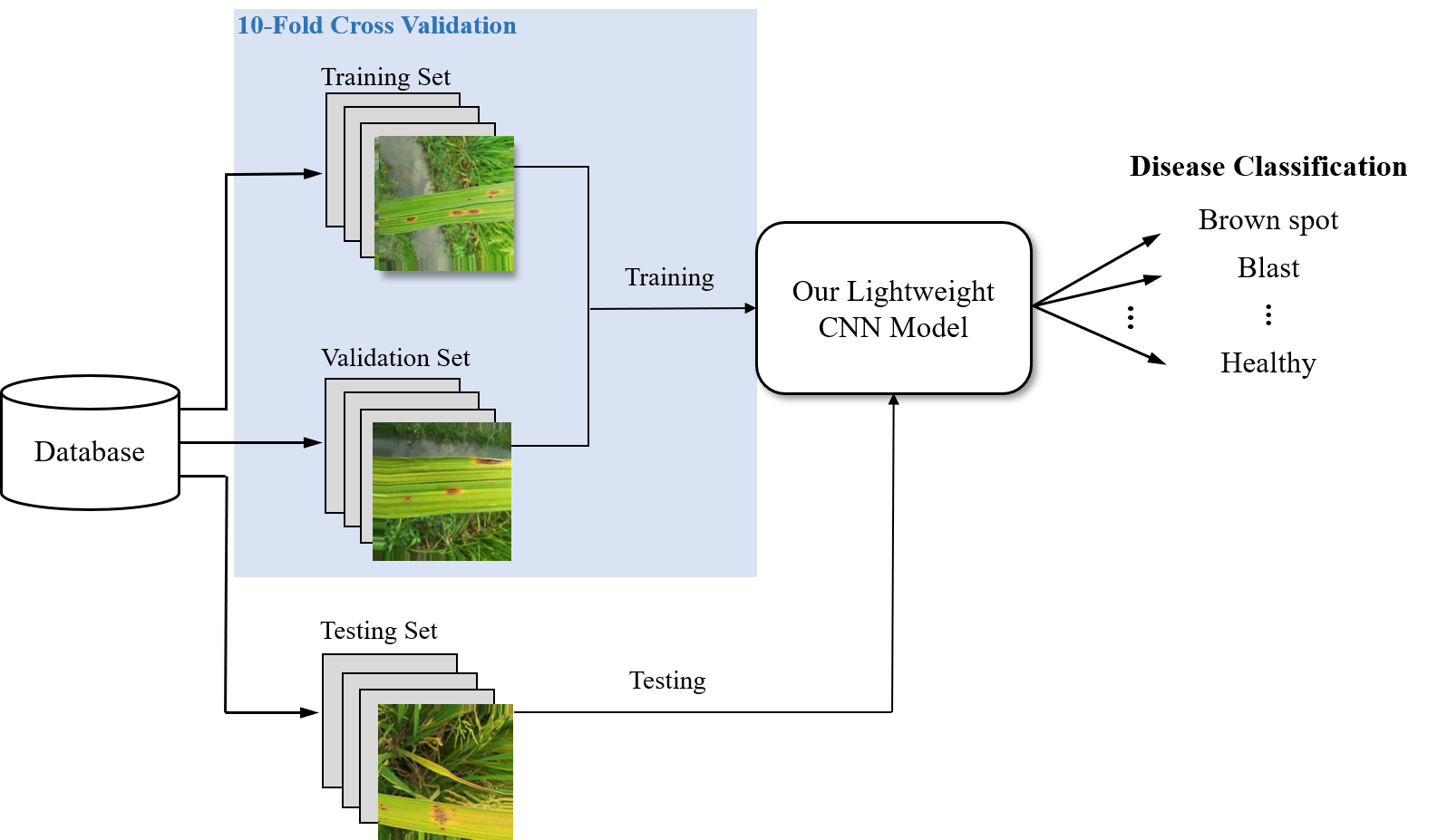
Classification of Rice Leaf Diseases Based on Lightweight Deep Learning Model
ICCK Transactions on Emerging Topics in Artificial Intelligence | Volume 3, Issue 2: 142-159, 2026 | DOI: 10.62762/TETAI.2025.878660
Abstract
Traditional methods for classifying plant diseases usually depend on manual observation, which is time-consuming, labor-intensive, and prone to human error. The rise of deep learning has greatly advanced this field by enabling more accurate and efficient classification techniques. In this paper, we introduce a novel lightweight deep learning framework that builds on the RegNetY convolutional neural network architecture by incorporating a modified Efficient Channel Attention module. This enhancement is specifically designed to improve the classification of various rice leaf diseases. Our experiments on a publicly available dataset show that the proposed approach not only boosts classification... More >

Graphical Abstract
Classification of Rice Leaf Diseases Based on Lightweight Deep Learning Model
Open Access | Research Article | 06 March 2026 | Cited: Crossref logo  4 , Scopus 4
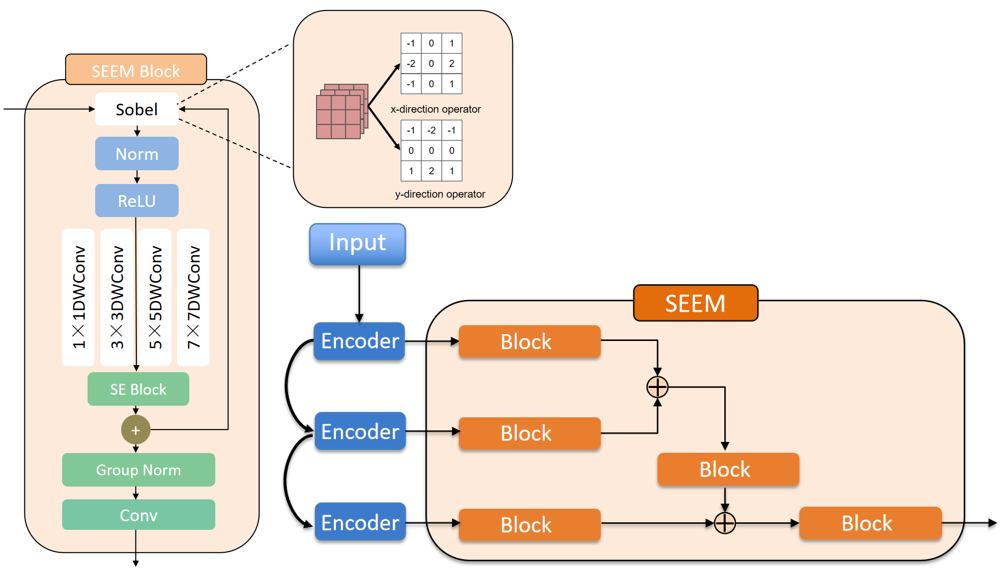
SEFF-Net: A Hybrid Feature Fusion Network for Accurate Segmentation of Breast Ultrasound Images
ICCK Transactions on Emerging Topics in Artificial Intelligence | Volume 3, Issue 2: 128-141, 2026 | DOI: 10.62762/TETAI.2026.494190
Abstract
Breast ultrasound imaging plays a crucial role in early breast cancer screening and diagnosis due to its noninvasive nature and cost-effectiveness. However, accurate lesion segmentation remains challenging because of severe speckle noise, low contrast, and blurred tumor boundaries. To address these issues, this paper proposes SEFF-Net, a novel edge-aware feature fusion network with a U-shaped encoder–decoder architecture to capture multi-level semantic representations for breast ultrasound image segmentation task. To enhance boundary perception, a Self-learning Edge Enhancement Module is embedded in the shallow encoding stages, while a Spatial Feature Fusion Module is introduced to effecti... More >

Graphical Abstract
SEFF-Net: A Hybrid Feature Fusion Network for Accurate Segmentation of Breast Ultrasound Images
Open Access | Review Article | 18 February 2026 | Cited: Crossref logo  1 , Scopus 1
Exploring Graph-Based Techniques in Text Data Processing: A Comprehensive Survey of NLP Advancements
ICCK Transactions on Emerging Topics in Artificial Intelligence | Volume 3, Issue 2: 86-127, 2026 | DOI: 10.62762/TETAI.2025.740330
Abstract
Graph Neural Networks (GNNs) have become increasingly prominent in Natural Language Processing (NLP) due to their ability to model intricate relationships and contextual connections between texts. Unlike traditional NLP methods, which typically process text linearly, GNNs utilize graph structures to represent the complex relationships between texts more effectively. This capability has led to significant advancements in various NLP applications, such as social media interaction analysis, sentiment analysis, text classification, and information extraction. Notably, GNNs excel in scenarios with limited labeled data, often outperforming traditional approaches by providing deeper, context-aware... More >

Graphical Abstract
Exploring Graph-Based Techniques in Text Data Processing: A Comprehensive Survey of NLP Advancements
Open Access | Research Article | 01 February 2026 | Cited: Crossref logo  2 , Scopus 2
An NLP-Based Evaluation of LLMs Across Creativity, Factual Accuracy, Open-Ended and Technical Explanations
ICCK Transactions on Emerging Topics in Artificial Intelligence | Volume 3, Issue 2: 76-85, 2026 | DOI: 10.62762/TETAI.2025.264517
Abstract
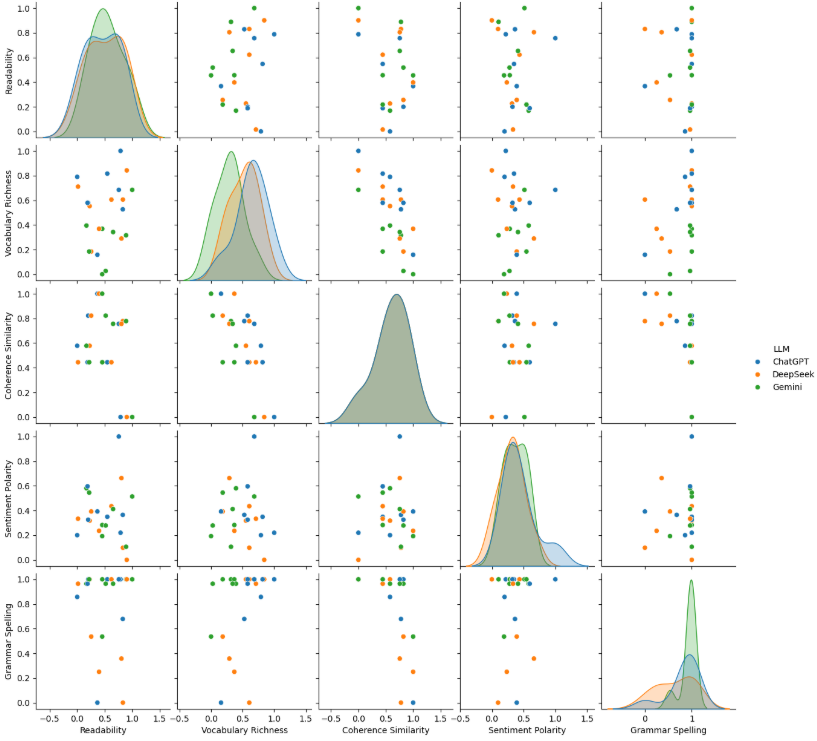
The rapid advancement of AI-based language models has transformed the field of Natural Language Processing (NLP) into a powerful tool for text generation. This study evaluates the performance of models in different categories such as factual accuracy, creative writing, open-ended writing, and technical explanation. We have considered three popular and advanced large language models (LLMs) for this analysis. To quantify their performance, we have applied a combination of statistical and linguistic metrics. We have used Dale-Chall to analyze the readability score of the responses. For lexical diversity, we have used the type-token ratio technique. In addition, a cosine similarity with TF-IDF i... More >

Graphical Abstract
An NLP-Based Evaluation of LLMs Across Creativity, Factual Accuracy, Open-Ended and Technical Explanations

Journal Statistics

105
Authors
20
Countries / Regions
40
Articles
227
Scopus Citations
82.5% Cited
2024
Published Since
228,327
Article Views
43,475
Article Downloads
ICCK Transactions on Emerging Topics in Artificial Intelligence
eISSN: 3068-6652
Crossref
Crossref
Member of Crossref
Visit Crossref →