


ISSN: 3070-2429
ICCK Transactions on Information Security and Cryptography is a peer-reviewed academic journal dedicated to advancing research and development in the fields of information security, cryptographic technologies, and their applications in protecting data and communications in the digital era.
DOI Prefix: 10.62762/TISC

Journal Metrics

-
Impact Factor
-
CiteScore

Recent Articles

Free Access | Research Article | 29 May 2026
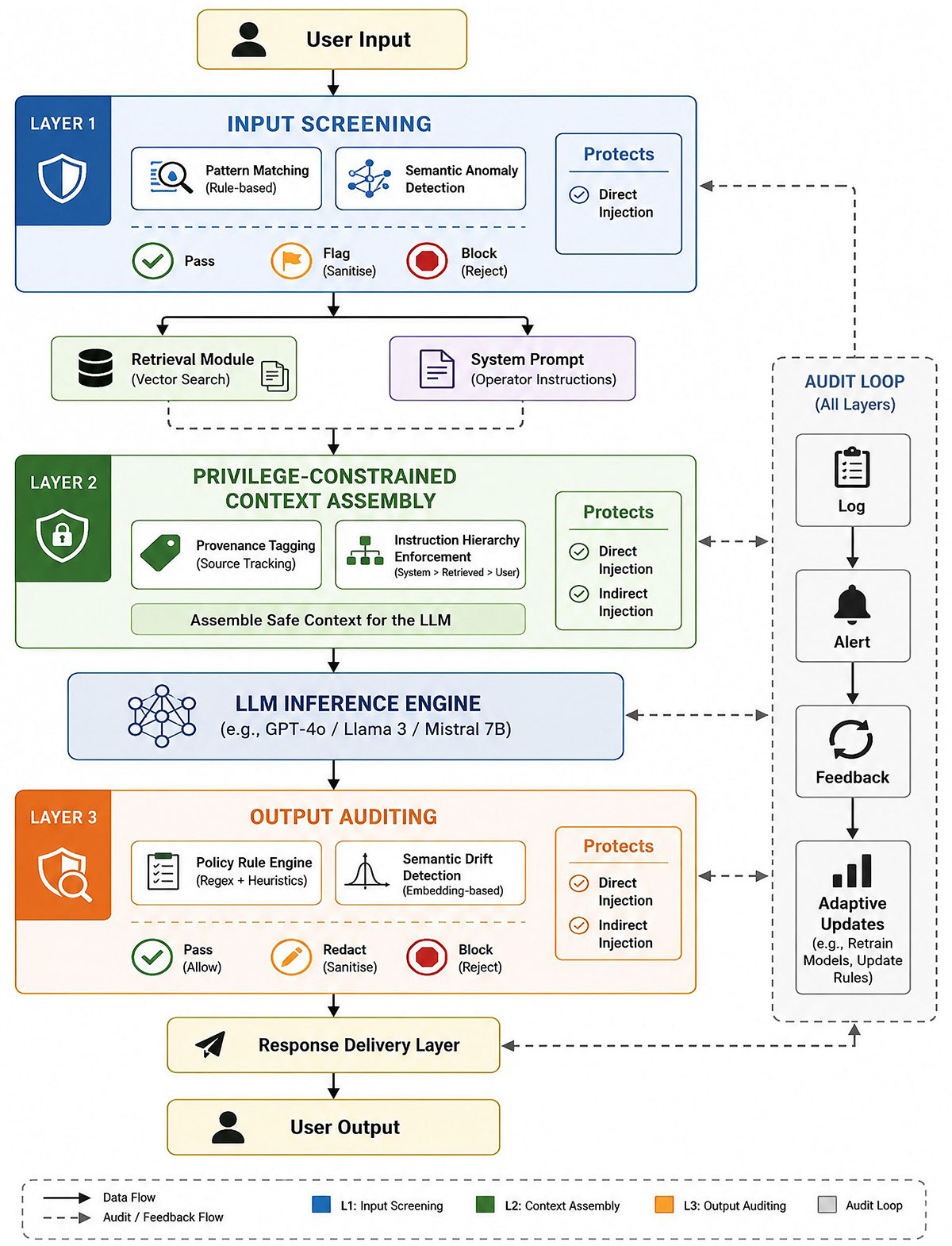
Multicloud Security Assessment: A Benchmark Study of Infrastructure as Code Scanners
ICCK Transactions on Information Security and Cryptography | Volume 2, Issue 2: 109-118, 2026 | DOI: 10.62762/TISC.2026.777114
Abstract
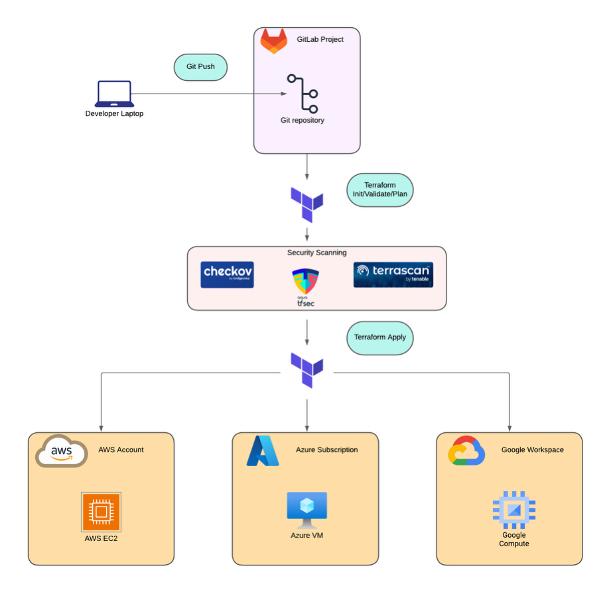
Multicloud environments are becoming more common, often businesses will have workloads across one or more of AWS, Azure and GCP, with each provider slightly differing in security features and capabilities. Furthermore, Infrastructure as Code is increasing in popularity meaning cloud resources are being provisioned as code through automation pipelines as opposed to GUI/Portal deployments. This shift means that security scanning of the resource code is a crucial first step in securing a cloud environment, and the tool(s) being used for this need to be able to perform at a consistent level across all the different cloud providers. Failure to do this could mean the introduction of security vulne... More >

Graphical Abstract
Multicloud Security Assessment: A Benchmark Study of Infrastructure as Code Scanners
Free Access | Research Article | 28 April 2026
Multi-Attack Audio-Visual Spoof Detection for Secure Hearing-Assistive Systems Using Transformer Fusion
ICCK Transactions on Information Security and Cryptography | Volume 2, Issue 2: 101-108, 2026 | DOI: 10.62762/TISC.2026.221187
Abstract
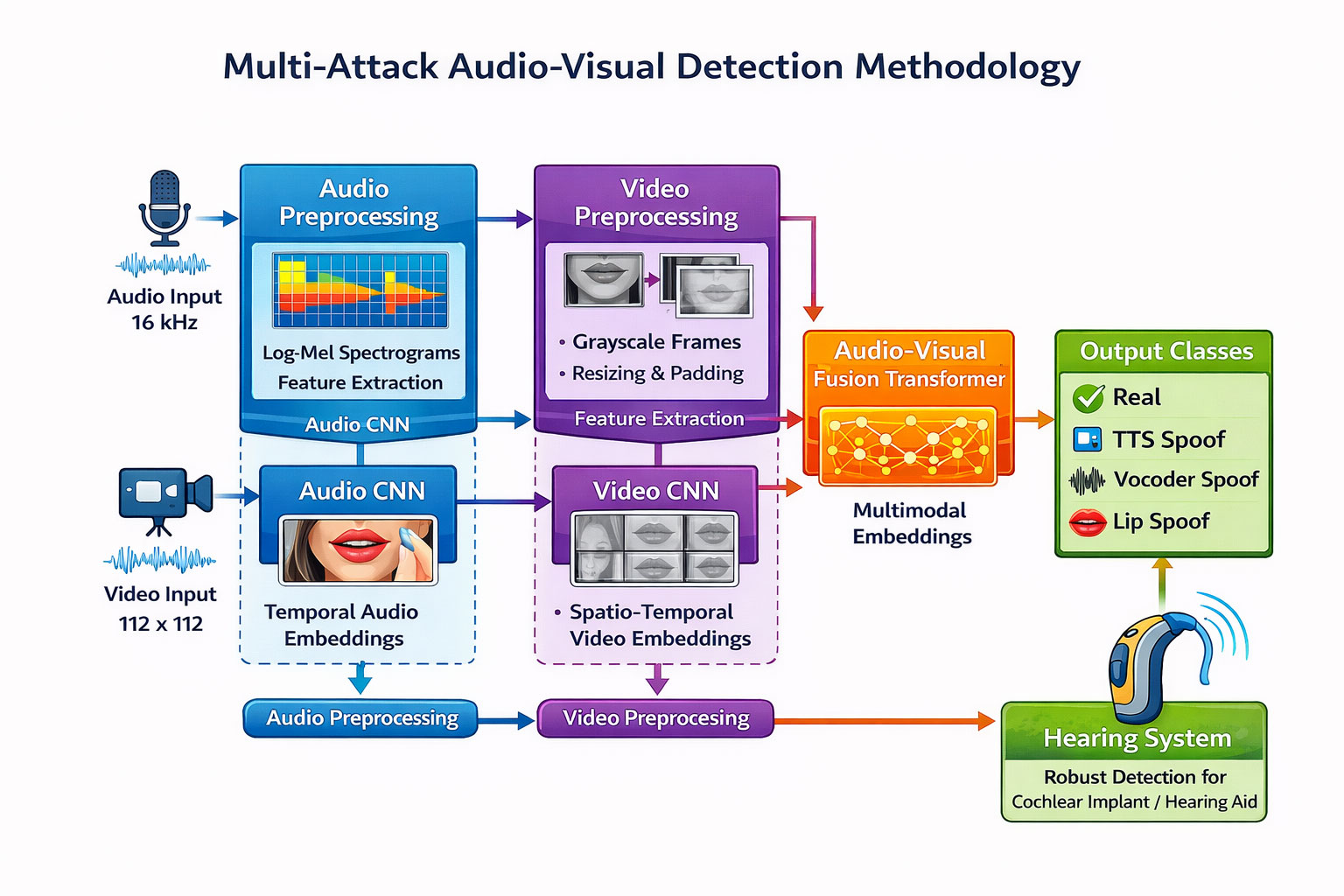
Audio-visual spoofing attacks have emerged as a serious threat to modern hearing-assistive systems due to rapid advances in text-to-speech synthesis, neural vocoders, and lip-sync deepfake generation. Advanced hearing aids and cochlear implants increasingly incorporate AI-based speech enhancement and multimodal perception modules, which makes them vulnerable to manipulated or synthetic inputs. Traditional spoof detection approaches are often limited to binary classification between bonafide and spoofed speech, failing to capture the diversity of emerging multi-modal attack types.In this paper, we propose a multi-attack audio-visual spoof detection framework designed that explicitly models fo... More >

Graphical Abstract
Multi-Attack Audio-Visual Spoof Detection for Secure Hearing-Assistive Systems Using Transformer Fusion
Free Access | Research Article | 17 April 2026
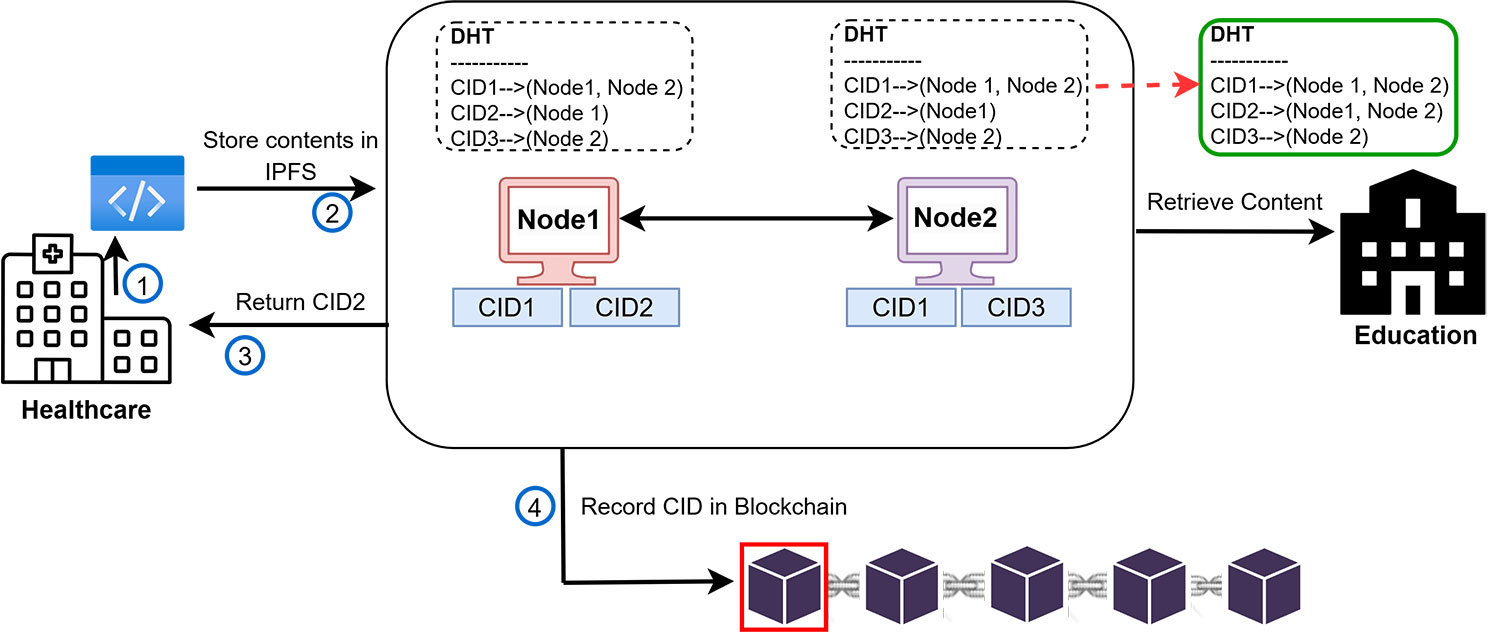
SMS-Based Disaster Alert System with Integrated Cryptographic Security
ICCK Transactions on Information Security and Cryptography | Volume 2, Issue 2: 82-100, 2026 | DOI: 10.62762/TISC.2026.121086
Abstract
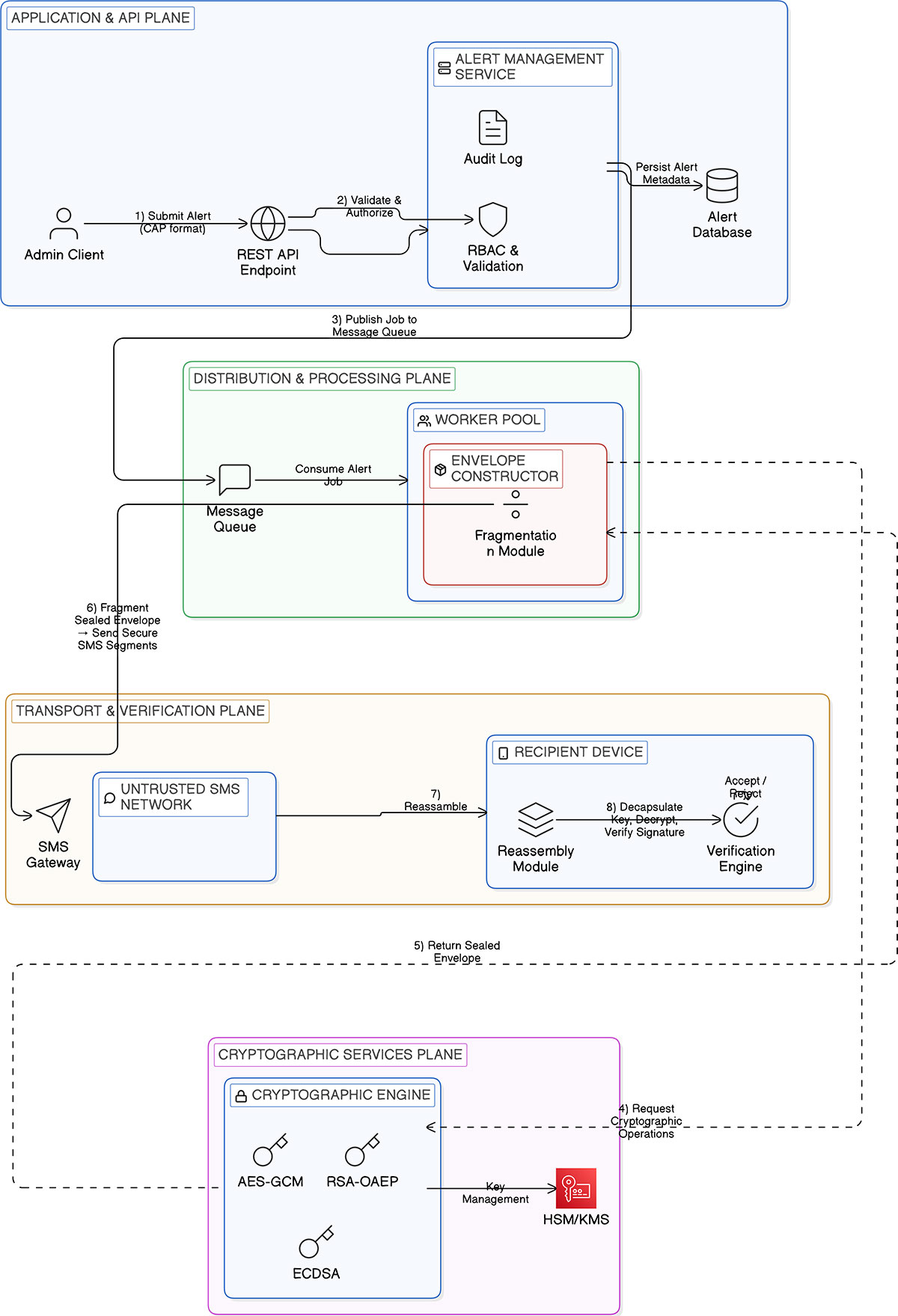
Natural disasters are on a rise all over the world, and these have pointed out vulnerabilities in existing Public Warning Systems, which fail during crises when they become choked with information, and it is not very efficient for people using basic mobile technology. The standard Short Message Service is widely accepted and in practice but lacks basic authentication, which makes this service a highly vulnerable target for Denial of Service (DoS) attacks and message spoofing attacks. This research proposes a Disaster Alert System with an advanced Cryptographic Security system over SMS notifications for authenticated and safe transfer of information. The major highlight is a security system c... More >

Graphical Abstract
SMS-Based Disaster Alert System with Integrated Cryptographic Security
Free Access | Research Article | 10 April 2026
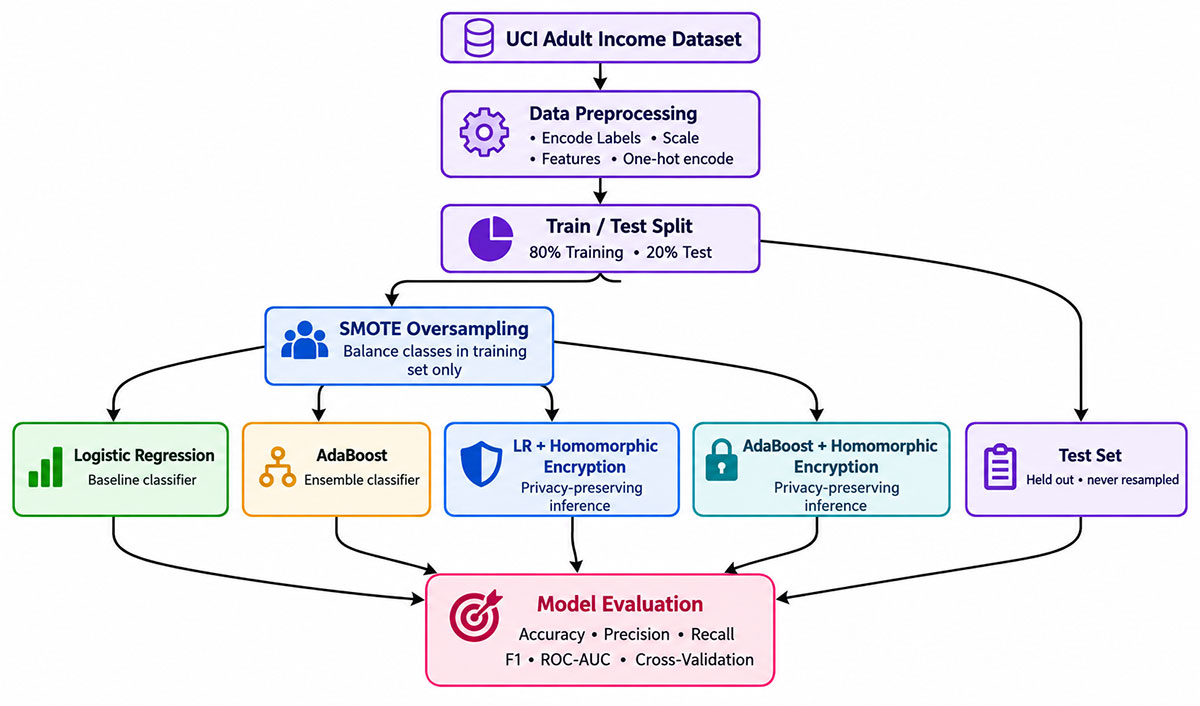
Privacy-Preserving Artificial Intelligence for Diabetes Prediction: A Comparison of Centralised and Federated Learning
ICCK Transactions on Information Security and Cryptography | Volume 2, Issue 2: 73-81, 2026 | DOI: 10.62762/TISC.2025.335076
Abstract
Artificial intelligence (AI) is increasingly used in healthcare to support disease prediction and clinical decision-making. Traditional centralised machine learning approaches often require the aggregation of sensitive patient data into a single repository, which raises substantial privacy, ethical, and regulatory concerns. Federated learning has emerged as a privacy-preserving alternative that enables collaborative model training across distributed data sources without sharing raw patient data. In this study, we investigate whether federated learning can achieve predictive performance comparable to that of centralised machine learning when applied to structured healthcare data. Using the PI... More >

Graphical Abstract
Privacy-Preserving Artificial Intelligence for Diabetes Prediction: A Comparison of Centralised and Federated Learning
Open Access | Editorial | 02 March 2026
Towards a Secure Future: Security Challenges for Deep Learning, AI, and Foundation Models in the Next Decade
ICCK Transactions on Information Security and Cryptography | Volume 2, Issue 2: 70-72, 2026 | DOI: 10.62762/TISC.2025.709595
Abstract
This editorial argues that as deep learning and foundation models permeate high-stakes domains, AI security must evolve into a rigorous, end-to-end discipline—prioritizing adaptive robustness, lifecycle integrity, privacy safeguards, and system-level governance—to ensure these powerful systems remain trustworthy under adversarial pressure. More >
Free Access | Research Article | 11 February 2026
A Resource-Efficient Machine Learning Pipeline for DDoS Attack Detection: A Comparative Study on CIC-IDS2018 and CIC-DDoS2019
ICCK Transactions on Information Security and Cryptography | Volume 2, Issue 1: 55-69, 2026 | DOI: 10.62762/TISC.2025.438083
Abstract
Distributed Denial of Service attacks remain a critical threat to modern networked systems due to their scale, diversity and evolving attack strategies. Although machine learning and deep learning techniques have been widely explored for DDoS detection, many existing studies rely on inconsistent preprocessing pipelines, single-dataset evaluations and limited reproducibility. This work proposes a unified and resource efficient detection framework that addresses these challenges through systematic data handling and transparent model evaluation. The proposed pipeline integrates data cleaning, memory optimization, class balancing and hybrid feature engineering that combines linear, tree-based, s... More >

Graphical Abstract
A Resource-Efficient Machine Learning Pipeline for DDoS Attack Detection: A Comparative Study on CIC-IDS2018 and CIC-DDoS2019
Free Access | Research Article | 10 February 2026 | Cited: Scopus 2
Optimized Copyright Protection of Scale-Adaptive Saliency-Driven ROI of Medical Records with MSER-Based authentication
ICCK Transactions on Information Security and Cryptography | Volume 2, Issue 1: 43-54, 2026 | DOI: 10.62762/TISC.2025.898154
Abstract
The medical information is always vulnerable to security violations. After the COVID-19 pandemic, the volume of medical information has exponentially increased and the major information is in the form of images. So, the security of this image information is crucial during the transfer using modern information and communication technologies from one place to another. Image watermarking is one of the methods to protect the copyright and integrity of medical records. The medical images consist of some area that has vital information regarding the disease and this area will be considered as the region of interest (ROI). Therefore, the protection of the copyright of this vital area is crucial for... More >

Graphical Abstract
Optimized Copyright Protection of Scale-Adaptive Saliency-Driven ROI of Medical Records with MSER-Based authentication
Free Access | Research Article | 09 February 2026
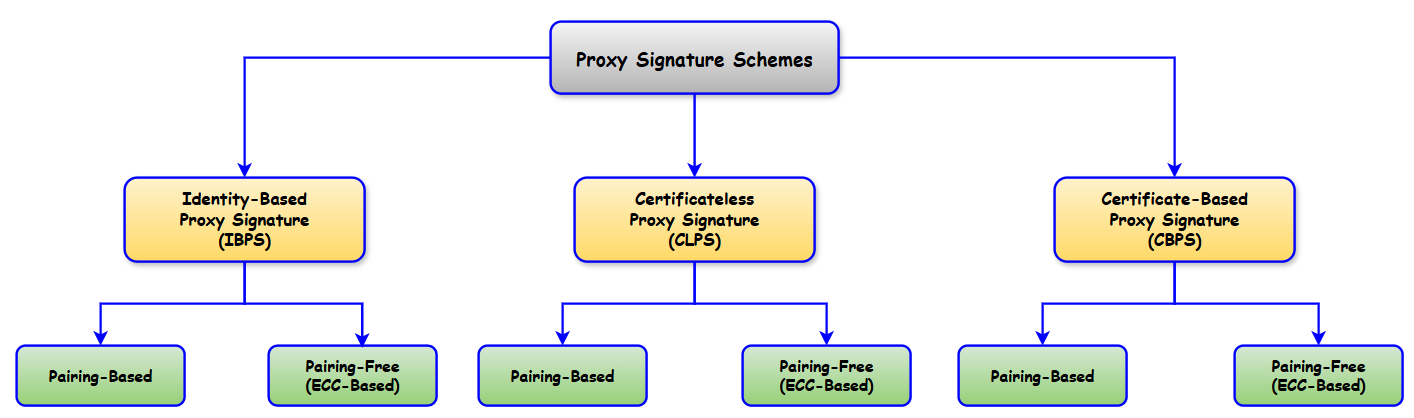
Constellation Warping-Based QAM Signal Watermarking for Secure and Reliable Wireless Communications
ICCK Transactions on Information Security and Cryptography | Volume 2, Issue 1: 29-42, 2026 | DOI: 10.62762/TISC.2025.407888
Abstract
This paper investigates the performance of constellation warping techniques in QAM signals as a novel approach for physical layer authentication. We introduce a dynamic watermarking method that embeds subtle warping patterns into QAM constellations, enabling receivers to authenticate legitimate transmissions while detecting spoofing attacks. Our time-varying watermarking scheme employs secure key-based pattern generation to resist replay and estimation attacks. Extensive simulations analyze the system's resilience against various attack types (replay, blind spoofing, and estimation-based) across different signal-to-noise ratios. Results demonstrate that the proposed approach achieves high de... More >

Graphical Abstract
Constellation Warping-Based QAM Signal Watermarking for Secure and Reliable Wireless Communications

Journal Statistics

42
Authors
10
Countries / Regions
15
Articles
Scopus: 2
Citations
2025
Published Since
12,750
Article Views
3,371
Article Downloads
ICCK Transactions on Information Security and Cryptography
eISSN: 3070-2429
Crossref
Crossref
Member of Crossref
Visit Crossref →