


ISSN: 3070-2429
ICCK Transactions on Information Security and Cryptography is a peer-reviewed academic journal dedicated to advancing research and development in the fields of information security, cryptographic technologies, and their applications in protecting data and communications in the digital era.
DOI Prefix: 10.62762/TISC

Journal Metrics

-
Impact Factor
-
CiteScore

Recent Articles

Open Access | Editorial | 02 March 2026
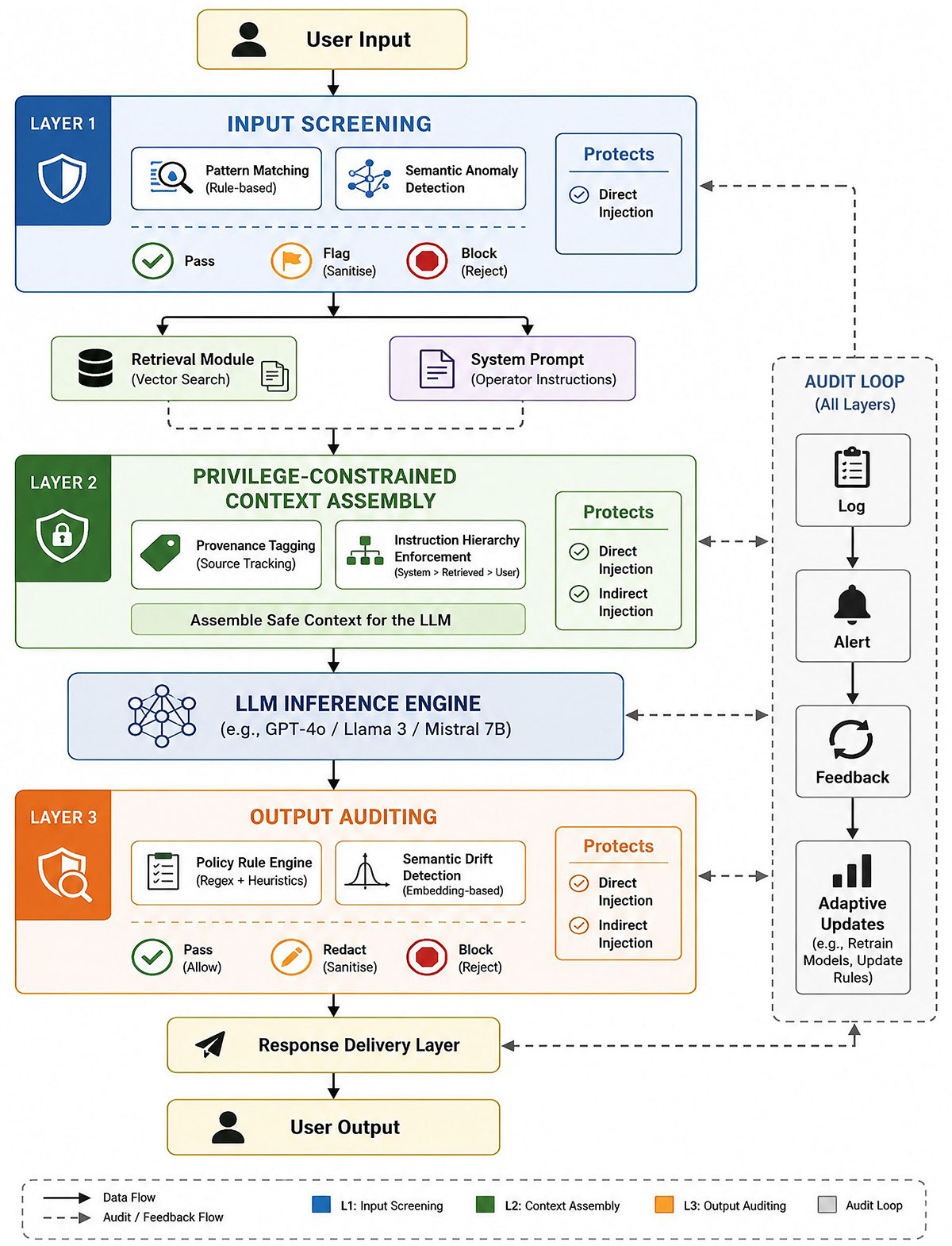
Towards a Secure Future: Security Challenges for Deep Learning, AI, and Foundation Models in the Next Decade
ICCK Transactions on Information Security and Cryptography | Volume 2, Issue 2: 70-72, 2026 | DOI: 10.62762/TISC.2025.709595
Abstract
This editorial argues that as deep learning and foundation models permeate high-stakes domains, AI security must evolve into a rigorous, end-to-end discipline—prioritizing adaptive robustness, lifecycle integrity, privacy safeguards, and system-level governance—to ensure these powerful systems remain trustworthy under adversarial pressure. More >
Free Access | Research Article | 11 February 2026
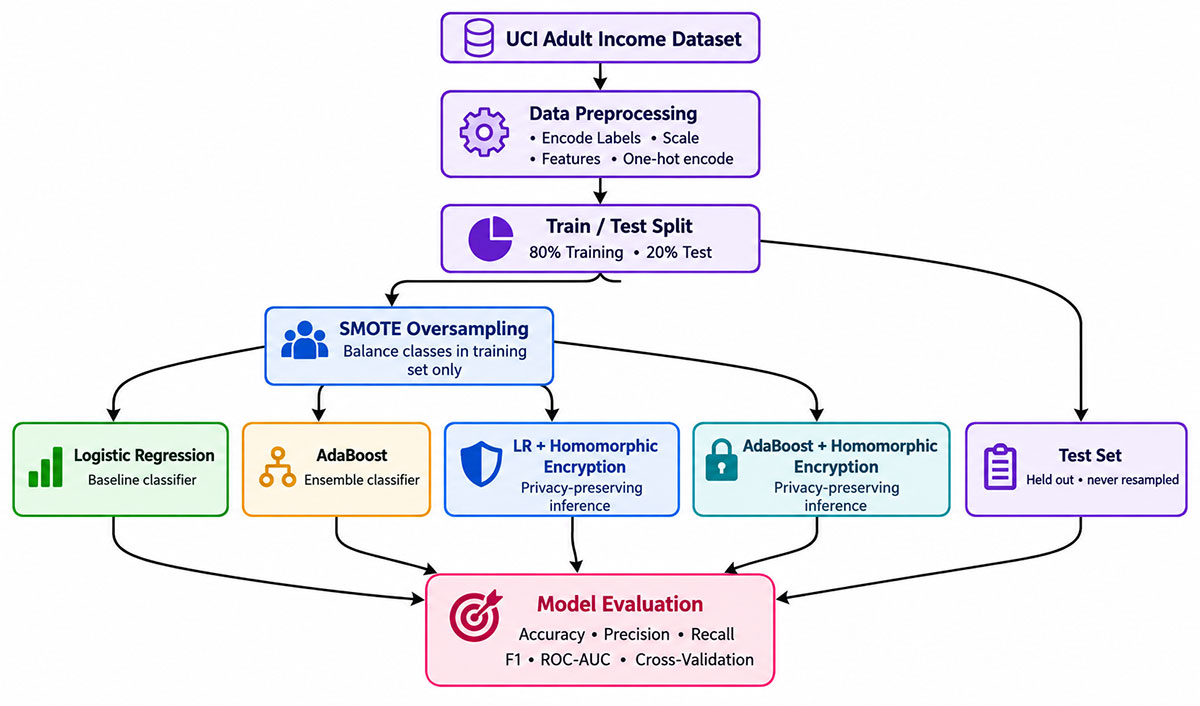
A Resource-Efficient Machine Learning Pipeline for DDoS Attack Detection: A Comparative Study on CIC-IDS2018 and CIC-DDoS2019
ICCK Transactions on Information Security and Cryptography | Volume 2, Issue 1: 55-69, 2026 | DOI: 10.62762/TISC.2025.438083
Abstract
Distributed Denial of Service attacks remain a critical threat to modern networked systems due to their scale, diversity and evolving attack strategies. Although machine learning and deep learning techniques have been widely explored for DDoS detection, many existing studies rely on inconsistent preprocessing pipelines, single-dataset evaluations and limited reproducibility. This work proposes a unified and resource efficient detection framework that addresses these challenges through systematic data handling and transparent model evaluation. The proposed pipeline integrates data cleaning, memory optimization, class balancing and hybrid feature engineering that combines linear, tree-based, s... More >

Graphical Abstract
A Resource-Efficient Machine Learning Pipeline for DDoS Attack Detection: A Comparative Study on CIC-IDS2018 and CIC-DDoS2019
Free Access | Research Article | 10 February 2026
Optimized Copyright Protection of Scale-Adaptive Saliency-Driven ROI of Medical Records with MSER-Based authentication
ICCK Transactions on Information Security and Cryptography | Volume 2, Issue 1: 43-54, 2026 | DOI: 10.62762/TISC.2025.898154
Abstract
The medical information is always vulnerable to security violations. After the COVID-19 pandemic, the volume of medical information has exponentially increased and the major information is in the form of images. So, the security of this image information is crucial during the transfer using modern information and communication technologies from one place to another. Image watermarking is one of the methods to protect the copyright and integrity of medical records. The medical images consist of some area that has vital information regarding the disease and this area will be considered as the region of interest (ROI). Therefore, the protection of the copyright of this vital area is crucial for... More >

Graphical Abstract
Optimized Copyright Protection of Scale-Adaptive Saliency-Driven ROI of Medical Records with MSER-Based authentication
Free Access | Research Article | 09 February 2026
Constellation Warping-Based QAM Signal Watermarking for Secure and Reliable Wireless Communications
ICCK Transactions on Information Security and Cryptography | Volume 2, Issue 1: 29-42, 2026 | DOI: 10.62762/TISC.2025.407888
Abstract
This paper investigates the performance of constellation warping techniques in QAM signals as a novel approach for physical layer authentication. We introduce a dynamic watermarking method that embeds subtle warping patterns into QAM constellations, enabling receivers to authenticate legitimate transmissions while detecting spoofing attacks. Our time-varying watermarking scheme employs secure key-based pattern generation to resist replay and estimation attacks. Extensive simulations analyze the system's resilience against various attack types (replay, blind spoofing, and estimation-based) across different signal-to-noise ratios. Results demonstrate that the proposed approach achieves high de... More >

Graphical Abstract
Constellation Warping-Based QAM Signal Watermarking for Secure and Reliable Wireless Communications
Free Access | Research Article | 08 February 2026
Secure and Efficient Authentication Architecture for IoT Devices in Resource-Limited Networks
ICCK Transactions on Information Security and Cryptography | Volume 2, Issue 1: 16-28, 2026 | DOI: 10.62762/TISC.2025.221813
Abstract
The widespread adoption of the Internet of Things (IoT) has revolutionized various sectors, including healthcare and transportation, by facilitating extensive data gathering and the provision of advanced, intelligent services. However, this growth also amplifies the risks of privacy breaches, unauthorized access, and resource exhaustion, particularly in constrained devices that cannot afford heavy cryptographic operations. Existing solutions often compromise between efficiency and security, leaving systems exposed to replay, Man-in-the-Middle, and even quantum-era threats. This paper proposes a novel authentication and privacy-preserving framework tailored for resource-constrained IoT enviro... More >

Graphical Abstract
Secure and Efficient Authentication Architecture for IoT Devices in Resource-Limited Networks
Free Access | Research Article | 20 December 2025
Malware Image Classification Using Global Context Vision Transformers for Information Security
ICCK Transactions on Information Security and Cryptography | Volume 2, Issue 1: 1-15, 2026 | DOI: 10.62762/TISC.2025.775760
Abstract
The continuous threat of malware against digital systems exists because its attack methods develop rapidly, reducing the effectiveness of traditional detection systems. Current static and dynamic analysis methods for malware detection face challenges with scalability and robustness when handling large and complex malware samples. Computer vision now shows that malware binaries contain specific structural patterns when displayed as grayscale images, which can be used for classification. This study investigates GCViT for malware detection through its application to the Malimg dataset, which contains 9,337 samples from 25 malware families. The dataset underwent preprocessing through a two-step... More >

Graphical Abstract
Malware Image Classification Using Global Context Vision Transformers for Information Security
Free Access | Research Article | 15 October 2025
NeuroPrivateVR: A Differential Privacy Framework for Secure Emotion Data in Immersive Virtual Reality
ICCK Transactions on Information Security and Cryptography | Volume 1, Issue 1: 42-51, 2025 | DOI: 10.62762/TISC.2025.954549
Abstract
VR empirical data include the sensitive affective and behavioral data (e.g. gaze patterns, physiological signals, facial expressions), placing a person at the risk of re-identification. Tailored privacy-preserving approaches to immersive data have not, however, received much attention in the recent affective-computing investigations. In the present paper, a differentially-privacy (DP) framework is presented as that allows anonymizing VR-based studies of emotion without losing scientific value. The first one is the quantification of re-identification risks through empirical linkage and inference attacks and then the mitigation of the risk through DP mechanisms such as Laplace noise, that soug... More >

Graphical Abstract
NeuroPrivateVR: A Differential Privacy Framework for Secure Emotion Data in Immersive Virtual Reality
Free Access | Research Article | 19 August 2025
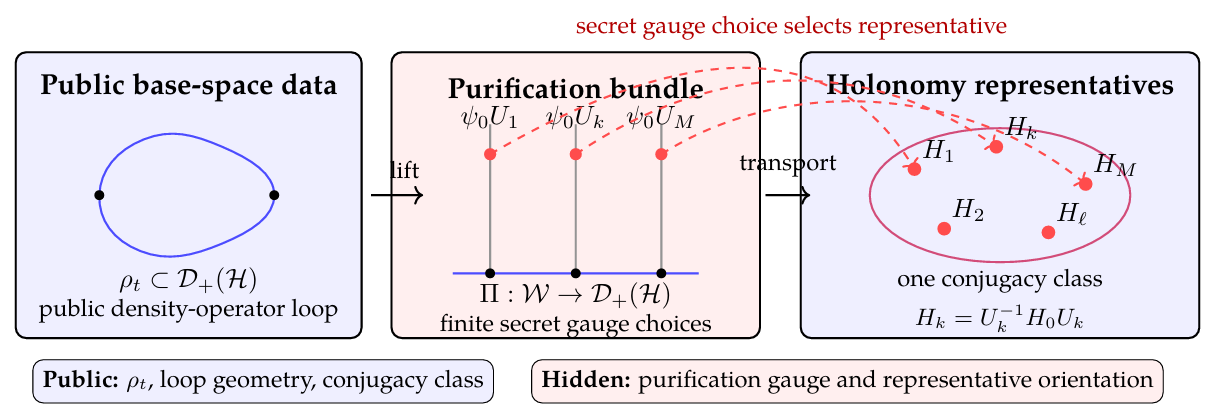
Singularity Cipher: A Topology-Driven Cryptographic Scheme Based on Visual Paradox and Klein Bottle Illusions
ICCK Transactions on Information Security and Cryptography | Volume 1, Issue 1: 26-41, 2025 | DOI: 10.62762/TISC.2025.186894
Abstract
This paper presents the Singularity Cipher, a novel cryptographic-steganographic framework that integrates topological transformations and visual paradoxes to achieve multidimensional security. Inspired by the non-orientable properties of the Klein bottle—constructed from two Möbius strips—the cipher applies symbolic twist functions to simulate topological traversal, producing high confusion and diffusion in the ciphertext. The resulting binary data is then encoded using perceptual illusions, such as the missing square paradox, to visually obscure the presence of encrypted content. Unlike conventional ciphers that rely solely on algebraic complexity, the Singularity Cipher introduces a... More >

Graphical Abstract
Singularity Cipher: A Topology-Driven Cryptographic Scheme Based on Visual Paradox and Klein Bottle Illusions
Free Access | Research Article | 18 August 2025
Secure Aware Outlier Detection in Underwater Wireless Sensor Networks Using Deep Learning
ICCK Transactions on Information Security and Cryptography | Volume 1, Issue 1: 13-25, 2025 | DOI: 10.62762/TISC.2025.610386
Abstract
The emerging field of underwater sensor networks (UWSN) has a vital potential shaping the modern and future landscape that assists in measuring water quality, pollution tracking, and identification of underwater habitats. The challenging conditions in the UWSN environments raise data and security concerns in terms of outliers related to the complicated communication system, poor visibility, and limited resources. The data quality and network efficiency may be affected due to these unwanted conditions, giving rise to certain malicious activities in the network. This study aims to enhance the outlier identification process in terms of security and quality perspectives using the Long Short-Term... More >

Graphical Abstract
Secure Aware Outlier Detection in Underwater Wireless Sensor Networks Using Deep Learning
Free Access | Research Article | 31 July 2025
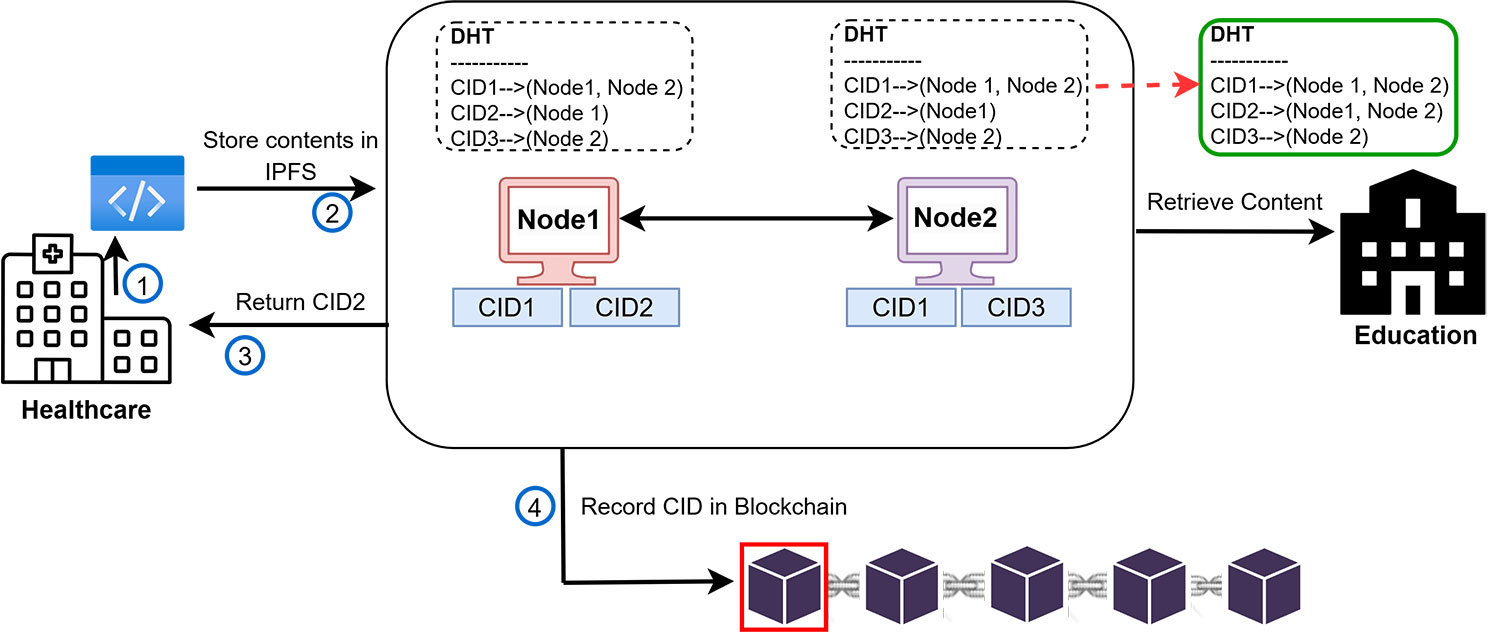
Joint Compression and Encryption of Virtual Machine Images Using LZMA and Chaotic Maps
ICCK Transactions on Information Security and Cryptography | Volume 1, Issue 1: 3-12, 2025 | DOI: 10.62762/TISC.2025.148753
Abstract
The exponential growth in security and storage requirements has led to increasing demand for high-performance solutions, particularly in managing large-scale data objects such as big binaries. Virtual Machines (VMs), a prime example of such binaries, are widely employed across desktops and dynamic server environments to deliver isolated execution contexts while minimizing hardware overhead. However, the proliferation of big binaries imposes significant challenges on both storage infrastructure and secure data transmission mechanisms. To address these issues, this paper proposes a novel "Combined Big Binaries Compression and Encryption" (CBBCE) scheme that jointly performs compression and enc... More >
Open Access | Editorial | 29 June 2025
Inaugural Editorial of the ICCK Transactions on Information Security and Cryptography
ICCK Transactions on Information Security and Cryptography | Volume 1, Issue 1: 1-2, 2025 | DOI: 10.62762/TISC.2025.393158
Abstract
Presents the inaugural editorial for this issue of the publication. More >

Journal Statistics

30
Authors
10
Countries / Regions
11
Articles
0
(Scopus: 0)
Citations
2025
Published Since
0
Special Issues
6,605
Article Views
1,702
Article Downloads
ICCK Transactions on Information Security and Cryptography
eISSN: 3070-2429
Crossref
Crossref
Member of Crossref
Visit Crossref →