Volume 2, Issue 1


Volume 2, Issue 1 (March, 2026) – 5 articles
Citations: 0, 0,  0   |   Viewed: 2303, Download: 548

Table of Contents

Free Access | Research Article | 11 February 2026
A Resource-Efficient Machine Learning Pipeline for DDoS Attack Detection: A Comparative Study on CIC-IDS2018 and CIC-DDoS2019
ICCK Transactions on Information Security and Cryptography | Volume 2, Issue 1: 55-69, 2026 | DOI: 10.62762/TISC.2025.438083
Abstract
Distributed Denial of Service attacks remain a critical threat to modern networked systems due to their scale, diversity and evolving attack strategies. Although machine learning and deep learning techniques have been widely explored for DDoS detection, many existing studies rely on inconsistent preprocessing pipelines, single-dataset evaluations and limited reproducibility. This work proposes a unified and resource efficient detection framework that addresses these challenges through systematic data handling and transparent model evaluation. The proposed pipeline integrates data cleaning, memory optimization, class balancing and hybrid feature engineering that combines linear, tree-based, s... More >

Graphical Abstract
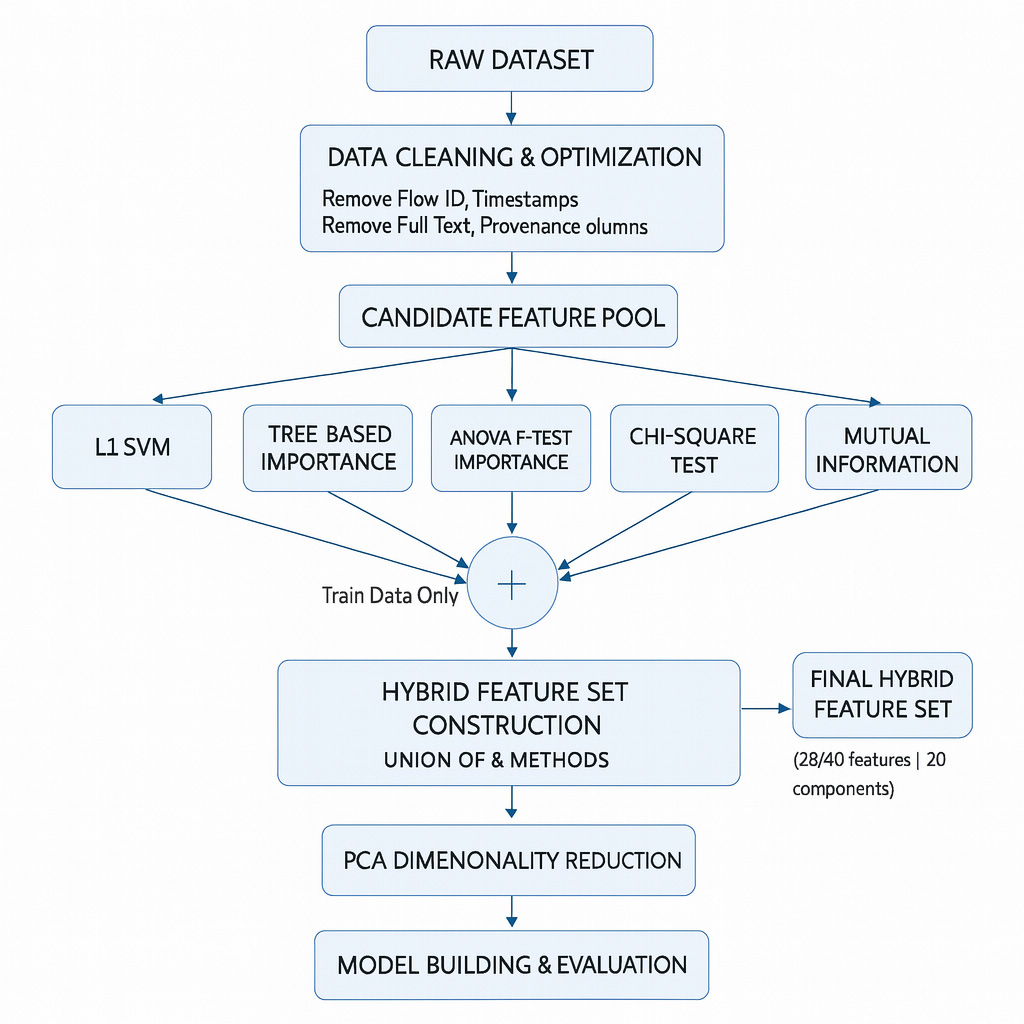
A Resource-Efficient Machine Learning Pipeline for DDoS Attack Detection: A Comparative Study on CIC-IDS2018 and CIC-DDoS2019
Free Access | Research Article | 10 February 2026
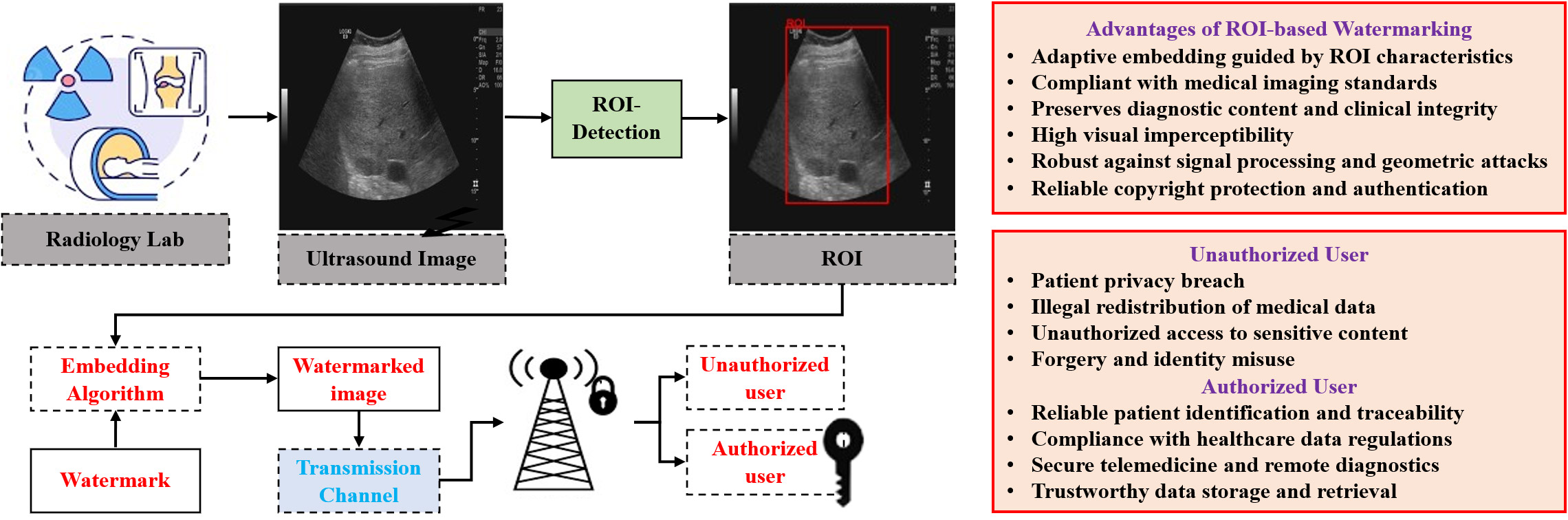
Optimized Copyright Protection of Scale-Adaptive Saliency-Driven ROI of Medical Records with MSER-Based authentication
ICCK Transactions on Information Security and Cryptography | Volume 2, Issue 1: 43-54, 2026 | DOI: 10.62762/TISC.2025.898154
Abstract
The medical information is always vulnerable to security violations. After the COVID-19 pandemic, the volume of medical information has exponentially increased and the major information is in the form of images. So, the security of this image information is crucial during the transfer using modern information and communication technologies from one place to another. Image watermarking is one of the methods to protect the copyright and integrity of medical records. The medical images consist of some area that has vital information regarding the disease and this area will be considered as the region of interest (ROI). Therefore, the protection of the copyright of this vital area is crucial for... More >

Graphical Abstract
Optimized Copyright Protection of Scale-Adaptive Saliency-Driven ROI of Medical Records with MSER-Based authentication
Free Access | Research Article | 09 February 2026
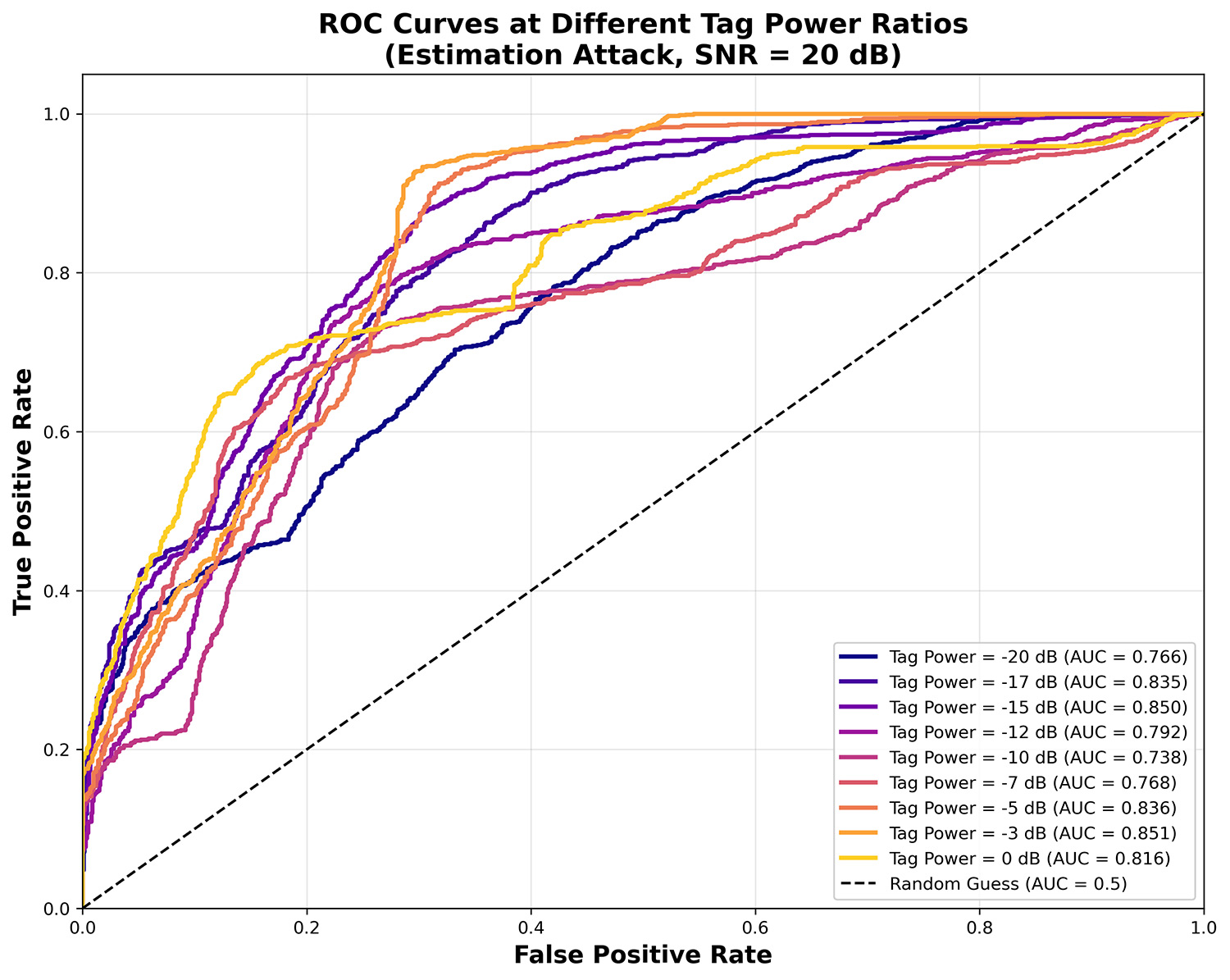
Constellation Warping-Based QAM Signal Watermarking for Secure and Reliable Wireless Communications
ICCK Transactions on Information Security and Cryptography | Volume 2, Issue 1: 29-42, 2026 | DOI: 10.62762/TISC.2025.407888
Abstract
This paper investigates the performance of constellation warping techniques in QAM signals as a novel approach for physical layer authentication. We introduce a dynamic watermarking method that embeds subtle warping patterns into QAM constellations, enabling receivers to authenticate legitimate transmissions while detecting spoofing attacks. Our time-varying watermarking scheme employs secure key-based pattern generation to resist replay and estimation attacks. Extensive simulations analyze the system's resilience against various attack types (replay, blind spoofing, and estimation-based) across different signal-to-noise ratios. Results demonstrate that the proposed approach achieves high de... More >

Graphical Abstract
Constellation Warping-Based QAM Signal Watermarking for Secure and Reliable Wireless Communications
Free Access | Research Article | 08 February 2026
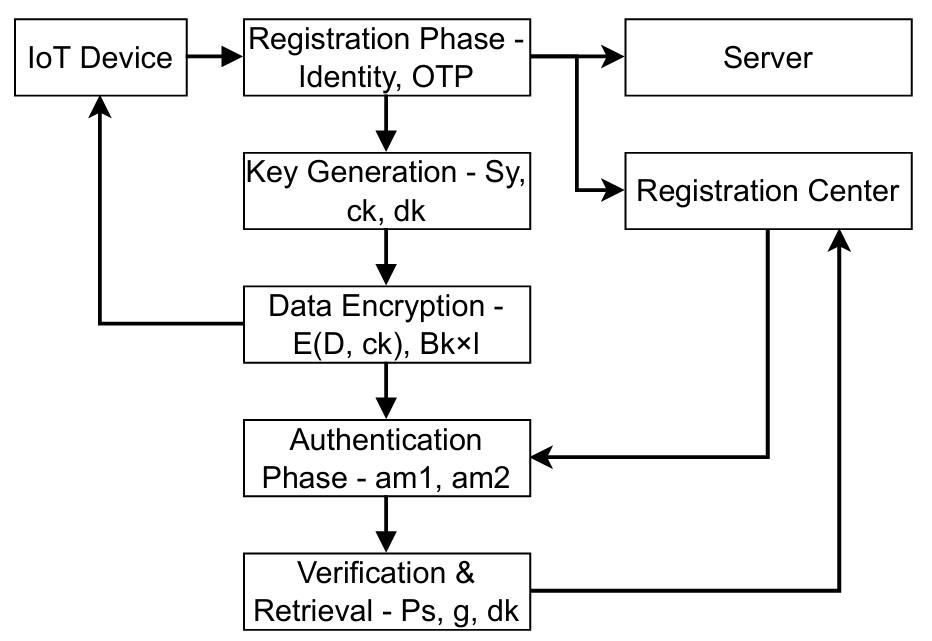
Secure and Efficient Authentication Architecture for IoT Devices in Resource-Limited Networks
ICCK Transactions on Information Security and Cryptography | Volume 2, Issue 1: 16-28, 2026 | DOI: 10.62762/TISC.2025.221813
Abstract
The widespread adoption of the Internet of Things (IoT) has revolutionized various sectors, including healthcare and transportation, by facilitating extensive data gathering and the provision of advanced, intelligent services. However, this growth also amplifies the risks of privacy breaches, unauthorized access, and resource exhaustion, particularly in constrained devices that cannot afford heavy cryptographic operations. Existing solutions often compromise between efficiency and security, leaving systems exposed to replay, Man-in-the-Middle, and even quantum-era threats. This paper proposes a novel authentication and privacy-preserving framework tailored for resource-constrained IoT enviro... More >

Graphical Abstract
Secure and Efficient Authentication Architecture for IoT Devices in Resource-Limited Networks
Free Access | Research Article | 20 December 2025
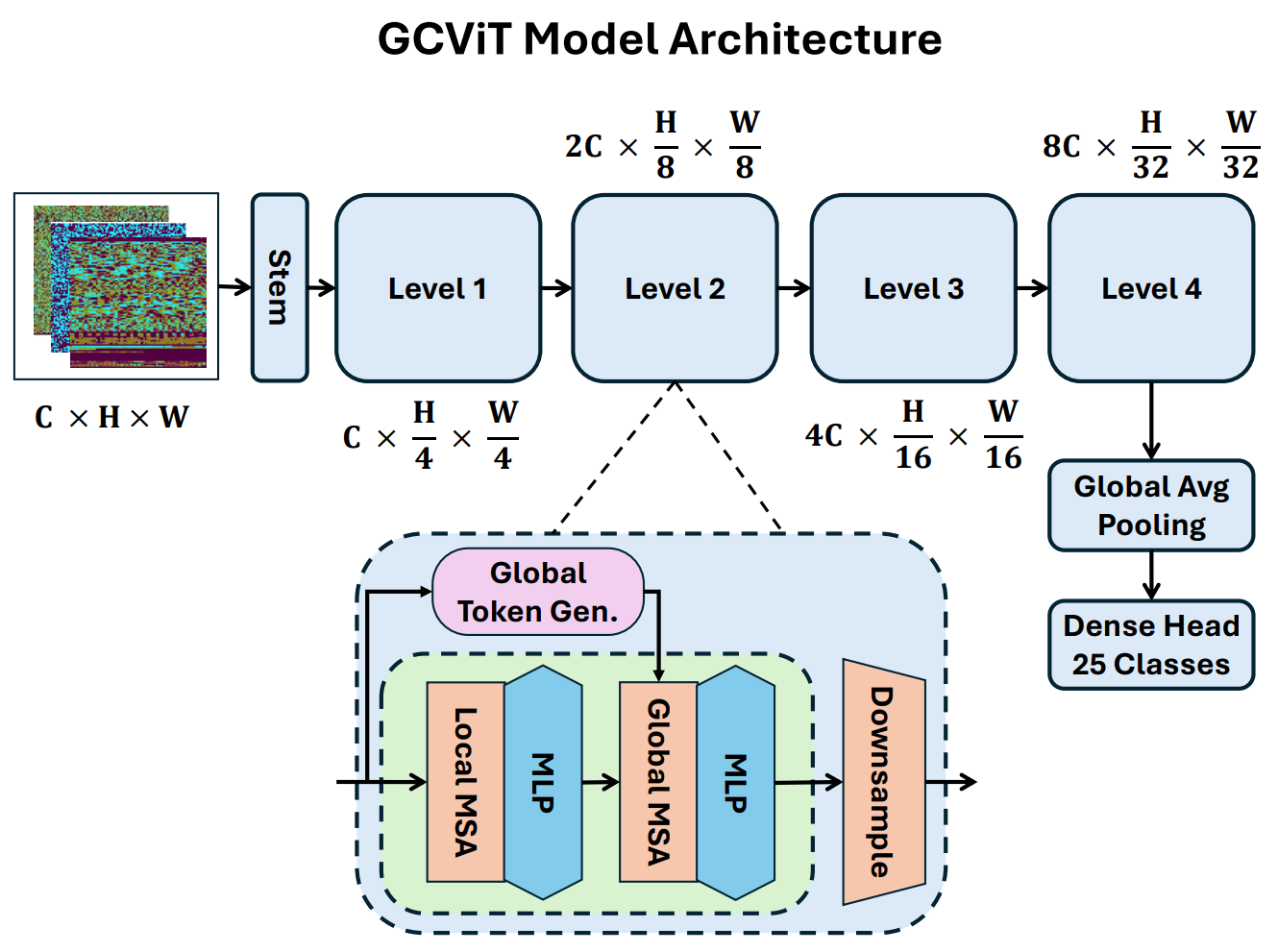
Malware Image Classification Using Global Context Vision Transformers for Information Security
ICCK Transactions on Information Security and Cryptography | Volume 2, Issue 1: 1-15, 2026 | DOI: 10.62762/TISC.2025.775760
Abstract
The continuous threat of malware against digital systems exists because its attack methods develop rapidly, reducing the effectiveness of traditional detection systems. Current static and dynamic analysis methods for malware detection face challenges with scalability and robustness when handling large and complex malware samples. Computer vision now shows that malware binaries contain specific structural patterns when displayed as grayscale images, which can be used for classification. This study investigates GCViT for malware detection through its application to the Malimg dataset, which contains 9,337 samples from 25 malware families. The dataset underwent preprocessing through a two-step... More >

Graphical Abstract
Malware Image Classification Using Global Context Vision Transformers for Information Security