Volume 2, Issue 3 (In Progress)


In Progress
Citations: Crossref logo 5,   1   |   Viewed: 3380, Download: 793

Table of Contents

Free Access | Research Article | 10 April 2026 | Cited: Crossref logo  1
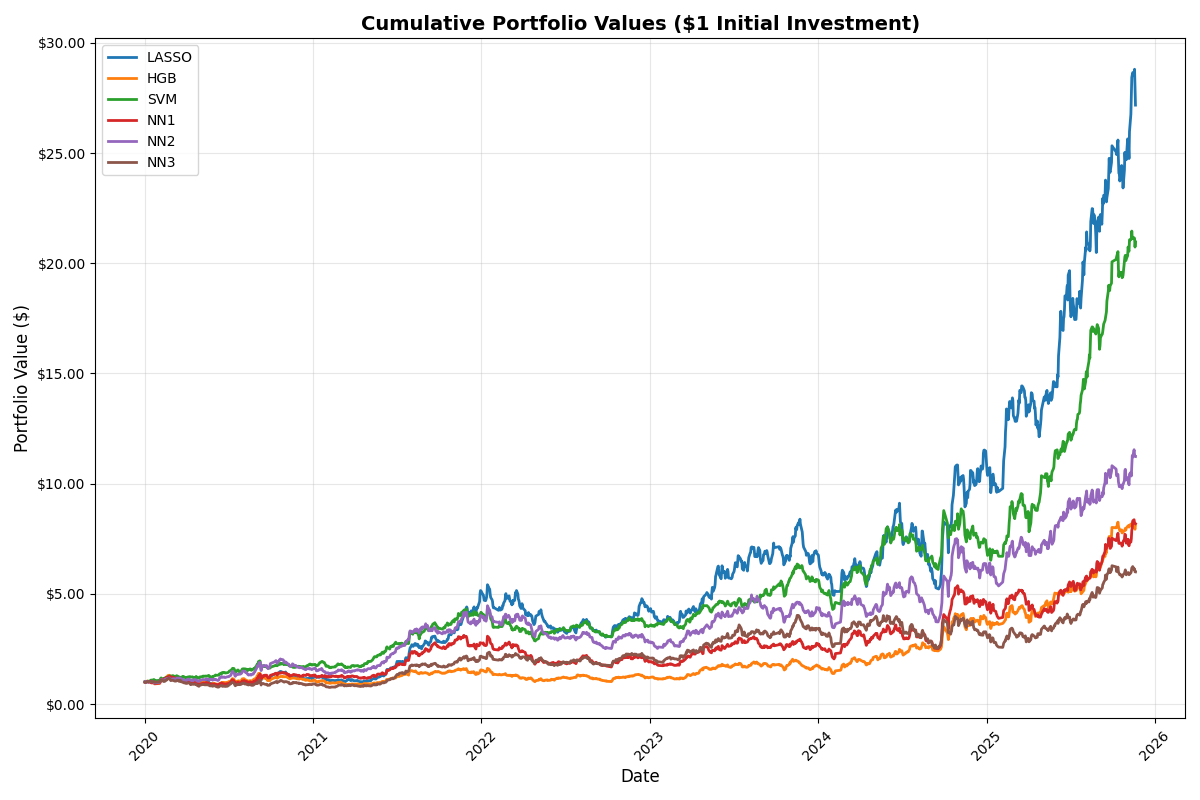
Wavelet Denoising and Model Parsimony in High-Frequency Momentum Strategies: Evidence from China’s ChiNext Market
ICCK Transactions on Machine Intelligence | Volume 2, Issue 3: 172-189, 2026 | DOI: 10.62762/TMI.2025.742127
Abstract
This study introduces a sophisticated dual-denoising framework for high-frequency momentum strategies in China's ChiNext market, integrating wavelet-based temporal filtering with isolation forest cross-sectional anomaly detection. Utilizing a comprehensive dataset of over 2 million daily observations from January 2016 to November 2025, the results demonstrate that wavelet denoising achieves exceptional efficacy for turnover series with a mean Signal-to-Noise Ratio improvement of 10.7 dB, while isolation forest robustly identifies anomalous stocks characterized by excessive trading activity and distorted risk-return profiles. Empirical results reveal that linear models with wavelet denoising... More >

Graphical Abstract
Wavelet Denoising and Model Parsimony in High-Frequency Momentum Strategies: Evidence from China’s ChiNext Market
Free Access | Research Article | 09 April 2026 | Cited: Crossref logo  1 , Scopus 1
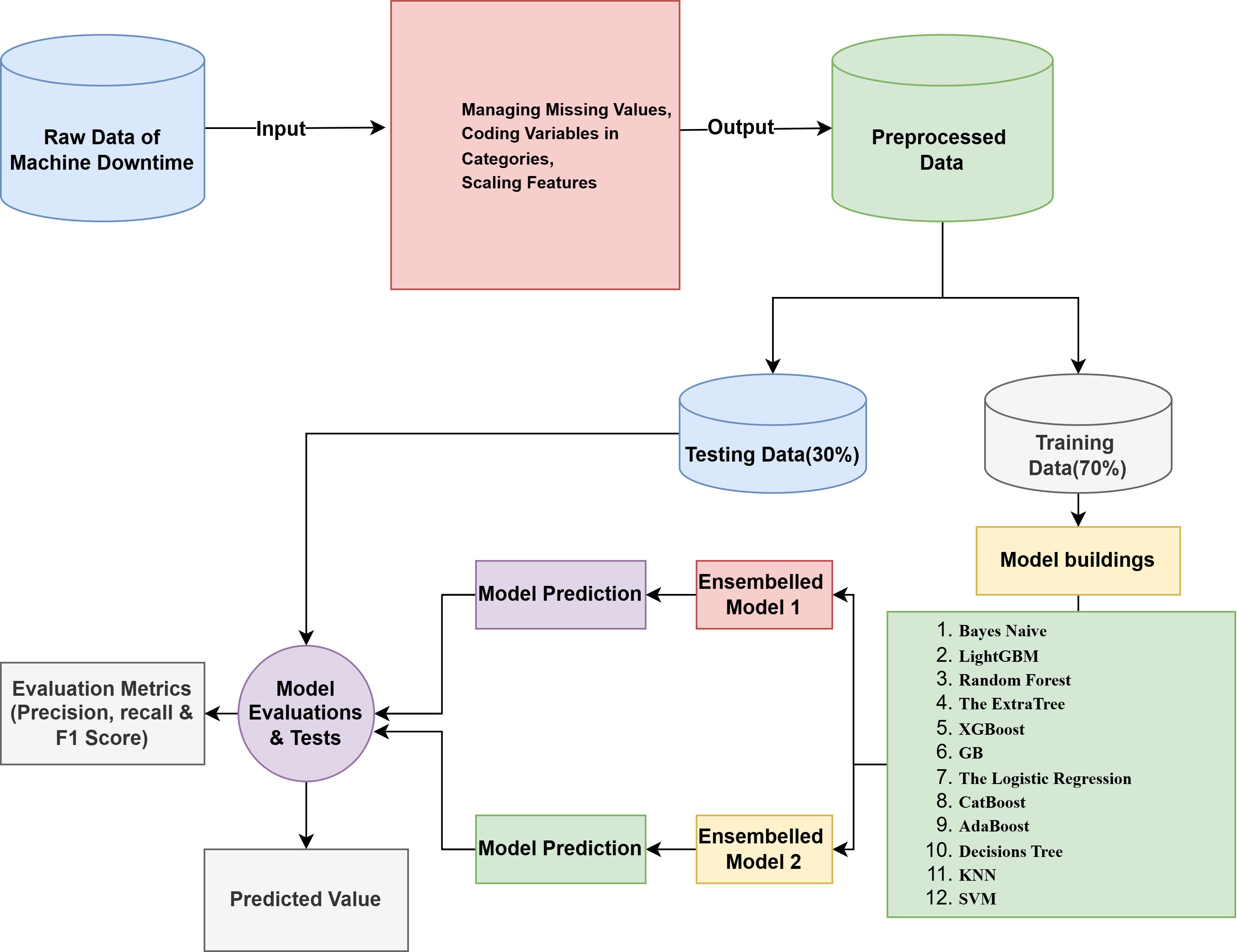
An Intelligent Approach for Machine Downtime Prediction Using Ensembled Machine Learning Models
ICCK Transactions on Machine Intelligence | Volume 2, Issue 3: 161-171, 2026 | DOI: 10.62762/TMI.2025.597909
Abstract
In industrial settings, unplanned machine downtime is a serious risk to profitability, operational effectiveness, and production. In order to predict machine breakdowns before they occur, this research offers a machine learning-based predictive maintenance framework that enables early prediction of machine downtime. The research is carried out using recorded data sets of industrial machines that operate according to various factors or reasons for downtime. Based on these values, prediction of downtime is possible. To guarantee data quality and consistency, several preprocessing techniques, such as imputation and normalization, were used on a dataset of 2,500 records and 16 features, ranging... More >

Graphical Abstract
An Intelligent Approach for Machine Downtime Prediction Using Ensembled Machine Learning Models
Free Access | Research Article | 06 April 2026 | Cited: Crossref logo  1
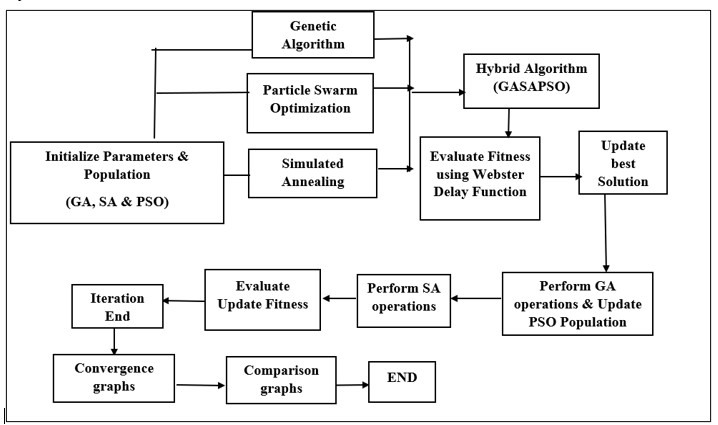
A Hybrid GASAPSO Algorithm for Traffic Signal Delay Minimization
ICCK Transactions on Machine Intelligence | Volume 2, Issue 3: 144-160, 2026 | DOI: 10.62762/TMI.2025.542785
Abstract
Traffic management is a crucial issue due to the massive increase in vehicles on the road. In order to improve traffic flow, reduce congestion, and ensure commuter safety at junctions, traffic light regulation is essential. This research aims to minimize delay and accident risk while maximizing vehicle throughput through intersections. In this paper, we introduced a new hybrid approach by combining various algorithms, which include a genetic algorithm (GA), Simulated Annealing (SA), and Particle Swarm Optimization (PSO) to reduce traffic delay at traffic lights. The Webster delay function has been used as a fitness function to evaluate the algorithmic performance. Our hybrid algorithm effici... More >

Graphical Abstract
A Hybrid GASAPSO Algorithm for Traffic Signal Delay Minimization
Free Access | Research Article | 02 April 2026 | Cited: Crossref logo  1
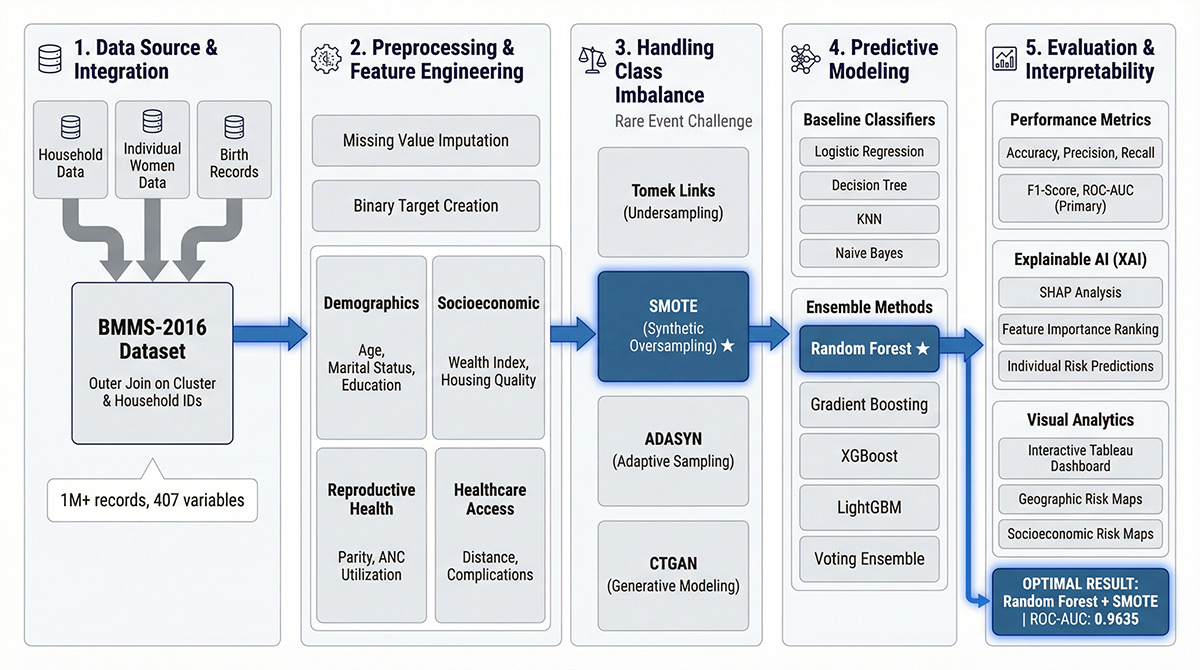
Predictive Analytics for Maternal Mortality in Bangladesh: An Interpretable ML Framework with Ensemble Methods
ICCK Transactions on Machine Intelligence | Volume 2, Issue 3: 127-143, 2026 | DOI: 10.62762/TMI.2026.182317
Abstract
Maternal mortality in Bangladesh remains a critical public health challenge, with recent evidence indicating stagnation in mortality reduction despite expanded facility-based delivery and skilled birth attendance. Accurate identification of high-risk cases is essential to enable targeted intervention and resource allocation. This study develops an interpretable machine learning framework for maternal mortality prediction using the nationally representative Bangladesh Maternal Mortality Survey 2016 (BMMS-2016). A comprehensive data integration and feature engineering pipeline was implemented across demographic, socioeconomic, and maternal healthcare domains. Given the severe class imbalance i... More >

Graphical Abstract
Predictive Analytics for Maternal Mortality in Bangladesh: An Interpretable ML Framework with Ensemble Methods
Free Access | Research Article | 23 March 2026 | Cited: Crossref logo  1
An Analysis of Time Series Models for Predicting Global Rice Price
ICCK Transactions on Machine Intelligence | Volume 2, Issue 3: 116-126, 2026 | DOI: 10.62762/TMI.2025.272892
Abstract
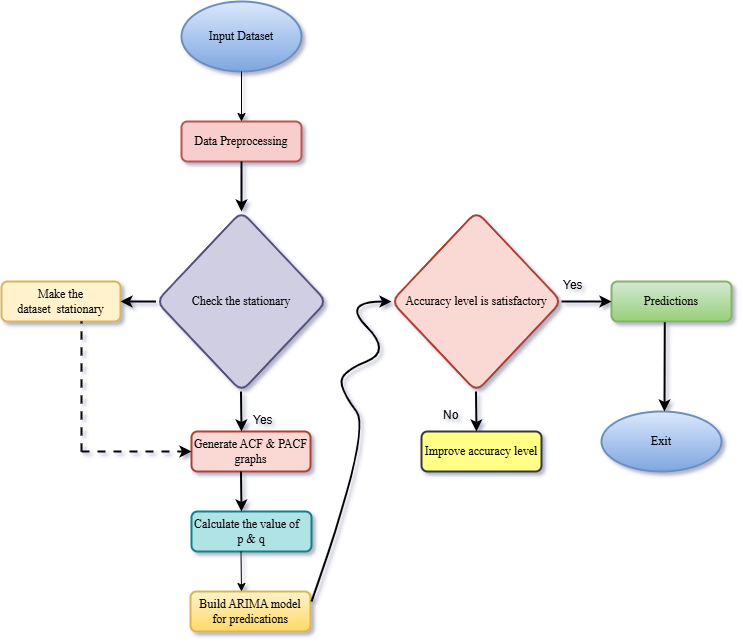
Rice plays a crucial role globally, as it is widely consumed across nations. Therefore, studying rice prices is vital, since fluctuations in the price can affect both its consumption and availability. This study analyzes time-series models using an international dataset. After preprocessing, the dataset comprises 71,856 samples and eight input features from six countries. The original dataset contained 300,816 rows and 23 columns. This study aims to predict rice inflation rates using time series models such as ARIMA, LSTM, and BiLSTM. The ARIMA model achieved the best combination of values (4,1,4)(0,0,0). Various statistical techniques that calculate inflation rates require expert knowledge... More >

Graphical Abstract
An Analysis of Time Series Models for Predicting Global Rice Price