Volume 2, Issue 1, Agricultural Science and Food Processing
Volume 2, Issue 1, 2025
Submit Manuscript Edit a Special Issue
Academic Editor
Haiyan Jia
Haiyan Jia
University of North Carolina at Chapel Hill, United States
Article QR Code
Article QR Code
Scan the QR code for reading
Popular articles
Agricultural Science and Food Processing, Volume 2, Issue 1, 2025: 47-55

Open Access | Research Article | 31 March 2025
Key Techniques and Efficiency Analysis of Amplification of Flanking Unknown Sequences by Inverse PCR
1 School of Biology, Shangluo University, Shangluo 726000, China
2 Qinling-Bashan Mountains Bioresources Comprehensive Development C. I. C., Hanzhong 723000, China
* Corresponding Authors: Xiaodong Xue, [email protected] ; Na Fan, [email protected]
ARK: ark:/57805/asfp.2024.865235
Received: 10 December 2024, Accepted: 20 March 2025, Published: 31 March 2025  
Abstract
Inverse PCR (IPCR) is a reliable, straightforward, and effective technique for acquiring unknown sequences. In this study, we used the model monocot Brachypodium distachyon (ecotype Bd21) to standardize the conditions and materials necessary for the successful execution of IPCR. The analysis of the amplified sequences resulted in the following conclusions. First, the distance between the nearest primer and the boundary of the known-unknown sequence is crucial for determining whether the target sequence can be expanded in the second round of IPCR. Specifically, this distance should exceed 100 bp, ideally around 200 bp. Second, because the random cleavage of a 6 bp endonuclease occurs at a greater distance than that of a 4 bp endonuclease, the use of a 6 bp endonuclease in IPCR results in larger but often inconsistent bands, while maintaining good specificity. Therefore, if the goal is to amplify longer sequences or achieve high accuracy, it is advisable to select endonucleases with 6 bp restriction sites. Third, IPCR is a viable technique that can be effectively utilized to obtain unknown DNA sequences. The experimental conditions established in this study serve as a theoretical basis for the amplification of unknown genome sequences of Gramineae crops and other species.

Graphical Abstract
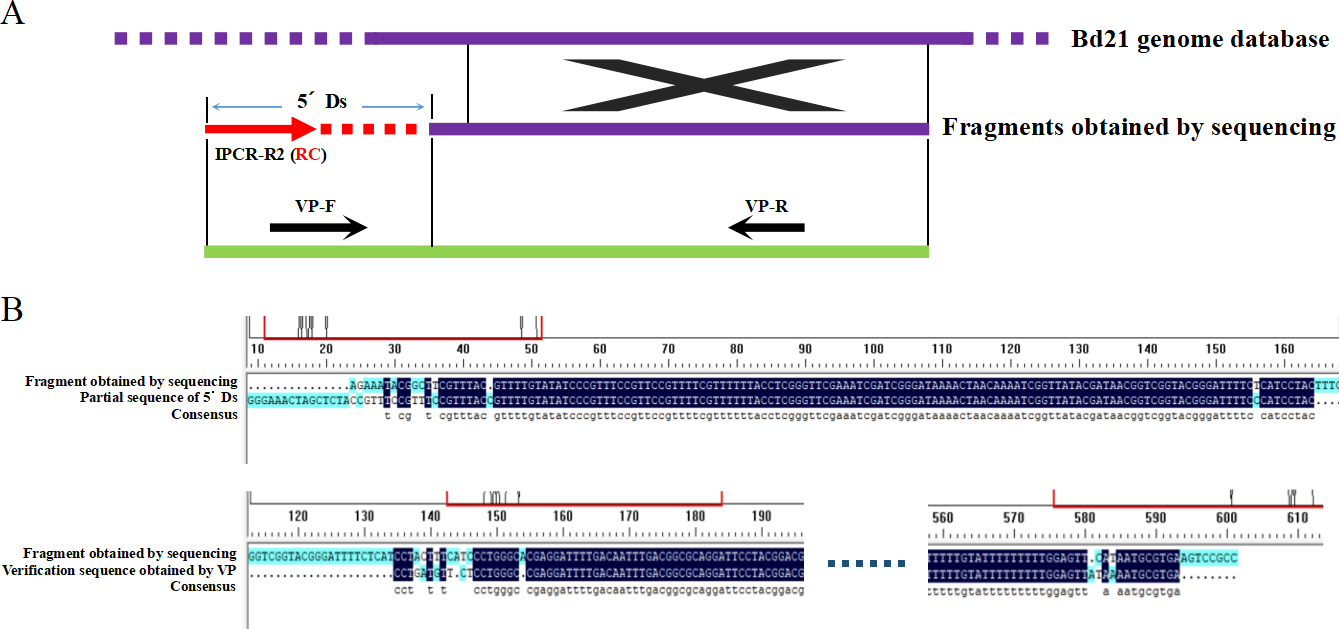
Key Techniques and Efficiency Analysis of Amplification of Flanking Unknown Sequences by Inverse PCR

Keywords
brachypodium distachyon
inverse PCR
unknown sequence
flanking sequence

Data Availability Statement
Data will be made available on request.

Funding
This work was supported in part by the Shaanxi Provincial Department of Education Key Scientific Research Project under Grant 21JY008; in part by the Shangluo University Science and Technology Research Project under Grant 20SKY010; in part by the General projects of Shaanxi Province's key research and development plan under Grant 2019NY-067; in part by the High-anthocyanin wheat green and efficient cultivation technology integration and demonstration project under Grant 2023-ZDLNY-13.

Conflicts of Interest
The authors declare no conflicts of interest. 

Ethical Approval and Consent to Participate
Not applicable.

References
  1. Jeltsch, A., Adam, S., Dukatz, M., Emperle, M., & Bashtrykov, P. (2021). Deep enzymology studies on DNA methyltransferases reveal novel connections between flanking sequences and enzyme activity. Journal of molecular biology, 433(19), 167186.
    [CrossRef]   [Google Scholar]
  2. Wang, J., Bi, X., Chen, W., Zhao, Q., Yang, J., Tong, X., & Zhao, M. (2021). Identification of the insertion site of transgenic DNA based on cyclization of the target gene with the flanking sequence and nested inverse PCR. Talanta Open, 3, 100033.
    [CrossRef]   [Google Scholar]
  3. Rishi, A. S., Nelson, N. D., & Goyal, A. (2004). Genome walking of large fragments: An improved method. Journal of Biotechnology, 111 (1), 9-15.
    [CrossRef]   [Google Scholar]
  4. Boratyn, G. M., Thierry-Mieg, J., Thierry-Mieg, D., Busby, B., & Madden, T. L. (2019). Magic-BLAST, an accurate RNA-seq aligner for long and short reads. BMC bioinformatics, 20, 1-19.
    [CrossRef]   [Google Scholar]
  5. Antal, Z., Rascle, C., Fevre, M., & Bruel, C. (2004). Single oligonucleotide nested PCR: A rapid method for the isolation of genes and their flanking regions from expressed sequence tags. Current Genetics, 46, 240-246.
    [CrossRef]   [Google Scholar]
  6. Tanksley, S. D., Ganal, M. W., & Martin, G. B. (1995). Chromosome landing: a paradigm for map-based gene cloning in plants with large genomes. Trends in Genetics, 11(2), 63-68.
    [CrossRef]   [Google Scholar]
  7. Kim, S. R., Jeon, J. S., & An, G. (2011). Development of an efficient inverse PCR method for isolating gene tags from T-DNA insertional mutants in rice. Plant Reverse Genetics: Methods and Protocols, 139-146.
    [CrossRef]   [Google Scholar]
  8. Rogers, Y. C., Christine Munk, A., Meincke, L. J., & Han, C. S. (2005). Closing bacterial genomic sequence gaps with adaptor-PCR. Biotechniques, 39(1), 31-34.
    [CrossRef]   [Google Scholar]
  9. Liu, Y. G., & Whittier, R. F. (1995). Thermal asymmetric interlaced PCR: Automatable amplification and sequencing of insert end fragments from P1 and YAC clones for chromosome walking. Genomics, 25(3), 674-681.
    [CrossRef]   [Google Scholar]
  10. Dalal, M., Chinnusamy, V., & Bansal, K. C. (2010). Isolation and functional characterization of lycopene β-cyclase (CYC-B) promoter from Solanum habrochaites. BMC Plant Biology, 10, 1-15.
    [CrossRef]   [Google Scholar]
  11. Fauteux, F., & Strömvik, M. V. (2009). Seed storage protein gene promoters contain conserved DNA motifs in Brassicaceae, Fabaceae and Poaceae. BMC plant biology, 9, 1-11.
    [CrossRef]   [Google Scholar]
  12. Ochman, H., Gerber, A. S., & Hartl, D. L. (1988). Genetic applications of an inverse polymerase chain reaction. Genetics, 120(3), 621-623.
    [CrossRef]   [Google Scholar]
  13. Abelleyro, M. M., Marchione, V. D., Palmitelli, M., Radic, C. P., Neme, D., Larripa, I. B., ... & Rossetti, L. C. (2019). Inverse PCR to perform long-distance haplotyping: main applications to improve preimplantation genetic diagnosis in hemophilia. European Journal of Human Genetics, 27(4), 603-611.
    [CrossRef]   [Google Scholar]
  14. Chen, L., Tu, Z., Hussain, J., Cong, L., Yan, Y., Jin, L., ... & He, G. (2010). Isolation and heterologous transformation analysis of a pollen-specific promoter from wheat (Triticum aestivum L.). Molecular biology reports, 37, 737-744.
    [CrossRef]   [Google Scholar]
  15. Tsaftaris, A., Pasentzis, K., & Argiriou, A. (2010). Rolling circle amplification of genomic templates for inverse PCR (RCA-GIP): A method for 5'- and 3'-genome walking without anchoring. Biotechnology Letters, 32, 157-161.
    [CrossRef]   [Google Scholar]
  16. Rossetti, L. C., Radic, C. P., Larripa, I. B., & De Brasi, C. D. (2005). Genotyping the hemophilia inversion hotspot by use of inverse PCR. Clinical chemistry, 51(7), 1154-1158.
    [CrossRef]   [Google Scholar]
  17. Yu, Q. G., Hu, N. J., Lu, Y. N., Vivek, R. N., & Yanagihara, R. (2001). Rapid acquisition of entire DNA polymerase gene of a novel herpesvirus from green turtle fibropapilloma by a genomic walking technique. Journal of Virological Methods, 91(2), 183-195.
    [CrossRef]   [Google Scholar]
  18. Šenovská, A., Drozdová, E., Brzobohatá, K., Chocholová, E., Fialová, D., & Šmerda, J. (2021). Sanger sequencing of mitochondrial hypervariable region of ancient samples for DNA authentication and screening before high-throughput sequencing. Journal of Archaeological Science: Reports, 40, 103216.
    [CrossRef]   [Google Scholar]
  19. Li, F., Bai, H., Xiong, Y., Fu, H., Jiang, S., Jiang, F., ... & Zhang, W. (2015). Molecular characterization of insulin-like androgenic gland hormone-binding protein gene from the oriental river prawn Macrobrachium nipponense and investigation of its transcriptional relationship with the insulin-like androgenic gland hormone gene. General and Comparative Endocrinology, 216, 152-160.
    [CrossRef]   [Google Scholar]
  20. Song, J., Liu, J., Weng, M., Huang, Y., Luo, L., Cao, P., ... & Wang, B. (2013). Cloning of galactinol synthase gene from Ammopiptanthus mongolicus and its expression in transgenic Photinia serrulata plants. Gene, 513 (1), 118-127.
    [CrossRef]   [Google Scholar]
  21. Yuanxin, Y., Chengcai, A., Li, L., Jiayu, G., Guihong, T., & Zhangliang, C. (2003). T‐linker‐specific ligation PCR (T‐linker PCR): an advanced PCR technique for chromosome walking or for isolation of tagged DNA ends. Nucleic acids research, 31 (12), e68-e68.
    [CrossRef]   [Google Scholar]
  22. Terauchi, R., & Kahl, G. (2000). Rapid isolation of promoter sequences by TAIL-PCR: The 5-flanking regions of Pal and Pgi genes from yams (Dioscorea). Mol Gen Genet, 263, 554-560.
    [CrossRef]   [Google Scholar]
  23. Harreither, W., Sygmund, C., Dünhofen, E., Vicuna, R., Haltrich, D., & Ludwig, R. (2009). Cellobiose dehydrogenase from the ligninolytic basidiomycete Ceriporiopsis subvermispora. Applied and Environmental Microbiology, 75(9), 2750-2757.
    [CrossRef]   [Google Scholar]
  24. Pang, K. M., & Knecht, D. A. (1997). Partial inverse PCR: A technique for cloning flanking sequences. BioTechniques, 22(6), 1046-1048.
    [CrossRef]   [Google Scholar]

Cite This Article
APA Style
Xue, X., Li, Q., Wu, Z., & Fan, N. (2025). Key Techniques and Efficiency Analysis of Amplification of Flanking Unknown Sequences by Inverse PCR. Agricultural Science and Food Processing, 2(1), 47–55. https://doi.org/10.62762/ASFP.2024.865235
Export Citation
RIS Format
Compatible with EndNote, Zotero, Mendeley, and other reference managers
RIS format data for reference managers
TY  - JOUR
AU  - Xue, Xiaodong
AU  - Li, Qinxia
AU  - Wu, Zhen
AU  - Fan, Na
PY  - 2025
DA  - 2025/03/31
TI  - Key Techniques and Efficiency Analysis of Amplification of Flanking Unknown Sequences by Inverse PCR
JO  - Agricultural Science and Food Processing
T2  - Agricultural Science and Food Processing
JF  - Agricultural Science and Food Processing
VL  - 2
IS  - 1
SP  - 47
EP  - 55
DO  - 10.62762/ASFP.2024.865235
UR  - https://www.icck.org/article/abs/ASFP.2024.865235
KW  - brachypodium distachyon
KW  - inverse PCR
KW  - unknown sequence
KW  - flanking sequence
AB  - Inverse PCR (IPCR) is a reliable, straightforward, and effective technique for acquiring unknown sequences. In this study, we used the model monocot Brachypodium distachyon (ecotype Bd21) to standardize the conditions and materials necessary for the successful execution of IPCR. The analysis of the amplified sequences resulted in the following conclusions. First, the distance between the nearest primer and the boundary of the known-unknown sequence is crucial for determining whether the target sequence can be expanded in the second round of IPCR. Specifically, this distance should exceed 100 bp, ideally around 200 bp. Second, because the random cleavage of a 6 bp endonuclease occurs at a greater distance than that of a 4 bp endonuclease, the use of a 6 bp endonuclease in IPCR results in larger but often inconsistent bands, while maintaining good specificity. Therefore, if the goal is to amplify longer sequences or achieve high accuracy, it is advisable to select endonucleases with 6 bp restriction sites. Third, IPCR is a viable technique that can be effectively utilized to obtain unknown DNA sequences. The experimental conditions established in this study serve as a theoretical basis for the amplification of unknown genome sequences of Gramineae crops and other species.
SN  - 3066-1579
PB  - Institute of Central Computation and Knowledge
LA  - English
ER  - 
BibTeX Format
Compatible with LaTeX, BibTeX, and other reference managers
BibTeX format data for LaTeX and reference managers
@article{Xue2025Key,
  author = {Xiaodong Xue and Qinxia Li and Zhen Wu and Na Fan},
  title = {Key Techniques and Efficiency Analysis of Amplification of Flanking Unknown Sequences by Inverse PCR},
  journal = {Agricultural Science and Food Processing},
  year = {2025},
  volume = {2},
  number = {1},
  pages = {47-55},
  doi = {10.62762/ASFP.2024.865235},
  url = {https://www.icck.org/article/abs/ASFP.2024.865235},
  abstract = {Inverse PCR (IPCR) is a reliable, straightforward, and effective technique for acquiring unknown sequences. In this study, we used the model monocot Brachypodium distachyon (ecotype Bd21) to standardize the conditions and materials necessary for the successful execution of IPCR. The analysis of the amplified sequences resulted in the following conclusions. First, the distance between the nearest primer and the boundary of the known-unknown sequence is crucial for determining whether the target sequence can be expanded in the second round of IPCR. Specifically, this distance should exceed 100 bp, ideally around 200 bp. Second, because the random cleavage of a 6 bp endonuclease occurs at a greater distance than that of a 4 bp endonuclease, the use of a 6 bp endonuclease in IPCR results in larger but often inconsistent bands, while maintaining good specificity. Therefore, if the goal is to amplify longer sequences or achieve high accuracy, it is advisable to select endonucleases with 6 bp restriction sites. Third, IPCR is a viable technique that can be effectively utilized to obtain unknown DNA sequences. The experimental conditions established in this study serve as a theoretical basis for the amplification of unknown genome sequences of Gramineae crops and other species.},
  keywords = {brachypodium distachyon, inverse PCR, unknown sequence, flanking sequence},
  issn = {3066-1579},
  publisher = {Institute of Central Computation and Knowledge}
}

Article Metrics
Citations:

Crossref

0

Scopus

0

Web of Science

0
Article Access Statistics:
Views: 1106
PDF Downloads: 561

Publisher's Note
ICCK stays neutral with regard to jurisdictional claims in published maps and institutional affiliations.

Rights and Permissions

CC BY Copyright © 2025 by the Author(s). Published by Institute of Central Computation and Knowledge. This article is an open access article distributed under the terms and conditions of the Creative Commons Attribution (CC BY) license (https://creativecommons.org/licenses/by/4.0/), which permits use, sharing, adaptation, distribution and reproduction in any medium or format, as long as you give appropriate credit to the original author(s) and the source, provide a link to the Creative Commons licence, and indicate if changes were made.
Agricultural Science and Food Processing

Agricultural Science and Food Processing

ISSN: 3066-1579 (Online) | ISSN: 3066-1560 (Print)

Email: [email protected]

Portico

Portico

All published articles are preserved here permanently:
https://www.portico.org/publishers/icck/