
Mitigating Barite Sag and Enhancing HPHT Performance of Oil-Based Drilling Fluids Using Micronized Saudi Calcium Carbonate



Article Information
Abstract
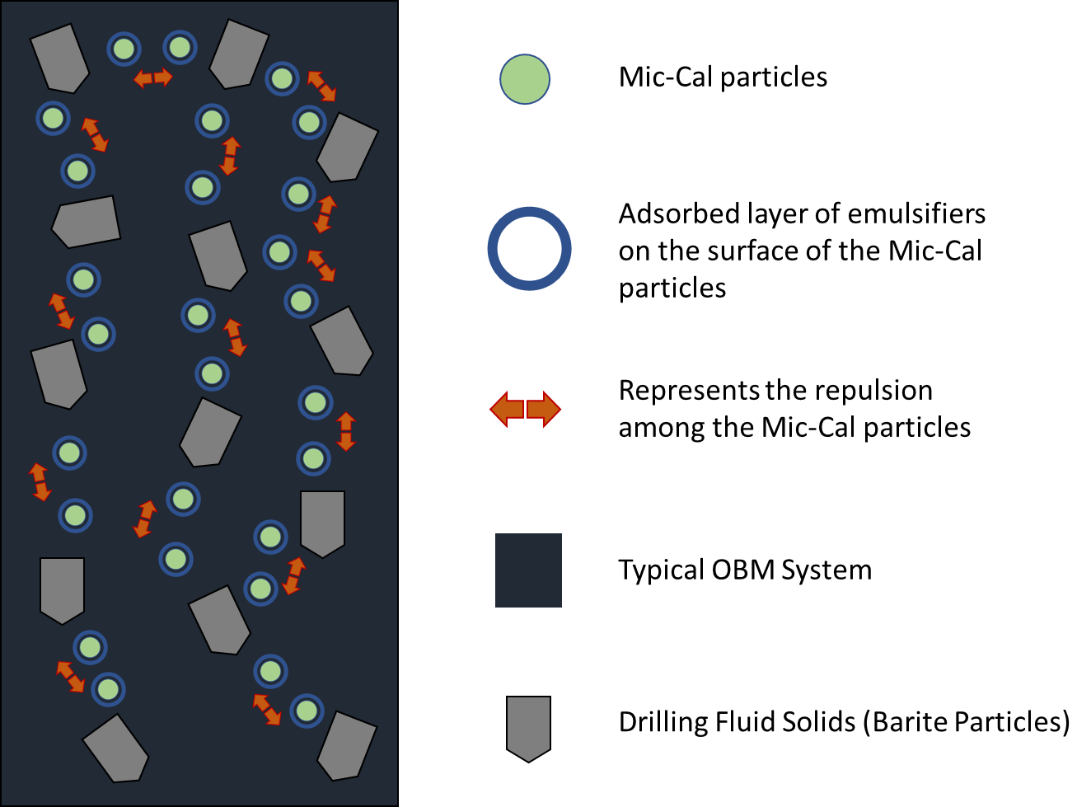
Barite sag and filtration control remain important challenges in oil-based drilling fluids used under high-pressure, high-temperature (HPHT) conditions. This study evaluates micronized calcium carbonate (Mic-Cal), prepared from limestone collected from the Aruma Formation in Saudi Arabia, as an additive for improving the stability and performance of an invert-emulsion oil-based drilling fluid. The Mic-Cal was characterized using particle-size distribution, X-ray fluorescence, X-ray diffraction, and scanning electron microscopy. Formulations containing 10, 20, and 30 lb/bbl Mic-Cal were evaluated after hot rolling at 350°F (177°C) for 16 h through static sag, density, and electrical stability tests, and the 20 and 30 lb/bbl formulations were further evaluated through HPHT filtration, rheology, and gel-strength tests. The material was predominantly micron-sized, with D50 and D90 values of 2.80 and 10.63 µm, respectively. At 20 lb/bbl, Mic-Cal reduced the static sag factor from 0.55 and 0.58 for the base fluid under vertical and 45° inclined conditions, respectively, to 0.52 under both conditions. The same dosage increased mud density from 14.0 to 14.3 ppg, while electrical stability remained above 400 V after thermal aging, indicating acceptable emulsion stability and solids oil-wetting. Compared with the base fluid, the 20 lb/bbl formulation increased apparent viscosity and yield point by approximately 20% and 56%, respectively, and reduced HPHT filtrate volume and filter-cake thickness by 11% and 33%. Increasing the Mic-Cal concentration to 30 lb/bbl did not provide further improvement in filtration or rheological performance. Under the tested conditions, 20 lb/bbl Mic-Cal provided the most favorable balance between sag mitigation, rheology, and filtration control.
Graphical Abstract
Keywords
Data Availability Statement
Funding
Conflicts of Interest
AI Use Statement
Ethical Approval and Consent to Participate
References
- Davarpanah, A. (2018). Integrated feasibility analysis of shale inhibition property by utilization of pore pressure transmission equipment. Petroleum Research, 3(2), 152-158.
[CrossRef] [Google Scholar] - Caenn, R., Darley, H. C. H., & Gray, G. R. (2017). Composition and Properties of Drilling and Completion Fluids (7th ed.). Gulf Professional Publishing (Elsevier), Cambridge, MA. ISBN 978-0-12-804751-4.
[CrossRef] [Google Scholar] - Gautam, S., Guria, C., & Rajak, V. K. (2022). A state of the art review on the performance of high-pressure and high-temperature drilling fluids: Towards understanding the structure-property relationship of drilling fluid additives. Journal of Petroleum Science and Engineering, 213, 110318.
[CrossRef] [Google Scholar] - Sayindla, S., Lund, B., Ytrehus, J. D., & Saasen, A. (2017). Hole-cleaning performance comparison of oil-based and water-based drilling fluids. Journal of Petroleum Science and Engineering, 159, 49-57.
[CrossRef] [Google Scholar] - Whyte, J., Makarychev-Mikhailov, S., & Arevalo, Y. (2022, March). Drilling Fluids Profiling—Is Your Mud Right for the Job?. In IADC/SPE International Drilling Conference and Exhibition (p. D011S009R002). SPE.
[CrossRef] [Google Scholar] - Li, W., Zhao, X., Ji, Y., Peng, H., Chen, B., Liu, L., & Han, X. (2016). Investigation of biodiesel-based drilling fluid, part 1: biodiesel evaluation, invert-emulsion properties, and development of a novel emulsifier package. SPE Journal, 21(05), 1755-1766.
[CrossRef] [Google Scholar] - Ofei, T. N., Cheng, I., Lund, B., Saasen, A., & Sangesland, S. (2020, August). On the stability of oil-based drilling fluid: effect of oil-water ratio. In International Conference on Offshore Mechanics and Arctic Engineering(Vol. 84430, p. V011T11A073). American Society of Mechanical Engineers.
[CrossRef] [Google Scholar] - Beg, M., Kumar, P., Choudhary, P., & Sharma, S. (2020). Effect of high temperature ageing on TiO2 nanoparticles enhanced drilling fluids: A rheological and filtration study. Upstream Oil and Gas Technology, 5, 100019.
[CrossRef] [Google Scholar] - Al-Shargabi, M., Davoodi, S., Wood, D. A., Al-Musai, A., Rukavishnikov, V. S., & Minaev, K. M. (2022). Nanoparticle applications as beneficial oil and gas drilling fluid additives: A review. Journal of Molecular Liquids, 352, 118725.
[CrossRef] [Google Scholar] - Sensoy, T., Chenevert, M. E., & Sharma, M. M. (2009, October). Minimizing water invasion in shale using nanoparticles. In SPE Annual Technical Conference and Exhibition, (pp. SPE-124429). SPE.
[CrossRef] [Google Scholar] - Cheraghian, G. (2021). Nanoparticles in drilling fluid: A review of the state-of-the-art. Journal of materials research and technology, 13, 737-753.
[CrossRef] [Google Scholar] - Siddig, O., Mahmoud, A. A., & Elkatatny, S. (2020). A review of different approaches for water-based drilling fluid filter cake removal. Journal of Petroleum Science and Engineering, 192, 107346.
[CrossRef] [Google Scholar] - Iqbal, R., Zubair, M., Pirzada, F., Abro, F., Ali, M., & Valasai, A. (2019). An experimental study on the performance of calcium carbonate extracted from eggshells as weighting agent in drilling fluid. Engineering, Technology & Applied Science Research, 9(1), 3859-3862.
[CrossRef] [Google Scholar] - Mady, A., Mahmoud, O., & Dahab, A. S. (2020). Nanoparticle-based drilling fluids as promising solutions to enhance drilling performance in Egyptian oil and gas fields. International Journal of Industry and Sustainable Development, 1(1), 24-38. https://www.researchgate.net/publication/338501847
[Google Scholar] - Dehghani, F., Kalantariasl, A., Saboori, R., Sabbaghi, S., & Peyvandi, K. (2019). Performance of carbonate calcium nanoparticles as filtration loss control agent of water-based drilling fluid. SN Applied Sciences, 1(11), 1466.
[CrossRef] [Google Scholar] - Zhang, H., Zhong, Y., She, J., & Kuang, J. (2019). Experimental study of nano-drilling fluid based on nano temporary plugging technology and its application mechanism in shale drilling. Applied Nanoscience, 9(8), 1637-1648.
[CrossRef] [Google Scholar] - Shokry, A., Basfar, S., & Elkatatny, S. (2024). Evaluation of using micronized Saudi calcite in ilmenite-weighted water-based drilling fluid. Scientific Reports, 14(1), 12777.
[CrossRef] [Google Scholar] - Al-Kahtany, K. M., El-Sorogy, A. S., Youssef, M., & Gahlan, H. A. (2016). Stratigraphy and depositional environments of the Upper Cretaceous Aruma Formation, Central Saudi Arabia. Arabian Journal of Geosciences, 9(5), 330.
[CrossRef] [Google Scholar] - American Petroleum Institute. (2023). API RP 13B-2: Recommended Practice for Field Testing Nonaqueous-based Drilling Fluids (6th ed.). API Publishing Services, Washington, DC, USA. https://store.accuristech.com/standards/api-rp-13b-2?product_id=2569495
[Google Scholar] - Fakoya, M. F., & Ahmed, R. (2024). Experimental study on dynamic barite sag and effects of inclination and pipe rotation. SPE Journal, 29(02), 830-842.
[CrossRef] [Google Scholar] - Oni, O., & Fadairo, A. (2024). Optimizing the Influence of Fly Ash as an Anti-Sagging Additive in Highly Deviated Geothermal Well Drilling Fluids Using Surface Response Method. Applied Sciences, 14(15), 6833.
[CrossRef] [Google Scholar] - Ma, J., Yu, P., Xia, B., & An, Y. (2019). Micro-manganese as a weight agent for improving the suspension capability of drilling fluid and the study of its mechanism. RSC advances, 9(61), 35509-35523.
[CrossRef] [Google Scholar] - Basfar, S., Al-Hakami, M., Elkatatny, S., & Ahmed, A. (2023). Evaluation of using fly ash as a weighing material for oil-based drilling fluid. ACS omega, 8(41), 38045-38052.
[CrossRef] [Google Scholar] - Gautam, S., & Guria, C. (2020). Optimal synthesis, characterization, and performance evaluation of high-pressure high-temperature polymer-based drilling fluid: the effect of viscoelasticity on cutting transport, filtration loss, and lubricity. SPE Journal, 25(03), 1333-1350.
[CrossRef] [Google Scholar] - Murtaza, M., Alarifi, S. A., Kamal, M. S., Onaizi, S. A., Al-Ajmi, M., & Mahmoud, M. (2021). Experimental investigation of the rheological behavior of an oil-based drilling fluid with rheology modifier and oil wetter additives. Molecules, 26(16), 4877.
[CrossRef] [Google Scholar] - Growcock, F. B., Ellis, C. F., & Schmidt, D. D. (1994). Electrical stability, emulsion stability, and wettability of invert oil-based muds. SPE Drilling & Completion, 9(01), 39-46.
[CrossRef] [Google Scholar] - Hattori, T., Hao, X., Shimokawara, M., Kato, Y., Kitamura, R., & Elakneswaran, Y. (2023, February). Influence of Inorganic Solid Particles in the Formation and Stability of Crude Oil Emulsion. In International Petroleum Technology Conference (p. D032S045R001). IPTC.
[CrossRef] [Google Scholar] - Sullivan, A. P., & Kilpatrick, P. K. (2002). The effects of inorganic solid particles on water and crude oil emulsion stability. Industrial & Engineering Chemistry Research, 41(14), 3389-3404.
[CrossRef] [Google Scholar] - Gaurina-Međimurec, N. (2002). Laboratory Evaluation of Calcium Carbonate particle size selection for drill-in fluids. Rudarsko-geološko-naftni zbornik, 14(1), 47-53. https://hrcak.srce.hr/clanak/8080
[Google Scholar] - Bai, X., Yong, X., Koutsos, V., Deng, L., Li, K., Zhou, Y., & Luo, Y. (2021). Dispersive and filter loss performance of calcium carbonate nanoparticles in water for drilling fluid applications. Nanotechnology, 32(48), 485704.
[CrossRef] [Google Scholar]
Cite This Article
TY  - JOUR
AU  - Basfar, Salem
AU  - Gowida, Ahmed
AU  - Elkatatny, Salaheldin
PY  - 2026
DA  - 2026/11/20
TI  - Mitigating Barite Sag and Enhancing HPHT Performance of Oil-Based Drilling Fluids Using Micronized Saudi Calcium Carbonate
JO  - Journal of Geo-Energy and Environment
T2  - Journal of Geo-Energy and Environment
JF  - Journal of Geo-Energy and Environment
VL  - 3
IS  - 2
SP  - 92
EP  - 104
DO  - 10.62762/JGEE.2026.727328
UR  - https://www.icck.org/article/abs/jgee.2026.727328
KW  - micronized calcium carbonate
KW  - oil-based drilling fluid
KW  - HPHT filtration
KW  - rheology
KW  - sag testing
AB  - Barite sag and filtration control remain important challenges in oil-based drilling fluids used under high-pressure, high-temperature (HPHT) conditions. This study evaluates micronized calcium carbonate (Mic-Cal), prepared from limestone collected from the Aruma Formation in Saudi Arabia, as an additive for improving the stability and performance of an invert-emulsion oil-based drilling fluid. The Mic-Cal was characterized using particle-size distribution, X-ray fluorescence, X-ray diffraction, and scanning electron microscopy. Formulations containing 10, 20, and 30 lb/bbl Mic-Cal were evaluated after hot rolling at 350°F (177°C) for 16 h through static sag, density, and electrical stability tests, and the 20 and 30 lb/bbl formulations were further evaluated through HPHT filtration, rheology, and gel-strength tests. The material was predominantly micron-sized, with D50 and D90 values of 2.80 and 10.63 µm, respectively. At 20 lb/bbl, Mic-Cal reduced the static sag factor from 0.55 and 0.58 for the base fluid under vertical and 45° inclined conditions, respectively, to 0.52 under both conditions. The same dosage increased mud density from 14.0 to 14.3 ppg, while electrical stability remained above 400 V after thermal aging, indicating acceptable emulsion stability and solids oil-wetting. Compared with the base fluid, the 20 lb/bbl formulation increased apparent viscosity and yield point by approximately 20% and 56%, respectively, and reduced HPHT filtrate volume and filter-cake thickness by 11% and 33%. Increasing the Mic-Cal concentration to 30 lb/bbl did not provide further improvement in filtration or rheological performance. Under the tested conditions, 20 lb/bbl Mic-Cal provided the most favorable balance between sag mitigation, rheology, and filtration control.
SN  - 3069-3268
PB  - Institute of Central Computation and Knowledge
LA  - English
ER  -
@article{Basfar2026Mitigating,
  author = {Salem Basfar and Ahmed Gowida and Salaheldin Elkatatny},
  title = {Mitigating Barite Sag and Enhancing HPHT Performance of Oil-Based Drilling Fluids Using Micronized Saudi Calcium Carbonate},
  journal = {Journal of Geo-Energy and Environment},
  year = {2026},
  volume = {3},
  number = {2},
  pages = {92-104},
  doi = {10.62762/JGEE.2026.727328},
  url = {https://www.icck.org/article/abs/jgee.2026.727328},
  abstract = {Barite sag and filtration control remain important challenges in oil-based drilling fluids used under high-pressure, high-temperature (HPHT) conditions. This study evaluates micronized calcium carbonate (Mic-Cal), prepared from limestone collected from the Aruma Formation in Saudi Arabia, as an additive for improving the stability and performance of an invert-emulsion oil-based drilling fluid. The Mic-Cal was characterized using particle-size distribution, X-ray fluorescence, X-ray diffraction, and scanning electron microscopy. Formulations containing 10, 20, and 30 lb/bbl Mic-Cal were evaluated after hot rolling at 350°F (177°C) for 16 h through static sag, density, and electrical stability tests, and the 20 and 30 lb/bbl formulations were further evaluated through HPHT filtration, rheology, and gel-strength tests. The material was predominantly micron-sized, with D50 and D90 values of 2.80 and 10.63 µm, respectively. At 20 lb/bbl, Mic-Cal reduced the static sag factor from 0.55 and 0.58 for the base fluid under vertical and 45° inclined conditions, respectively, to 0.52 under both conditions. The same dosage increased mud density from 14.0 to 14.3 ppg, while electrical stability remained above 400 V after thermal aging, indicating acceptable emulsion stability and solids oil-wetting. Compared with the base fluid, the 20 lb/bbl formulation increased apparent viscosity and yield point by approximately 20\% and 56\%, respectively, and reduced HPHT filtrate volume and filter-cake thickness by 11\% and 33\%. Increasing the Mic-Cal concentration to 30 lb/bbl did not provide further improvement in filtration or rheological performance. Under the tested conditions, 20 lb/bbl Mic-Cal provided the most favorable balance between sag mitigation, rheology, and filtration control.},
  keywords = {micronized calcium carbonate, oil-based drilling fluid, HPHT filtration, rheology, sag testing},
  issn = {3069-3268},
  publisher = {Institute of Central Computation and Knowledge}
}
Article Metrics
Publisher's Note
ICCK stays neutral with regard to jurisdictional claims in published maps and institutional affiliations.
Rights and Permissions
 Copyright © 2026 by the Author(s). Published by Institute of Central Computation and Knowledge. This article is an open access article distributed under the terms and conditions of the Creative Commons Attribution (CC BY) license (https://creativecommons.org/licenses/by/4.0/), which permits use, sharing, adaptation, distribution and reproduction in any medium or format, as long as you give appropriate credit to the original author(s) and the source, provide a link to the Creative Commons licence, and indicate if changes were made.

Portico
