Volume 2, Issue 1, ICCK Journal of Image Analysis and Processing
Volume 2, Issue 1, 2026
Submit Manuscript Edit a Special Issue
Article QR Code
Article QR Code
Scan the QR code for reading
Popular articles
ICCK Journal of Image Analysis and Processing, Volume 2, Issue 1, 2026: 1-16

Open Access | Research Article | 21 January 2026
Embedded Electronic IoT System for Poultry Health Monitoring and AI-Powered Disease Detection from Feces
1 Higher Institute of Applied Sciences and Technology of Kasserine, Kairouan University, Kasserine 1200, Tunisia
* Corresponding Author: Hmidi Alaeddine, [email protected]
ARK: ark:/57805/jiap.2025.569459
Received: 03 September 2025, Accepted: 29 December 2025, Published: 21 January 2026  
Abstract
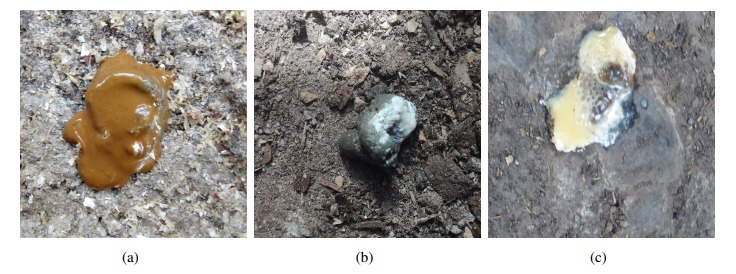
Poultry farming plays a vital role in global food production, requiring efficient management to ensure productivity and animal welfare. Traditional methods, largely based on manual monitoring, are often inefficient, error-prone, and costly. With the rise of Internet of Things (IoT) technologies, intelligent systems now enable remote monitoring and management of environmental conditions, farm operations, and disease prevention. Platforms such as ThingSpeak allow for real-time data collection, processing, and visualization, offering a cost-effective solution for poultry farm management. By integrating sensors to measure temperature, humidity, air quality, and feeding, and by leveraging ThingSpeak’s analytical tools, farms can automatically adjust conditions and support proactive decision-making. This not only reduces operational costs but also improves efficiency, resource management, and animal health monitoring. The growing demand for poultry products has pressured farms to increase production, which heightens the risk of disease outbreaks and significant economic losses. Traditional disease detection methods, which depend on manual inspections by skilled professionals, are labor-intensive and delay timely intervention. To address these challenges, an IoT-based poultry disease detection and classification system is proposed. This system employs sensors for continuous health monitoring and artificial intelligence algorithms such as YOLOV7 and MobileNetV3 to analyze data. YOLOV7 segments regions of interest from automatically captured fecal images, while MobileNetV3 classifies them into four states: healthy, coccidiosis, salmonella, and Newcastle disease. Trained on Zenodo database samples, these models achieve high accuracy, providing farmers and veterinarians with an effective tool for proactive disease management and sustainable poultry farming.

Graphical Abstract
Embedded Electronic IoT System for Poultry Health Monitoring and AI-Powered Disease Detection from Feces

Keywords
ESP32
YOLOV7
MobileNetV3
IoT
intelligent poultry system
disease detection

Data Availability Statement
Data will be made available on request.

Funding
This work was supported without any funding.

Conflicts of Interest
The authors declare no conflicts of interest.

AI Use Statement
The authors declare that no generative AI was used in the preparation of this manuscript.

Ethical Approval and Consent to Participate
Not applicable.

References
  1. Akhund, T. M. N. U., Snigdha, S. R., Reza, M. S., Newaz, N. T., Saifuzzaman, M., \& Rashel, M. R. (2020, May). Self-powered IoT-based design for multi-purpose smart poultry farm. In \textit{International Conference on Information and Communication Technology for Intelligent Systems} (pp. 43-51). Singapore: Springer Nature Singapore. [\href{
    [CrossRef]   [Google Scholar]
  2. Ramteke, B., \& Dongre, S. (2022, April). IoT based smart automated poultry farm management system. In \textit{2022 10th International Conference on Emerging Trends in Engineering and Technology-Signal and Information Processing (ICETET-SIP-22)} (pp. 1-4). IEEE. [\href{
    [CrossRef]   [Google Scholar]
  3. Mondol, J. P., Mahmud, K. R., Kibria, M. G., \& Al Azad, A. K. (2020, November). IoT based smart weather monitoring system for poultry farm. In \textit{2020 2nd International Conference on Advanced Information and Communication Technology (ICAICT)} (pp. 229-234). IEEE. [\href{
    [CrossRef]   [Google Scholar]
  4. Ahmed, M. M., Hassanien, E. E., \& Hassanien, A. E. (2024). A smart IoT-based monitoring system in poultry farms using chicken behavioural analysis. \textit{Internet of Things, 25}, 101010. [\href{
    [CrossRef]   [Google Scholar]
  5. Sadeghi, M., Banakar, A., Khazaee, M., \& Soleimani, M. R. (2015). An intelligent procedure for the detection and classification of chickens infected by clostridium perfringens based on their vocalization. \textit{Revista Brasileira de Ciência Avícola, 17}(4), 537-544. [\href{
    [CrossRef]   [Google Scholar]
  6. Chien, Y. R., \& Chen, Y. X. (2018). An RFID-based smart nest box: an experimental study of laying performance and behavior of individual hens. \textit{Sensors, 18}(3), 859. [\href{
    [CrossRef]   [Google Scholar]
  7. Stadig, L. M., Rodenburg, T. B., Ampe, B., Reubens, B., \& Tuyttens, F. A. (2018). An automated positioning system for monitoring chickens’ location: effects of wearing a backpack on behaviour, leg health and production. \textit{Applied Animal Behaviour Science, 198}, 83-88. [\href{
    [CrossRef]   [Google Scholar]
  8. de Alencar, N., da Silva Lima, N., Gonçalves, R., de Lima, L., Ungaro, H., Minoro Abe, J., \& Abe, J. (2020). Lameness prediction in broiler chicken using a machine learning technique. \textit{Information Processing in Agriculture, 8}(3), 409-418. [\href{
    [CrossRef]   [Google Scholar]
  9. Orakwue, S. I., Al-Khafaji, H. M. R., \& Chabuk, M. Z. (2022). IoT based smart monitoring system for efficient poultry farming. \textit{Webology, 19}(1), 4105-4112. [\href{
    [CrossRef]   [Google Scholar]
  10. Hambali, M. F. H., Patchmuthu, R. K., \& Wan, A. T. (2020, June). IoT based smart poultry farm in Brunei. In \textit{2020 8th International Conference on Information and Communication Technology (ICoICT)} (pp. 1-5). IEEE. [\href{
    [CrossRef]   [Google Scholar]
  11. Jayarajan, P., Annamalai, M., Jannifer, V. A., \& Prakash, A. A. (2021, March). Iot based automated poultry farm for layer chicken. In \textit{2021 7th International Conference on Advanced Computing and Communication Systems (ICACCS)} (Vol. 1, pp. 733-737). IEEE. [\href{
    [CrossRef]   [Google Scholar]
  12. Singh, M., Kumar, R., Tandon, D., Sood, P., \& Sharma, M. (2020, December). Artificial intelligence and iot based monitoring of poultry health: A review. In \textit{2020 IEEE International Conference on Communication, Networks and Satellite (Comnetsat)} (pp. 50-54). IEEE. [\href{
    [CrossRef]   [Google Scholar]
  13. Vijay, A., Garg, T., Goyal, V., Yadav, A., \& Mukherjee, R. (2023, January). A low-cost edge-iot based smart poultry farm. In \textit{2023 15th International Conference on COMmunication Systems \textnormal{\&} NETworkS (COMSNETS)} (pp. 397-399). IEEE. [\href{
    [CrossRef]   [Google Scholar]
  14. Prasad, M. V. S., Sumalatha, A., Rani, K. S., Meenakshi, C., Nicy, M., \& Babu, D. C. (2024, February). Cloud-Based IoT Solution for Enhanced Poultry Farm Management. In \textit{2024 4th International Conference on Innovative Practices in Technology and Management (ICIPTM)} (pp. 1-5). IEEE. [\href{
    [CrossRef]   [Google Scholar]
  15. Malini, T., Aswath, D. L., Abhishek, R., Kirubhakaran, R., \& Anandhamurugan, S. (2023, March). IoT based smart poultry farm monitoring. In \textit{2023 9th International Conference on Advanced Computing and Communication Systems (ICACCS)} (Vol. 1, pp. 13-18). IEEE. [\href{
    [CrossRef]   [Google Scholar]
  16. Wang, J., Shen, M., Liu, L., Xu, Y., \& Okinda, C. (2019). Recognition and classification of broiler droppings based on deep convolutional neural network. \textit{Journal of Sensors, 2019}(1), 3823515. [\href{
    [CrossRef]   [Google Scholar]
  17. Zhuang, X., Bi, M., Guo, J., Wu, S., \& Zhang, T. (2018). Development of an early warning algorithm to detect sick broilers. \textit{Computers and Electronics in Agriculture, 144}, 102-113. [\href{
    [CrossRef]   [Google Scholar]
  18. Zhuang, X., \& Zhang, T. (2019). Detection of sick broilers by digital image processing and deep learning. \textit{Biosystems Engineering, 179}, 106-116. [\href{
    [CrossRef]   [Google Scholar]
  19. Sibanda, T. Z., Welch, M., Schneider, D., Kolakshyapati, M., \& Ruhnke, I. (2020). Characterising free-range layer flocks using unsupervised cluster analysis. \textit{Animals, 10}(5), 855. [\href{
    [CrossRef]   [Google Scholar]
  20. Yuanzhou, Y., Haoyang, H., Mu, J., Li, J., \& Pu, H. (2020). Estimation of the gender ratio of chickens based on computer vision: Dataset and exploration. \textit{Entropy, 22}(7), 719. [\href{
    [CrossRef]   [Google Scholar]
  21. Klotz, D. F., Ribeiro, R., Enembreck, F., Denardin, G. W., Barbosa, M. A., Casanova, D., \& Teixeira, M. (2022). Estimating and tuning adaptive action plans for the control of smart interconnected poultry condominiums. \textit{Expert Systems with Applications, 187}, 115876. [\href{
    [CrossRef]   [Google Scholar]
  22. Nasiri, A., Yoder, J., Zhao, Y., Hawkins, S., Prado, M., \& Gan, H. (2022). Pose estimation-based lameness recognition in broiler using CNN-LSTM network. \textit{Computers and Electronics in Agriculture, 197}, 106931. [\href{
    [CrossRef]   [Google Scholar]
  23. Li, G., Zhao, Y., Porter, Z., \& Purswell, J. L. (2021). Automated measurement of broiler stretching behaviors under four stocking densities via faster region-based convolutional neural network. \textit{Animal, 15}(1), 100059. [\href{
    [CrossRef]   [Google Scholar]
  24. Küçüktopcu, E., \& Cemek, B. (2021). Comparison of neuro-fuzzy and neural networks techniques for estimating ammonia concentration in poultry farms. \textit{Journal of environmental chemical engineering, 9}(4), 105699. [\href{
    [CrossRef]   [Google Scholar]
  25. Cuan, K., Li, Z., Zhang, T., \& Qu, H. (2022). Gender determination of domestic chicks based on vocalization signals. \textit{Computers and Electronics in Agriculture, 199}, 107172. [\href{
    [CrossRef]   [Google Scholar]
  26. Fang, C., Zhang, T., Zheng, H., Huang, J., \& Cuan, K. (2021). Pose estimation and behavior classification of broiler chickens based on deep neural networks. \textit{Computers and Electronics in Agriculture, 180}, 105863. [\href{
    [CrossRef]   [Google Scholar]
  27. Cuan, K., Zhang, T., Li, Z., Huang, J., Ding, Y., \& Fang, C. (2022). Automatic Newcastle disease detection using sound technology and deep learning method. \textit{Computers and Electronics in Agriculture, 194}, 106740. [\href{
    [CrossRef]   [Google Scholar]
  28. Mahdavian, A., Minaei, S., Marchetto, P. M., Almasganj, F., Rahimi, S., \& Yang, C. (2021). Acoustic features of vocalization signal in poultry health monitoring. \textit{Applied Acoustics, 175}, 107756. [\href{
    [CrossRef]   [Google Scholar]
  29. You, J., Lou, E., Afrouziyeh, M., Zukiwsky, N. M., \& Zuidhof, M. J. (2021). Using an artificial neural network to predict the probability of oviposition events of precision fed broiler breeder hens. \textit{Poultry Science, 100}(8), 101187. [\href{
    [CrossRef]   [Google Scholar]
  30. Bloch, V., Barchilon, N., Halachmi, I., \& Druyan, S. (2020). Automatic broiler temperature measuring by thermal camera. \textit{Biosystems Engineering, 199}, 127-134. [\href{
    [CrossRef]   [Google Scholar]
  31. Branco, T., Moura, D., \& I., Oliveira, S. (2020). Detection of broiler heat stress by using the generalised sequential pattern algorithm. \textit{Biosystems Engineering, 199}, 121-126. [\href{
    [CrossRef]   [Google Scholar]
  32. Carpentier, L., Vranken, E., Berckmans, D., Paeshuyse, J., \& Norton, T. (2019). Development of sound-based poultry health monitoring tool for automated sneeze detection. \textit{Computers and Electronics in Agriculture, 162}, 573-581. [\href{
    [CrossRef]   [Google Scholar]
  33. Cuan, K., Zhang, T., Huang, J., Fang, C., \& Guan, Y. (2020). Detection of avian influenza-infected chickens based on a chicken sound convolutional neural network. \textit{Computers and Electronics in Agriculture, 178}, 105688. [\href{
    [CrossRef]   [Google Scholar]
  34. Amraei, S., Abdanan, M., \& Salari, S. (2017). Broiler weight estimation based on machine vision and artificial neural network. \textit{British Poultry Science, 58}(2), 200-205. [\href{
    [CrossRef]   [Google Scholar]
  35. Amraei, S., Mehdizadeh, S., \& Sallary, S. (2017). Application of computer vision and support vector regression for weight prediction of live broiler chicken. \textit{Engineering in Agriculture, Environment and Food, 10}(4), 266-271. [\href{
    [CrossRef]   [Google Scholar]
  36. You, J., Lou, E., Afrouziyeh, M., Zukiwsky, N. M., \& Zuidhof, M. J. (2021). Using an artificial neural network to predict the probability of oviposition events of precision fed broiler breeder hens. \textit{Poultry Science, 100}(8), 101187. [\href{
    [CrossRef]   [Google Scholar]
  37. Li, G., Ji, B., Li, B., Shi, Z., Zhao, Y., Dou, Y., \& Brocato, J. (2020). Assessment of layer pullet drinking behaviors under selectable light colors using convolutional neural network. \textit{Computers and Electronics in Agriculture, 172}, 105333. [\href{
    [CrossRef]   [Google Scholar]
  38. Li, G., Zhao, Y., Purswell, J. L., Du, Q., Chesser, G. D., \& Lowe, J. W. (2020). Analysis of feeding and drinking behaviors of group-reared broilers via image processing. \textit{Computers and Electronics in Agriculture, 175}, 105596. [\href{
    [CrossRef]   [Google Scholar]
  39. Zhang, H., \& Chen, C. (2020, June). Design of sick chicken automatic detection system based on improved residual network. In \textit{2020 IEEE 4th Information Technology, Networking, Electronic and Automation Control Conference (ITNEC)} (Vol. 1, pp. 2480-2485). IEEE. [\href{
    [CrossRef]   [Google Scholar]
  40. Cuan, K., Zhang, T., Huang, J., Fang, C., \& Guan, Y. (2020). Detection of avian influenza-infected chickens based on a chicken sound convolutional neural network. \textit{Computers and Electronics in Agriculture, 178}, 105688. [\href{
    [CrossRef]   [Google Scholar]
  41. Degu, M. Z., \& Simegn, G. L. (2023). Smartphone based detection and classification of poultry diseases from chicken fecal images using deep learning techniques. \textit{Smart Agricultural Technology, 4}, 100221. [\href{
    [CrossRef]   [Google Scholar]
  42. Lahlouh, I., Rerhrhaye, F., Elakkary, A., \& Sefiani, N. (2020). Experimental implementation of a new multi input multi output fuzzy-PID controller in a poultry house system. \textit{Heliyon, 6}(8), e04645. [\href{
    [CrossRef]   [Google Scholar]
  43. Demmers, T., Cao, Y., Gauss, S., Lowe, J., Parsons, D., \& Wathes, C. (2018). Neural predictive control of broiler chicken and pig growth. \textit{Biosystems Engineering, 173}, 134-142. [\href{
    [CrossRef]   [Google Scholar]
  44. Kakhki, R. A., Anwar, Z., Bakhshalinejad, R., France, J., \& Golian, A. (2019). Application of adaptive neuro-fuzzy inference systems to estimate digestible critical amino acid requirements in young broiler chicks. \textit{Poultry Science, 98}(8), 3233-3239. [\href{
    [CrossRef]   [Google Scholar]
  45. So-In, C., Poolsanguan, S., \& Rujirakul, K. (2014). A hybrid mobile environmental and population density management system for smart poultry farms. \textit{Computers and Electronics in Agriculture, 109}, 287-301. [\href{
    [CrossRef]   [Google Scholar]
  46. Machuve, D., Nwankwo, E., Lyimo, E., Maguo, E., \& Munisi, C. (2021). \textit{Machine learning dataset for poultry diseases diagnostics - PCR annotated (Version 3)} [Data set]. Zenodo. [\href{
    [CrossRef]   [Google Scholar]

Cite This Article
APA Style
Alaeddine, H. (2026). Embedded Electronic IoT System for Poultry Health Monitoring and AI-Powered Disease Detection from Feces. ICCK Journal of Image Analysis and Processing, 2(1), 1–16. https://doi.org/10.62762/JIAP.2025.569459
Export Citation
RIS Format
Compatible with EndNote, Zotero, Mendeley, and other reference managers
RIS format data for reference managers
TY  - JOUR
AU  - Alaeddine, Hmidi
PY  - 2026
DA  - 2026/01/21
TI  - Embedded Electronic IoT System for Poultry Health Monitoring and AI-Powered Disease Detection from Feces
JO  - ICCK Journal of Image Analysis and Processing
T2  - ICCK Journal of Image Analysis and Processing
JF  - ICCK Journal of Image Analysis and Processing
VL  - 2
IS  - 1
SP  - 1
EP  - 16
DO  - 10.62762/JIAP.2025.569459
UR  - https://www.icck.org/article/abs/JIAP.2025.569459
KW  - ESP32
KW  - YOLOV7
KW  - MobileNetV3
KW  - IoT
KW  - intelligent poultry system
KW  - disease detection
AB  - Poultry farming plays a vital role in global food production, requiring efficient management to ensure productivity and animal welfare. Traditional methods, largely based on manual monitoring, are often inefficient, error-prone, and costly. With the rise of Internet of Things (IoT) technologies, intelligent systems now enable remote monitoring and management of environmental conditions, farm operations, and disease prevention. Platforms such as ThingSpeak allow for real-time data collection, processing, and visualization, offering a cost-effective solution for poultry farm management. By integrating sensors to measure temperature, humidity, air quality, and feeding, and by leveraging ThingSpeak’s analytical tools, farms can automatically adjust conditions and support proactive decision-making. This not only reduces operational costs but also improves efficiency, resource management, and animal health monitoring. The growing demand for poultry products has pressured farms to increase production, which heightens the risk of disease outbreaks and significant economic losses. Traditional disease detection methods, which depend on manual inspections by skilled professionals, are labor-intensive and delay timely intervention. To address these challenges, an IoT-based poultry disease detection and classification system is proposed. This system employs sensors for continuous health monitoring and artificial intelligence algorithms such as YOLOV7 and MobileNetV3 to analyze data. YOLOV7 segments regions of interest from automatically captured fecal images, while MobileNetV3 classifies them into four states: healthy, coccidiosis, salmonella, and Newcastle disease. Trained on Zenodo database samples, these models achieve high accuracy, providing farmers and veterinarians with an effective tool for proactive disease management and sustainable poultry farming.
SN  - 3068-6679
PB  - Institute of Central Computation and Knowledge
LA  - English
ER  - 
BibTeX Format
Compatible with LaTeX, BibTeX, and other reference managers
BibTeX format data for LaTeX and reference managers
@article{Alaeddine2026Embedded,
  author = {Hmidi Alaeddine},
  title = {Embedded Electronic IoT System for Poultry Health Monitoring and AI-Powered Disease Detection from Feces},
  journal = {ICCK Journal of Image Analysis and Processing},
  year = {2026},
  volume = {2},
  number = {1},
  pages = {1-16},
  doi = {10.62762/JIAP.2025.569459},
  url = {https://www.icck.org/article/abs/JIAP.2025.569459},
  abstract = {Poultry farming plays a vital role in global food production, requiring efficient management to ensure productivity and animal welfare. Traditional methods, largely based on manual monitoring, are often inefficient, error-prone, and costly. With the rise of Internet of Things (IoT) technologies, intelligent systems now enable remote monitoring and management of environmental conditions, farm operations, and disease prevention. Platforms such as ThingSpeak allow for real-time data collection, processing, and visualization, offering a cost-effective solution for poultry farm management. By integrating sensors to measure temperature, humidity, air quality, and feeding, and by leveraging ThingSpeak’s analytical tools, farms can automatically adjust conditions and support proactive decision-making. This not only reduces operational costs but also improves efficiency, resource management, and animal health monitoring. The growing demand for poultry products has pressured farms to increase production, which heightens the risk of disease outbreaks and significant economic losses. Traditional disease detection methods, which depend on manual inspections by skilled professionals, are labor-intensive and delay timely intervention. To address these challenges, an IoT-based poultry disease detection and classification system is proposed. This system employs sensors for continuous health monitoring and artificial intelligence algorithms such as YOLOV7 and MobileNetV3 to analyze data. YOLOV7 segments regions of interest from automatically captured fecal images, while MobileNetV3 classifies them into four states: healthy, coccidiosis, salmonella, and Newcastle disease. Trained on Zenodo database samples, these models achieve high accuracy, providing farmers and veterinarians with an effective tool for proactive disease management and sustainable poultry farming.},
  keywords = {ESP32, YOLOV7, MobileNetV3, IoT, intelligent poultry system, disease detection},
  issn = {3068-6679},
  publisher = {Institute of Central Computation and Knowledge}
}

Article Metrics
Citations:

Crossref

0

Scopus

0

Web of Science

0
Article Access Statistics:
Views: 137
PDF Downloads: 23

Publisher's Note
ICCK stays neutral with regard to jurisdictional claims in published maps and institutional affiliations.

Rights and Permissions
CC BY Copyright © 2026 by the Author(s). Published by Institute of Central Computation and Knowledge. This article is an open access article distributed under the terms and conditions of the Creative Commons Attribution (CC BY) license (https://creativecommons.org/licenses/by/4.0/), which permits use, sharing, adaptation, distribution and reproduction in any medium or format, as long as you give appropriate credit to the original author(s) and the source, provide a link to the Creative Commons licence, and indicate if changes were made.
ICCK Journal of Image Analysis and Processing

ICCK Journal of Image Analysis and Processing

ISSN: 3068-6679 (Online)

Email: [email protected]

Portico

Portico

All published articles are preserved here permanently:
https://www.portico.org/publishers/icck/