

A Stiffly Stable Adaptive Fifth-Order Block Time-Stepping Method for Stiff Oscillatory Differential Equations



Article Information
Abstract
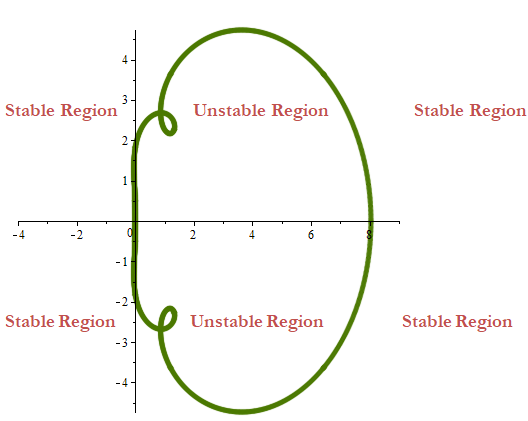
This paper presents an adaptive block time-stepping algorithm designed for the numerical integration of first-order stiff oscillatory problems, which typically involve multiple time scales and stringent stability conditions. The proposed method integrates a block formulation enabling the simultaneous evaluation of several solution points with an adaptive step size mechanism to effectively regulate local truncation errors. A predictor-corrector strategy is employed, where an explicit predictor generates initial estimates, and an implicit block corrector enhances stability for stiff systems. The resulting nonlinear equations are resolved using Newton's iterative method. The scheme is proven to be consistent, zero-stable, and achieves fifth-order accuracy. Its stability characteristics are further examined through A-stability analysis using locus boundary techniques, validating its applicability to stiff problems. Additionally, an error control procedure is incorporated to dynamically adjust the step size, ensuring an optimal balance between computational efficiency and solution accuracy. Numerical experiments on benchmark stiff oscillatory systems indicate that the proposed method outperforms the fourth-order variable step size block backward differentiation formula (VSBBDF4), as well as MATLAB solvers ODE15s and ODE23s, in terms of stability, accuracy, and computational efficiency.
Graphical Abstract
Keywords
Data Availability Statement
Funding
Conflicts of Interest
AI Use Statement
Ethical Approval and Consent to Participate
References
- Zawawi, I. M., Ibrahim, Z. B., & Othman, K. I. (2021, July). Variable step block backward differentiation formula with independent parameter for solving stiff ordinary differential equations. In Journal of Physics: Conference Series (Vol. 1988, No. 1, p. 012031). IOP Publishing.
[CrossRef] [Google Scholar] - Enright, W. H., Hull, T. E., & Lindberg, B. (1975). Comparing numerical methods for stiff systems of ODE: s. BIT Numerical Mathematics, 15(1), 10-48.
[CrossRef] [Google Scholar] - Calvo, M., Montijano, J. I., & R\'{andez, L. (1993). A$_0$-stability of variable stepsize BDF methods. Journal of Computational and Applied Mathematics, 45(1-2), 29-39.
[CrossRef] [Google Scholar] - Hairer, E., Wanner, G., & Nørsett, S. P. (1993). Solving ordinary differential equations I: Nonstiff problems. Berlin, Heidelberg: Springer Berlin Heidelberg.
[CrossRef] [Google Scholar] - Gear, C. W. (1971). Numerical Initial Value Problems in Ordinary Differential Equations. London: Prentice-Hall. https://dl.acm.org/doi/10.5555/540426
[Google Scholar] - Butcher, J. C. (2016). Numerical methods for ordinary differential equations. John Wiley & Sons.
[CrossRef] [Google Scholar] - Verwer, J. G., Spee, E. J., Blom, J. G., & Hundsdorfer, W. (1999). A second-order Rosenbrock method applied to photochemical dispersion problems. SIAM Journal on Scientific Computing, 20(4), 1456-1480.
[CrossRef] [Google Scholar] - Hojjati, G., Ardabili, M. R., & Hosseini, S. M. (2004). A-EBDF: an adaptive method for numerical solution of stiff systems of ODEs. Mathematics and Computers in Simulation, 66(1), 33-41.
[CrossRef] [Google Scholar] - Cash, J. R. (1980). On the integration of stiff systems of ODEs using extended backward differentiation formulae. Numerische Mathematik, 34(3), 235-246.
[CrossRef] [Google Scholar] - Rosenbrock, H. H. (1963). Some general implicit processes for the numerical solution of differential equations. The Computer Journal, 5(4), 329-330.
[CrossRef] [Google Scholar] - Wanner, G., & Hairer, E. (1996). Solving ordinary differential equations II (Vol. 375, p. 98). New York: Springer Berlin Heidelberg.
[CrossRef] [Google Scholar] - Ashino, R., Nagase, M., & Vaillancourt, R. (2000). Behind and beyond the MATLAB ODE suite. Computers & Mathematics with Applications, 40(4-5), 491-512.
[CrossRef] [Google Scholar] - Shampine, L. F., & Reichelt, M. W. (1997). The matlab ode suite. SIAM journal on scientific computing, 18(1), 1-22.
[CrossRef] [Google Scholar] - Ascher, U. M., & Petzold, L. R. (1998). Computer methods for ordinary differential equations and differential-algebraic equations. Society for Industrial and Applied Mathematics.
[CrossRef] [Google Scholar] - Nasarudin, A. A., Ibrahim, Z. B., & Rosali, H. (2020). On the integration of stiff ODEs using block backward differentiation formulas of order six. Symmetry, 12(6), 952.
[CrossRef] [Google Scholar] - Ibrahim, Z. B., Ijam, H. M., Aksah, S. J., & Abd Rasid, N. (2024). Enhancing accuracy and efficiency in stiff ODE integration using variable step diagonal BBDF approaches. Malaysian Journal of Fundamental and Applied Sciences, 20(5), 1083-1100.
[CrossRef] [Google Scholar] - Martín-Vaquero, J., & Vigo-Aguiar, J. (2007). Adapted BDF algorithms: higher-order methods and their stability. Journal of Scientific Computing, 32(2), 287-313.
[CrossRef] [Google Scholar] - Mohd Zawawi, I. S., Ibrahim, Z. B., & Othman, K. I. (2015). Derivation of diagonally implicit block backward differentiation formulas for solving stiff initial value problems. Mathematical problems in engineering, 2015(1), 179231.
[CrossRef] [Google Scholar] - Alhassan, B., Bala, N., & Musa, H. (2025). Numerical solution of systems of first order stiff oscillatory differential equations using diagonally implicit super class of block backward differentiation formula. Computational Algorithms and Numerical Dimensions, 4(2), 157-179.
[CrossRef] [Google Scholar] - Ibrahim, Z. B., Othman, K. I., & Suleiman, M. (2007). Implicit r-point block backward differentiation formula for solving first-order stiff ODEs. Applied Mathematics and Computation, 186(1), 558-565.
[CrossRef] [Google Scholar] - Ibrahim, Z. B., Othman, K. I., & Suleiman, M. (2007). Variable Step Block Backward Differentiation Formula for Solving First Order Stiff ODEs. Proceedings of the World Congress on Engineering, 2, 785-789. https://www.iaeng.org/publication/WCE2007/WCE2007_pp785-789.pdf
[Google Scholar] - Suleiman, M. B., Musa, H., Ismail, F., & Senu, N. (2013). A new variable step size block backward differentiation formula for solving stiff initial value problems. International Journal of Computer Mathematics, 90(11), 2391-2408.
[CrossRef] [Google Scholar] - Ijam, H. M., Ibrahim, Z. B., & Zawawi, I. S. M. (2024). Stiffly stable diagonally implicit block backward differentiation formula with adaptive step size strategy for stiff ordinary differential equations. Matematika, 27-47.
[CrossRef] [Google Scholar] - Bala, N., Musa, H., & Alhassan, B. (2026). A Third-Order Variable Step Size Superclass of Block Backward Differentiation Formula for Efficient Solution of Highly Stiff Differential Systems. Journal of Nonlinear Dynamics and Applications, 2(3), 143-158.
[CrossRef] [Google Scholar] - Suleiman, M. B., Musa, H., Ismail, F., Senu, N., & Ibrahim, Z. B. (2014). A new superclass of block backward differentiation formula for stiff ordinary differential equations. Asian-european journal of mathematics, 7(01), 1350034.
[CrossRef] [Google Scholar] - Mohd Ijam, H., & Ibrahim, Z. B. (2019). Diagonally implicit block backward differentiation formula with optimal stability properties for stiff ordinary differential equations. Symmetry, 11(11), 1342.
[CrossRef] [Google Scholar] - Mohd Ijam, H., Ibrahim, Z. B., Abdul Majid, Z., & Senu, N. (2020). Stability analysis of a diagonally implicit scheme of block backward differentiation formula for stiff pharmacokinetics models. Advances in difference equations, 2020(1), 400.
[CrossRef] [Google Scholar] - Dahlquist, G. (1956). Convergence and stability in the numerical integration of ordinary differential equations. Mathematica Scandinavica, 4, 33-53. https://www.jstor.org/stable/24490010
[Google Scholar] - Lambert, J. D. (1991). Numerical methods for ordinary differential systems: the initial value problem. John Wiley & Sons, Inc.. https://dl.acm.org/doi/abs/10.5555/129839
[Google Scholar] - Okuonghae, R. I., & Ikhile, M. N. O. (2011). A ($\alpha$)-Stable linear multistep methods for stiff IVPs in ODEs. Acta universitatis palackianae olomucensis. facultas rerum naturalium. mathematica, 50(1), 73-90. https://dml.cz/handle/10338.dmlcz/141714
[Google Scholar] - Fatunla, S. O. (1995). A class of block methods for second order IVPs. International journal of computer mathematics, 55(1-2), 119-133.
[CrossRef] [Google Scholar]
Cite This Article
TY  - JOUR
AU  - Bala, Najamuddeen
AU  - Musa, Hamisu
AU  - Alhassan, Buhari
AU  - Lawal, Aliyu
PY  - 2026
DA  - 2026/09/06
TI  - A Stiffly Stable Adaptive Fifth-Order Block Time-Stepping Method for Stiff Oscillatory Differential Equations
JO  - Journal of Mathematics and Interdisciplinary Applications
T2  - Journal of Mathematics and Interdisciplinary Applications
JF  - Journal of Mathematics and Interdisciplinary Applications
VL  - 2
IS  - 3
SP  - 209
EP  - 228
DO  - 10.62762/JMIA.2026.142673
UR  - https://www.icck.org/article/abs/JMIA.2026.142673
KW  - stiff ordinary differential equations
KW  - variable step size
KW  - block backward differentiation formula
KW  - A-stability
KW  - predictor-corrector method
AB  - This paper presents an adaptive block time-stepping algorithm designed for the numerical integration of first-order stiff oscillatory problems, which typically involve multiple time scales and stringent stability conditions. The proposed method integrates a block formulation enabling the simultaneous evaluation of several solution points with an adaptive step size mechanism to effectively regulate local truncation errors. A predictor-corrector strategy is employed, where an explicit predictor generates initial estimates, and an implicit block corrector enhances stability for stiff systems. The resulting nonlinear equations are resolved using Newton's iterative method. The scheme is proven to be consistent, zero-stable, and achieves fifth-order accuracy. Its stability characteristics are further examined through A-stability analysis using locus boundary techniques, validating its applicability to stiff problems. Additionally, an error control procedure is incorporated to dynamically adjust the step size, ensuring an optimal balance between computational efficiency and solution accuracy. Numerical experiments on benchmark stiff oscillatory systems indicate that the proposed method outperforms the fourth-order variable step size block backward differentiation formula (VSBBDF4), as well as MATLAB solvers ODE15s and ODE23s, in terms of stability, accuracy, and computational efficiency.
SN  - 3070-393X
PB  - Institute of Central Computation and Knowledge
LA  - English
ER  -
@article{Bala2026A,
  author = {Najamuddeen Bala and Hamisu Musa and Buhari Alhassan and Aliyu Lawal},
  title = {A Stiffly Stable Adaptive Fifth-Order Block Time-Stepping Method for Stiff Oscillatory Differential Equations},
  journal = {Journal of Mathematics and Interdisciplinary Applications},
  year = {2026},
  volume = {2},
  number = {3},
  pages = {209-228},
  doi = {10.62762/JMIA.2026.142673},
  url = {https://www.icck.org/article/abs/JMIA.2026.142673},
  abstract = {This paper presents an adaptive block time-stepping algorithm designed for the numerical integration of first-order stiff oscillatory problems, which typically involve multiple time scales and stringent stability conditions. The proposed method integrates a block formulation enabling the simultaneous evaluation of several solution points with an adaptive step size mechanism to effectively regulate local truncation errors. A predictor-corrector strategy is employed, where an explicit predictor generates initial estimates, and an implicit block corrector enhances stability for stiff systems. The resulting nonlinear equations are resolved using Newton's iterative method. The scheme is proven to be consistent, zero-stable, and achieves fifth-order accuracy. Its stability characteristics are further examined through A-stability analysis using locus boundary techniques, validating its applicability to stiff problems. Additionally, an error control procedure is incorporated to dynamically adjust the step size, ensuring an optimal balance between computational efficiency and solution accuracy. Numerical experiments on benchmark stiff oscillatory systems indicate that the proposed method outperforms the fourth-order variable step size block backward differentiation formula (VSBBDF4), as well as MATLAB solvers ODE15s and ODE23s, in terms of stability, accuracy, and computational efficiency.},
  keywords = {stiff ordinary differential equations, variable step size, block backward differentiation formula, A-stability, predictor-corrector method},
  issn = {3070-393X},
  publisher = {Institute of Central Computation and Knowledge}
}
Article Metrics
Publisher's Note
ICCK stays neutral with regard to jurisdictional claims in published maps and institutional affiliations.
Rights and Permissions
 Copyright © 2026 by the Author(s). Published by Institute of Central Computation and Knowledge. This article is an open access article distributed under the terms and conditions of the Creative Commons Attribution (CC BY) license (https://creativecommons.org/licenses/by/4.0/), which permits use, sharing, adaptation, distribution and reproduction in any medium or format, as long as you give appropriate credit to the original author(s) and the source, provide a link to the Creative Commons licence, and indicate if changes were made.


Portico
