


ISSN: 3070-393X
Journal of Mathematics and Interdisciplinary Applications is a peer-reviewed international journal dedicated to the advancement of theoretical and applied research at the interdisciplinary areas of sciences.
DOI Prefix: 10.62762/JMIA

Journal Metrics

-
Impact Factor
-
CiteScore

Recent Articles

Open Access | Research Article | 16 March 2026
Proof of Morse’s Lemma
Journal of Mathematics and Interdisciplinary Applications | Volume 2, Issue 1: 54-58, 2026 | DOI: 10.62762/JMIA.2026.947879
Abstract
In this paper, we present an important property of smooth function germs of orbit tangent space, and apply it to discuss the proof of Morse's Lemma. More >
Open Access | Research Article | 11 March 2026
A Stochastic Impulsive Competition Model for Tumor Evolution under Intermittent Androgen Deprivation Therapy
Journal of Mathematics and Interdisciplinary Applications | Volume 2, Issue 1: 36-53, 2026 | DOI: 10.62762/JMIA.2025.355794
Abstract
In prostate cancer treatment, intermittent androgen deprivation therapy can delay the emergence of drug resistance, yet its efficacy is influenced by environmental fluctuations, treatment parameters, and competition among tumor cell populations. To investigate the mechanisms underlying resistance during intermittent therapy, we developed a stochastic impulsive differential equation model. First, a global analysis of the model without environmental noise is conducted. Subsequently, sufficient conditions for tumor extinction and persistence are established based on stochastic stability theory. Numerical simulations further demonstrate that moderate noise suppresses tumor growth, and an optimal... More >

Graphical Abstract
A Stochastic Impulsive Competition Model for Tumor Evolution under Intermittent Androgen Deprivation Therapy
Open Access | Research Article | 07 March 2026
Analysis of Trajectory Structure and GAS for a High-Order Nonlinear Difference Equation
Journal of Mathematics and Interdisciplinary Applications | Volume 2, Issue 1: 28-35, 2026 | DOI: 10.62762/JMIA.2025.554313
Abstract
This article delves into the trajectory structure rules of a specific fifth-order rational difference equation: $$ s_{m+1}=\frac{s_ms_{m-2}s_{m-3}s_{m-4}+s_ms_{m-2}+s_ms_{m-3}+s_{m-2}s_{m-3}+s_{m-4}+a}{s_ms_{m-2}s_{m-3}+s_ms_{m-2}s_{m-4}+s_ms_{m-3}s_{m-4}+s_{m-2}s_{m-3}s_{m-4}+1+a} $$ where the initial conditions satisfy $s_i\in (0,\infty)$, $i=-4,-3,-2,-1,0$, and the parameters $a\in [0,\infty).$ As the initial values vary, the lengths of consecutive positive and negative semi-cycles for non-trivial solutions exhibit a periodic pattern with a prime period of 31. The rule within one period is $1^-, 2^+, 1^-, 1^+, 1^-, 1^+, 2^-, 4^+, 3^-, 2^+, 2^-, 1^+, 5^-, 1^+, 1^-,$ $ 3^+ $. Through t... More >

Graphical Abstract
Analysis of Trajectory Structure and GAS for a High-Order Nonlinear Difference Equation
Open Access | Research Article | 07 February 2026
Quantile Deviation Ensemble Based on Multi-Layer Perceptrons for Cervical Cancer Classification with Uncertainty Perception
Journal of Mathematics and Interdisciplinary Applications | Volume 2, Issue 1: 12-27, 2026 | DOI: 10.62762/JMIA.2026.403659
Abstract
The accurate classification of cervical cytology in Pap smear images remains a critical challenge in computer-aided diagnosis, largely due to the inherent uncertainty and subtle morphological variations among different pathological categories. To address this, we propose a novel uncertainty-aware ensemble framework that integrates statistical quantile analysis with deep learning for robust and interpretable classification. Our framework first leverages three deep convolutional neural networks DenseNet121, MobileNetV2, and ResNet-50 as base feature extractors. Instead of employing naive ensemble strategies, we introduce a quantile deviation based weighting mechanism to dynamically assess and... More >

Graphical Abstract
Quantile Deviation Ensemble Based on Multi-Layer Perceptrons for Cervical Cancer Classification with Uncertainty Perception
Open Access | Research Article | 28 January 2026
Modeling the Mediating Effect of Anxiety on Cell Phone Addiction and Depression Among College Students: A Structural Equation Analysis
Journal of Mathematics and Interdisciplinary Applications | Volume 2, Issue 1: 1-11, 2026 | DOI: 10.62762/JMIA.2025.883899
Abstract
(1) Objective: This study aims to examine the relationships between college students' cell phone addiction, anxiety, and depression, and to explore the mediating role of anxiety in the association between cell phone addiction and depression. (2) Methods: Data were statistically analyzed using SPSS and AMOS. Independent samples t-tests and F-tests were employed to analyze differences in cell phone addiction (and its dimensions) across demographic variables. Pearson correlation analysis was conducted to assess the relationships among cell phone addiction, anxiety, and depression. Structural equation modeling (SEM) via AMOS was used to validate the hypothetical model, and regression analysis co... More >

Graphical Abstract
Modeling the Mediating Effect of Anxiety on Cell Phone Addiction and Depression Among College Students: A Structural Equation Analysis
Open Access | Research Article | 29 November 2025
Multi-strategy Enhanced Grey Wolf Optimizer for Numerical Optimization and Its Application to Feature Selection
Journal of Mathematics and Interdisciplinary Applications | Volume 1, Issue 1: 51-71, 2025 | DOI: 10.62762/JMIA.2025.522565
Abstract
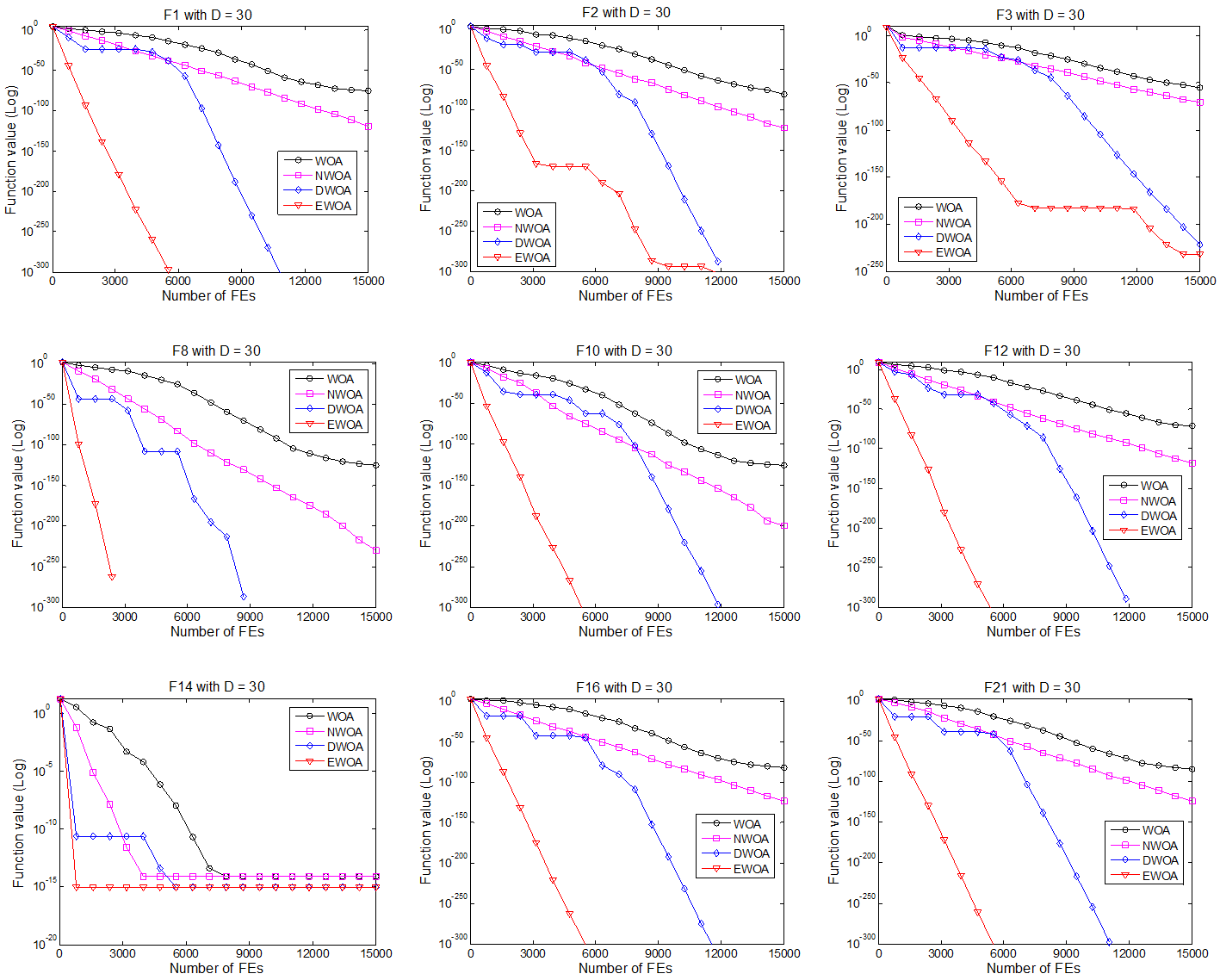
Grey wolf optimizer (GWO) is an effective meta-heuristic technique which has been widely utilized to solve numerical optimization as well as real-world applications. However, GWO has some shortcomings, i.e., low solution accuracy, slow convergence, and easy stagnation at local optima in solving complex problems. To tackle these shortcomings, an enhanced GWO called EGWO is developed in this study. This enhancement is achieved by embedding three novel strategies into the basic GWO to improve its performance. Firstly, a new transition mechanism is designed instead of the original strategy to obtain a good transition from the exploration to exploitation. Secondly, the cuckoo search algorithm is... More >

Graphical Abstract
Multi-strategy Enhanced Grey Wolf Optimizer for Numerical Optimization and Its Application to Feature Selection
Open Access | Research Article | 28 November 2025
Dynamical Behavior of a Second-Order Exponential-Type Fuzzy Difference Equation with Quadratic Term
Journal of Mathematics and Interdisciplinary Applications | Volume 1, Issue 1: 29-50, 2025 | DOI: 10.62762/JMIA.2025.999827
Abstract
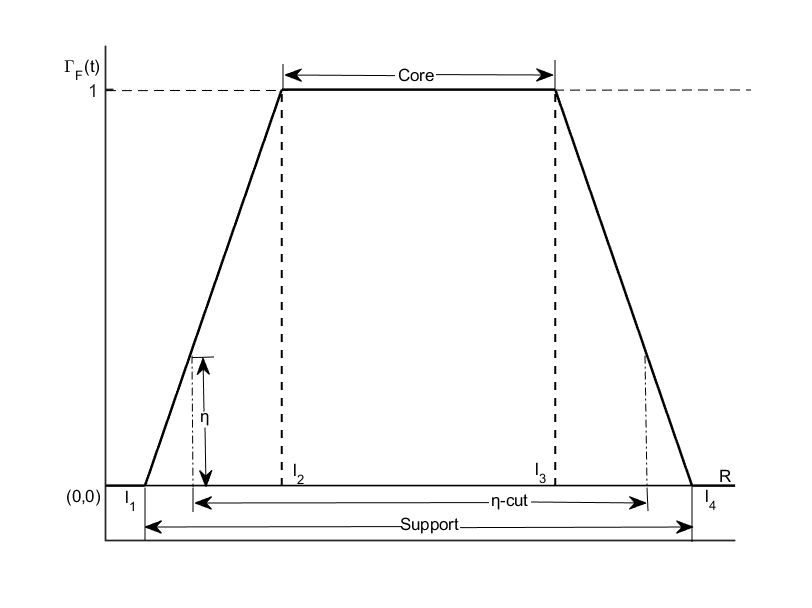
The paper discusses the dynamical characteristics of solutions to a model with quadratic term. More precisely, an exponential-type fuzzy difference equation is proposed as follows $$ a_{n+1}=\frac{D+Pe^{-a_n}}{T+a^2_{n-1}},\ \ n=0,1,\cdots ,$$ here $D, P, T$ and $a_0, a_{-1}$ belong to positive fuzzy numbers. This model can be used to characterize the diffusion modeling of a class of infectious diseases with uncertainty, such as the transmission prediction of dengue fever, monkeypox, and other infectious diseases. In addition, by highlighting the advantages of using Stefanini's the generalization of division of fuzzy number (it is also known as g-division) and constructing a Lyapunov functi... More >

Graphical Abstract
Dynamical Behavior of a Second-Order Exponential-Type Fuzzy Difference Equation with Quadratic Term
Open Access | Research Article | 26 November 2025
Analysis of a Pest-Natural Enemy Model with Time Delay in Impulsive Releasing Natural Enemy
Journal of Mathematics and Interdisciplinary Applications | Volume 1, Issue 1: 20-28, 2025 | DOI: 10.62762/JMIA.2025.442174
Abstract
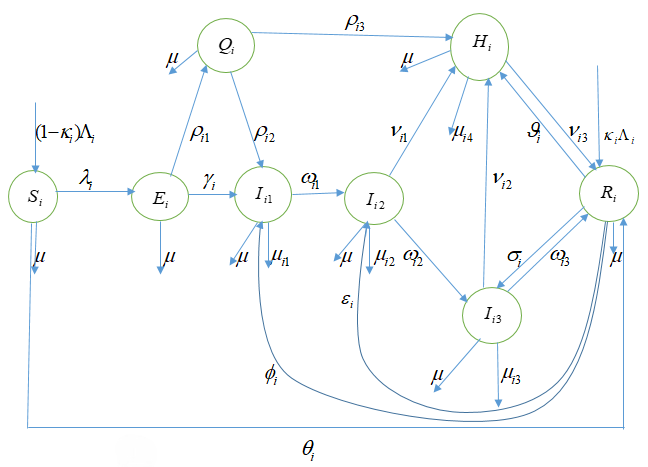
Releasing amount of natural enemy generally depends on its population data, while impulsive releasing natural enemy usually brings about a time delay after the data is observed in the practical pest management. Therefore, it is very important for pest managers to assess the impact of the time delay in pest management. In this paper, we construct a pest-natural enemy model with time delay in impulsive releasing natural enemy. We prove that the pest-free periodic solution of model $(2.1)$ is globally attractive with $\eta \tau<\frac{\zeta y^{\ast}(1-e^{-\lambda \tau})}{\lambda}$. We also prove that model $(2.1)$ is permanent with $\eta \tau>\frac{\zeta y^{\ast}(1-e^{-\lambda \tau})}{\lambda}$.... More >

Graphical Abstract
Analysis of a Pest-Natural Enemy Model with Time Delay in Impulsive Releasing Natural Enemy
Open Access | Research Article | 05 November 2025
Limit Cycles for Continuous Piecewise Linear Systems with Three Zones Having Two Degenerate Subsystems
Journal of Mathematics and Interdisciplinary Applications | Volume 1, Issue 1: 3-19, 2025 | DOI: 10.62762/JMIA.2025.453419
Abstract
This paper deals with continuous piecewise linear differential systems with three zones separated by two parallel straight lines (for short, CPWL3). The number of limit cycles of CPWL3 systems with two degenerate subsystems is not clear. In the paper, we provide a complete study on the maximum number of limit cycles by geometric techniques when the continuous piecewise linear systems with three zones have two degenerate subsystems. During our analysis, we also detect some bifurcation phenomena, such as boundary equilibrium bifurcation, scabbard bifurcation, grazing bifurcation, heteroclinic bifurcation and Hopf bifurcation. More >

Graphical Abstract
Limit Cycles for Continuous Piecewise Linear Systems with Three Zones Having Two Degenerate Subsystems
Open Access | Editorial | 23 July 2025
Inaugural Editorial of the Journal of Mathematics and Interdisciplinary Applications
Journal of Mathematics and Interdisciplinary Applications | Volume 1, Issue 1: 1-2, 2025 | DOI: 10.62762/JMIA.2025.966943
Abstract
Presents the introductory editorial for this issue of the publication. More >

Journal Statistics

28
Authors
2
Countries / Regions
10
Articles
0
(Scopus: 0)
Citations
2025
Published Since
0
Special Issues
3,222
Article Views
1,719
Article Downloads
Journal of Mathematics and Interdisciplinary Applications
eISSN: 3070-393X
Crossref
Crossref
Member of Crossref
Visit Crossref →