

RLC Circuit-based Detection of Subharmonics, Interharmonics, and Harmonics in Current and Voltage Waveforms



Article Information
Abstract
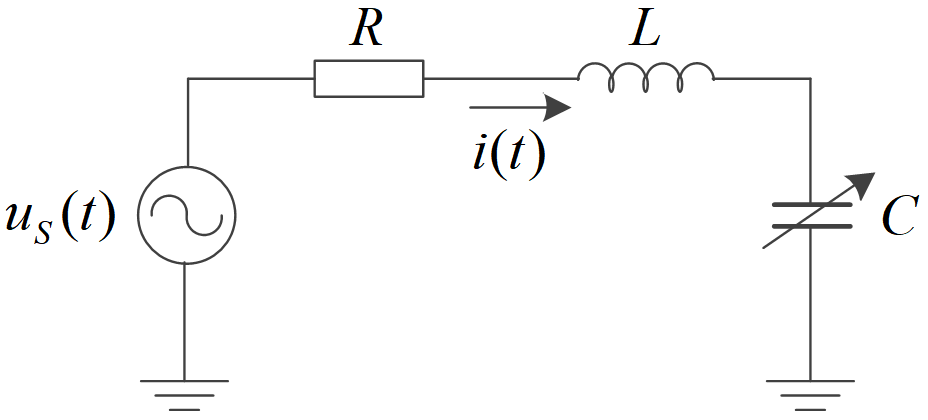
This paper presents a simple and efficient method for detecting harmonics, interharmonics, and subharmonics in voltage and current waveforms. The proposed technique is based on a series RLC resonant circuit and is characterized by its simplicity, relatively fast response, and ease of implementation. The performance of the proposed method is validated using both mathematically generated signals with severe waveform distortion and signals measured in real distribution networks with high penetration of renewable energy sources. The maximum relative errors in the frequency of detected harmonic components were 1.33% for the mathematically generated strongly distorted signals and 0.60% for the measured signals. The relative errors in the estimated harmonic amplitudes, expressed with respect to the fundamental harmonic, were up to 4.75% for the strongly distorted mathematically generated signals and ranged from 1.28% to 11.75% for the measured signals. The errors decreased as the level of waveform distortion increased.
Graphical Abstract
Keywords
Data Availability Statement
Funding
Conflicts of Interest
AI Use Statement
Ethical Approval and Consent to Participate
References
- Banjanin, M., Vuković, G., Erceg, B., Perović, B., & Milovanović, M. (2025). Power Quality of the 50 MW PV Power Plant. ICCK Transactions on Electric Power Networks and Systems, 1(2), 58-69.
[CrossRef] [Google Scholar] - Banjanin, M., Ikić, M., Milovanović, M., & Perović, B. (2025). Harmonic Analysis of Distributed Energy Sources Using Sliding FFT and IEC 61000-4-7. Revue Roumaine des Sciences Techniques, Série Électrotechnique et Énergétique, 70(4), 507–512.
[CrossRef] [Google Scholar] - Lin, H. C. (2014). Sources, effects, and modelling of interharmonics. Mathematical Problems in Engineering, 2014(1), 730362.
[CrossRef] [Google Scholar] - Testa, A., Akram, M. F., Burch, R., Carpinelli, G., Chang, G., Dinavahi, V., ... & Xu, W. (2007). Interharmonics: Theory and modeling. IEEE Transactions on Power Delivery, 22(4), 2335-2348.
[CrossRef] [Google Scholar] - Li, C., Xu, W., & Tayjasanant, T. (2003). Interharmonics: basic concepts and techniques for their detection and measurement. Electric Power Systems Research, 66(1), 39-48.
[CrossRef] [Google Scholar] - Chang, G. W., & Chen, C. I. (2009). An accurate time-domain procedure for harmonics and interharmonics detection. IEEE transactions on power delivery, 25(3), 1787-1795.
[CrossRef] [Google Scholar] - Li, Y., Teng, Z., Tang, Q., & Ji, Z. (2021). Detection of interharmonics using sparse signal decomposition based on ICA-MP. IEEE Transactions on Instrumentation and Measurement, 70, 1-9.
[CrossRef] [Google Scholar] - Uz-Logoglu, E., Salor, O., & Ermis, M. (2019). Real-time detection of interharmonics and harmonics of AC electric arc furnaces on GPU framework. IEEE Transactions on Industry Applications, 55(6), 6613-6623.
[CrossRef] [Google Scholar] - Yu, Y., Zhao, W., Li, S., & Huang, S. (2021). A two-stage wavelet decomposition method for instantaneous power quality indices estimation considering interharmonics and transient disturbances. IEEE Transactions on Instrumentation and Measurement, 70, 1-13.
[CrossRef] [Google Scholar] - Qian, H., Zhao, R., & Chen, T. (2007). Interharmonics analysis based on interpolating windowed FFT algorithm. IEEE Transactions on Power Delivery, 22(2), 1064-1069.
[CrossRef] [Google Scholar] - Banjanin, M., Milovanović, M., & Radosavljević, J. (2025). Voltage dips and swells detection by sliding fast Fourier transform: Possibilities for application in modern distribution networks. Journal of Electrical Engineering, 76(1), 58-71.
[CrossRef] [Google Scholar]
Cite This Article
TY  - JOUR
AU  - Banjanin, Mladen
AU  - Čolić, Bojana
PY  - 2026
DA  - 2026/09/01
TI  - RLC Circuit-based Detection of Subharmonics, Interharmonics, and Harmonics in Current and Voltage Waveforms
JO  - ICCK Transactions on Electric Power Networks and Systems
T2  - ICCK Transactions on Electric Power Networks and Systems
JF  - ICCK Transactions on Electric Power Networks and Systems
VL  - 2
IS  - 3
SP  - 128
EP  - 137
DO  - 10.62762/TEPNS.2026.598621
UR  - https://www.icck.org/article/abs/TEPNS.2026.598621
KW  - harmonics
KW  - interharmonics
KW  - power quality
KW  - RLC circuit
KW  - subharmonics
KW  - waveform distortion
AB  - This paper presents a simple and efficient method for detecting harmonics, interharmonics, and subharmonics in voltage and current waveforms. The proposed technique is based on a series RLC resonant circuit and is characterized by its simplicity, relatively fast response, and ease of implementation. The performance of the proposed method is validated using both mathematically generated signals with severe waveform distortion and signals measured in real distribution networks with high penetration of renewable energy sources. The maximum relative errors in the frequency of detected harmonic components were 1.33% for the mathematically generated strongly distorted signals and 0.60% for the measured signals. The relative errors in the estimated harmonic amplitudes, expressed with respect to the fundamental harmonic, were up to 4.75% for the strongly distorted mathematically generated signals and ranged from 1.28% to 11.75% for the measured signals. The errors decreased as the level of waveform distortion increased.
SN  - 3070-2607
PB  - Institute of Central Computation and Knowledge
LA  - English
ER  -
@article{Banjanin2026RLC,
  author = {Mladen Banjanin and Bojana Čolić},
  title = {RLC Circuit-based Detection of Subharmonics, Interharmonics, and Harmonics in Current and Voltage Waveforms},
  journal = {ICCK Transactions on Electric Power Networks and Systems},
  year = {2026},
  volume = {2},
  number = {3},
  pages = {128-137},
  doi = {10.62762/TEPNS.2026.598621},
  url = {https://www.icck.org/article/abs/TEPNS.2026.598621},
  abstract = {This paper presents a simple and efficient method for detecting harmonics, interharmonics, and subharmonics in voltage and current waveforms. The proposed technique is based on a series RLC resonant circuit and is characterized by its simplicity, relatively fast response, and ease of implementation. The performance of the proposed method is validated using both mathematically generated signals with severe waveform distortion and signals measured in real distribution networks with high penetration of renewable energy sources. The maximum relative errors in the frequency of detected harmonic components were 1.33\% for the mathematically generated strongly distorted signals and 0.60\% for the measured signals. The relative errors in the estimated harmonic amplitudes, expressed with respect to the fundamental harmonic, were up to 4.75\% for the strongly distorted mathematically generated signals and ranged from 1.28\% to 11.75\% for the measured signals. The errors decreased as the level of waveform distortion increased.},
  keywords = {harmonics, interharmonics, power quality, RLC circuit, subharmonics, waveform distortion},
  issn = {3070-2607},
  publisher = {Institute of Central Computation and Knowledge}
}
Article Metrics
Publisher's Note
ICCK stays neutral with regard to jurisdictional claims in published maps and institutional affiliations.
Rights and Permissions


Portico
