


Biomedical Informatics and Smart Healthcare

Publishing Model:
ISSN:
ISSN: 3068-5524
Biomedical Informatics and Smart Healthcare focuses on the integration of advanced informatics techniques with healthcare technologies to enhance patient care, improve clinical decision-making, and advance medical research.
DOI Prefix: 10.62762/BISH

Journal Metrics

-
Impact Factor
-
CiteScore

Recent Articles

Open Access | Review Article | 24 September 2025 | Cited: Scopus 2
A Review Analysis of Drug Delivery System Using Artificial Intelligence
Biomedical Informatics and Smart Healthcare | Volume 1, Issue 2: 52-66, 2025 | DOI: 10.62762/BISH.2025.806902
Abstract
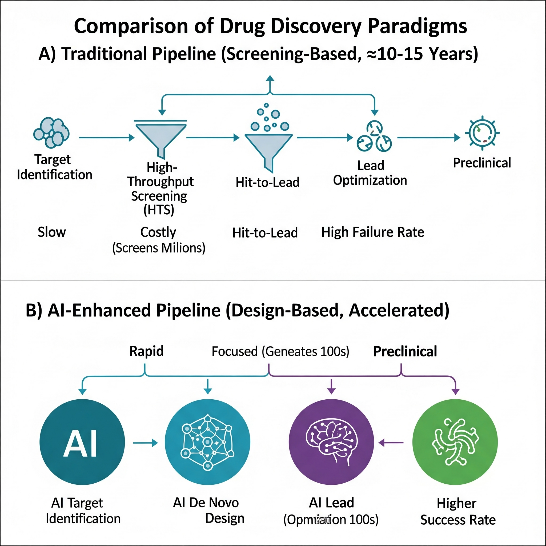
According to the President of the United Nations, AI holds enormous promise for accelerating progress towards numerous United Nations Sustainable Development Goals (SDGs). This paper focuses on various applications of technologies such as artificial neural networks (ANN) and deep learning (DL) in the development of pharmaceutical solid dosage forms. DL is a subset of machine learning (ML) that utilizes extensive experimental data to learn through advanced methods like artificial neural networks. ANNs can analyze patient data to generate customized drug delivery regimens based on genetic and medical histories. A range of AI technologies, including neural networks, fuzzy logic, and evolutionar... More >

Graphical Abstract
A Review Analysis of Drug Delivery System Using Artificial Intelligence
Open Access | Research Article | 22 September 2025 | Cited: Crossref logo  3 , Scopus 1
CT Image Denoising using Discrete Wavelet Transform
Biomedical Informatics and Smart Healthcare | Volume 1, Issue 2: 44-51, 2025 | DOI: 10.62762/BISH.2025.874472
Abstract
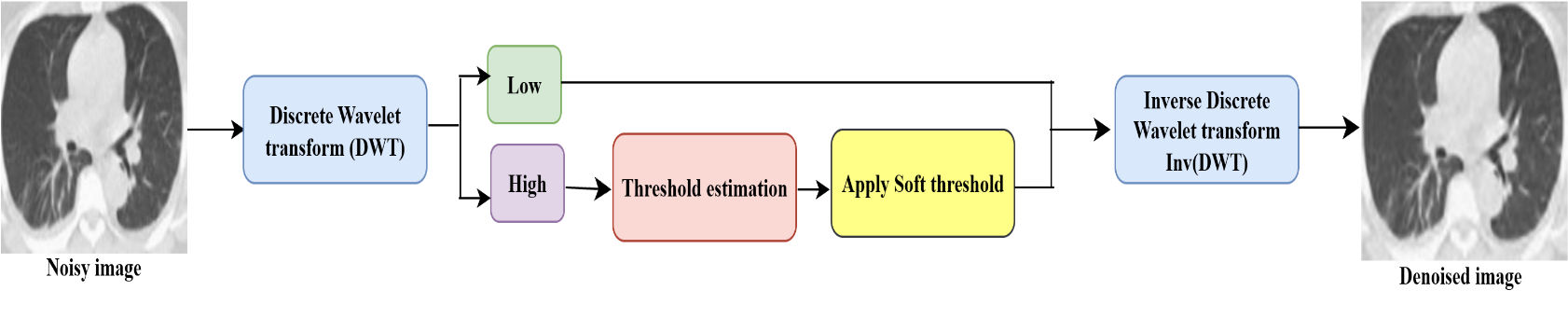
Low Dose Computed Tomography (LDCT) scan is modern medical imaging diagnostic technique that provides a detailed projection of internal human body tissue level structures. Even though the LDCT image quality is compromised by Gaussian-noise, which can be generated during image acquisition, this compromises the accurate diagnostic precision. The effective denoising is required to improve image quality in LDCT images. This study demonstrates that the Discrete Wavelet Transform(DWT) method shows better results, both quantitatively and visually, under varying noise intensities ($\sigma=10,20,30,$ and $40$). The DWT method decomposes the image to multiresolution subbands (approximation, and detail... More >

Graphical Abstract
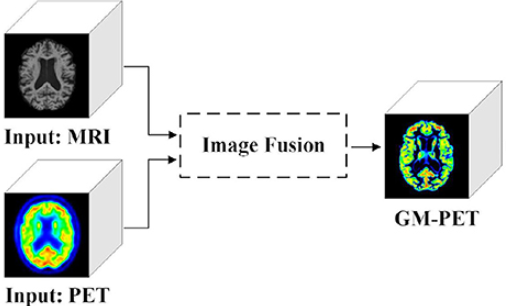
CT Image Denoising using Discrete Wavelet Transform
Open Access | Editorial | 08 August 2025
Editorial: Biomedical Informatics and Smart Healthcare - Shaping the Future of Health
Biomedical Informatics and Smart Healthcare | Volume 1, Issue 2: 40-43, 2025 | DOI: 10.62762/BISH.2025.328158
Abstract
Biomedical Informatics and Smart Healthcare are helping to enhance and improve modern medicine and healthcare facilities by promoting technology-enhanced care and patient-centric approaches. This editorial primarily discusses the latest advancements in the fields of artificial intelligence, big data analytics, and IoT-enabled medical devices that are redefining medical workflows, diagnostics, and healthcare delivery. As the field evolves, biomedical informatics has enabled personalized patient treatment, real-time health tracking, and data-driven decision-making. The editorial also addresses ethical and regulatory concerns associated with this medical transformation, including issues related... More >
Open Access | Mini Review | 26 June 2025 | Cited: Crossref logo  2 , Scopus 3
Understanding Medical Image Denoising, Enhancement, and Reconstruction
Biomedical Informatics and Smart Healthcare | Volume 1, Issue 1: 35-39, 2025 | DOI: 10.62762/BISH.2025.966762
Abstract
Medical imaging is an essential and valuable tool in modern medicine for providing essential details on the internal structures and functioning of the human body. Although very useful, the raw images obtained from medical imaging systems usually contain different types of artifacts and noise that might hide some essential diagnostic information. In this paper, the author details the conventional and non-conventional methods as well as sophisticated deep learning research methods used in improving the quality of healthcare images. The paper also delves into strategies designed to elevate the visual quality and interpretability in medical diagnostics. The paper includes some latest case studie... More >
Open Access | Research Article | 24 June 2025
Exploring the Temporal Dynamics and Causal Interactions Between the Amygdala and vmPFC: A Multidimensional Approach Using Time-Lagged Correlation, Granger Causality, and Entropy Analysis
Biomedical Informatics and Smart Healthcare | Volume 1, Issue 1: 27-34, 2025 | DOI: 10.62762/BISH.2025.346171
Abstract
Understanding the dynamic interaction between the amygdala and the ventromedial prefrontal cortex (vmPFC) is essential for unraveling the neural mechanisms underlying emotion regulation. This study introduces a multidimensional analytical framework that integrates functional connectivity, time-lagged correlation, Granger causality analysis (GCA), and entropy-based complexity metrics to explore the amygdala–vmPFC relationship during emotionally aversive tasks using intracranial EEG (iEEG) data. Our findings reveal a significant negative functional correlation (r = -0.009, p < 0.05) between the amygdala and vmPFC, indicating an inhibitory relationship. Time-lagged correlation analysis furthe... More >

Graphical Abstract
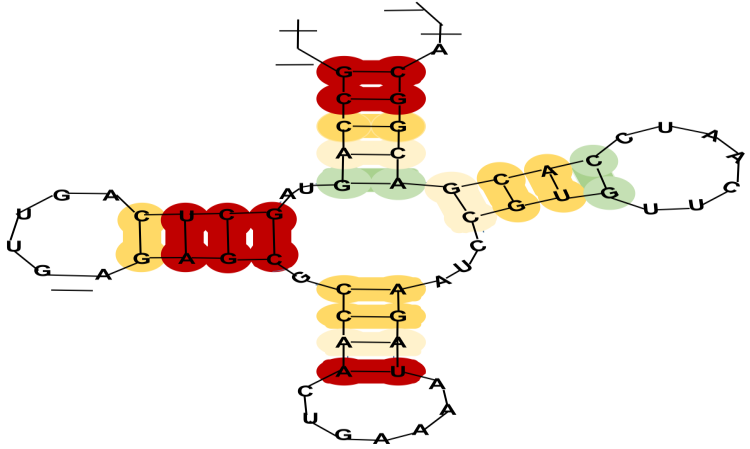
Exploring the Temporal Dynamics and Causal Interactions Between the Amygdala and vmPFC: A Multidimensional Approach Using Time-Lagged Correlation, Granger Causality, and Entropy Analysis
Open Access | Research Article | 03 June 2025 | Cited: Crossref logo  6 , Scopus 6
Diabetic Retinopathy Detection and Analysis with Convolutional Neural Networks and Vision Transformer
Biomedical Informatics and Smart Healthcare | Volume 1, Issue 1: 18-26, 2025 | DOI: 10.62762/BISH.2025.724307
Abstract
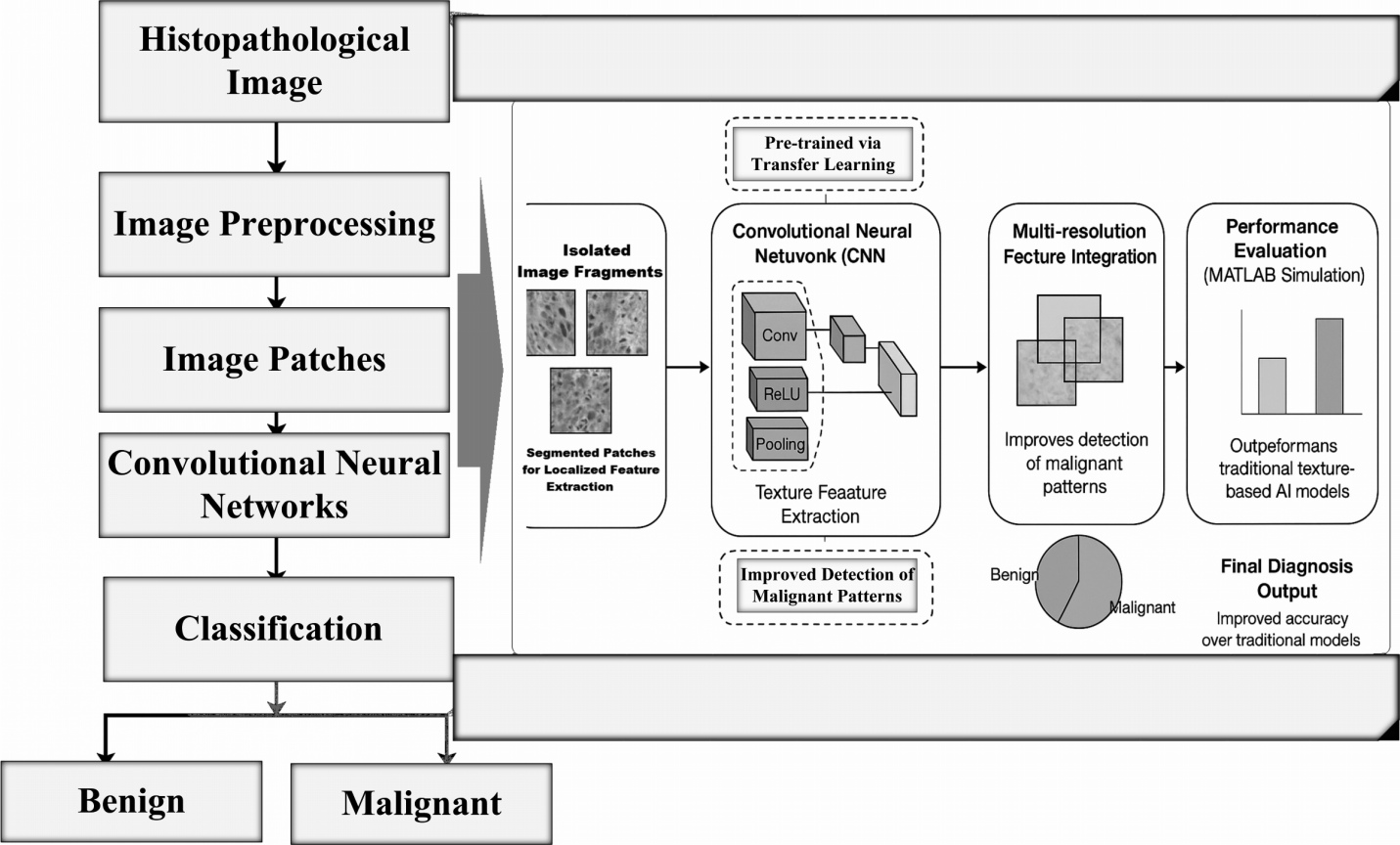
Diabetic Retinopathy occurs when elevated blood sugar levels damage retinal blood vessels, potentially leading to vision impairment. In this paper, we have tested the performance of CNN, ViT and their hybrid models. The dataset used is publicly available on Kaggle and the dataset contained around 35,000 retinal images which were divided into 5 classes namely No DR, Mild DR, Moderate DR, Severe DR and Proliferative DR. In CNN we tested 4 different architectures in which we achieved the best accuracy of 75.4% with Resnet50 architecture and with ViT model we achieved an accuracy of 83.9% and from the hybrid model we achieved an accuracy of 88.4% from the Resnet50 + ViT. The results shown by the... More >

Graphical Abstract
Diabetic Retinopathy Detection and Analysis with Convolutional Neural Networks and Vision Transformer
Open Access | Research Article | 02 June 2025 | Cited: Crossref logo  1 , Scopus 1
Optimizing ICU Resource Allocation During the COVID-19 Crisis: An AI-Driven Approach
Biomedical Informatics and Smart Healthcare | Volume 1, Issue 1: 9-17, 2025 | DOI: 10.62762/BISH.2025.457428
Abstract
The COVID-19 pandemic exerted immense pressure on healthcare systems globally, including in Morocco, where the demand for intensive care unit (ICU) beds frequently surpassed available capacity—at times doubling it. This crisis underscored the critical need for accurate prediction of ICU length of stay (LOS) to optimize resource allocation, enhance patient care, and reduce healthcare costs. This study aims to leverage artificial intelligence (AI) to predict and optimize ICU resource allocation during the COVID-19 crisis, ensuring efficient patient triage and resource management. By integrating Random Forest (RF) and Deep Neural Networks (DNN), the research demonstrates improved accuracy in... More >

Graphical Abstract
Optimizing ICU Resource Allocation During the COVID-19 Crisis: An AI-Driven Approach
Open Access | Research Article | 30 May 2025
HDSF: A Healthcare Decision Support Framework to Provide A Seamless and Adaptable Patient Experience
Biomedical Informatics and Smart Healthcare | Volume 1, Issue 1: 1-8, 2025 | DOI: 10.62762/BISH.2025.352565
Abstract
Healthcare decision support framework(HDSF), a comprehensive web application framework designed to revolutionize healthcare accessibility and efficiency. HDSF integrates various facilities including online appointment booking, virtual doctor consultations, symptom detection, detailed prescription management, home nursing appointment scheduling, and updates on local health camps with Google Maps integration for navigation. The application employs a robust architecture with a front end developed using HTML, CSS, and Bootstrap, while the back-end leverages Java and Java Servlet technologies. Data management is facilitated by MySQL, and the application is developed within the Eclipse IDE and XAM... More >

Graphical Abstract
HDSF: A Healthcare Decision Support Framework to Provide A Seamless and Adaptable Patient Experience

Journal Statistics

69
Authors
10
Countries / Regions
24
Articles
20
Scopus Citations
33.3% Cited
2025
Published Since
59,595
Article Views
15,396
Article Downloads
Biomedical Informatics and Smart Healthcare
eISSN: 3068-5524
Crossref
Crossref
Member of Crossref
Visit Crossref →