


ICCK Transactions on Advanced Computing and Systems

Publishing Model:
ISSN:
ISSN: 3068-7969
ICCK Transactions on Advanced Computing and Systems is a peer-reviewed journal dedicated to publishing innovative research in the field of advanced computing and systems.
DOI Prefix: 10.62762/TACS

Journal Metrics

-
Impact Factor
-
CiteScore

Recent Articles

Open Access | Research Article | 04 October 2025 | Cited: Crossref logo  2 , Scopus 1
Transforming Citation Networks into Insights: Mapping Scholarly Influence with Advanced Graph Models
ICCK Transactions on Advanced Computing and Systems | Volume 1, Issue 4: 238-257, 2025 | DOI: 10.62762/TACS.2025.939169
Abstract
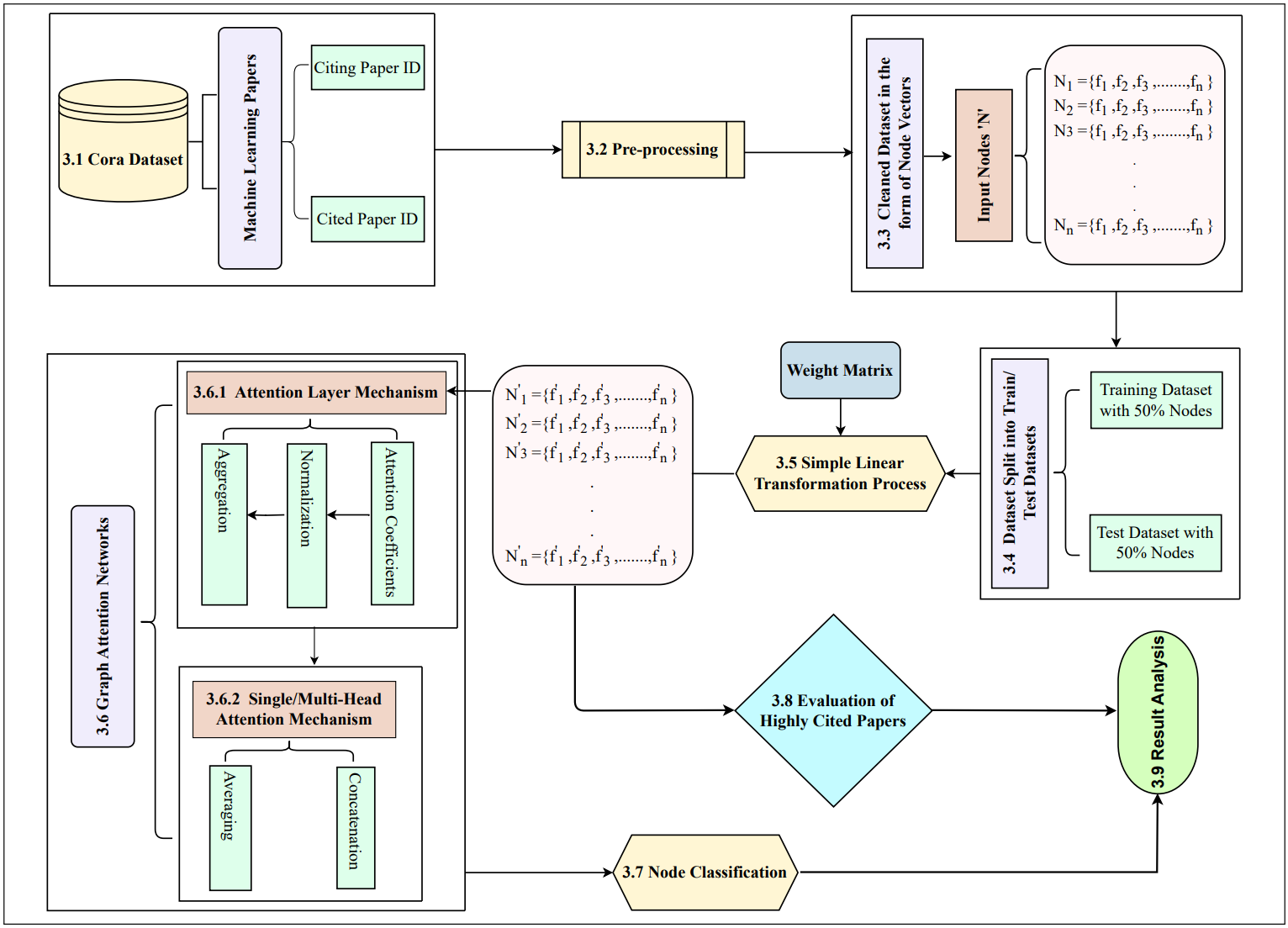
The growing role of citation relations in identifying research impact has spurred much investigation on assessing the most cited papers and their roles within datasets. Due to the richness of the CORA dataset, this study selects highly cited papers and measures the results of node classification, as well as the H-index of research articles. Besides, it explores the correlations and robustness with regard to the nodes by computing their chances and studying their connections. To these ends, linear transformation was utilized for mapping low-level node features to high-level, and the Graph Attention Networks (GAT) for node classification. The study was able to find highly cited papers and comp... More >

Graphical Abstract
Transforming Citation Networks into Insights: Mapping Scholarly Influence with Advanced Graph Models
Open Access | Review Article | 03 October 2025 | Cited: Crossref logo  1 , Scopus 1
Quantifying Risk with AI: Models and Frameworks
ICCK Transactions on Advanced Computing and Systems | Volume 1, Issue 4: 222-237, 2025 | DOI: 10.62762/TACS.2025.142506
Abstract
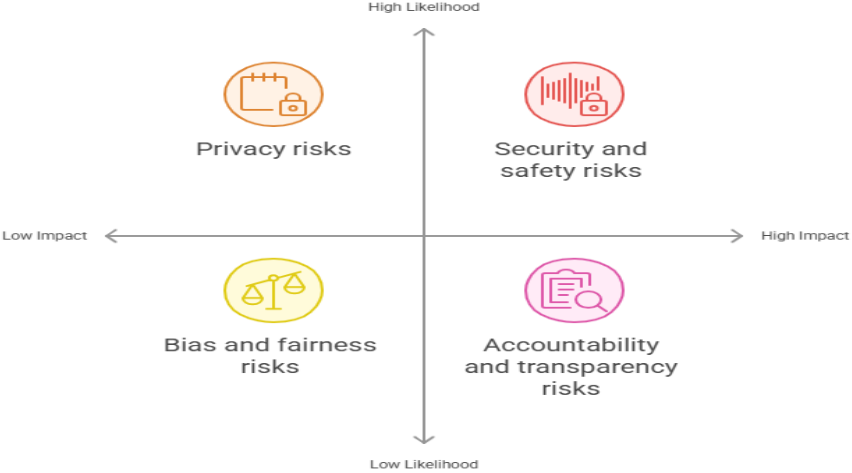
Artificial intelligence (AI) has become a critical tool for risk management across industries such as insurance, healthcare, business, and finance. It enables risk quantification, improves predictive accuracy, and supports decision-making in dynamic and uncertain environments. This paper examines models, methods, and frameworks for AI-based risk assessment, while addressing concerns of ethics, regulation, and explainability. Key technologies, including machine learning, deep learning, and reinforcement learning, are highlighted for their ability to transform traditional approaches by enhancing prediction, optimization, and decision processes. The second part focuses on AI-driven risk modelin... More >

Graphical Abstract

Quantifying Risk with AI: Models and Frameworks
Open Access | Research Article | 21 September 2025 | Cited: Crossref logo  1 , Scopus 3
Mitigating Message Injection Attacks in Internet of Vehicles Using Deep Learning Based Intrusion Detection System
ICCK Transactions on Advanced Computing and Systems | Volume 1, Issue 4: 208-221, 2025 | DOI: 10.62762/TACS.2025.560376
Abstract
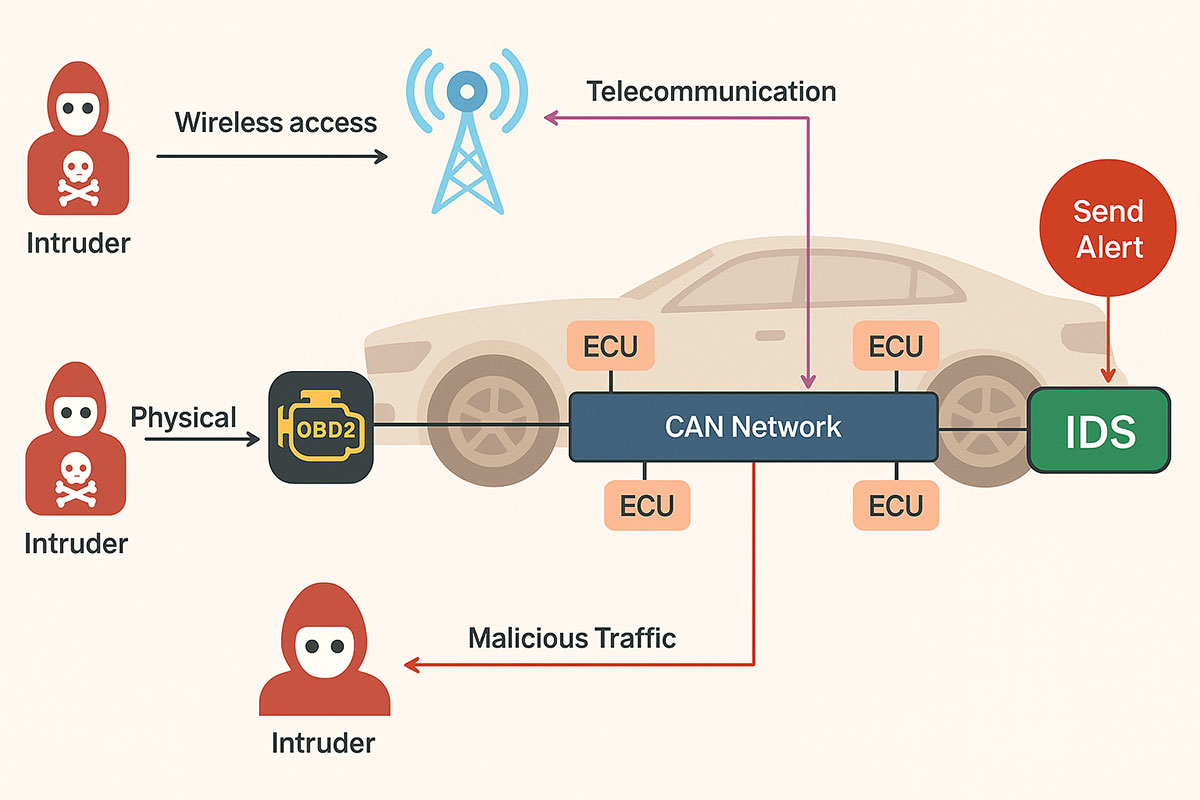
Real-time communication between autonomous vehicles, infrastructure, and their environment has facilitated the Internet of Vehicles (IoVs). Although this connectivity provides vehicular networks with significant benefits, it also introduces severe security threats, such as message injection attacks, particularly due to the heavy reliance on the Controller Area Network (CAN) protocol, which is inherently vulnerable. Electronic Control Units (ECUs) become primary targets for these attacks, leading to unsafe vehicle behaviors. To address these challenges, an Intrusion Detection System (IDS) based on deep learning architectures, Recurrent Neural Network (RNN), Long Short-Term Memory (LSTM), and... More >

Graphical Abstract

Mitigating Message Injection Attacks in Internet of Vehicles Using Deep Learning Based Intrusion Detection System
Open Access | Research Article | 19 September 2025 | Cited: Crossref logo  2
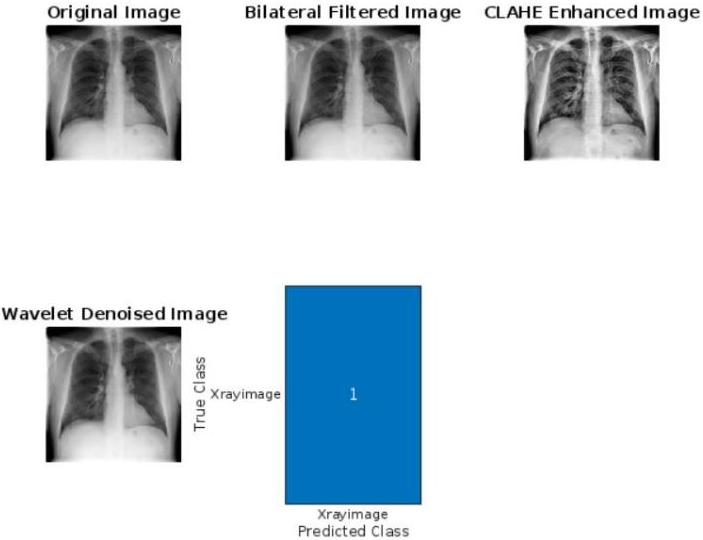
Evaluating the Impact of Image Enhancement Techniques on Deep Learning-Based X-ray Classification
ICCK Transactions on Advanced Computing and Systems | Volume 1, Issue 3: 193-207, 2025 | DOI: 10.62762/TACS.2025.653850
Abstract
This study evaluates four image enhancement techniques---Bilateral Filtering, Contrast Limited Adaptive Histogram Equalization (CLAHE), Wavelet Denoising, and Super-Resolution---with respect to their impact on Convolutional Neural Network (CNN)-based body part classification from X-ray images. Image quality is quantified using Peak Signal-to-Noise Ratio (PSNR) and Structural Similarity Index (SSIM) across three datasets: LEG, CT Scan, and Chest X-ray. Bilateral Filtering consistently delivers superior performance to the other enhancement methods on all three datasets. On the LEG dataset, Bilateral Filtering achieved a PSNR of 51.78 and an SSIM of 0.99918, outperforming CLAHE, which yielded a... More >

Graphical Abstract

Evaluating the Impact of Image Enhancement Techniques on Deep Learning-Based X-ray Classification
Open Access | Research Article | 29 August 2025 | Cited: Crossref logo  6 , Scopus 8
Intelligent Cyber-Attack Detection for Autonomous Vehicles Using Advanced Deep Learning Models
ICCK Transactions on Advanced Computing and Systems | Volume 1, Issue 3: 180-192, 2025 | DOI: 10.62762/TACS.2025.952297
Abstract
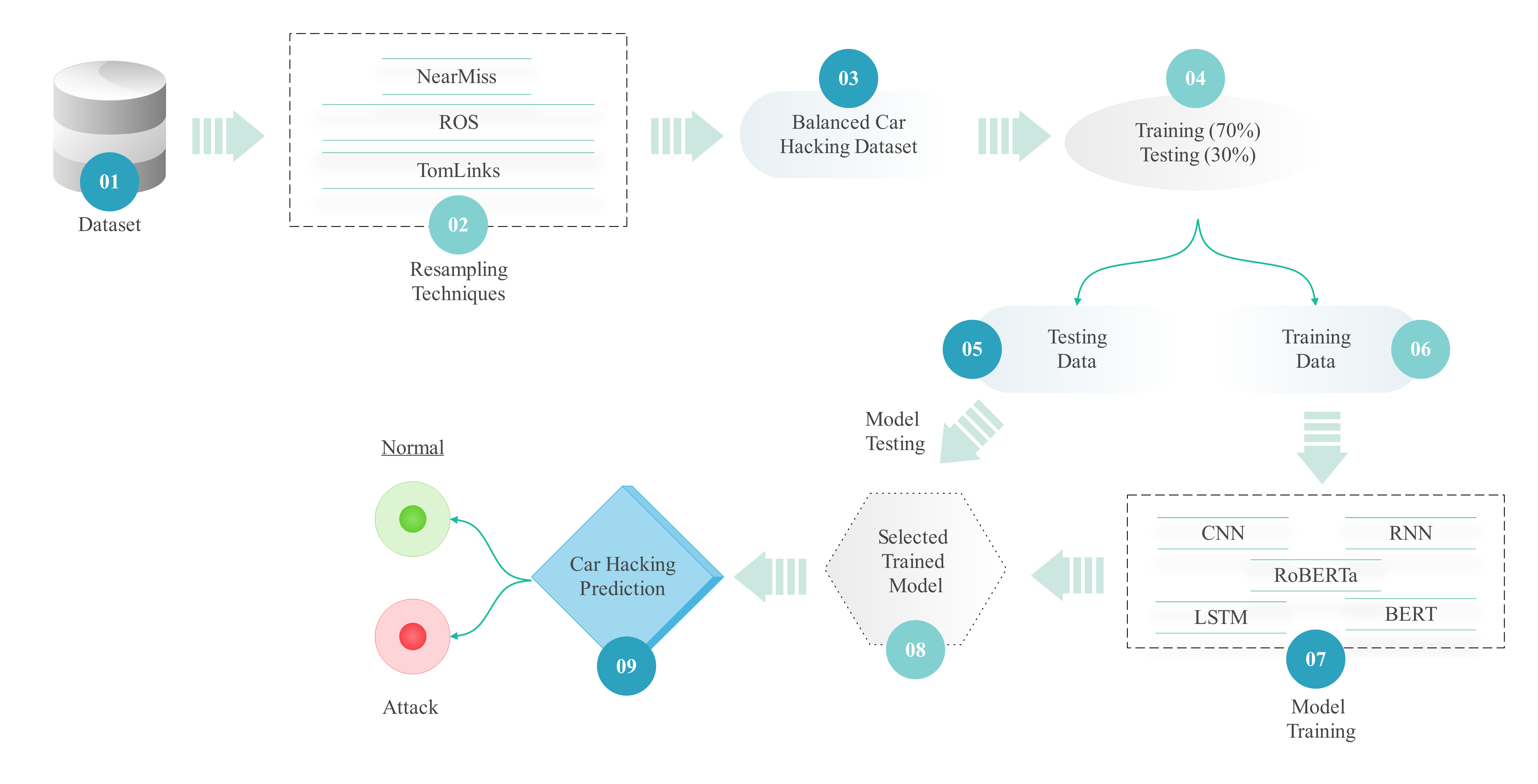
The Internet of Vehicles (IoV) has greatly influenced transportation by allowing autonomous vehicles to interact and communicate with other cars as well as with the surrounding traffic system. Even so, being interconnected comes with risks in terms of cyber attacks, for example, by injecting messages or fooling sensors through CAN systems. The study, consequently, suggests an Intrusion Detection System (IDS) that uses Convolutional Neural Networks (CNN), Recurrent Neural Networks (RNN), Long Short-Term Memory (LSTM), Bidirectional Encoder Representations from Transformers (BERT), and RoBERTa, to properly detect and handle these cyber threats. To solve the problem of unbalanced data, we use R... More >

Graphical Abstract
Intelligent Cyber-Attack Detection for Autonomous Vehicles Using Advanced Deep Learning Models
Open Access | Research Article | 14 July 2025 | Cited: Crossref logo  1 , Scopus 1
Enhancing Sentiment Analysis of Roman Urdu Using Augmentation Techniques and Deep Learning Models
ICCK Transactions on Advanced Computing and Systems | Volume 1, Issue 3: 164-179, 2025 | DOI: 10.62762/TACS.2025.190575
Abstract
Roman Urdu sentiment analysis faces significant challenges due to transliteration inconsistencies, informal language usage, and the lack of labeled datasets. This study proposes a novel framework that addresses these challenges by combining advanced data preprocessing techniques and data augmentation strategies such as synonym replacement, back-translation, and random word insertion. These methods enhance dataset diversity, improving the model’s generalization ability. A rich Roman Urdu dataset was collected from diverse sources, including social media platforms (Facebook, Twitter, YouTube), blogs, forums, and e-commerce sites, to capture a wide range of user opinions. Three deep learning... More >

Graphical Abstract

Enhancing Sentiment Analysis of Roman Urdu Using Augmentation Techniques and Deep Learning Models
Open Access | Research Article | 09 July 2025 | Cited: Crossref logo  7 , Scopus 10
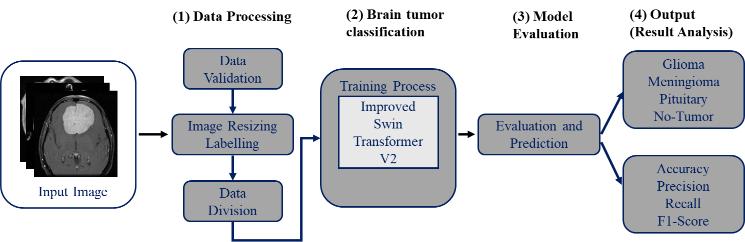
A Novel Deep Learning Framework for Brain Tumor Classification Using Improved Swin Transformer V2
ICCK Transactions on Advanced Computing and Systems | Volume 1, Issue 3: 154-163, 2025 | DOI: 10.62762/TACS.2025.807755
Abstract
Brain tumors pose a serious threat to global health, making accurate and early detection essential for effective treatment planning. While Magnetic Resonance Imaging (MRI) is widely used for diagnosis, manual interpretation is time-consuming and subject to error. This has prompted increasing use of deep learning for automated tumor classification. We propose a novel framework based on the Swin Transformer V2 architecture for classifying brain tumors in MRI scans into glioma, meningioma, pituitary tumor, and non-tumor categories. The design introduces two core innovations: a Dual-Branch Down-sampling module and an Enhanced Attention Mechanism, which improve multi-scale feature representation... More >

Graphical Abstract
A Novel Deep Learning Framework for Brain Tumor Classification Using Improved Swin Transformer V2
Open Access | Research Article | 08 July 2025 | Cited: Crossref logo  8 , Scopus 9
Advanced Hyperelliptic Curve-Based Authentication Protocols for Secure Internet of Drones Communication
ICCK Transactions on Advanced Computing and Systems | Volume 1, Issue 3: 138-153, 2025 | DOI: 10.62762/TACS.2025.926789
Abstract
The concept of an Internet of Drones (IoD) is becoming increasingly important in various domains, including surveillance and logistics. Effective communication between the interconnected systems is the essence of the Internet of Drones, however, due to the resource constraints of drones and the dynamic nature of the operating environment, security of communication within IoD networks is indeed the top priority. Considering these challenges on the part of IoD communication, a novel Hyperelliptic Curve Cryptography (HECC)-based authentication protocol is proposed in this paper to secure the data exchange between drones and their control servers and to ensure efficient communication. The propos... More >

Graphical Abstract
Advanced Hyperelliptic Curve-Based Authentication Protocols for Secure Internet of Drones Communication

Journal Statistics

119
Authors
15
Countries / Regions
34
Articles
Scopus: 95
Citations
2024
Published Since
91,458
Article Views
19,501
Article Downloads
ICCK Transactions on Advanced Computing and Systems
eISSN: 3068-7969
Crossref
Crossref
Member of Crossref
Visit Crossref →