Volume 3, Issue 2 (In Progress)


In Progress
Citations: 0, 0,  0   |   Viewed: 1866, Download: 449

Table of Contents

Open Access | Research Article | 06 March 2026
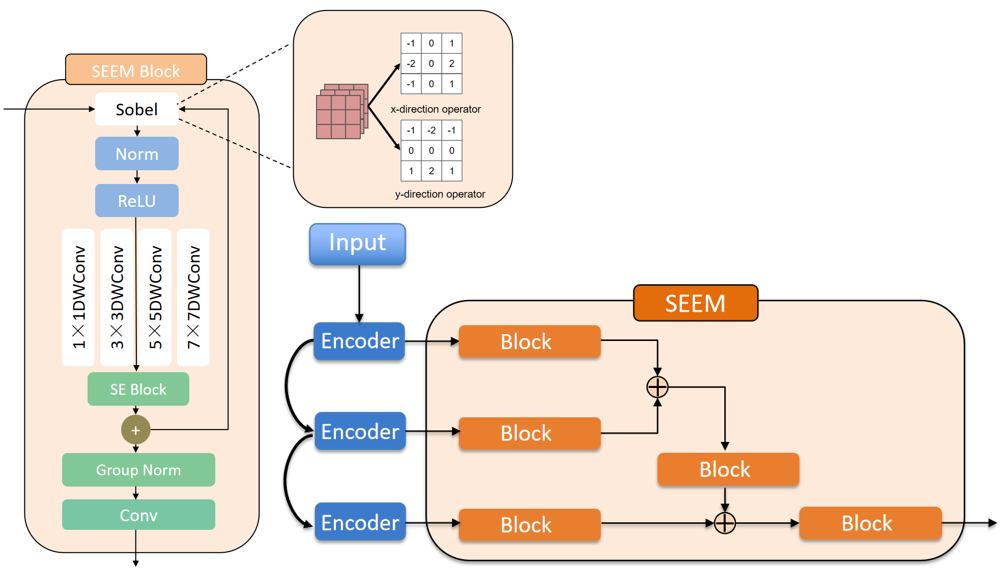
SEFF-Net: A Hybrid Feature Fusion Network for Accurate Segmentation of Breast Ultrasound Images
ICCK Transactions on Emerging Topics in Artificial Intelligence | Volume 3, Issue 2: 128-141, 2026 | DOI: 10.62762/TETAI.2026.494190
Abstract
Breast ultrasound imaging plays a crucial role in early breast cancer screening and diagnosis due to its noninvasive nature and cost-effectiveness. However, accurate lesion segmentation remains challenging because of severe speckle noise, low contrast, and blurred tumor boundaries. To address these issues, this paper proposes SEFF-Net, a novel edge-aware feature fusion network with a U-shaped encoder–decoder architecture to capture multi-level semantic representations for breast ultrasound image segmentation task. To enhance boundary perception, a Self-learning Edge Enhancement Module is embedded in the shallow encoding stages, while a Spatial Feature Fusion Module is introduced to effecti... More >

Graphical Abstract
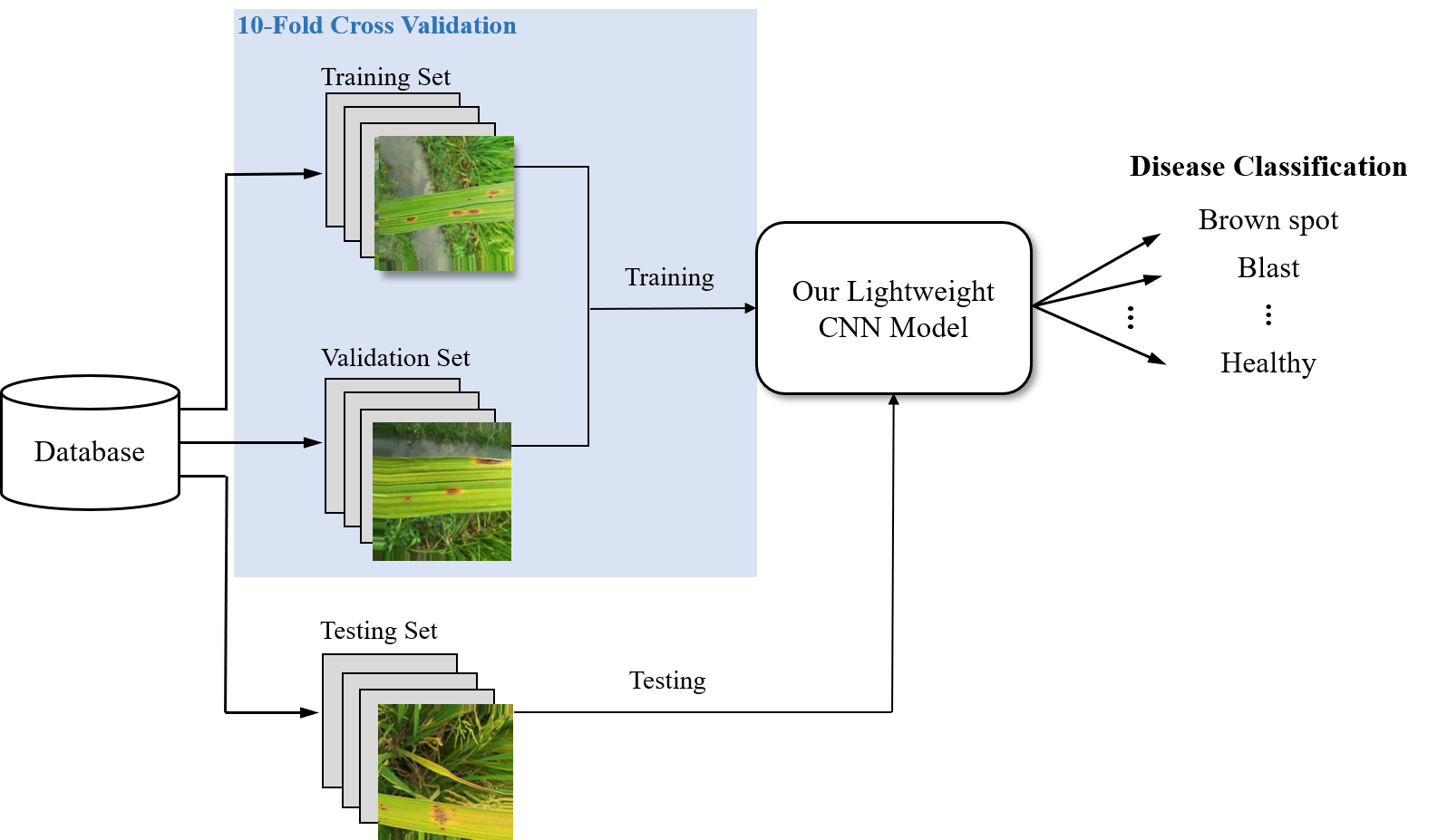
SEFF-Net: A Hybrid Feature Fusion Network for Accurate Segmentation of Breast Ultrasound Images
Open Access | Review Article | 18 February 2026
Exploring Graph-Based Techniques in Text Data Processing: A Comprehensive Survey of NLP Advancements
ICCK Transactions on Emerging Topics in Artificial Intelligence | Volume 3, Issue 2: 86-127, 2026 | DOI: 10.62762/TETAI.2025.740330
Abstract
Graph Neural Networks (GNNs) have become increasingly prominent in Natural Language Processing (NLP) due to their ability to model intricate relationships and contextual connections between texts. Unlike traditional NLP methods, which typically process text linearly, GNNs utilize graph structures to represent the complex relationships between texts more effectively. This capability has led to significant advancements in various NLP applications, such as social media interaction analysis, sentiment analysis, text classification, and information extraction. Notably, GNNs excel in scenarios with limited labeled data, often outperforming traditional approaches by providing deeper, context-aware... More >

Graphical Abstract
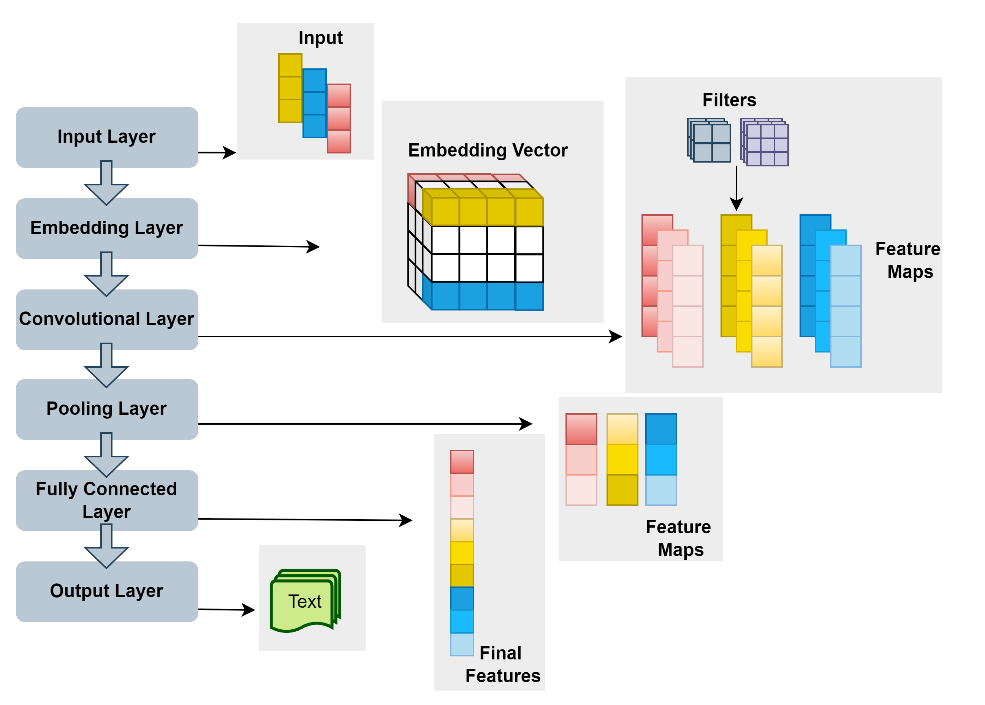
Exploring Graph-Based Techniques in Text Data Processing: A Comprehensive Survey of NLP Advancements
Open Access | Research Article | 01 February 2026
An NLP-Based Evaluation of LLMs Across Creativity, Factual Accuracy, Open-Ended and Technical Explanations
ICCK Transactions on Emerging Topics in Artificial Intelligence | Volume 3, Issue 2: 76-85, 2026 | DOI: 10.62762/TETAI.2025.264517
Abstract
The rapid advancement of AI-based language models has transformed the field of Natural Language Processing (NLP) into a powerful tool for text generation. This study evaluates the performance of models in different categories such as factual accuracy, creative writing, open-ended writing, and technical explanation. We have considered three popular and advanced large language models (LLMs) for this analysis. To quantify their performance, we have applied a combination of statistical and linguistic metrics. We have used Dale-Chall to analyze the readability score of the responses. For lexical diversity, we have used the type-token ratio technique. In addition, a cosine similarity with TF-IDF i... More >

Graphical Abstract
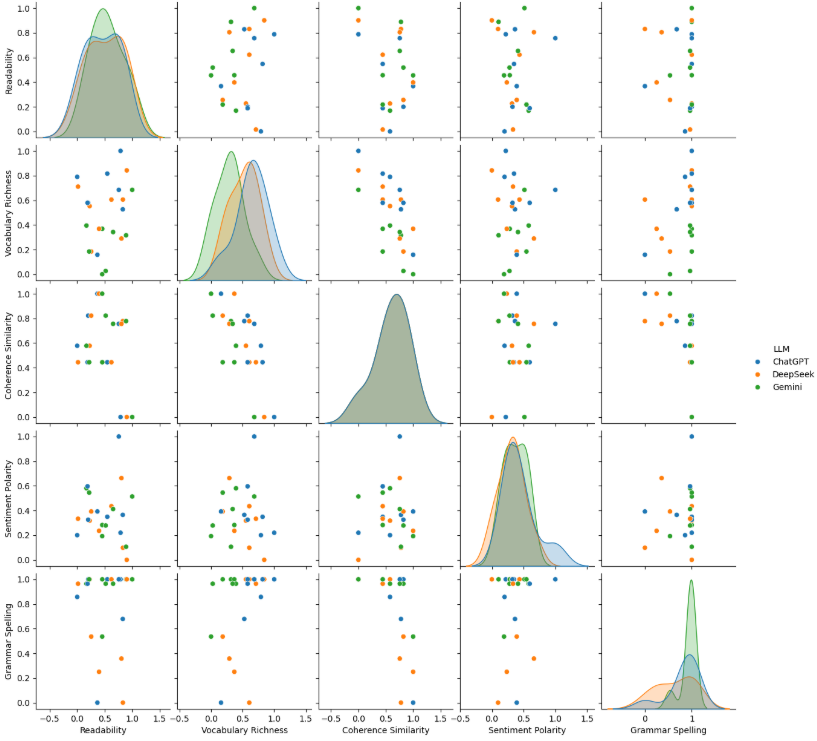
An NLP-Based Evaluation of LLMs Across Creativity, Factual Accuracy, Open-Ended and Technical Explanations
Open Access | Research Article | 12 January 2026
Deep Learning for U.S. Bond Yield Forecasting: An Enhanced LSTM–LagLasso Framework
ICCK Transactions on Emerging Topics in Artificial Intelligence | Volume 3, Issue 2: 61-75, 2026 | DOI: 10.62762/TETAI.2025.197745
Abstract
This paper advances a decision-aligned post-processing layer for government bond yield forecasts, turning competent sequence predictions into curve-consistent and economically calibrated outputs with minimal engineering burden. Starting from capacity-fair baselines in the LSTM, GRU and compact transformer families, used only to generate initial point forecasts for five, ten and thirty year maturities at short horizons, we add two model-agnostic stages. A curve consistency projection enforces monotone ordering across maturities and, when warranted, mild convexity while preserving local signal. An asymmetric economic calibration then learns a monotone mapping that down-weights the costlier sid... More >

Graphical Abstract
Deep Learning for U.S. Bond Yield Forecasting: An Enhanced LSTM–LagLasso Framework