
The Impact of Workplace Marginalization on Organizational Citizenship Behavior of Property Management Personnel in Public Health Emergencies







Article Information
Abstract
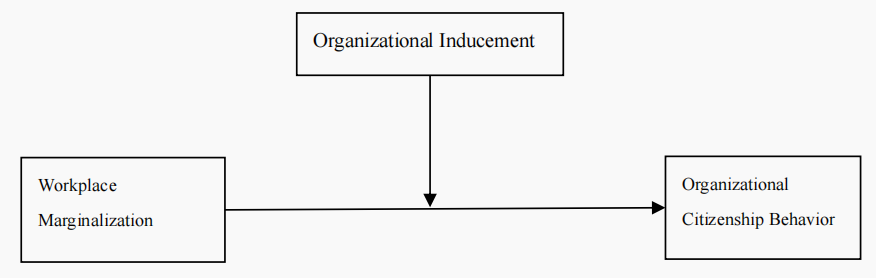
In public health emergencies, property personnel in communities have become a key line of defense to ensure the safety of residents. However, in practice, it has been observed that there is often a significant mismatch between the characteristics of these personnel and their roles during such emergencies. The behavior of these employees at work is influenced by various factors. This study, beginning with grassroots personnel, aims to explore the impact of their perception of workplace marginalization on their organizational citizenship behavior. Additionally, the study analyzes the moderating effect of organizational incentives to provide theoretical guidance for emergency management practices. Through data analysis, it has been found that the perception of workplace marginalization among these personnel has a negative impact on their organizational citizenship behavior. Furthermore, organizational incentives do not significantly moderate this relationship.
Graphical Abstract
Keywords
Data Availability Statement
Funding
Conflicts of Interest
Ethical Approval and Consent to Participate
References
- Organ, D. W. (1988). Organizational citizenship behavior: The good soldier syndrome. Lexington Books/DC Heath and Com.
[Google Scholar] - Farh, J. L., Earley, P. C., & Lin, S. C. (1997). Impetus for action: A cultural analysis of justice and organizational citizenship behavior in Chinese society. Administrative science quarterly, 421-444.
[CrossRef] [Google Scholar] - March, J. G., & Simon, H. A. (1993). Organizations. John Wiley & Sons.
[Google Scholar] - Liu, J., Wang, W., Wu, L., Xu, J., & Li, J. (2012). Refuse workplace exclusion: A model and empirical examination. Nankai Business Review, 15(1), 84–92.
[Google Scholar] - Rensun, Y., Changhong, N., & Shunchun, H. (2015). Workplace exclusion, peripherization and its influence on employee turnover: the moderating roles of employee job performance. Management Review, 27(8), 127.
[Google Scholar] - Cropanzano, R., & Mitchell, M. S. (2005). Social exchange theory: An interdisciplinary review. Journal of Management, 31(6), 874–900.
[CrossRef] [Google Scholar] - Wang, M., Zhang, M., & Guoxiang, Z. (2021). The influence mechanism of employees’ organization socialization on their cooperative behavior: Mediating role of perceived organizational support and perceived inside status. Journal of Henan Normal University (Philosophy and Social Sciences Edition), 48(6), 93-99.
[Google Scholar] - Chen, X., Xu, S. & Fang, J. (2008) Empirical Methods in Organization and Management Research. 2nd Edition, Peking University Press, Beijing.
[Google Scholar] - Eisenberger, R., Huntington, R., Hutchison, S., & Sowa, D. (1986). Perceived organizational support. Journal of Applied psychology, 71(3), 500.
[Google Scholar] - Hayes, A. F. (2017). Introduction to mediation, moderation, and conditional process analysis: A regression-based approach. Guilford publications.
[Google Scholar] - Aiken, L. S., & West, S. G. (1991). Multiple regression: Testing and interpreting interactions. Sage.
[Google Scholar]
Cite This Article
TY  - JOUR
AU  - Ouyang, Yao
AU  - Yu, Mudan
AU  - Wang, Yu
AU  - Cai, Xueqin
AU  - Ye, Hancong
PY  - 2024
DA  - 2024/01/05
TI  - The Impact of Workplace Marginalization on Organizational Citizenship Behavior of Property Management Personnel in Public Health Emergencies
JO  - Journal of Social Systems and Policy Analysis
T2  - Journal of Social Systems and Policy Analysis
JF  - Journal of Social Systems and Policy Analysis
VL  - 1
IS  - 1
SP  - 9
EP  - 14
DO  - 10.62762/JSSPA.2024.106925
UR  - https://www.icck.org/article/abs/jsspa.2024.106925
KW  - Workplace marginalization
KW  - Organizational citizenship behavior
KW  - Organizational inducement
KW  - Public health emergencies
KW  - Property management personnel
AB  - In public health emergencies, property personnel in communities have become a key line of defense to ensure the safety of residents. However, in practice, it has been observed that there is often a significant mismatch between the characteristics of these personnel and their roles during such emergencies. The behavior of these employees at work is influenced by various factors. This study, beginning with grassroots personnel, aims to explore the impact of their perception of workplace marginalization on their organizational citizenship behavior. Additionally, the study analyzes the moderating effect of organizational incentives to provide theoretical guidance for emergency management practices. Through data analysis, it has been found that the perception of workplace marginalization among these personnel has a negative impact on their organizational citizenship behavior. Furthermore, organizational incentives do not significantly moderate this relationship.
SN  - 3068-5540
PB  - Institute of Central Computation and Knowledge
LA  - English
ER  -
@article{Ouyang2024The,
  author = {Yao Ouyang and Mudan Yu and Yu Wang and Xueqin Cai and Hancong Ye},
  title = {The Impact of Workplace Marginalization on Organizational Citizenship Behavior of Property Management Personnel in Public Health Emergencies},
  journal = {Journal of Social Systems and Policy Analysis},
  year = {2024},
  volume = {1},
  number = {1},
  pages = {9-14},
  doi = {10.62762/JSSPA.2024.106925},
  url = {https://www.icck.org/article/abs/jsspa.2024.106925},
  abstract = {In public health emergencies, property personnel in communities have become a key line of defense to ensure the safety of residents. However, in practice, it has been observed that there is often a significant mismatch between the characteristics of these personnel and their roles during such emergencies. The behavior of these employees at work is influenced by various factors. This study, beginning with grassroots personnel, aims to explore the impact of their perception of workplace marginalization on their organizational citizenship behavior. Additionally, the study analyzes the moderating effect of organizational incentives to provide theoretical guidance for emergency management practices. Through data analysis, it has been found that the perception of workplace marginalization among these personnel has a negative impact on their organizational citizenship behavior. Furthermore, organizational incentives do not significantly moderate this relationship.},
  keywords = {Workplace marginalization, Organizational citizenship behavior, Organizational inducement, Public health emergencies, Property management personnel},
  issn = {3068-5540},
  publisher = {Institute of Central Computation and Knowledge}
}
Publisher's Note
ICCK stays neutral with regard to jurisdictional claims in published maps and institutional affiliations.
Rights and Permissions
 Copyright © 2024 by the Author(s). Published by Institute of Central Computation and Knowledge. This article is an open access article distributed under the terms and conditions of the Creative Commons Attribution (CC BY) license (https://creativecommons.org/licenses/by/4.0/), which permits use, sharing, adaptation, distribution and reproduction in any medium or format, as long as you give appropriate credit to the original author(s) and the source, provide a link to the Creative Commons licence, and indicate if changes were made.


Portico
