Volume 3, Issue 2, Journal of Social Systems and Policy Analysis
Volume 3, Issue 2, 2026
Submit Manuscript Edit a Special Issue
Article QR Code
Article QR Code
Scan the QR code for reading
Popular articles
Journal of Social Systems and Policy Analysis, Volume 3, Issue 2, 2026: 55-68

Open Access | Research Article | 04 March 2026
Green Finance and Low-Carbon Economic Development: Moderating Roles of Green Technology Innovation and Government Intervention in China
1 School of Economics, Sichuan University of Science and Engineering, Zigong 643000, China
* Corresponding Author: Mengdie Zhang, [email protected]
ARK: ark:/57805/jsspa.2026.563767
Received: 19 January 2026, Accepted: 07 February 2026, Published: 04 March 2026  
Abstract
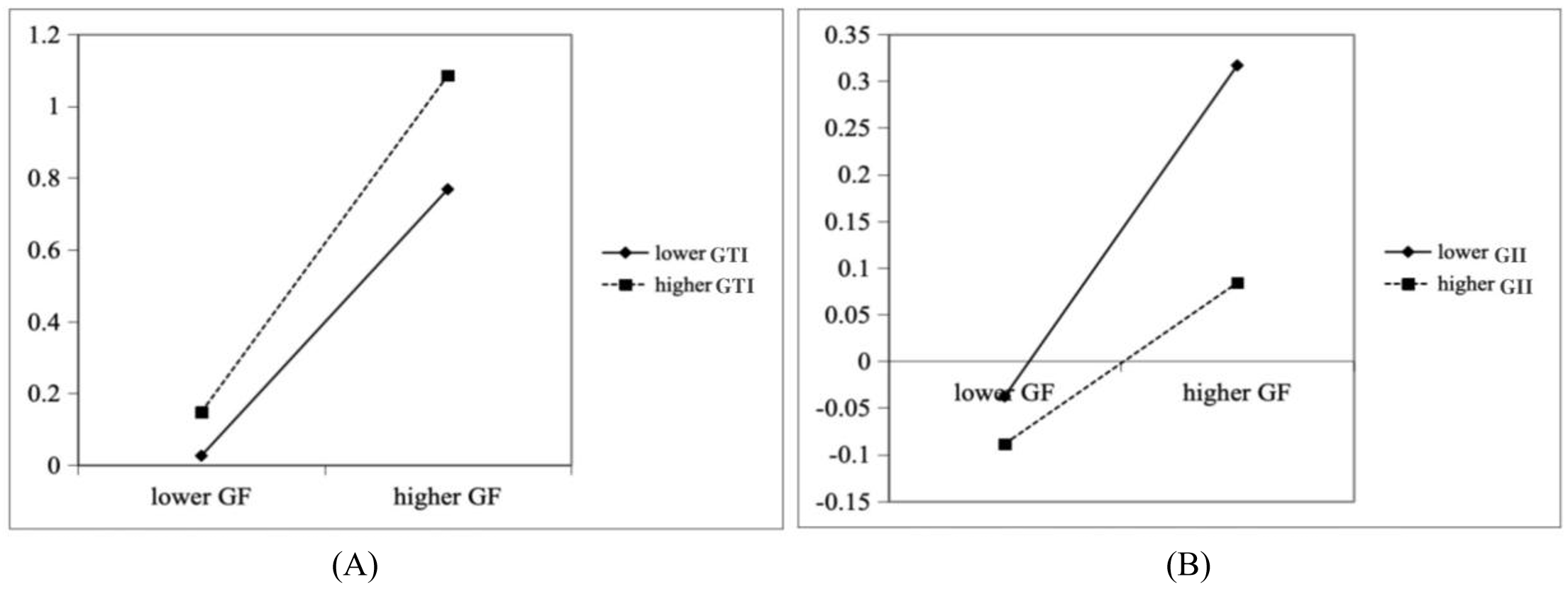
Using balanced panel data for 30 Chinese provinces from 2005 to 2022, this study investigates the impact of green finance (GF) on low-carbon economic development (LCE), with particular attention to the moderating roles of green technology innovation (GTI) and government intervention intensity (GII). A two-way fixed effects model is employed to control for regional heterogeneity and time effects. The results show that GF significantly promotes LCE. Moreover, GTI strengthens the positive effect of GF on LCE, whereas GII weakens this relationship, indicating that excessive government intervention may reduce the effectiveness of GF in supporting low-carbon development. These findings remain robust across alternative specifications and measurements, and provide policy implications for improving green financial systems and advancing low-carbon transitions in emerging economies.

Graphical Abstract
Green Finance and Low-Carbon Economic Development: Moderating Roles of Green Technology Innovation and Government Intervention in China

Keywords
green finance
low-carbon economic development
green technology innovation
government intervention

Data Availability Statement
Data will be made available on request.

Funding
This work was supported in part by the Chengdu Philosophy and Social Sciences Research Center and the Chengdu Green and Low-Carbon Development Research Center under Grant LD202521; in part by the Sichuan Provincial Key Laboratory of Philosophy and Social Sciences for Digital Analysis and Intelligent Decision-Making in Urban–Rural Industrial Integration Development (Project on the Measurement, Evaluation, and Mechanisms of Urban–Rural Industrial Integration in Southern Sichuan under Digital Economy Empowerment) under Grant CXCYRH25B-23; and in part by the Sichuan University of Science and Engineering Talent Introduction Project (Research on the Mechanisms and Pathways of Technological Innovation’s Impact on High-Quality Economic Development under the “Dual Carbon” Goals) under Grant 2023RC17.

Conflicts of Interest
The authors declare no conflicts of interest.

AI Use Statement
The authors declare that no generative AI was used in the preparation of this manuscript.

Ethical Approval and Consent to Participate
Not applicable.

References
  1. Daniya, G., & Tang, D. (2024). Green Finance and Industrial Low-Carbon Transition: A Case Study on Green Economy Policy in Kazakhstan. Sustainability, 16}(17), 7731.
    [CrossRef]   [Google Scholar]
  2. Shi, L., Yi, Y., & Lin, H. (2025). Impact of Green Finance on Carbon Emission Performance. Journal of Green Economy and Low-Carbon Development, 4}(3), 128–139.
    [CrossRef]   [Google Scholar]
  3. Yaowen, X. (2019). The development of green finance model in low carbon economy. Finance Analysis and Management, 1}(1), 22-26.
    [Google Scholar]
  4. Ahamer, G. (2025). Technology Transitions Towards a Green and Low-Carbon Economy. Green and Low-Carbon Economy, 3}(4), 405-423.
    [CrossRef]   [Google Scholar]
  5. Kaplan, F. (2025). Green Finance And Sustainable Policies: Driving The Transition To A Low-Carbon Economy. International Journal of Islamic Economics and Finance Studies, 11}(2), 255–296.
    [CrossRef]   [Google Scholar]
  6. Lin, Z., Liao, X., & Jia, H. (2023). Could green finance facilitate low-carbon transformation of power generation? Some evidence from China. International Journal of Climate Change Strategies and Management, 15}(2), 141-158.
    [CrossRef]   [Google Scholar]
  7. Zeng, S., & Zhang, S. (2011). Literature Review of Carbon Finance and Low Carbon Economy for Constructing Low Carbon Society in China. Low Carbon Economy, 2}(01), 15-19.
    [CrossRef]   [Google Scholar]
  8. Srivastava, T., Kaur, N., & Sharma, S. (2025). Green Finance Strategies for Catalyzing Sustainable Development. In Adaptive Strategies for Green Economy and Sustainability Policies} (pp. 521-538). IGI Global Scientific Publishing.
    [CrossRef]   [Google Scholar]
  9. Guo, Z. (2025). Research on Green Finance Promoting the Development of Low-Carbon Economy. Journal of Economics and Management Sciences, 8}(4), p1-p1.
    [CrossRef]   [Google Scholar]
  10. Wang, Y., Xiang, D., Yang, Z., & Ma, S. S. (2019). Unraveling customer sustainable consumption behaviors in sharing economy: A socio-economic approach based on social exchange theory. Journal of cleaner production, 208}, 869-879.
    [CrossRef]   [Google Scholar]
  11. Zhu, L., Yang, M., Li, W., Liao, H., & Huang, H. (2021). The spatial–temporal changes of the coupling relationship among agricultural labor force, agricultural economy, and farmland in Chongqing. Sustainability, 13}(16), 8780.
    [CrossRef]   [Google Scholar]
  12. Liu, B., Li, Y., Tian, X., Sun, L., & Xiu, P. (2023). Can digital economy development contribute to the low-carbon transition? Evidence from the city level in China. International Journal of Environmental Research and Public Health, 20}(3), 2733.
    [CrossRef]   [Google Scholar]
  13. Azam, M., Rehman, Z. U., & Ibrahim, Y. (2022). Causal nexus in industrialization, urbanization, trade openness, and carbon emissions: empirical evidence from OPEC economies. Environment, Development and Sustainability, 24}(12), 13990-14010.
    [CrossRef]   [Google Scholar]
  14. Raihan, A. (2025). Green energy and technological innovation toward a low-carbon economy in Bangladesh. Green and Low-Carbon Economy, 3}(2), 171-181.
    [CrossRef]   [Google Scholar]
  15. Zhang, L., Sun, D., Tao, L., Ren, J., Yu, X., Zhang, Y., ... & Zeng, H. (2025). Driving the Green and Low-Carbon Economy Through Digital Innovation: Insights from China's Inclusive Carbon Benefit Mechanism. Green and Low-Carbon Economy}.
    [CrossRef]   [Google Scholar]
  16. Ahamer, G. (2024). Carbon Cycle Models Quantify for a Green and Low-Carbon Economy. Green and Low-Carbon Economy}.
    [CrossRef]   [Google Scholar]
  17. Li, J., & Xu, Y. (2024). Market-based environmental regulation, green technology innovation and green and low-carbon economy. International Journal of Internet Manufacturing and Services, 10}(2-3), 95-111.
    [CrossRef]   [Google Scholar]
  18. Pedraza, J. M. (2023). The role of renewable energy in the transition to green, low-carbon power generation in Asia. Green and Low-Carbon Economy, 1}(2), 68-84.
    [CrossRef]   [Google Scholar]
  19. Yang, B. (2017). China’s low-carbon economy development and carbon finance market supervision mechanism. Low Carbon Economy, 8}(04), 97-105.
    [CrossRef]   [Google Scholar]
  20. Mittal, H., & Kushwaha, O. S. (2024). Policy implementation roadmap, diverse perspectives, challenges, solutions towards low-carbon hydrogen economy. Green and Low-Carbon Economy}.
    [CrossRef]   [Google Scholar]
  21. Carrasco, J. F. (2014). The Challenge of Changing to a Low-Carbon Economy: A Brief Overview. Low Carbon Economy, 05}(01), 1–5. http://dx.doi.org/10.4236/lce.2014.51001
    [Google Scholar]
  22. Zhang, H. (2020). Construction and Application of Low-Carbon Audit Evaluation Index System Based on Low-Carbon Economy. Modern Economy, 11}(12), 2027–2040.
    [CrossRef]   [Google Scholar]
  23. He, L., Liu, R., Zhong, Z., Wang, D., & Xia, Y. (2019). Can green financial development promote renewable energy investment efficiency? A consideration of bank credit. Renewable Energy, 143}, 974-984.
    [CrossRef]   [Google Scholar]
  24. Tang, D., Yan, J., Sheng, X., Hai, Y., & Boamah, V. (2023). Research on green finance, technological innovation, and industrial structure upgrading in the Yangtze River Economic belt. Sustainability, 15}(18), 13831.
    [CrossRef]   [Google Scholar]
  25. Wang, X., & Wang, Q. (2021). Research on the impact of green finance on the upgrading of China's regional industrial structure from the perspective of sustainable development. Resources Policy, 74}, 102436.
    [CrossRef]   [Google Scholar]
  26. Zhou, X., Tang, X., & Zhang, R. (2020). Impact of green finance on economic development and environmental quality: a study based on provincial panel data from China. Environmental Science and Pollution Research, 27}(16), 19915-19932.
    [CrossRef]   [Google Scholar]
  27. Zhongyu, Z., & Zhongxiang, Z. (2021). The construction and empirical study on evaluation index system of international low-carbon economy development. Frontiers in Energy Research, 9}, 761567.
    [CrossRef]   [Google Scholar]
  28. Zhu, Y., Zhang, J., & Duan, C. (2023). How does green finance affect the low-carbon economy? Capital allocation, green technology innovation and industry structure perspectives. Economic Research-Ekonomska Istraživanja, 36}(2), 2110138.
    [CrossRef]   [Google Scholar]
  29. Liu, L., & Li, X. (2024). A study on the impact of green finance on the high-quality economic development of Beijing–Tianjin–Hebei Region. Sustainability, 16}(6), 2433.
    [CrossRef]   [Google Scholar]

Cite This Article
APA Style
Zhang, M. (2026). Green Finance and Low-Carbon Economic Development: Moderating Roles of Green Technology Innovation and Government Intervention in China. Journal of Social Systems and Policy Analysis, 3(2), 55–68. https://doi.org/10.62762/JSSPA.2026.563767
Export Citation
RIS Format
Compatible with EndNote, Zotero, Mendeley, and other reference managers
RIS format data for reference managers
TY  - JOUR
AU  - Zhang, Mengdie
PY  - 2026
DA  - 2026/03/04
TI  - Green Finance and Low-Carbon Economic Development: Moderating Roles of Green Technology Innovation and Government Intervention in China
JO  - Journal of Social Systems and Policy Analysis
T2  - Journal of Social Systems and Policy Analysis
JF  - Journal of Social Systems and Policy Analysis
VL  - 3
IS  - 2
SP  - 55
EP  - 68
DO  - 10.62762/JSSPA.2026.563767
UR  - https://www.icck.org/article/abs/JSSPA.2026.563767
KW  - green finance
KW  - low-carbon economic development
KW  - green technology innovation
KW  - government intervention
AB  - Using balanced panel data for 30 Chinese provinces from 2005 to 2022, this study investigates the impact of green finance (GF) on low-carbon economic development (LCE), with particular attention to the moderating roles of green technology innovation (GTI) and government intervention intensity (GII). A two-way fixed effects model is employed to control for regional heterogeneity and time effects. The results show that GF significantly promotes LCE. Moreover, GTI strengthens the positive effect of GF on LCE, whereas GII weakens this relationship, indicating that excessive government intervention may reduce the effectiveness of GF in supporting low-carbon development. These findings remain robust across alternative specifications and measurements, and provide policy implications for improving green financial systems and advancing low-carbon transitions in emerging economies.
SN  - 3068-5540
PB  - Institute of Central Computation and Knowledge
LA  - English
ER  - 
BibTeX Format
Compatible with LaTeX, BibTeX, and other reference managers
BibTeX format data for LaTeX and reference managers
@article{Zhang2026Green,
  author = {Mengdie Zhang},
  title = {Green Finance and Low-Carbon Economic Development: Moderating Roles of Green Technology Innovation and Government Intervention in China},
  journal = {Journal of Social Systems and Policy Analysis},
  year = {2026},
  volume = {3},
  number = {2},
  pages = {55-68},
  doi = {10.62762/JSSPA.2026.563767},
  url = {https://www.icck.org/article/abs/JSSPA.2026.563767},
  abstract = {Using balanced panel data for 30 Chinese provinces from 2005 to 2022, this study investigates the impact of green finance (GF) on low-carbon economic development (LCE), with particular attention to the moderating roles of green technology innovation (GTI) and government intervention intensity (GII). A two-way fixed effects model is employed to control for regional heterogeneity and time effects. The results show that GF significantly promotes LCE. Moreover, GTI strengthens the positive effect of GF on LCE, whereas GII weakens this relationship, indicating that excessive government intervention may reduce the effectiveness of GF in supporting low-carbon development. These findings remain robust across alternative specifications and measurements, and provide policy implications for improving green financial systems and advancing low-carbon transitions in emerging economies.},
  keywords = {green finance, low-carbon economic development, green technology innovation, government intervention},
  issn = {3068-5540},
  publisher = {Institute of Central Computation and Knowledge}
}

Article Metrics
Citations:

Crossref

0

Scopus

0

Web of Science

0
Article Access Statistics:
Views: 22
PDF Downloads: 6

Publisher's Note
ICCK stays neutral with regard to jurisdictional claims in published maps and institutional affiliations.

Rights and Permissions
CC BY Copyright © 2026 by the Author(s). Published by Institute of Central Computation and Knowledge. This article is an open access article distributed under the terms and conditions of the Creative Commons Attribution (CC BY) license (https://creativecommons.org/licenses/by/4.0/), which permits use, sharing, adaptation, distribution and reproduction in any medium or format, as long as you give appropriate credit to the original author(s) and the source, provide a link to the Creative Commons licence, and indicate if changes were made.
Journal of Social Systems and Policy Analysis

Journal of Social Systems and Policy Analysis

ISSN: 3068-5540 (Online)

Email: [email protected]

Portico

Portico

All published articles are preserved here permanently:
https://www.portico.org/publishers/icck/