Volume 1, Issue 1, Oncology Communications
Volume 1, Issue 1, 2025
Submit Manuscript Edit a Special Issue
Article QR Code
Article QR Code
Scan the QR code for reading
Popular articles
Oncology Communications, Volume 1, Issue 1, 2025: 20-42

Open Access | Research Article | 27 February 2026
Comprehensive Analysis of PLOD Family Prognostic Value and Related Regulatory ceRNA Network in Breast Cancer
1 Department of General Surgery, The Second Xiangya Hospital, Central South University, Changsha, China
2 Department of Orthopedics, The Second Xiangya Hospital, Central South University, Changsha, China
3 Department of Breast and Thyroid Surgery, Affiliated Cancer Hospital of Xinjiang Medical University, Urumqi City 830000, China
4 Department of Breast and Thyroid Surgery, Yiyang Central Hospital, Yiyang, China
† These authors contributed equally to this work
* Corresponding Authors: Linxiao Xia, [email protected] ; Limeng Qu, [email protected]
ARK: ark:/57805/oc.2025.804127
Received: 09 November 2025, Accepted: 07 February 2026, Published: 27 February 2026  
Abstract
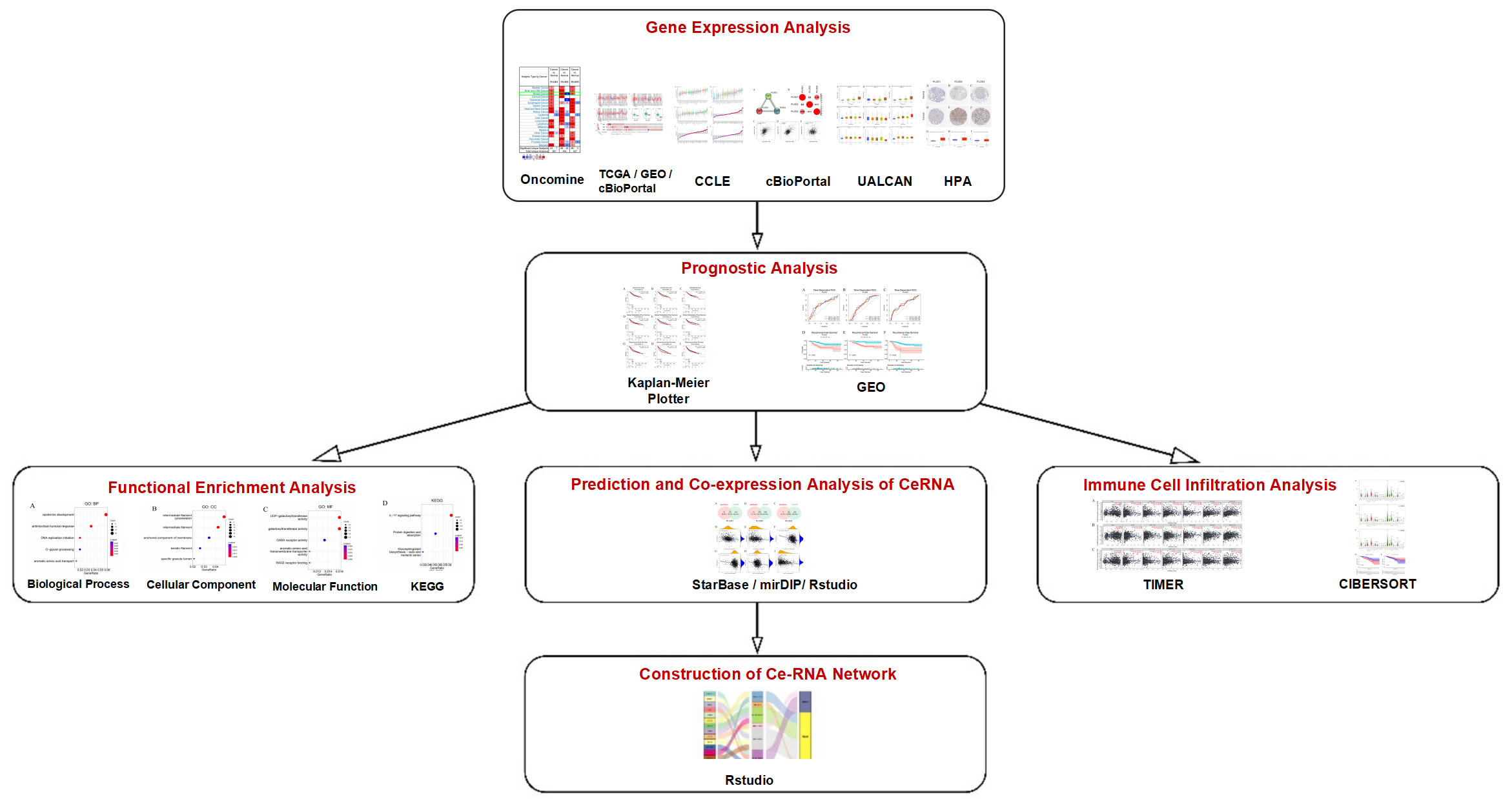
Procollagen-lysine, 2-oxoglutarate 5-dioxygenases (PLODs) catalyze lysine hydroxylation, promoting collagen crosslinking and extracellular matrix stability, and are implicated in tumor aggressiveness. However, their expression and prognostic value in breast cancer (BC) remain unclear. We explored PLOD1-3 expression in BC using ONCOMINE, TIMER, CCLE, cBioPortal, UALCAN, GEPIA, and HPA. Prognostic associations were assessed via Kaplan-Meier Plotter, with enrichment analysis by clusterProfiler. A competing endogenous RNA (ceRNA) network was constructed using TCGA data, and immune infiltration analyzed by TIMER and CIBERSORT. PLOD1-3 were upregulated in BC versus normal tissues at both transcript and protein levels, with high expression predicting shorter survival. Enrichment analysis implicated PLODs in DNA replication, cytokinesis, and basement membrane formation. The ceRNA network for PLODs was successfully constructed. Immune infiltration analysis revealed significant correlations between PLOD expression and immune cell levels; high M2 macrophage or low plasma cell infiltration indicated poor prognosis. PLODs are highly expressed in BC and may serve as prognostic biomarkers and therapeutic targets.

Graphical Abstract
Comprehensive Analysis of PLOD Family Prognostic Value and Related Regulatory ceRNA Network in Breast Cancer

Keywords
PLOD family
ceRNA network
breast cancer
prognostic

Data Availability Statement
Data will be made available on request.

Funding
This work was supported in part by the Regional Joint Project of Hunan Natural Science Foundation, Yiyang Science and Technology Innovation Plan Project under Grant [2022]108, and the Joint Project of the University and School of Hunan University of Chinese Medicine under Grant 2022XYLH111.

Conflicts of Interest
The authors declare no conflicts of interest.

AI Use Statement
The authors declare that no generative AI was used in the preparation of this manuscript.

Ethical Approval and Consent to Participate
This work is a secondary analysis of publicly available, de-identified datasets and does not involve human subjects research requiring ethics committee approval or informed consent.

References
  1. Algaber, A., Al-Haidari, A., Madhi, R., Rahman, M., Syk, I., & Thorlacius, H. (2020). MicroRNA-340-5p inhibits colon cancer cell migration via targeting of RhoA. Scientific Reports, 10(1), 16934.
    [CrossRef]   [Google Scholar]
  2. Alinejad, V., Dolati, S., Motallebnezhad, M., & Yousefi, M. (2017). The role of IL17B-IL17RB signaling pathway in breast cancer. Biomedicine & Pharmacotherapy, 88, 795-803.
    [CrossRef]   [Google Scholar]
  3. Anderson, N. M., & Simon, M. C. (2020). The tumor microenvironment. Current biology, 30(16), R921-R925.
    [CrossRef]   [Google Scholar]
  4. Baek, J. H., Yun, H. S., Kwon, G. T., Lee, J., Kim, J. Y., Jo, Y., ... & Hwang, S. G. (2019). PLOD3 suppression exerts an anti-tumor effect on human lung cancer cells by modulating the PKC-delta signaling pathway. Cell death & disease, 10(3), 156.
    [CrossRef]   [Google Scholar]
  5. Baek, J. H., Yun, H. S., Kwon, G. T., Kim, J. Y., Lee, C. W., Song, J. Y., ... & Hwang, S. G. (2018). PLOD3 promotes lung metastasis via regulation of STAT3. Cell death & disease, 9(12), 1138.
    [CrossRef]   [Google Scholar]
  6. Benevides, L., da Fonseca, D. M., Donate, P. B., Tiezzi, D. G., De Carvalho, D. D., de Andrade, J. M., ... & Silva, J. S. (2015). IL17 promotes mammary tumor progression by changing the behavior of tumor cells and eliciting tumorigenic neutrophils recruitment. Cancer research, 75(18), 3788-3799.
    [CrossRef]   [Google Scholar]
  7. Beveridge, D. J., Richardson, K. L., Epis, M. R., Brown, R. A. M., Stuart, L. M., Woo, A. J., & Leedman, P. J. (2021). The tumor suppressor miR-642a-5p targets Wilms Tumor 1 gene and cell-cycle progression in prostate cancer. Scientific Reports, 11(1), 18003.
    [CrossRef]   [Google Scholar]
  8. Chandrashekar, D. S., Bashel, B., Balasubramanya, S. A. H., Creighton, C. J., Ponce-Rodriguez, I., Chakravarthi, B. V., & Varambally, S. (2017). UALCAN: a portal for facilitating tumor subgroup gene expression and survival analyses. Neoplasia, 19(8), 649-658.
    [CrossRef]   [Google Scholar]
  9. Chen, Y., Guo, H., Terajima, M., Banerjee, P., Liu, X., Yu, J., ... & Kurie, J. M. (2016). Lysyl hydroxylase 2 is secreted by tumor cells and can modify collagen in the extracellular space. Journal of Biological Chemistry, 291(50), 25799-25808.
    [CrossRef]   [Google Scholar]
  10. Cheriyamundath, S., Kumar, A., Gavert, N., Brabletz, T., & Ben-Ze’ev, A. (2021). The collagen-modifying enzyme PLOD2 is induced and required during L1-mediated colon cancer progression. International journal of molecular sciences, 22(7), 3552.
    [CrossRef]   [Google Scholar]
  11. Eisinger-Mathason, T. K., Zhang, M., Qiu, Q., Skuli, N., Nakazawa, M. S., Karakasheva, T., ... & Simon, M. C. (2013). Hypoxia-dependent modification of collagen networks promotes sarcoma metastasis. Cancer discovery, 3(10), 1190-1205.
    [CrossRef]   [Google Scholar]
  12. Emdad, L., Janjic, A., Alzubi, M. A., Hu, B., Santhekadur, P. K., Menezes, M. E., ... & Fisher, P. B. (2015). Suppression of miR-184 in malignant gliomas upregulates SND1 and promotes tumor aggressiveness. Neuro-oncology, 17(3), 419-429.
    [CrossRef]   [Google Scholar]
  13. Fang, C., Cao, Y., Liu, X., Zeng, X. T., & Li, Y. (2017). Serum CA125 is a predictive marker for breast cancer outcomes and correlates with molecular subtypes. Oncotarget, 8(38), 63963.
    [CrossRef]   [Google Scholar]
  14. Fridman, W. H., Galon, J., Dieu-Nosjean, M. C., Cremer, I., Fisson, S., Damotte, D., ... & Sautes-Fridman, C. (2010). Immune infiltration in human cancer: prognostic significance and disease control. Cancer immunology and immunotherapy, 1-24.
    [CrossRef]   [Google Scholar]
  15. Fu, J., Yu, A., Tang, J., He, B., & Chen, W. (2020). Adoptive CD8+ T cell therapy generates immunological memory to inhibit melanoma metastasis. American Journal of Translational Research, 12(11), 7262.
    [Google Scholar]
  16. Gao, J., Aksoy, B. A., Dogrusoz, U., Dresdner, G., Gross, B., Sumer, S. O., ... & Schultz, N. (2013). Integrative analysis of complex cancer genomics and clinical profiles using the cBioPortal. Science signaling, 6(269), pl1-pl1.
    [CrossRef]   [Google Scholar]
  17. Gilkes, D. M., Bajpai, S., Chaturvedi, P., Wirtz, D., & Semenza, G. L. (2013). Hypoxia-inducible factor 1 (HIF-1) promotes extracellular matrix remodeling under hypoxic conditions by inducing P4HA1, P4HA2, and PLOD2 expression in fibroblasts.
    [CrossRef]   [Google Scholar]
  18. Gilkes, D. M., Bajpai, S., Wong, C. C., Chaturvedi, P., Hubbi, M. E., Wirtz, D., & Semenza, G. L. (2013). Procollagen lysyl hydroxylase 2 is essential for hypoxia-induced breast cancer metastasis. Molecular cancer research, 11(5), 456-466.
    [CrossRef]   [Google Scholar]
  19. Gilkes, D. M., Semenza, G. L., & Wirtz, D. (2014). Hypoxia and the extracellular matrix: drivers of tumour metastasis. Nature Reviews Cancer, 14(6), 430-439.
    [CrossRef]   [Google Scholar]
  20. Giunta, C., Randolph, A., & Steinmann, B. (2005). Mutation analysis of the PLOD1 gene: an efficient multistep approach to the molecular diagnosis of the kyphoscoliotic type of Ehlers-Danlos syndrome (EDS VIA). Molecular genetics and metabolism, 86(1-2), 269-276.
    [CrossRef]   [Google Scholar]
  21. Gong, S., Duan, Y., Wu, C., Osterhoff, G., Schopow, N., & Kallendrusch, S. (2021). A human pan-cancer system analysis of procollagen-lysine, 2-oxoglutarate 5-dioxygenase 3 (Plod3). International Journal of Molecular Sciences, 22(18), 9903.
    [CrossRef]   [Google Scholar]
  22. Groux-Degroote, S., & Delannoy, P. (2021). Cancer-associated glycosphingolipids as tumor markers and targets for cancer immunotherapy. International Journal of Molecular Sciences, 22(11), 6145.
    [CrossRef]   [Google Scholar]
  23. Guo, T., Gu, C., Li, B., & Xu, C. (2021). PLODs are overexpressed in ovarian cancer and are associated with gap junctions via connexin 43. Laboratory investigation, 101(5), 564-569.
    [CrossRef]   [Google Scholar]
  24. Guo, T., Li, B., Kang, Y., Gu, C., Fang, F., Chen, X., ... & Xu, C. (2021). COLGALT2 is overexpressed in ovarian cancer and interacts with PLOD3. Clinical and Translational Medicine, 11(3), e370.
    [CrossRef]   [Google Scholar]
  25. Hausmann, E. (1967). Cofactor requirements for the enzymatic hydroxylation of lysine in a polypeptide precursor of collagen. Biochimica et Biophysica Acta (BBA)-Protein Structure, 133(3), 591-593.
    [CrossRef]   [Google Scholar]
  26. Ji, W., Diao, Y. L., Qiu, Y. R., Ge, J., Cao, X. C., & Yu, Y. (2020). LINC00665 promotes breast cancer progression through regulation of the miR-379-5p/LIN28B axis. Cell death & disease, 11(1), 16.
    [CrossRef]   [Google Scholar]
  27. Kahlert, U. D., Nikkhah, G., & Maciaczyk, J. (2013). Epithelial-to-mesenchymal (-like) transition as a relevant molecular event in malignant gliomas. Cancer letters, 331(2), 131-138.
    [CrossRef]   [Google Scholar]
  28. Kaushik, N., Kim, S., Suh, Y., & Lee, S. J. (2019). Proinvasive extracellular matrix remodeling for tumor progression. Archives of pharmacal research, 42(1), 40-47.
    [CrossRef]   [Google Scholar]
  29. Kivirikko, K. I., & Pihlajaniemi, T. (1998). Collagen hydroxylases and the protein disulfide isomerase subunit of prolyl 4-hydroxylases. Advances in enzymology and related areas of molecular biology, 72, 325-398.
    [CrossRef]   [Google Scholar]
  30. Kopfstein, L., & Christofori, G. (2006). Metastasis: cell-autonomous mechanisms versus contributions by the tumor microenvironment. Cellular and Molecular Life Sciences CMLS, 63(4), 449-468.
    [CrossRef]   [Google Scholar]
  31. Kurozumi, A., Kato, M., Goto, Y., Matsushita, R., Nishikawa, R., Okato, A., ... & Seki, N. (2016). Regulation of the collagen cross-linking enzymes LOXL2 and PLOD2 by tumor-suppressive microRNA-26a/b in renal cell carcinoma. International journal of oncology, 48(5), 1837-1846.
    [CrossRef]   [Google Scholar]
  32. Kwa, M. Q., Herum, K. M., & Brakebusch, C. (2019). Cancer-associated fibroblasts: how do they contribute to metastasis?. Clinical & experimental metastasis, 36(2), 71-86.
    [CrossRef]   [Google Scholar]
  33. Laprevotte, E., Cochaud, S., Du Manoir, S., Lapierre, M., Dejou, C., Philippe, M., ... & Bonnefoy, N. (2017). The IL-17B-IL-17 receptor B pathway promotes resistance to paclitaxel in breast tumors through activation of the ERK1/2 pathway. Oncotarget, 8(69), 113360.
    [CrossRef]   [Google Scholar]
  34. Levental, K. R., Yu, H., Kass, L., Lakins, J. N., Egeblad, M., Erler, J. T., ... & Weaver, V. M. (2009). Matrix crosslinking forces tumor progression by enhancing integrin signaling. Cell, 139(5), 891-906.
    [CrossRef]   [Google Scholar]
  35. Li, J. H., Liu, S., Zhou, H., Qu, L. H., & Yang, J. H. (2014). starBase v2. 0: decoding miRNA-ceRNA, miRNA-ncRNA and protein–RNA interaction networks from large-scale CLIP-Seq data. Nucleic acids research, 42(D1), D92-D97.
    [CrossRef]   [Google Scholar]
  36. Li, L., Wang, W., Li, X., & Gao, T. (2017). Association of ECRG4 with PLK1, CDK4, PLOD1 and PLOD2 in esophageal squamous cell carcinoma. American journal of translational research, 9(8), 3741.
    [Google Scholar]
  37. Li, S. S., Lian, Y. F., Huang, Y. L., Huang, Y. H., & Xiao, J. (2020). Overexpressing PLOD family genes predict poor prognosis in gastric cancer. Journal of Cancer, 11(1), 121.
    [CrossRef]   [Google Scholar]
  38. Li, T., Mello-Thoms, C., & Brennan, P. C. (2016). Descriptive epidemiology of breast cancer in China: incidence, mortality, survival and prevalence. Breast cancer research and treatment, 159(3), 395-406.
    [CrossRef]   [Google Scholar]
  39. Li, X., Xu, Y., & Zhang, L. (2019). Serum CA153 as biomarker for cancer and noncancer diseases. Progress in molecular biology and translational science, 162, 265-276.
    [CrossRef]   [Google Scholar]
  40. Liu, K., Zhang, W., Tan, J., Ma, J., & Zhao, J. (2019). MiR-200b-3p Functions as an Oncogene by Targeting ABCA1 in Lung Adenocarcinoma. Technology In Cancer Research & Treatment, 18, 1533033819892590.
    [CrossRef]   [Google Scholar]
  41. Liu, T., Han, C., Wang, S., Fang, P., Ma, Z., Xu, L., & Yin, R. (2019). Cancer-associated fibroblasts: an emerging target of anti-cancer immunotherapy. Journal of hematology & oncology, 12(1), 86.
    [CrossRef]   [Google Scholar]
  42. Lyu, Y., & Feng, C. (2021). Collagen synthesis and gap junctions: the highway for metastasis of ovarian cancer. Laboratory Investigation, 101(5), 540-542.
    [CrossRef]   [Google Scholar]
  43. Masoud, G. N., & Li, W. (2015). HIF-1$\alpha$ pathway: role, regulation and intervention for cancer therapy. Acta Pharm Sin B, 5(5), 378-89.
    [CrossRef]   [Google Scholar]
  44. Meng, Y., Sun, J., Zhang, G., Yu, T., & Piao, H. (2022). Clinical prognostic value of the PLOD gene family in lung adenocarcinoma. Frontiers in molecular biosciences, 8, 770729.
    [CrossRef]   [Google Scholar]
  45. Miyamoto, K., Seki, N., Matsushita, R., Yonemori, M., Yoshino, H., Nakagawa, M., & Enokida, H. (2016). Tumour-suppressive miRNA-26a-5p and miR-26b-5p inhibit cell aggressiveness by regulating PLOD2 in bladder cancer. British journal of cancer, 115(3), 354-363.
    [CrossRef]   [Google Scholar]
  46. Nicastri, A., Gaspari, M., Sacco, R., Elia, L., Gabriele, C., Romano, R., ... & Cuda, G. (2014). N-glycoprotein analysis discovers new up-regulated glycoproteins in colorectal cancer tissue. Journal of proteome research, 13(11), 4932-4941.
    [CrossRef]   [Google Scholar]
  47. Noda, T., Yamamoto, H., Takemasa, I., Yamada, D., Uemura, M., Wada, H., ... & Nagano, H. (2012). PLOD 2 induced under hypoxia is a novel prognostic factor for hepatocellular carcinoma after curative resection. Liver International, 32(1), 110-118.
    [CrossRef]   [Google Scholar]
  48. Paoletti, C., & Hayes, D. F. (2014). Molecular testing in breast cancer. Annual review of medicine, 65(1), 95-110.
    [CrossRef]   [Google Scholar]
  49. Qi, Q., Huang, W., Zhang, H., Zhang, B., Sun, X., Ma, J., ... & Wang, C. (2021). Bioinformatic analysis of PLOD family member expression and prognostic value in non-small cell lung cancer. Translational Cancer Research, 10(6), 2707.
    [CrossRef]   [Google Scholar]
  50. Qi, Y., & Xu, R. (2018). Roles of PLODs in collagen synthesis and cancer progression. Frontiers in cell and developmental biology, 6, 66.
    [CrossRef]   [Google Scholar]
  51. Rautavuoma, K., Takaluoma, K., Sormunen, R., Myllyharju, J., Kivirikko, K. I., & Soininen, R. (2004). Premature aggregation of type IV collagen and early lethality in lysyl hydroxylase 3 null mice. Proceedings of the National Academy of Sciences, 101(39), 14120-14125.
    [CrossRef]   [Google Scholar]
  52. Rhoads, R. E., & Udenfriend, S. (1968). Decarboxylation of alpha-ketoglutarate coupled to collagen proline hydroxylase. Proceedings of the National Academy of Sciences, 60(4), 1473-1478.
    [CrossRef]   [Google Scholar]
  53. Saito, K., Mitsui, A., Sumardika, I. W., Yokoyama, Y., Sakaguchi, M., & Kondo, E. (2021). PLOD2-driven IL-6/STAT3 signaling promotes the invasion and metastasis of oral squamous cell carcinoma via activation of integrin $\beta_1$. International Journal of Oncology, 58(6), 29.
    [CrossRef]   [Google Scholar]
  54. Saito, M., & Marumo, K. M. S. K. M. (2010). Collagen cross-links as a determinant of bone quality: a possible explanation for bone fragility in aging, osteoporosis, and diabetes mellitus. Osteoporosis international, 21(2), 195-214.
    [CrossRef]   [Google Scholar]
  55. Salmena, L., Poliseno, L., Tay, Y., Kats, L., & Pandolfi, P. P. (2011). A ceRNA hypothesis: the Rosetta Stone of a hidden RNA language?. Cell, 146(3), 353-358.
    [CrossRef]   [Google Scholar]
  56. Shao, S., Zhang, X., Duan, L., Fang, H., Rao, S., Liu, W., Guo, B., & Zhang, X. (2018). Lysyl Hydroxylase Inhibition by Minoxidil Blocks Collagen Deposition and Prevents Pulmonary Fibrosis via TGF-$\beta_1$/Smad3 Signaling Pathway. Medical Science Monitor : International Medical Journal of Experimental and Clinical Research, 24, 8592-8601.
    [CrossRef]   [Google Scholar]
  57. Shen, Q., Eun, J. W., Lee, K., Kim, H. S., Yang, H. D., Kim, S. Y., ... & Nam, S. W. (2018). Barrier to autointegration factor 1, procollagen‐lysine, 2‐oxoglutarate 5‐dioxygenase 3, and splicing factor 3b subunit 4 as early‐stage cancer decision markers and drivers of hepatocellular carcinoma. Hepatology, 67(4), 1360-1377.
    [CrossRef]   [Google Scholar]
  58. Song, X., Wei, C., & Li, X. (2021). The potential role and status of IL-17 family cytokines in breast cancer. International immunopharmacology, 95, 107544.
    [CrossRef]   [Google Scholar]
  59. Song, Y., Zheng, S., Wang, J., Long, H., Fang, L., Wang, G., ... & Qi, S. (2017). Hypoxia-induced PLOD2 promotes proliferation, migration and invasion via PI3K/Akt signaling in glioma. Oncotarget, 8(26), 41947.
    [CrossRef]   [Google Scholar]
  60. Soysal, S. D., Tzankov, A., & Muenst, S. E. (2015). Role of the tumor microenvironment in breast cancer. Pathobiology, 82(3-4), 142-152.
    [CrossRef]   [Google Scholar]
  61. Soysal, S. D., Tzankov, A., & Muenst, S. E. (2015). Role of the tumor microenvironment in breast cancer. Pathobiology, 82(3-4), 142-152.
    [CrossRef]   [Google Scholar]
  62. Sun, X., Lin, F., Sun, W., Zhu, W., Fang, D., Luo, L., ... & Jiang, L. (2021). Exosome-transmitted miRNA-335-5p promotes colorectal cancer invasion and metastasis by facilitating EMT via targeting RASA1. Molecular therapy Nucleic acids, 24, 164-174.
    [CrossRef]   [Google Scholar]
  63. Sung, H., Ferlay, J., Siegel, R. L., Laversanne, M., Soerjomataram, I., Jemal, A., & Bray, F. (2021). Global cancer statistics 2020: GLOBOCAN estimates of incidence and mortality worldwide for 36 cancers in 185 countries. CA: a cancer journal for clinicians, 71(3), 209-249.
    [CrossRef]   [Google Scholar]
  64. Szpirer, C., Szpirer, J., Rivière, M., Vanvooren, P., Valtavaara, M., & Myllylä, R. (1997). Localization of the gene encoding a novel isoform of lysyl hydroxylase. Mammalian genome, 8(9), 707-708.
    [CrossRef]   [Google Scholar]
  65. Tasker, P. N., Macdonald, H., Fraser, W. D., Reid, D. M., Ralston, S. H., & Albagha, O. M. E. (2006). Association of PLOD1 polymorphisms with bone mineral density in a population-based study of women from the UK. Osteoporosis international, 17(7), 1078-1085.
    [CrossRef]   [Google Scholar]
  66. Tokar, T., Pastrello, C., Rossos, A. E., Abovsky, M., Hauschild, A. C., Tsay, M., ... & Jurisica, I. (2018). mirDIP 4.1—integrative database of human microRNA target predictions. Nucleic acids research, 46(D1), D360-D370.
    [CrossRef]   [Google Scholar]
  67. Tsai, C. K., Huang, L. C., Tsai, W. C., Huang, S. M., Lee, J. T., & Hueng, D. Y. (2018). Overexpression of PLOD3 promotes tumor progression and poor prognosis in gliomas. Oncotarget, 9(21), 15705.
    [CrossRef]   [Google Scholar]
  68. Valtavaara, M., Szpirer, C., Szpirer, J., & Myllylä, R. (1998). Primary structure, tissue distribution, and chromosomal localization of a novel isoform of lysyl hydroxylase (lysyl hydroxylase 3). Journal of Biological Chemistry, 273(21), 12881-12886.
    [CrossRef]   [Google Scholar]
  69. van der Slot, A. J., Zuurmond, A. M., van den Bogaerdt, A. J., Ulrich, M. M., Middelkoop, E., Boers, W., ... & Bank, R. A. (2004). Increased formation of pyridinoline cross-links due to higher telopeptide lysyl hydroxylase levels is a general fibrotic phenomenon. Matrix biology, 23(4), 251-257.
    [CrossRef]   [Google Scholar]
  70. Wang, B., Xu, L., Ge, Y., Cai, X., Li, Q., Yu, Z., ... & Gu, Y. (2019). PLOD3 is Upregulated in Gastric Cancer and Correlated with Clinicopathologic Characteristics. Clinical laboratory, 65.
    [CrossRef]   [Google Scholar]
  71. Wang, D., Zhang, S., & Chen, F. (2018). High expression of PLOD1 drives tumorigenesis and affects clinical outcome in gastrointestinal carcinoma. Genetic testing and molecular biomarkers, 22(6), 366-373.
    [CrossRef]   [Google Scholar]
  72. Wang, F., Wu, D., Xu, Z., Chen, J., Zhang, J., Li, X., ... & Wang, W. (2019). miR-182-5p affects human bladder cancer cell proliferation, migration and invasion through regulating Cofilin 1. Cancer cell international, 19(1), 42.
    [CrossRef]   [Google Scholar]
  73. Wang, W., Xu, X., Tian, B., Wang, Y., Du, L., Sun, T., ... & Jing, J. (2017). The diagnostic value of serum tumor markers CEA, CA19-9, CA125, CA15-3, and TPS in metastatic breast cancer. Clinica chimica acta, 470, 51-55.
    [CrossRef]   [Google Scholar]
  74. Wang, Z., Shi, Y., Ying, C., Jiang, Y., & Hu, J. (2021). Hypoxia-induced PLOD1 overexpression contributes to the malignant phenotype of glioblastoma via NF-KB signaling. Oncogene, 40(8), 1458-1475.
    [CrossRef]   [Google Scholar]
  75. Wouters, M. C., & Nelson, B. H. (2018). Prognostic significance of tumor-infiltrating B cells and plasma cells in human cancer. Clinical Cancer Research, 24(24), 6125-6135.
    [CrossRef]   [Google Scholar]
  76. Wu, C., Duan, Y., Gong, S., Kallendrusch, S., Schopow, N., & Osterhoff, G. (2021). Integrative and comprehensive pancancer analysis of regulator of chromatin condensation 1 (RCC1). International journal of molecular sciences, 22(14), 7374.
    [CrossRef]   [Google Scholar]
  77. Xia, L., Han, Q., Chi, C., Zhu, Y., Pan, J., Dong, B., ... & Sha, J. (2020). Transcriptional regulation of PRKAR2B by miR-200b-3p/200c-3p and XBP1 in human prostate cancer. Biomedicine & Pharmacotherapy, 124, 109863.
    [CrossRef]   [Google Scholar]
  78. Yamada, Y., Kato, M., Arai, T., Sanada, H., Uchida, A., Misono, S., ... & Seki, N. (2019). Aberrantly expressed PLOD 1 promotes cancer aggressiveness in bladder cancer: a potential prognostic marker and therapeutic target. Molecular oncology, 13(9), 1898-1912.
    [CrossRef]   [Google Scholar]
  79. Yeo, S. K., & Guan, J. L. (2017). Breast Cancer: Multiple Subtypes within a Tumor? Trends in Cancer, 3(11), 753-760.
    [CrossRef]   [Google Scholar]
  80. Yin, L., Duan, J. J., Bian, X. W., & Yu, S. C. (2020). Triple-negative breast cancer molecular subtyping and treatment progress. Breast cancer research, 22(1), 61.
    [CrossRef]   [Google Scholar]
  81. Yuan, H., Lin, Z., Liu, Y., Jiang, Y., Liu, K., Tu, M., ... & Hong, J. (2020). Intrahepatic cholangiocarcinoma induced M2-polarized tumor-associated macrophages facilitate tumor growth and invasiveness. Cancer cell international, 20(1), 586.
    [CrossRef]   [Google Scholar]
  82. Zhang, A., Qian, Y., Ye, Z., Chen, H., Xie, H., Zhou, L., ... & Zheng, S. (2017). Cancer‐associated fibroblasts promote M2 polarization of macrophages in pancreatic ductal adenocarcinoma. Cancer medicine, 6(2), 463-470.
    [CrossRef]   [Google Scholar]
  83. Zhang, J., Tian, Y., Mo, S., & Fu, X. (2022). Overexpressing PLOD family genes predict poor prognosis in pancreatic cancer. International journal of general medicine, 3077-3096.
    [CrossRef]   [Google Scholar]
  84. Zhao, Y., Zhang, X., & Yao, J. (2021). Comprehensive analysis of PLOD family members in low-grade gliomas using bioinformatics methods. Plos one, 16(1), e0246097.
    [CrossRef]   [Google Scholar]
  85. Zheng, C., Terreni, M., Sollogoub, M., & Zhang, Y. (2021). Functional role of glycosphingolipids in cancer. Current medicinal chemistry, 28(20), 3913-3924.
    [CrossRef]   [Google Scholar]
  86. Zhu, J., Xiong, G., Fu, H., Evers, B. M., Zhou, B. P., & Xu, R. (2015). Chaperone Hsp47 drives malignant growth and invasion by modulating an ECM gene network. Cancer research, 75(8), 1580-1591.
    [CrossRef]   [Google Scholar]

Cite This Article
APA Style
Li, J., Zhou, C., Anwar, M., Xia, L., & Qu, L. (2026). Comprehensive Analysis of PLOD Family Prognostic Value and Related Regulatory ceRNA Network in Breast Cancer. Oncology Communications, 1(1), 20–42. https://doi.org/10.62762/OC.2025.804127
Export Citation
RIS Format
Compatible with EndNote, Zotero, Mendeley, and other reference managers
RIS format data for reference managers
TY  - JOUR
AU  - Li, Jinyang
AU  - Zhou, Chuqiao
AU  - Anwar, Munawar
AU  - Xia, Linxiao
AU  - Qu, Limeng
PY  - 2026
DA  - 2026/02/27
TI  - Comprehensive Analysis of PLOD Family Prognostic Value and Related Regulatory ceRNA Network in Breast Cancer
JO  - Oncology Communications
T2  - Oncology Communications
JF  - Oncology Communications
VL  - 1
IS  - 1
SP  - 20
EP  - 42
DO  - 10.62762/OC.2025.804127
UR  - https://www.icck.org/article/abs/OC.2025.804127
KW  - PLOD family
KW  - ceRNA network
KW  - breast cancer
KW  - prognostic
AB  - Procollagen-lysine, 2-oxoglutarate 5-dioxygenases (PLODs) catalyze lysine hydroxylation, promoting collagen crosslinking and extracellular matrix stability, and are implicated in tumor aggressiveness. However, their expression and prognostic value in breast cancer (BC) remain unclear. We explored PLOD1-3 expression in BC using ONCOMINE, TIMER, CCLE, cBioPortal, UALCAN, GEPIA, and HPA. Prognostic associations were assessed via Kaplan-Meier Plotter, with enrichment analysis by clusterProfiler. A competing endogenous RNA (ceRNA) network was constructed using TCGA data, and immune infiltration analyzed by TIMER and CIBERSORT. PLOD1-3 were upregulated in BC versus normal tissues at both transcript and protein levels, with high expression predicting shorter survival. Enrichment analysis implicated PLODs in DNA replication, cytokinesis, and basement membrane formation. The ceRNA network for PLODs was successfully constructed. Immune infiltration analysis revealed significant correlations between PLOD expression and immune cell levels; high M2 macrophage or low plasma cell infiltration indicated poor prognosis. PLODs are highly expressed in BC and may serve as prognostic biomarkers and therapeutic targets.
SN  - pending
PB  - Institute of Central Computation and Knowledge
LA  - English
ER  - 
BibTeX Format
Compatible with LaTeX, BibTeX, and other reference managers
BibTeX format data for LaTeX and reference managers
@article{Li2026Comprehens,
  author = {Jinyang Li and Chuqiao Zhou and Munawar Anwar and Linxiao Xia and Limeng Qu},
  title = {Comprehensive Analysis of PLOD Family Prognostic Value and Related Regulatory ceRNA Network in Breast Cancer},
  journal = {Oncology Communications},
  year = {2026},
  volume = {1},
  number = {1},
  pages = {20-42},
  doi = {10.62762/OC.2025.804127},
  url = {https://www.icck.org/article/abs/OC.2025.804127},
  abstract = {Procollagen-lysine, 2-oxoglutarate 5-dioxygenases (PLODs) catalyze lysine hydroxylation, promoting collagen crosslinking and extracellular matrix stability, and are implicated in tumor aggressiveness. However, their expression and prognostic value in breast cancer (BC) remain unclear. We explored PLOD1-3 expression in BC using ONCOMINE, TIMER, CCLE, cBioPortal, UALCAN, GEPIA, and HPA. Prognostic associations were assessed via Kaplan-Meier Plotter, with enrichment analysis by clusterProfiler. A competing endogenous RNA (ceRNA) network was constructed using TCGA data, and immune infiltration analyzed by TIMER and CIBERSORT. PLOD1-3 were upregulated in BC versus normal tissues at both transcript and protein levels, with high expression predicting shorter survival. Enrichment analysis implicated PLODs in DNA replication, cytokinesis, and basement membrane formation. The ceRNA network for PLODs was successfully constructed. Immune infiltration analysis revealed significant correlations between PLOD expression and immune cell levels; high M2 macrophage or low plasma cell infiltration indicated poor prognosis. PLODs are highly expressed in BC and may serve as prognostic biomarkers and therapeutic targets.},
  keywords = {PLOD family, ceRNA network, breast cancer, prognostic},
  issn = {pending},
  publisher = {Institute of Central Computation and Knowledge}
}

Article Metrics
Citations:

Crossref

0

Scopus

0

Web of Science

0
Article Access Statistics:
Views: 25
PDF Downloads: 5

Publisher's Note
ICCK stays neutral with regard to jurisdictional claims in published maps and institutional affiliations.

Rights and Permissions
CC BY Copyright © 2026 by the Author(s). Published by Institute of Central Computation and Knowledge. This article is an open access article distributed under the terms and conditions of the Creative Commons Attribution (CC BY) license (https://creativecommons.org/licenses/by/4.0/), which permits use, sharing, adaptation, distribution and reproduction in any medium or format, as long as you give appropriate credit to the original author(s) and the source, provide a link to the Creative Commons licence, and indicate if changes were made.
Oncology Communications

Oncology Communications

ISSN: pending (Online)

Email: [email protected]

Portico

Portico

All published articles are preserved here permanently:
https://www.portico.org/publishers/icck/