Volume 1, Issue 2, ICCK Transactions on Advanced Functional Materials and Processing
Volume 1, Issue 2, 2025
Submit Manuscript Edit a Special Issue
Article QR Code
Article QR Code
Scan the QR code for reading
Popular articles
ICCK Transactions on Advanced Functional Materials and Processing, Volume 1, Issue 2, 2025: 78-92

Open Access | Review Article | 31 December 2025
Advanced Manufacturing Processes and 3D Printing Approaches for Enhancing Solubility and Bioavailability of Poorly Water-Soluble Drugs
1 College of Pharmacy, Sanskaram University, Patauda, Jhajjar 124108, Haryana, India
2 Faculty of Pharmacy, Qaiwan International University, Sulaymaniyah 46001, Kurdistan Region, Iraq
3 Institute of Vocational and Technical Education, Ram-Eesh Group of Institutions, Greater Noida 201310, Uttar Pradesh, India
4 Institute of Pharmacy, Andarsh Institute of Pharmacy, Nandanvan, Nagpur 440024, Maharashtra, India
* Corresponding Author: Rupesh Dudhe, [email protected]
ARK: ark:/57805/tafmp.2025.952672
Received: 30 September 2025, Accepted: 24 December 2025, Published: 31 December 2025  
Abstract
Poor aqueous solubility is a critical challenge in drug development, often leading to low oral bioavailability and limited therapeutic efficacy. To address this issue, advanced manufacturing processes and 3D printing technologies have emerged as powerful strategies for improving drug solubility and dissolution behavior. Advanced techniques such as hot-melt extrusion, spray drying, nanocrystal technology, co-crystallization, lipid-based systems, and amorphous solid dispersions enable stable formulations with enhanced solubility and scalable production. In parallel, 3D printing offers unique advantages in fabricating personalized, complex, and controlled-release dosage forms, making it an attractive approach for precision medicine. This review highlights the principles, advantages, and applications of these technologies in enhancing the solubility and bioavailability of poorly water-soluble drugs. Comparative insights into their effectiveness, case studies of successful formulations, and emerging trends are discussed. While challenges remain in terms of stability, regulatory acceptance, and large-scale translation, the integration of advanced manufacturing with 3D printing and computational tools holds immense potential to revolutionize future pharmaceutical development and patient-centered therapies.

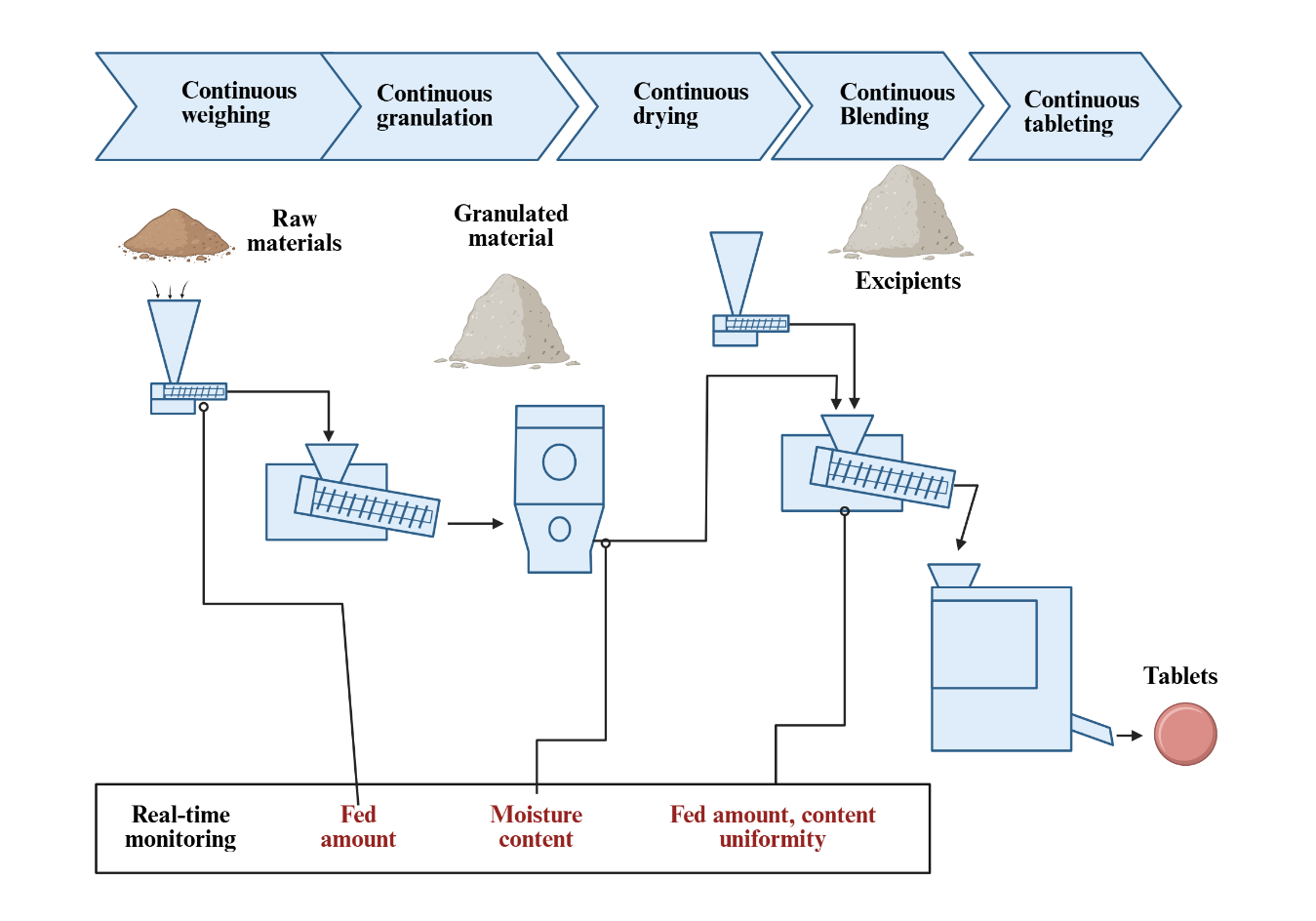
Graphical Abstract
Advanced Manufacturing Processes and 3D Printing Approaches for Enhancing Solubility and Bioavailability of Poorly Water-Soluble Drugs

Keywords
3D Printing
bioavailability
water-soluble drugs
aqueous solubility
permeability

Data Availability Statement
Not applicable.

Funding
This work was supported without any funding.

Conflicts of Interest
The authors declare no conflicts of interest.

Ethical Approval and Consent to Participate
Not applicable.

References
  1. Alqahtani, M. S., Kazi, M., Alsenaidy, M. A., & Ahmad, M. Z. (2021). Advances in oral drug delivery. Frontiers in pharmacology, 12, 618411.
    [CrossRef]   [Google Scholar]
  2. Alsufyani, M. M., Alqarni, W. M., Alzahrani, Y., Balbed, A. K., Alkathyri, M. M., & Rahman, M. A. (2025). Spontaneous nanoemulsification for solubility enhancement of BCS class II and IV molecules, quercetin as a model drug. MethodsX, 14, 103298.
    [CrossRef]   [Google Scholar]
  3. MS, A. K., Rajesh, M., & Subramanian, L. (2023). Solubility enhancement techniques: A comprehensive review. World J. Biol. Pharm. Health Sci, 13, 141-149.
    [CrossRef]   [Google Scholar]
  4. Bandgar, S. A., Shelake, S. S., & Patil, S. S. (2017). Solubility enhancement of poorly soluble drug by Various techniques. World Journal of Pharmacy and Pharmaceutical sciences, 6(9).
    [CrossRef]   [Google Scholar]
  5. Bernatoniene, J., Plieskis, M., & Petrikonis, K. (2025). Pharmaceutical 3D Printing Technology Integrating Nanomaterials and Nanodevices for Precision Neurological Therapies. Pharmaceutics, 17(3), 352.
    [CrossRef]   [Google Scholar]
  6. Bernatoniene, J., Stabrauskiene, J., Kazlauskaite, J. A., Bernatonyte, U., & Kopustinskiene, D. M. (2025). The Future of Medicine: How 3D Printing Is Transforming Pharmaceuticals. Pharmaceutics, 17(3), 390.
    [CrossRef]   [Google Scholar]
  7. Bhalani, D. V., Nutan, B., Kumar, A., & Singh Chandel, A. K. (2022). Bioavailability enhancement techniques for poorly aqueous soluble drugs and therapeutics. Biomedicines, 10(9), 2055.
    [CrossRef]   [Google Scholar]
  8. Borkhataria, C., Mehta, J., & Vaja, P. (2023). African Journal of Pharmaceutical Sciences.
    [CrossRef]   [Google Scholar]
  9. Chakravarty, P., Famili, A., Nagapudi, K., & Al-Sayah, M. A. (2019). Using supercritical fluid technology as a green alternative during the preparation of drug delivery systems. Pharmaceutics, 11(12), 629.
    [CrossRef]   [Google Scholar]
  10. Devhare, L., & Kore, P. K. (2016). A recent review on bioavailability and solubility enhancement of poorly soluble drugs by physical and chemical modifications. Research chronicle in health sciences, 2(5), 299-308.
    [Google Scholar]
  11. Fu, C., & Chen, Q. (2025). The future of pharmaceuticals: Artificial intelligence in drug discovery and development. Journal of Pharmaceutical Analysis, 101248.
    [CrossRef]   [Google Scholar]
  12. Jandyal, A., Chaturvedi, I., Wazir, I., Raina, A., & Haq, M. I. U. (2022). 3D printing–A review of processes, materials and applications in industry 4.0. Sustainable Operations and Computers, 3, 33-42.
    [CrossRef]   [Google Scholar]
  13. Jennotte, O., Koch, N., Lechanteur, A., & Evrard, B. (2020). Three-dimensional printing technology as a promising tool in bioavailability enhancement of poorly water-soluble molecules: a review. International Journal of Pharmaceutics, 580, 119200.
    [CrossRef]   [Google Scholar]
  14. Kalepu, S., & Nekkanti, V. (2015). Insoluble drug delivery strategies: review of recent advances and business prospects. Acta Pharmaceutica Sinica B, 5(5), 442-453.
    [CrossRef]   [Google Scholar]
  15. Narmada, I. (2023). Contemporary Review on Solubility Enhancement Techniques. Journal of Drug Delivery & Therapeutics, 13(2).
    [CrossRef]   [Google Scholar]
  16. Kumar, S., Kaur, R., Rajput, R., & Singh, M. (2018). Bio pharmaceutics classification system (BCS) class IV drug nanoparticles: Quantum leap to improve their therapeutic index. Advanced pharmaceutical bulletin, 8(4), 617.
    [CrossRef]   [Google Scholar]
  17. Lakkala, P., Munnangi, S. R., Bandari, S., & Repka, M. (2023). Additive manufacturing technologies with emphasis on stereolithography 3D printing in pharmaceutical and medical applications: A review. International journal of pharmaceutics: X, 5, 100159.
    [CrossRef]   [Google Scholar]
  18. Lou, J., Duan, H., Qin, Q., Teng, Z., Gan, F., Zhou, X., & Zhou, X. (2023). Advances in oral drug delivery systems: challenges and opportunities. Pharmaceutics, 15(2), 484.
    [CrossRef]   [Google Scholar]
  19. Lv, Y., Li, W., Liao, W., Jiang, H., Liu, Y., Cao, J., ... & Feng, Y. (2024). Nano-drug delivery systems based on natural products. International Journal of Nanomedicine, 541-569.
    [CrossRef]   [Google Scholar]
  20. Mallikarjuna, B., Bhargav, P., Hiremath, S., Jayachristiyan, K. G., & Jayanth, N. (2025). A review on the melt extrusion-based fused deposition modeling (FDM): background, materials, process parameters and military applications. International Journal on Interactive Design and Manufacturing (IJIDeM), 19(2), 651-665.
    [CrossRef]   [Google Scholar]
  21. Otieno, D. B., Bosire, G. O., Onyari, J. M., & Mwabora, J. M. (2024). Advances in 3-D printing: polymers, fabrication mechanisms, mass balance models and applications. Discover Polymers, 1(1), 10.
    [CrossRef]   [Google Scholar]
  22. Pandi, P., Bulusu, R., Kommineni, N., Khan, W., & Singh, M. (2020). Amorphous solid dispersions: An update for preparation, characterization, mechanism on bioavailability, stability, regulatory considerations and marketed products. International journal of pharmaceutics, 586, 119560.
    [CrossRef]   [Google Scholar]
  23. Patel, V. R., & Agrawal, Y. K. (2011). Nanosuspension: An approach to enhance solubility of drugs. Journal of advanced pharmaceutical technology & research, 2(2), 81-87.
    [CrossRef]   [Google Scholar]
  24. Patil, H., Tiwari, R. V., & Repka, M. A. (2016). Hot-melt extrusion: from theory to application in pharmaceutical formulation. Aaps Pharmscitech, 17(1), 20-42.
    [CrossRef]   [Google Scholar]
  25. Pérez Gutiérrez, C. L., Cottone, F., Pagano, C., Di Michele, A., Puglia, D., Luzi, F., ... & Perioli, L. (2023). The optimization of pressure-assisted microsyringe (PAM) 3D printing parameters for the development of sustainable starch-based patches. Polymers, 15(18), 3792.
    [CrossRef]   [Google Scholar]
  26. Siepmann, J., Siepmann, F., & Florence, A. T. (2009). Factors influencing oral drug absorption and drug availability. In Modern Pharmaceutics Volume 1 (pp. 135-172). CRC Press.
    [Google Scholar]
  27. Jadhav, A., & Jadhav, V. S. (2022). A review on 3D printing: An additive manufacturing technology. Materials Today: Proceedings, 62, 2094-2099.
    [CrossRef]   [Google Scholar]
  28. Salama, A. H. (2020). Spray drying as an advantageous strategy for enhancing pharmaceuticals bioavailability. Drug Delivery and Translational Research, 10(1), 1-12.
    [CrossRef]   [Google Scholar]
  29. Sareen, S., Mathew, G., & Joseph, L. (2012). Improvement in solubility of poor water-soluble drugs by solid dispersion. International journal of pharmaceutical investigation, 2(1), 12.
    [CrossRef]   [Google Scholar]
  30. Savjani, K. T., Gajjar, A. K., & Savjani, J. K. (2012). Drug solubility: importance and enhancement techniques. International Scholarly Research Notices, 2012(1), 195727.
    [CrossRef]   [Google Scholar]
  31. Shrestha, H., Bala, R., & Arora, S. (2014). Lipid‐based drug delivery systems. Journal of pharmaceutics, 2014(1), 801820.
    [CrossRef]   [Google Scholar]
  32. Syrlybayev, D., Zharylkassyn, B., Seisekulova, A., Akhmetov, M., Perveen, A., & Talamona, D. (2021). Optimisation of strength properties of FDM printed parts—A critical review. Polymers, 13(10), 1587.
    [CrossRef]   [Google Scholar]
  33. Kumar, K., Zindani, D., & Davim, J. P. (2018). Advanced machining and manufacturing processes (pp. 89-104). Cham: Springer International Publishing.
    [CrossRef]   [Google Scholar]
  34. Venkatesh, T., Reddy, A. K., Maheswari, J. U., Dalith, M. D., & Kumar, C. A. (2011). Nanosuspensions: ideal approach for the drug delivery of poorly water soluble drugs. Der Pharmacia Lettre, 3(2), 203-213.
    [Google Scholar]
  35. Wagh, K. S., Patil, S. K., Akarte, A. K., & Baviskar, D. T. (2011). Nanosuspension-a new approach of bioavailability enhancement. International Journal of Pharmaceutical Sciences Review and Research, 8(2), 61-65.
    [Google Scholar]
  36. Zhou, L., Miller, J., Vezza, J., Mayster, M., Raffay, M., Justice, Q., ... & Bernat, J. (2024). Additive manufacturing: a comprehensive review. Sensors, 24(9), 2668.
    [CrossRef]   [Google Scholar]
  37. Zhuo, Y., Zhao, Y. G., & Zhang, Y. (2024). Enhancing drug solubility, bioavailability, and targeted therapeutic applications through magnetic nanoparticles. Molecules, 29(20), 4854.
    [CrossRef]   [Google Scholar]
  38. Jaiswal, M., Dudhe, R., & Sharma, P. K. (2015). Nanoemulsion: an advanced mode of drug delivery system. 3 Biotech, 5(2), 123-127.
    [CrossRef]   [Google Scholar]

Cite This Article
APA Style
Sihmar, A., Dudhe, R., Porwal, O., Shivani, K., & Dudhe, A. R. (2025). Advanced Manufacturing Processes and 3D Printing Approaches for Enhancing Solubility and Bioavailability of Poorly Water-Soluble Drugs. ICCK Transactions on Advanced Functional Materials and Processing, 1(2), 78–92. https://doi.org/10.62762/TAFMP.2025.952672
Export Citation
RIS Format
Compatible with EndNote, Zotero, Mendeley, and other reference managers
RIS format data for reference managers
TY  - JOUR
AU  - Sihmar, Amit
AU  - Dudhe, Rupesh
AU  - Porwal, Omji
AU  - Shivani, Km
AU  - Dudhe, Anshu R.
PY  - 2025
DA  - 2025/12/31
TI  - Advanced Manufacturing Processes and 3D Printing Approaches for Enhancing Solubility and Bioavailability of Poorly Water-Soluble Drugs
JO  - ICCK Transactions on Advanced Functional Materials and Processing
T2  - ICCK Transactions on Advanced Functional Materials and Processing
JF  - ICCK Transactions on Advanced Functional Materials and Processing
VL  - 1
IS  - 2
SP  - 78
EP  - 92
DO  - 10.62762/TAFMP.2025.952672
UR  - https://www.icck.org/article/abs/TAFMP.2025.952672
KW  - 3D Printing
KW  - bioavailability
KW  - water-soluble drugs
KW  - aqueous solubility
KW  - permeability
AB  - Poor aqueous solubility is a critical challenge in drug development, often leading to low oral bioavailability and limited therapeutic efficacy. To address this issue, advanced manufacturing processes and 3D printing technologies have emerged as powerful strategies for improving drug solubility and dissolution behavior. Advanced techniques such as hot-melt extrusion, spray drying, nanocrystal technology, co-crystallization, lipid-based systems, and amorphous solid dispersions enable stable formulations with enhanced solubility and scalable production. In parallel, 3D printing offers unique advantages in fabricating personalized, complex, and controlled-release dosage forms, making it an attractive approach for precision medicine. This review highlights the principles, advantages, and applications of these technologies in enhancing the solubility and bioavailability of poorly water-soluble drugs. Comparative insights into their effectiveness, case studies of successful formulations, and emerging trends are discussed. While challenges remain in terms of stability, regulatory acceptance, and large-scale translation, the integration of advanced manufacturing with 3D printing and computational tools holds immense potential to revolutionize future pharmaceutical development and patient-centered therapies.
SN  - 3068-8973
PB  - Institute of Central Computation and Knowledge
LA  - English
ER  - 
BibTeX Format
Compatible with LaTeX, BibTeX, and other reference managers
BibTeX format data for LaTeX and reference managers
@article{Sihmar2025Advanced,
  author = {Amit Sihmar and Rupesh Dudhe and Omji Porwal and Km Shivani and Anshu R. Dudhe},
  title = {Advanced Manufacturing Processes and 3D Printing Approaches for Enhancing Solubility and Bioavailability of Poorly Water-Soluble Drugs},
  journal = {ICCK Transactions on Advanced Functional Materials and Processing},
  year = {2025},
  volume = {1},
  number = {2},
  pages = {78-92},
  doi = {10.62762/TAFMP.2025.952672},
  url = {https://www.icck.org/article/abs/TAFMP.2025.952672},
  abstract = {Poor aqueous solubility is a critical challenge in drug development, often leading to low oral bioavailability and limited therapeutic efficacy. To address this issue, advanced manufacturing processes and 3D printing technologies have emerged as powerful strategies for improving drug solubility and dissolution behavior. Advanced techniques such as hot-melt extrusion, spray drying, nanocrystal technology, co-crystallization, lipid-based systems, and amorphous solid dispersions enable stable formulations with enhanced solubility and scalable production. In parallel, 3D printing offers unique advantages in fabricating personalized, complex, and controlled-release dosage forms, making it an attractive approach for precision medicine. This review highlights the principles, advantages, and applications of these technologies in enhancing the solubility and bioavailability of poorly water-soluble drugs. Comparative insights into their effectiveness, case studies of successful formulations, and emerging trends are discussed. While challenges remain in terms of stability, regulatory acceptance, and large-scale translation, the integration of advanced manufacturing with 3D printing and computational tools holds immense potential to revolutionize future pharmaceutical development and patient-centered therapies.},
  keywords = {3D Printing, bioavailability, water-soluble drugs, aqueous solubility, permeability},
  issn = {3068-8973},
  publisher = {Institute of Central Computation and Knowledge}
}

Article Metrics
Citations:

Crossref

0

Scopus

0

Web of Science

0
Article Access Statistics:
Views: 187
PDF Downloads: 63

Publisher's Note
ICCK stays neutral with regard to jurisdictional claims in published maps and institutional affiliations.

Rights and Permissions
CC BY Copyright © 2025 by the Author(s). Published by Institute of Central Computation and Knowledge. This article is an open access article distributed under the terms and conditions of the Creative Commons Attribution (CC BY) license (https://creativecommons.org/licenses/by/4.0/), which permits use, sharing, adaptation, distribution and reproduction in any medium or format, as long as you give appropriate credit to the original author(s) and the source, provide a link to the Creative Commons licence, and indicate if changes were made.
ICCK Transactions on Advanced Functional Materials and Processing

ICCK Transactions on Advanced Functional Materials and Processing

ISSN: 3068-8973 (Online)

Email: [email protected]

Portico

Portico

All published articles are preserved here permanently:
https://www.portico.org/publishers/icck/