
Adaptive Fuzzy Control Mechanisms for Enhancing Stability and Efficiency in Smart Grids and Virtual Power Plants




Article Information
Abstract
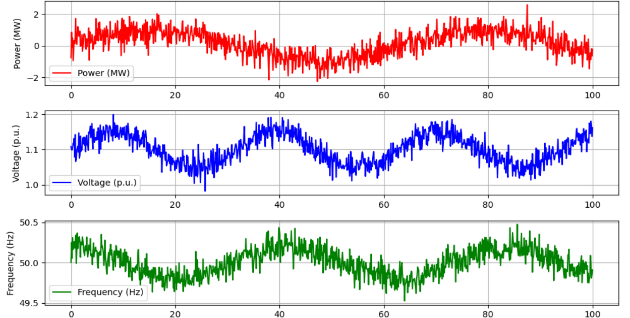
Integration of distributed generation and renewable energy resources in contemporary power systems necessitates sophisticated control techniques to maintain efficiency and stability. Adaptive fuzzy control (AFC) mechanisms introduce a smart methodology for handling uncertainty and variability in virtual power plants (VPPs) and smart grids. AFC improves immunity against voltage and frequency fluctuations through dynamic adaptation of control parameters as per real-time grid conditions. This strategy allows for effective load balancing, demand response, and fault tolerance, minimizing power losses and enhancing overall energy efficiency. AFC uses fuzzy logic concepts to make decisions in real time from uncertain or imprecise information, which makes it extremely effective in managing the variability of renewable energy sources. AFC also improves the coordination of distributed energy resources (DERs), optimizing energy distribution and grid stability. The suggested control mechanism also facilitates automated decision-making, minimizing human intervention in energy management. Simulation results confirm the efficacy of AFC in suppressing fluctuations due to intermittent renewable sources, resulting in enhanced reliability and sustainability. The results indicate AFC's potential as a robust and scalable solution for next-generation smart grid management. The study concludes that integrating AFC into smart grids and VPPs can significantly enhance power system efficiency, stability, and resilience.
Graphical Abstract
Keywords
Data Availability Statement
Funding
Conflicts of Interest
Ethical Approval and Consent to Participate
References
- Bhuiyan, E. A., Hossain, M. Z., Muyeen, S. M., Fahim, S. R., Sarker, S. K., & Das, S. K. (2021). Towards next generation virtual power plant: Technology review and frameworks. Renewable and Sustainable Energy Reviews, 150, 111358.
[CrossRef] [Google Scholar] - Wang, J., Zhong, H., Ma, Z., Xia, Q., & Kang, C. (2017). Review and prospect of integrated demand response in the multi-energy system. Applied Energy, 202, 772-782.
[CrossRef] [Google Scholar] - Abdelkader, S., Amissah, J., & Abdel-Rahim, O. (2024). Virtual power plants: an in-depth analysis of their advancements and importance as crucial players in modern power systems. Energy, Sustainability and Society, 14(1), 52.
[CrossRef] [Google Scholar] - Binyamin, S. S., & Ben Slama, S. (2022). Multi-agent systems for resource allocation and scheduling in a smart grid. Sensors, 22(21), 8099.
[CrossRef] [Google Scholar] - Kong, K. G. H., How, B. S., Teng, S. Y., Leong, W. D., Foo, D. C., Tan, R. R., & Sunarso, J. (2021). Towards data-driven process integration for renewable energy planning. Current opinion in chemical engineering, 31, 100665.
[CrossRef] [Google Scholar] - Goia, B., Cioara, T., & Anghel, I. (2022). Virtual power plant optimization in smart grids: A narrative review. Future Internet, 14(5), 128.
[CrossRef] [Google Scholar] - Roozbehani, M. M., Heydarian-Forushani, E., Hasanzadeh, S., & Elghali, S. B. (2022). Virtual power plant operational strategies: Models, markets, optimization, challenges, and opportunities. Sustainability, 14(19), 12486.
[CrossRef] [Google Scholar] - Zhang, G., Jiang, C., & Wang, X. (2019). Comprehensive review on structure and operation of virtual power plant in electrical system. IET generation, transmission & distribution, 13(2), 145-156.
[CrossRef] [Google Scholar] - Zia, M. F., Elbouchikhi, E., & Benbouzid, M. (2018). Microgrids energy management systems: A critical review on methods, solutions, and prospects. Applied energy, 222, 1033-1055.
[CrossRef] [Google Scholar] - Khan, R., Islam, N., Das, S. K., Muyeen, S. M., Moyeen, S. I., Ali, M. F., ... & Techato, K. (2021). Energy sustainability–survey on technology and control of microgrid, smart grid and virtual power plant. IEEE Access, 9, 104663-104694.
[CrossRef] [Google Scholar] - Marzbnai, F., Osman, A., & Hassan, M. S. (2025). Advances in Virtual Power Plant Operations: A Review of Optimization Models. IEEE Access, 13, 131525-131548.
[CrossRef] [Google Scholar] - Huang, J., Li, H., & Zhang, Z. (2025). Review of Virtual Power Plant Response Capability Assessment and Optimization Dispatch. Technologies, 13(6), 216.
[CrossRef] [Google Scholar] - Panda, S., Mohanty, S., Rout, P. K., & Sahu, B. K. (2022). A conceptual review on transformation of micro‐grid to virtual power plant: Issues, modeling, solutions, and future prospects. International journal of energy research, 46(6), 7021-7054.
[CrossRef] [Google Scholar] - Marinescu, B., Gomis-Bellmunt, O., Dörfler, F., Schulte, H., & Sigrist, L. (2022). Dynamic virtual power plant: A new concept for grid integration of renewable energy sources. IEEE Access, 10, 104980-104995.
[CrossRef] [Google Scholar] - Wang, X., Liu, Z., An, Q., & Li, G. (2024, April). Multi-objective Optimization Strategy for Virtual Power Plant with Flexible Data Center. In 2024 7th International Conference on Energy, Electrical and Power Engineering (CEEPE) (pp. 1265-1269). IEEE.
[CrossRef] [Google Scholar] - Ali, J. U. A. B. W., Kazmi, S. A. A., Altamimi, A., Khan, Z. A., Alrumayh, O., & Malik, M. M. (2022). Smart energy management in virtual power plant paradigm with a new improved multilevel optimization based approach. IEEE Access, 10, 50062-50077.
[CrossRef] [Google Scholar] - Habib, M. A. (2022). Game theory, Electrical power market and Dilemmas. Journal of Electrical Engineering, Electronics, Control and Computer Science, 8(3), 33-42.
[Google Scholar] - Dogan, A., & Cidem Dogan, D. (2023). A review on machine learning models in forecasting of virtual power plant uncertainties. Archives of Computational Methods in Engineering, 30(3), 2081-2103.
[CrossRef] [Google Scholar] - Bedi, A., Ramprabhakar, J., Anand, R., Meena, V. P., & Hameed, I. A. (2025). Empowering net zero energy grids: a comprehensive review of virtual power plants, challenges, applications, and blockchain integration. Discover Applied Sciences, 7(4), 1-22.
[CrossRef] [Google Scholar] - Ghavidel, S., Li, L., Aghaei, J., Yu, T., & Zhu, J. (2016, September). A review on the virtual power plant: Components and operation systems. In 2016 IEEE international conference on power system technology (POWERCON) (pp. 1-6). IEEE.
[CrossRef] [Google Scholar] - Sowji. (n.d.). Fuzzy control dataset. GitHub. Retrieved from https://github.com/sowji32/bookchp-Adaptive-Fuzzy-Control-Mechanisms-for-Enhancing-Stability-and-Efficiency
[Google Scholar]
Cite This Article
TY  - JOUR
AU  - Yogi, Manas Kumar
AU  - Sowjanya, Koppula Lakshmi
AU  - Yasaswini, Manchala
PY  - 2025
DA  - 2025/08/13
TI  - Adaptive Fuzzy Control Mechanisms for Enhancing Stability and Efficiency in Smart Grids and Virtual Power Plants
JO  - ICCK Transactions on Advanced Fuzzy Systems
T2  - ICCK Transactions on Advanced Fuzzy Systems
JF  - ICCK Transactions on Advanced Fuzzy Systems
VL  - 1
IS  - 1
SP  - 4
EP  - 17
DO  - 10.62762/TAFS.2025.138480
UR  - https://www.icck.org/article/abs/tafs.2025.138480
KW  - adaptive
KW  - fuzzy control
KW  - smart grid
KW  - virtual power plants
KW  - energy optimization
AB  - Integration of distributed generation and renewable energy resources in contemporary power systems necessitates sophisticated control techniques to maintain efficiency and stability. Adaptive fuzzy control (AFC) mechanisms introduce a smart methodology for handling uncertainty and variability in virtual power plants (VPPs) and smart grids. AFC improves immunity against voltage and frequency fluctuations through dynamic adaptation of control parameters as per real-time grid conditions. This strategy allows for effective load balancing, demand response, and fault tolerance, minimizing power losses and enhancing overall energy efficiency. AFC uses fuzzy logic concepts to make decisions in real time from uncertain or imprecise information, which makes it extremely effective in managing the variability of renewable energy sources. AFC also improves the coordination of distributed energy resources (DERs), optimizing energy distribution and grid stability. The suggested control mechanism also facilitates automated decision-making, minimizing human intervention in energy management. Simulation results confirm the efficacy of AFC in suppressing fluctuations due to intermittent renewable sources, resulting in enhanced reliability and sustainability. The results indicate AFC's potential as a robust and scalable solution for next-generation smart grid management. The study concludes that integrating AFC into smart grids and VPPs can significantly enhance power system efficiency, stability, and resilience.
SN  - request pending
PB  - Institute of Central Computation and Knowledge
LA  - English
ER  -
@article{Yogi2025Adaptive,
  author = {Manas Kumar Yogi and Koppula Lakshmi Sowjanya and Manchala Yasaswini},
  title = {Adaptive Fuzzy Control Mechanisms for Enhancing Stability and Efficiency in Smart Grids and Virtual Power Plants},
  journal = {ICCK Transactions on Advanced Fuzzy Systems},
  year = {2025},
  volume = {1},
  number = {1},
  pages = {4-17},
  doi = {10.62762/TAFS.2025.138480},
  url = {https://www.icck.org/article/abs/tafs.2025.138480},
  abstract = {Integration of distributed generation and renewable energy resources in contemporary power systems necessitates sophisticated control techniques to maintain efficiency and stability. Adaptive fuzzy control (AFC) mechanisms introduce a smart methodology for handling uncertainty and variability in virtual power plants (VPPs) and smart grids. AFC improves immunity against voltage and frequency fluctuations through dynamic adaptation of control parameters as per real-time grid conditions. This strategy allows for effective load balancing, demand response, and fault tolerance, minimizing power losses and enhancing overall energy efficiency. AFC uses fuzzy logic concepts to make decisions in real time from uncertain or imprecise information, which makes it extremely effective in managing the variability of renewable energy sources. AFC also improves the coordination of distributed energy resources (DERs), optimizing energy distribution and grid stability. The suggested control mechanism also facilitates automated decision-making, minimizing human intervention in energy management. Simulation results confirm the efficacy of AFC in suppressing fluctuations due to intermittent renewable sources, resulting in enhanced reliability and sustainability. The results indicate AFC's potential as a robust and scalable solution for next-generation smart grid management. The study concludes that integrating AFC into smart grids and VPPs can significantly enhance power system efficiency, stability, and resilience.},
  keywords = {adaptive, fuzzy control, smart grid, virtual power plants, energy optimization},
  issn = {request pending},
  publisher = {Institute of Central Computation and Knowledge}
}
Article Metrics
Publisher's Note
ICCK stays neutral with regard to jurisdictional claims in published maps and institutional affiliations.
Rights and Permissions


Portico
