Volume 2, Issue 2, ICCK Transactions on Machine Intelligence
Volume 2, Issue 2, 2026
Submit Manuscript Edit a Special Issue
Article QR Code
Article QR Code
Scan the QR code for reading
Popular articles
ICCK Transactions on Machine Intelligence, Volume 2, Issue 2, 2026: 88-99

Free to Read | Research Article | 10 February 2026
Optimizing CNN Architectures for Steering Angle Prediction for Self-Driving Vehicles in Unstructured Roads: A Comparative Study of Activation Functions and Model Complexity
1 Computer and Electronics Department, Institute of Engineering, Tribhuvan University, Lalitpur 44700, Nepal
* Corresponding Authors: Bibek Shrestha, [email protected] ; Utsav Ghimire, [email protected]
ARK: ark:/57805/tmi.2025.759110
Received: 17 December 2025, Accepted: 30 December 2025, Published: 10 February 2026  
Abstract
This study investigates convolutional neural network (CNN) architectures for predicting steering angles in self-driving vehicles navigating unstructured roads, using road-facing image data. Two complementary experiments are conducted. First, the impact of three activation functions—Exponential Linear Unit (ELU), Rectified Linear Unit (ReLU), and Leaky ReLU—is evaluated on a baseline CNN model. Trained on 14,754 images and validated on 3,585 images, the model with ELU activation achieves the lowest validation mean squared error (MSE) compared to ReLU and Leaky ReLU, demonstrating superior convergence and generalization. Second, the effect of model complexity is examined using ELU activation across simple, moderate, and complex CNN variants. Results indicate that the moderately complex architecture yields the best performance, outperforming both simpler (underfitting) and more complex (overfitting) models in terms of validation MSE. These findings underscore the critical role of appropriate activation functions and balanced network depth in achieving robust, efficient steering prediction for autonomous driving in challenging, unstructured environments.

Graphical Abstract
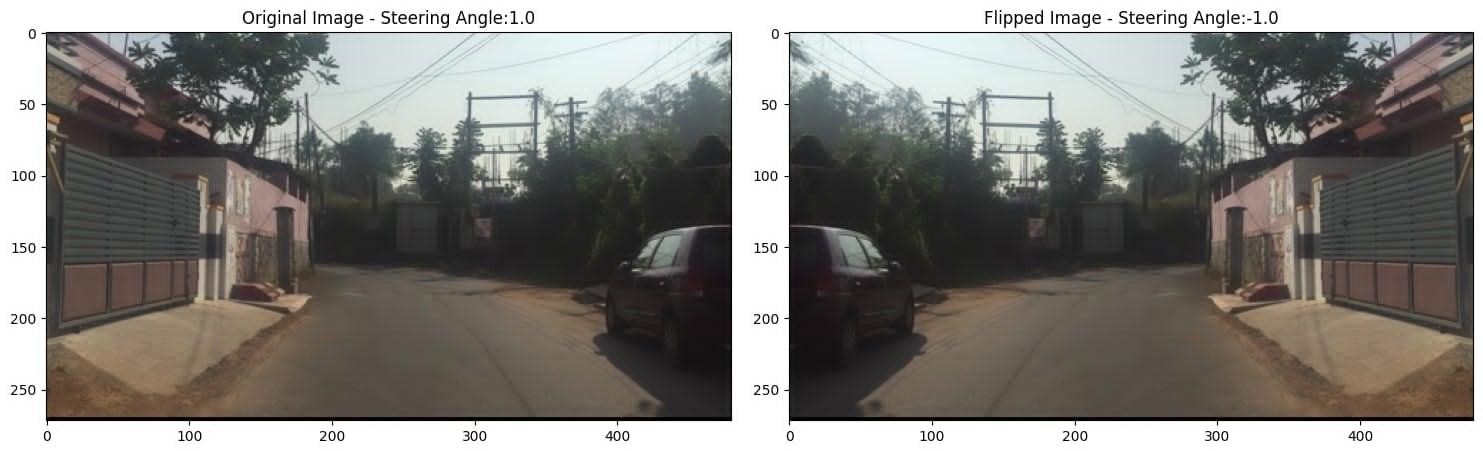
Optimizing CNN Architectures for Steering Angle Prediction for Self-Driving Vehicles in Unstructured Roads: A Comparative Study of Activation Functions and Model Complexity

Keywords
convolutional neural networks
steering angles
activation functions
exponential linear units
rectified linear units
leaky relus

Data Availability Statement
Data will be made available on request.

Funding
This work was supported without any funding.

Conflicts of Interest
The authors declare no conflicts of interest.

AI Use Statement
The authors declare that no generative AI was used in the preparation of this manuscript.

Ethical Approval and Consent to Participate
Not applicable.

References
  1. Singhal, V., Gugale, S., Agarwal, R., Dhake, P., & Kalshetti, U. (2019, September). Steering angle prediction in autonomous vehicles using deep learning. In 2019 5th International Conference On Computing, Communication, Control And Automation (ICCUBEA) (pp. 1-6). IEEE.
    [CrossRef]   [Google Scholar]
  2. Adnan, A., Rahman, G. M., Hossain, M. M., Mim, M. S., & Rahman, M. K. (2022, May). A deep learning based autonomous electric vehicle on unstructured road conditions. In 2022 IEEE 12th Symposium on Computer Applications & Industrial Electronics (ISCAIE) (pp. 105-110). IEEE.
    [CrossRef]   [Google Scholar]
  3. Chaudhari, R., Dubey, S., Kathale, J., & Rao, R. (2018, April). Autonomous driving car using convolutional neural networks. In 2018 Second International Conference on Inventive Communication and Computational Technologies (ICICCT) (pp. 936-940). IEEE.
    [CrossRef]   [Google Scholar]
  4. Haq, Z. A., & Jaffery, Z. A. (2021, March). Impact of activation functions and number of layers on the classification of fruits using CNN. In 2021 8th International Conference on Computing for Sustainable Global Development (INDIACom) (pp. 227-231). IEEE.
    [Google Scholar]
  5. Varsheny, M., & Singh, P. (2021). Optimizing nonlinear activation function for convolutional neural networks. Signal, Image and Video Processing, 15(6), 1323–1330.
    [CrossRef]   [Google Scholar]
  6. Bojarski, M., Del Testa, D., Dworakowski, D., Firner, B., Flepp, B., Goyal, P., ... & Zieba, K. (2016). End to end learning for self-driving cars. arXiv preprint arXiv:1604.07316.
    [Google Scholar]
  7. Oyedare, T., Shah, V. K., Jakubisin, D. J., & Reed, J. H. (2023, May). Keep it simple: CNN model complexity studies for interference classification tasks. In IEEE INFOCOM 2023-IEEE Conference on Computer Communications Workshops (INFOCOM WKSHPS) (pp. 1-6). IEEE.
    [CrossRef]   [Google Scholar]
  8. Hassan, I. U., Zia, H., Fatima, H. S., Yusuf, S. A., & Khurram, M. (2022). A lightweight convolutional neural network to predict steering angle for autonomous driving using CARLA simulator. Modelling and Simulation in Engineering, 2022(1), 5716820.
    [CrossRef]   [Google Scholar]
  9. George, K. S., Abhiram, A., Jose, A., Madhav, A. S., Najiya, N., & Aswin, S. (2022, March). Steering Angle Estimation for an Autonomous Car. In 2022 IEEE International Conference on Signal Processing, Informatics, Communication and Energy Systems (SPICES) (Vol. 1, pp. 168-173). IEEE.
    [CrossRef]   [Google Scholar]
  10. Sokipriala, J. (2021). Prediction of steering angle for autonomous vehicles using pre-trained neural network. European Journal of Engineering and Technology Research, 6(5), 171–176.
    [CrossRef]   [Google Scholar]
  11. Bhalla, A., Nikhila, M. S., & Singh, P. (2020, December). Simulation of self-driving car using deep learning. In 2020 3rd international conference on intelligent sustainable systems (ICISS) (pp. 519-525). IEEE.
    [CrossRef]   [Google Scholar]
  12. Ranjith Rochan, M., Aarthi Alagammai, K., & Sujatha, J. Computer vision based novel steering angle calculation for autonomous vehicles. In Proceedings of the 2018 Second IEEE International Conference on Robotic Computing (IRC), Laguna Hills, CA, USA (Vol. 31).
    [CrossRef]   [Google Scholar]
  13. Dubey, A. K., & Jain, V. (2019). Comparative study of convolution neural network’s relu and leaky-relu activation functions. In Applications of Computing, Automation and Wireless Systems in Electrical Engineering: Proceedings of MARC 2018 (pp. 873-880). Singapore: Springer Singapore.
    [CrossRef]   [Google Scholar]
  14. Goel, S., Sharma, S., & Tripathi, R. C. (2021, December). Predicting diabetes using CNN for various activation functions: a comparative study. In 2021 10th International Conference on System Modeling & Advancement in Research Trends (SMART) (pp. 665-669). IEEE.
    [CrossRef]   [Google Scholar]
  15. Clevert, D. A., Unterthiner, T., & Hochreiter, S. (2015). Fast and accurate deep network learning by exponential linear units (elus). arXiv preprint arXiv:1511.07289, 4(5), 11.
    [Google Scholar]
  16. Diwate, R. B., Patil, L. V., Khodaskar, M. R., & Kulkarni, N. P. (2021, March). Lower complex CNN model for fire detection in surveillance videos. In 2021 International Conference on Emerging Smart Computing and Informatics (ESCI) (pp. 380-384). IEEE.
    [CrossRef]   [Google Scholar]
  17. Zaghari, N., Fathy, M., Jameii, S. M., Sabokrou, M., & Shahverdy, M. (2021). Improving the learning of self-driving vehicles based on real driving behavior using deep neural network techniques. The Journal of Supercomputing, 77(4), 3752-3794.
    [CrossRef]   [Google Scholar]

Cite This Article
APA Style
Ranjit, K. C., Shrestha, B., & Ghimire, U. (2026). Optimizing CNNArchitectures for Steering Angle Prediction for Self-Driving Vehicles in Unstructured Roads: A Comparative Study of Activation Functions and Model Complexity. ICCK Transactions on Machine Intelligence, 2(2), 88–99. https://doi.org/10.62762/TMI.2025.759110
Export Citation
RIS Format
Compatible with EndNote, Zotero, Mendeley, and other reference managers
RIS format data for reference managers
TY  - JOUR
AU  - Ranjit, K. C.
AU  - Shrestha, Bibek
AU  - Ghimire, Utsav
PY  - 2026
DA  - 2026/02/10
TI  - Optimizing CNN Architectures for Steering Angle Prediction for Self-Driving Vehicles in Unstructured Roads: A Comparative Study of Activation Functions and Model Complexity
JO  - ICCK Transactions on Machine Intelligence
T2  - ICCK Transactions on Machine Intelligence
JF  - ICCK Transactions on Machine Intelligence
VL  - 2
IS  - 2
SP  - 88
EP  - 99
DO  - 10.62762/TMI.2025.759110
UR  - https://www.icck.org/article/abs/TMI.2025.759110
KW  - convolutional neural networks
KW  - steering angles
KW  - activation functions
KW  - exponential linear units
KW  - rectified linear units
KW  - leaky relus
AB  - This study investigates convolutional neural network (CNN) architectures for predicting steering angles in self-driving vehicles navigating unstructured roads, using road-facing image data. Two complementary experiments are conducted. First, the impact of three activation functions—Exponential Linear Unit (ELU), Rectified Linear Unit (ReLU), and Leaky ReLU—is evaluated on a baseline CNN model. Trained on 14,754 images and validated on 3,585 images, the model with ELU activation achieves the lowest validation mean squared error (MSE) compared to ReLU and Leaky ReLU, demonstrating superior convergence and generalization. Second, the effect of model complexity is examined using ELU activation across simple, moderate, and complex CNN variants. Results indicate that the moderately complex architecture yields the best performance, outperforming both simpler (underfitting) and more complex (overfitting) models in terms of validation MSE. These findings underscore the critical role of appropriate activation functions and balanced network depth in achieving robust, efficient steering prediction for autonomous driving in challenging, unstructured environments.
SN  - 3068-7403
PB  - Institute of Central Computation and Knowledge
LA  - English
ER  - 
BibTeX Format
Compatible with LaTeX, BibTeX, and other reference managers
BibTeX format data for LaTeX and reference managers
@article{Ranjit2026Optimizing,
  author = {K. C. Ranjit and Bibek Shrestha and Utsav Ghimire},
  title = {Optimizing CNN Architectures for Steering Angle Prediction for Self-Driving Vehicles in Unstructured Roads: A Comparative Study of Activation Functions and Model Complexity},
  journal = {ICCK Transactions on Machine Intelligence},
  year = {2026},
  volume = {2},
  number = {2},
  pages = {88-99},
  doi = {10.62762/TMI.2025.759110},
  url = {https://www.icck.org/article/abs/TMI.2025.759110},
  abstract = {This study investigates convolutional neural network (CNN) architectures for predicting steering angles in self-driving vehicles navigating unstructured roads, using road-facing image data. Two complementary experiments are conducted. First, the impact of three activation functions—Exponential Linear Unit (ELU), Rectified Linear Unit (ReLU), and Leaky ReLU—is evaluated on a baseline CNN model. Trained on 14,754 images and validated on 3,585 images, the model with ELU activation achieves the lowest validation mean squared error (MSE) compared to ReLU and Leaky ReLU, demonstrating superior convergence and generalization. Second, the effect of model complexity is examined using ELU activation across simple, moderate, and complex CNN variants. Results indicate that the moderately complex architecture yields the best performance, outperforming both simpler (underfitting) and more complex (overfitting) models in terms of validation MSE. These findings underscore the critical role of appropriate activation functions and balanced network depth in achieving robust, efficient steering prediction for autonomous driving in challenging, unstructured environments.},
  keywords = {convolutional neural networks, steering angles, activation functions, exponential linear units, rectified linear units, leaky relus},
  issn = {3068-7403},
  publisher = {Institute of Central Computation and Knowledge}
}

Article Metrics
Citations:

Crossref

0

Scopus

0

Web of Science

0
Article Access Statistics:
Views: 35
PDF Downloads: 12

Publisher's Note
ICCK stays neutral with regard to jurisdictional claims in published maps and institutional affiliations.

Rights and Permissions
Institute of Central Computation and Knowledge (ICCK) or its licensor (e.g. a society or other partner) holds exclusive rights to this article under a publishing agreement with the author(s) or other rightsholder(s); author self-archiving of the accepted manuscript version of this article is solely governed by the terms of such publishing agreement and applicable law.
ICCK Transactions on Machine Intelligence

ICCK Transactions on Machine Intelligence

ISSN: 3068-7403 (Online)

Email: [email protected]

Portico

Portico

All published articles are preserved here permanently:
https://www.portico.org/publishers/icck/