

Research on the Reform Path of Nursing Talent Training Model for Health Care


Article Information
Abstract
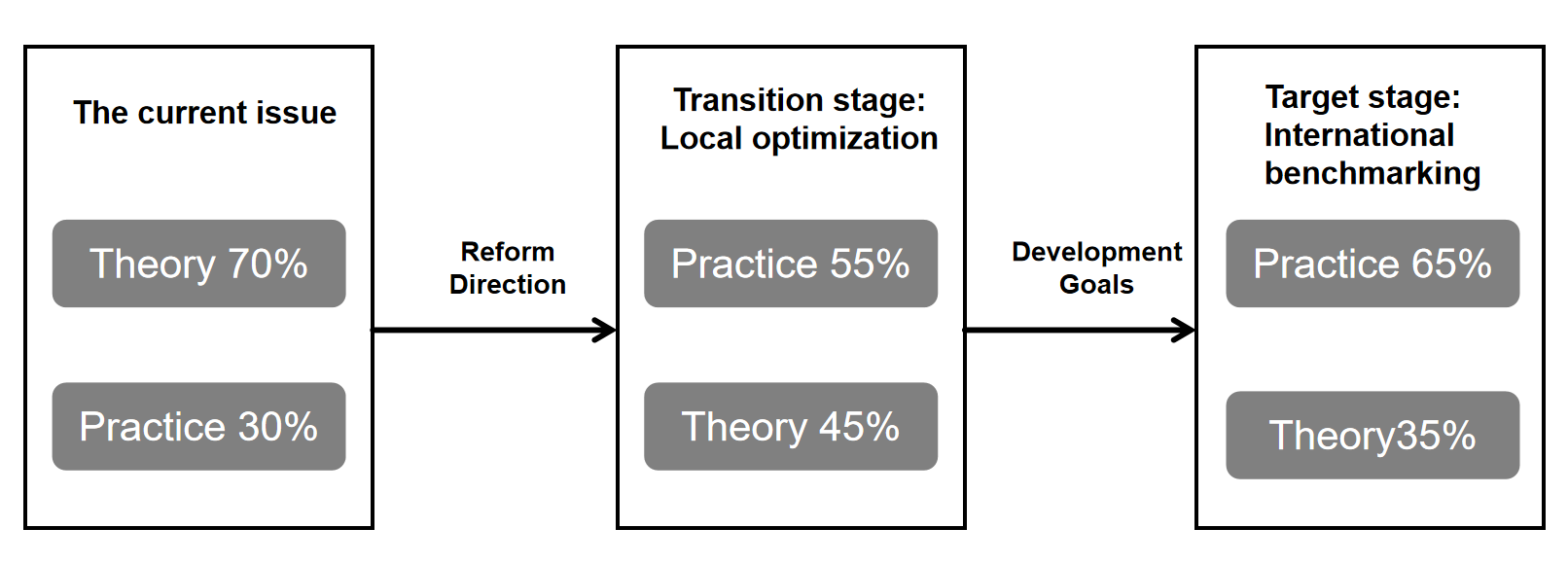
In the context of the accelerated global aging process and the increasingly diverse health care demands, the shortage of skilled elderly care and nursing professionals has emerged as a key constraint impeding the development of this sector. This article offers a systematic review of both domestic and international research on the development of elderly care and nursing talent, examines structural deficiencies in current training models, and proposes reform pathways informed by international best practices and localized implementation. The findings reveal that the existing training system is confronted with three major challenges: curricula that do not align with industry needs, limited practical skill development, and insufficient integration between education and industry. Drawing on the German dual system and the Japanese long-term care model, this study illustrates how interdisciplinary collaboration, tiered certification frameworks, and cultural integration have enhanced the adaptability of professional competencies. Future reforms should be guided by the principles of "collaboration between medicine and education, integration of theory and practice, and cross-sectoral integration," with the objective of establishing a demand-driven, competency-based training system. This article aims to provide theoretical insights and actionable recommendations for advancing innovation in elderly care education.
Graphical Abstract
Keywords
Data Availability Statement
Funding
Conflicts of Interest
Ethical Approval and Consent to Participate
References
- Qin, J., Lin, C., Zhang, Y., & Zhang, L. (2024). The status and challenges of primary health care in China. Chinese General Practice Journal, 1(3), 182-187.
[CrossRef] [Google Scholar] - Gruber, J., Lin, M., Yang, H., & Yi, J. (2025, April). China’s social health insurance in the era of rapid population aging. In JAMA Health Forum (Vol. 6, No. 4, pp. e251105-e251105). American Medical Association.
[CrossRef] [Google Scholar] - Zaman, U., Imran, Mehmood, F., Iqbal, N., Kim, J., & Ibrahim, M. (2022). Towards secure and intelligent internet of health things: A survey of enabling technologies and applications. Electronics, 11(12), 1893.
[CrossRef] [Google Scholar] - Hung, J. (2022). Smart elderly care services in China: challenges, progress, and policy development. Sustainability, 15(1), 178.
[CrossRef] [Google Scholar] - Tong, L., Zhang, J., Yue, L., Chen, L., & Wang, M. (2025). A neural network-based model for cultivating applied talents in the context of industry-education integration. Discover Artificial Intelligence, 5(1), 1-14.
[CrossRef] [Google Scholar] - Young, M., Lewis, C., Kailavasan, M., Satterthwaite, L., Safir, O., Tomlinson, J., & Biyani, C. S. (2022). A systematic review of methodological principles and delivery of surgical simulation bootcamps. The American Journal of Surgery, 223(6), 1079-1087.
[CrossRef] [Google Scholar] - Li, Y., Guo, L. L., Gui, J., Zhang, X., Wang, Y., Liu, H., ... & Zhang, L. (2024). Construction and application of “organ-system-centered” undergraduate nursing professional training model. BMC nursing, 23(1), 608.
[CrossRef] [Google Scholar] - Zhang, H., Jin, S. J., & Du, S. Z. (2020). Developing a curriculum model of English teaching for master’s degree nursing education in a Chinese medicine university. International Journal of Nursing Sciences, 7(1), 99-104.
[CrossRef] [Google Scholar] - Zhou, L., Chen, Y., Li, X., & Sha, Y. (2025). Cross-Cultural Communication Strategies for Traditional Chinese Medicine: A Pathway to Cultural Confidence. Journal of Sociology and Education, 1(2).
[CrossRef] [Google Scholar] - Moafa, K. M. Y., Almohammadi, N. F. H., Alrashedi, F. S. S., Alrashidi, S. T. S., Al-Hamdan, S. A., Faggad, M. M., ... & Al-Anzi, A. K. (2024). Artificial Intelligence for Improved Health Management: Application, Uses, Opportunities, and Challenges-A Systematic Review. Egyptian Journal of Chemistry, 67(13), 865-880.
[CrossRef] [Google Scholar] - Woods, O., & Kong, L. (2020). New cultures of care? The spatio-temporal modalities of home-based smart eldercare technologies in Singapore. Social & Cultural Geography, 21(9), 1307-1327.
[CrossRef] [Google Scholar]
Cite This Article
TY  - JOUR
AU  - Li, Qiang
PY  - 2025
DA  - 2025/09/23
TI  - Research on the Reform Path of Nursing Talent Training Model for Health Care
JO  - Frontiers in Educational Innovation and Research
T2  - Frontiers in Educational Innovation and Research
JF  - Frontiers in Educational Innovation and Research
VL  - 1
IS  - 2
SP  - 63
EP  - 70
DO  - 10.62762/FEIR.2025.704155
UR  - https://www.icck.org/article/abs/FEIR.2025.704155
KW  - healthcare and rehabilitation care
KW  - talent cultivation model
KW  - international comparison
KW  - reform path
AB  - In the context of the accelerated global aging process and the increasingly diverse health care demands, the shortage of skilled elderly care and nursing professionals has emerged as a key constraint impeding the development of this sector. This article offers a systematic review of both domestic and international research on the development of elderly care and nursing talent, examines structural deficiencies in current training models, and proposes reform pathways informed by international best practices and localized implementation. The findings reveal that the existing training system is confronted with three major challenges: curricula that do not align with industry needs, limited practical skill development, and insufficient integration between education and industry. Drawing on the German dual system and the Japanese long-term care model, this study illustrates how interdisciplinary collaboration, tiered certification frameworks, and cultural integration have enhanced the adaptability of professional competencies. Future reforms should be guided by the principles of "collaboration between medicine and education, integration of theory and practice, and cross-sectoral integration," with the objective of establishing a demand-driven, competency-based training system. This article aims to provide theoretical insights and actionable recommendations for advancing innovation in elderly care education.
SN  - 3068-5664
PB  - Institute of Central Computation and Knowledge
LA  - English
ER  -
@article{Li2025Research,
  author = {Qiang Li},
  title = {Research on the Reform Path of Nursing Talent Training Model for Health Care},
  journal = {Frontiers in Educational Innovation and Research},
  year = {2025},
  volume = {1},
  number = {2},
  pages = {63-70},
  doi = {10.62762/FEIR.2025.704155},
  url = {https://www.icck.org/article/abs/FEIR.2025.704155},
  abstract = {In the context of the accelerated global aging process and the increasingly diverse health care demands, the shortage of skilled elderly care and nursing professionals has emerged as a key constraint impeding the development of this sector. This article offers a systematic review of both domestic and international research on the development of elderly care and nursing talent, examines structural deficiencies in current training models, and proposes reform pathways informed by international best practices and localized implementation. The findings reveal that the existing training system is confronted with three major challenges: curricula that do not align with industry needs, limited practical skill development, and insufficient integration between education and industry. Drawing on the German dual system and the Japanese long-term care model, this study illustrates how interdisciplinary collaboration, tiered certification frameworks, and cultural integration have enhanced the adaptability of professional competencies. Future reforms should be guided by the principles of "collaboration between medicine and education, integration of theory and practice, and cross-sectoral integration," with the objective of establishing a demand-driven, competency-based training system. This article aims to provide theoretical insights and actionable recommendations for advancing innovation in elderly care education.},
  keywords = {healthcare and rehabilitation care, talent cultivation model, international comparison, reform path},
  issn = {3068-5664},
  publisher = {Institute of Central Computation and Knowledge}
}
Article Metrics
Publisher's Note
ICCK stays neutral with regard to jurisdictional claims in published maps and institutional affiliations.
Rights and Permissions
 Copyright © 2025 by the Author(s). Published by Institute of Central Computation and Knowledge. This article is an open access article distributed under the terms and conditions of the Creative Commons Attribution (CC BY) license (https://creativecommons.org/licenses/by/4.0/), which permits use, sharing, adaptation, distribution and reproduction in any medium or format, as long as you give appropriate credit to the original author(s) and the source, provide a link to the Creative Commons licence, and indicate if changes were made.


Portico
