

A High-Accuracy Cost Prediction Model for Shale Gas Drilling in Southern Sichuan Using PCA and BP Neural Network



Article Information
Abstract
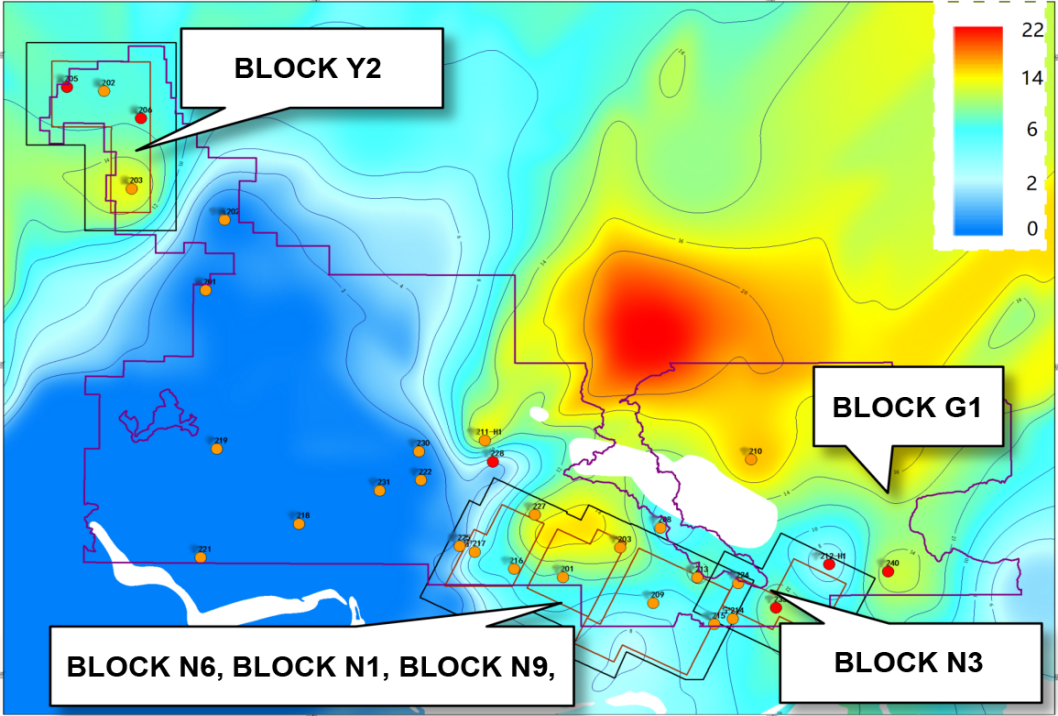
Shale gas, as a typical low-quality marginal hydrocarbon resource, faces persistently high drilling costs, which have become one of the main bottlenecks restricting its large-scale development. The Southern Sichuan region of China holds enormous shale gas reserves and is a strategically important area for achieving cost-effective large-scale development. However, as production capacity construction intensifies and the volume of investment and cost data increases, traditional data processing methods can no longer meet the timeliness and accuracy requirements for handling massive data. Accurate prediction of oil and gas drilling costs will help in making scientific decisions and evaluations. In this study, based on the costs and engineering parameters of settled wells in the Southern Sichuan Block N shale gas field, we established a Back-Propagation (BP) neural network model incorporating principal component analysis (PCA) to achieve accurate prediction of single-well drilling costs. Results show that: (1) PCA can effectively extract useful information from the shale gas drilling cost influence factors. Specifically, the number of fracturing stages, drilling duration, well depth, total proppant volume, horizontal section length, etc., are identified as key parameters affecting single-well drilling cost. (2) Using Matlab programming and a graphical user interface (GUI), we developed an integrated shale gas single-well cost prediction software system that combines data import, model training, cost prediction, and results export. The BP neural network model’s predictions achieved an average relative error of only -0.57\%, demonstrating convenience, practicality, and high accuracy. This system can provide a basis for investment decision-making in the Southern Sichuan shale gas block and has value for commercial application.
Graphical Abstract
Keywords
Data Availability Statement
Funding
Conflicts of Interest
AI Use Statement
Ethical Approval and Consent to Participate
References
- Li, J., Li, H., Jiang, W., Cai, M., He, J., Wang, Q., & Li, D. (2024). Shale pore characteristics and their impact on the gas-bearing properties of the Longmaxi Formation in the Luzhou area. Scientific Reports, 14(1), 16896.
[CrossRef] [Google Scholar] - Ge, H., Wang, X., & Zhang, Y. (2013). A Technical Approach to Reduce Shale Gas Development Cost. Petroleum Drilling Techniques, 41(6), 1–5.
[CrossRef] [Google Scholar] - Zhang, L., He, X., Li, X., Li, K., He, J., Zhang, Z., ... & Liu, W. (2022). Shale gas exploration and development in the Sichuan Basin: Progress, challenge and countermeasures. Natural Gas Industry B, 9(2), 176-186.
[CrossRef] [Google Scholar] - Zecheng, W. A. N. G., Yizuo, S. H. I., Long, W. E. N., Wuren, X. I. E., Rong, L. I., Hui, J. I. N., & Zengmin, Y. A. N. (2022). Exploring the potential of oil and gas resources in Sichuan Basin with Super Basin Thinking. Petroleum Exploration and Development, 49(5), 977-990.
[CrossRef] [Google Scholar] - Chukwuma-Eke, E. C., Ogunsola, O. Y., & Isibor, N. J. (2022). A conceptual approach to cost forecasting and financial planning in complex oil and gas projects. International Journal of Multidisciplinary Research and Growth Evaluation, 3(1), 819-833.
[CrossRef] [Google Scholar] - Zhang, Z. X., Kang, X. F., & Zhang, F. F. (2013). Application of grey theory for oil and gas reservoir evaluation program optimization. Advanced Materials Research, 616, 1008-1012.
[CrossRef] [Google Scholar] - Fattahi, H., & Babanouri, N. (2017). Applying optimized support vector regression models for prediction of tunnel boring machine performance. Geotechnical and Geological Engineering, 35(5), 2205-2217.
[CrossRef] [Google Scholar] - Ewees, A. A., Al-qaness, M. A., Thanh, H. V., AlRassas, A. M., & Elaziz, M. A. (2025). Optimized neural networks for efficient modeling of crude oil production. Knowledge and Information Systems, 1-22.
[CrossRef] [Google Scholar] - Yang, T., Liang, Y., Wang, Z., & Ji, Q. (2024). Dynamic Prediction of Shale Gas Drilling Costs Based on Machine Learning. Applied Sciences (2076-3417), 14(23).
[CrossRef] [Google Scholar] - Xinhua, M. A., & Jun, X. I. E. (2018). The progress and prospects of shale gas exploration and development in southern Sichuan Basin, SW China. Petroleum Exploration and Development, 45(1), 172-182.
[CrossRef] [Google Scholar] - Mistré, M., Crénes, M., & Hafner, M. (2018). Shale gas production costs: historical developments and outlook. Energy Strategy Reviews, 20, 20-25.
[CrossRef] [Google Scholar] - Bai, K., Dong, A., Zhan, C., Zhang, W., & Tu, B. (2023). Drilling Parameter Optimization of Shale Gas Wells Based on Saw‐Tooth Genetic Algorithm to Reduce Drilling Costs. Geofluids, 2023(1), 5647442.
[CrossRef] [Google Scholar] - Zhang, G., Chen, R., Hu, G., Huang, W., Zhang, X., & Liu, H. (2019). Low-cost drilling technology for horizontal wells with atmospheric shale gas in the outer margin of Sichuan Basin. In IOP Conference Series: Earth and Environmental Science, 295, 042098. IOP Publishing.
[CrossRef] [Google Scholar] - Abdulraheem, A. (2022). Generation of synthetic sonic slowness logs from real-time drilling sensors using artificial neural network. Journal of Energy Resources Technology-Transactions of the ASME, 144(1), 013201.
[CrossRef] [Google Scholar] - Szoplik, J., & Muchel, P. (2022). Using an artificial neural network model for natural gas compositions forecasting. Energy, 263(Part D), 126001.
[CrossRef] [Google Scholar] - Szoplik, J. (2015). Forecasting of natural gas consumption with artificial neural networks. Energy, 85, 208–220.
[CrossRef] [Google Scholar] - Ma, X. (2019). Enrichment laws and scale effective development of shale gas in the southern Sichuan Basin. Natural Gas Industry B, 6(3), 240-249.
[CrossRef] [Google Scholar] - Xu, J., Li, J., Yang, W., Chen, G., Liu, Y., Verdecchia, A., ... & Tang, J. (2025). Shallow Lingering and Deep Transient Seismicity Related to Hydraulic Fracturing in the Changning Shale Gas Field, Sichuan Basin, China. Journal of Geophysical Research: Solid Earth, 130(4), e2024JB030279.
[CrossRef] [Google Scholar] - Liu, J., Xue, F., Dai, J., Yang, J., Wang, L., Shi, X., ... & Liu, C. (2024). Waveform features and automatic discrimination of deep and shallow microearthquakes in the Changning shale gas field, Southern Sichuan Basin, China. Journal of Applied Geophysics, 241, 105850.
[CrossRef] [Google Scholar] - Krishna, S., Ridha, S., Vasant, P., Ilyas, S. U., & Ofei, T. N. (2020). Simplified predictive model for downhole pressure surges during tripping operations using power law drilling fluids. Journal of Energy Resources Technology, 142(12), 123001.
[CrossRef] [Google Scholar] - Hossain, M. E. (2015). Drilling costs estimation for hydrocarbon wells. Journal of Sustainable Energy Engineering, 3(1), 3-32.
[CrossRef] [Google Scholar] - Augustine, C., Tester, J. W., Anderson, B., Petty, S., & Livesay, B. (2006, January). A comparison of geothermal with oil and gas well drilling costs. In Proceedings of the 31st Workshop on Geothermal Reservoir Engineering (pp. 5-19). New York, New York: Curran Associates Inc.
[Google Scholar] - Kaiser, M. J. (2007). A survey of drilling cost and complexity estimation models. International Journal of Petroleum Science and Technology, 1(1), 1–22.
[Google Scholar] - Elkatatny, S. (2021). Real-time prediction of rate of penetration while drilling complex lithologies using artificial intelligence techniques. Ain Shams Engineering Journal, 12(1), 917-926.
[CrossRef] [Google Scholar] - Lukawski, M. Z., Anderson, B. J., Augustine, C., Capuano, L. E., Jr., Beckers, K. F., Livesay, B., & Tester, J. W. (2014). Cost analysis of oil, gas, and geothermal well drilling. Journal of Petroleum Science and Engineering, 118, 1–14.
[CrossRef] [Google Scholar] - Heidary, M. (2015). The use of kernel principal component analysis and discrete wavelet transform to determine the gas and oil interface. Journal of Geophysics and Engineering, 12(3), 386–399.
[CrossRef] [Google Scholar] - Bhosale, S., Manigiri, R., Choudhury, R. P., & Bhakthavatsalam, V. (2020). High resolution mass spectrometry and principal component analysis for an exhaustive understanding of acidic species composition in vacuum gas oil samples. Energy & Fuels, 34(3), 2800–2806.
[CrossRef] [Google Scholar] - Han, Y., Liu, J., Liu, F., & Geng, Z. (2022). An intelligent moving window sparse principal component analysis-based case based reasoning for fault diagnosis: Case of the drilling process. ISA Transactions, 128(Part A), 242–254.
[CrossRef] [Google Scholar] - Komadja, G. C., Westman, E., Rana, A., & Vitalis, A. (2025). Predicting rock mass strength from drilling data using synergistic unsupervised and supervised machine learning approaches. Earth Science Informatics, 18(3), 1-15.
[CrossRef] [Google Scholar] - Wang, W., Cui, X., Qi, Y., Xue, K., Liang, R., & Bai, C. (2024). Prediction model of coal gas permeability based on improved DBO optimized BP neural network. Sensors, 24(9), 2873.
[CrossRef] [Google Scholar] - Chen, Q., & Wang, W. (2024). Prediction of shale gas horizontal well production using particle swarm optimisation-based BP neural network. International Journal of Oil Gas and Coal Technology, 36(4), 449-460.
[CrossRef] [Google Scholar] - Lin, Y. C., Chen, D. D., Chen, M. S., Chen, X. M., & Li, J. (2018). A precise BP neural network-based online model predictive control strategy for die forging hydraulic press machine. Neural Computing and Applications, 29(9), 585-596.
[CrossRef] [Google Scholar] - Chen, Y., Sang, Y., Wang, X., Ye, X., Shi, H., Wu, P., ... & Xiong, C. (2024). Study on Evaluation and Prediction for Shale Gas PDC Bit in Luzhou Block Sichuan Based on BP Neural Network and Bit Structure. Applied Sciences, 14(11), 4370.
[CrossRef] [Google Scholar] - Hecht-Nielsen, R. (1992). Theory of the backpropagation neural network. In Neural networks for perception (pp. 65-93). Academic Press.
[CrossRef] [Google Scholar] - Luo, S., Xu, T., & Wei, S. (2022). Prediction method and application of shale reservoirs core gas content based on machine learning. Journal of Applied Geophysics, 204, 104741.
[CrossRef] [Google Scholar] - Peng, Y., Chen, Z., Xie, L., Wang, Y., Zhang, X., Chen, N., & Hu, Y. (2024). Prediction of Shale Gas Well Productivity Based on a Cuckoo-Optimized Neural Network. Mathematics, 12(18), 2948.
[CrossRef] [Google Scholar] - Martinez, W. L. (2011). Graphical user interfaces. Wiley Interdisciplinary Reviews: Computational Statistics, 3(2), 119-133.
[CrossRef] [Google Scholar]
Cited By (7)
-
Songyang Wan, Weiwei Liu, Liang Liao, Yuping Ouyang, Yonghui Yan, Hu Li, Kun Zhang. Geological Characteristics and Resource Potential of the Leping Formation Shale Gas in the Qingjiang Basin, Southern Poyang Depression, China.
Journal of Petroleum Geology, 2026 , 49 (4).
[CrossRef] -
Xianhua Huang, Jianru Tang, Jialin Zhao, Jin Li, Shuai Yin, Shaoke Feng, Hu Li. Comprehensive evaluation of gas-bearing properties in ultra-deep basement reservoirs based on an optimizable support vector machine.
Scientific Reports, 2026 , 16 (1).
[CrossRef] -
Qibing Wen, Liangjun Xu, Licheng Yang, Xin Chen, Xinrui Yang, Siyuan Chang, Lu Xu, Huilin Li, Tong Xia, Dongxi Liu, Ziyang Tang. Shale reservoir characteristics and exploration potential of the Permian Wujiaoping Formation in the Nanya Syncline, Sichuan Basin, China.
Applied Earth Science: Transactions of the Institutions of Mining and Metallurgy, 2026 .
[CrossRef] -
Jiajie Li, Hu Li, Shengxian Zhao, Qirong Qin, Bryan X. Medina-Rodriguez, Li Li. Fracture characteristics and distribution prediction under multi-phase tectonic superimposition in the Changning area, Southern Sichuan Basin: implications for shale gas preservation.
Engineering Fracture Mechanics, 2026 , 346 .
[CrossRef] -
Zhuo Li, Zhenxue Jiang, Xianglu Tang, Wenlong Gong, Wei Wu. Formation, Evolution, and Preservation Mechanisms of Overpressure in the Wufeng–Longmaxi Shale, Changning Area, Sichuan Basin.
Journal of Petroleum Geology, 2026 .
[CrossRef] -
Yansong Wang, Yifan Gu, Junwei Pu, Lin Jiang, Yuqiang Jiang, Kun Zhang, Hu Li. A Review of Molecular Simulation Techniques Applied in Microscopic Occurrence Patterns of Shale Gas.
ACS Earth and Space Chemistry, 2026 , 10 (6).
[CrossRef] -
Tianbiao Zhao. A mini review on “from decades to centuries”: temporal gaps in CCUS governance.
Frontiers in Earth Science, 2026 , 14 .
[CrossRef]
Cite This Article
TY  - JOUR
AU  - Ma, Geli
AU  - Huang, Rong
AU  - Dong, Yichen
AU  - Lv, Chao
AU  - Lin, Wenjing
PY  - 2026
DA  - 2026/02/04
TI  - A High-Accuracy Cost Prediction Model for Shale Gas Drilling in Southern Sichuan Using PCA and BP Neural Network
JO  - Journal of Geo-Energy and Environment
T2  - Journal of Geo-Energy and Environment
JF  - Journal of Geo-Energy and Environment
VL  - 2
IS  - 1
SP  - 46
EP  - 55
DO  - 10.62762/JGEE.2026.416866
UR  - https://www.icck.org/article/abs/JGEE.2026.416866
KW  - shale gas
KW  - principal component analysis
KW  - drilling cost prediction
KW  - BP neural network
KW  - software system
AB  - Shale gas, as a typical low-quality marginal hydrocarbon resource, faces persistently high drilling costs, which have become one of the main bottlenecks restricting its large-scale development. The Southern Sichuan region of China holds enormous shale gas reserves and is a strategically important area for achieving cost-effective large-scale development. However, as production capacity construction intensifies and the volume of investment and cost data increases, traditional data processing methods can no longer meet the timeliness and accuracy requirements for handling massive data. Accurate prediction of oil and gas drilling costs will help in making scientific decisions and evaluations. In this study, based on the costs and engineering parameters of settled wells in the Southern Sichuan Block N shale gas field, we established a Back-Propagation (BP) neural network model incorporating principal component analysis (PCA) to achieve accurate prediction of single-well drilling costs. Results show that: (1) PCA can effectively extract useful information from the shale gas drilling cost influence factors. Specifically, the number of fracturing stages, drilling duration, well depth, total proppant volume, horizontal section length, etc., are identified as key parameters affecting single-well drilling cost. (2) Using Matlab programming and a graphical user interface (GUI), we developed an integrated shale gas single-well cost prediction software system that combines data import, model training, cost prediction, and results export. The BP neural network model’s predictions achieved an average relative error of only -0.57\%, demonstrating convenience, practicality, and high accuracy. This system can provide a basis for investment decision-making in the Southern Sichuan shale gas block and has value for commercial application.
SN  - 3069-3268
PB  - Institute of Central Computation and Knowledge
LA  - English
ER  -
@article{Ma2026A,
  author = {Geli Ma and Rong Huang and Yichen Dong and Chao Lv and Wenjing Lin},
  title = {A High-Accuracy Cost Prediction Model for Shale Gas Drilling in Southern Sichuan Using PCA and BP Neural Network},
  journal = {Journal of Geo-Energy and Environment},
  year = {2026},
  volume = {2},
  number = {1},
  pages = {46-55},
  doi = {10.62762/JGEE.2026.416866},
  url = {https://www.icck.org/article/abs/JGEE.2026.416866},
  abstract = {Shale gas, as a typical low-quality marginal hydrocarbon resource, faces persistently high drilling costs, which have become one of the main bottlenecks restricting its large-scale development. The Southern Sichuan region of China holds enormous shale gas reserves and is a strategically important area for achieving cost-effective large-scale development. However, as production capacity construction intensifies and the volume of investment and cost data increases, traditional data processing methods can no longer meet the timeliness and accuracy requirements for handling massive data. Accurate prediction of oil and gas drilling costs will help in making scientific decisions and evaluations. In this study, based on the costs and engineering parameters of settled wells in the Southern Sichuan Block N shale gas field, we established a Back-Propagation (BP) neural network model incorporating principal component analysis (PCA) to achieve accurate prediction of single-well drilling costs. Results show that: (1) PCA can effectively extract useful information from the shale gas drilling cost influence factors. Specifically, the number of fracturing stages, drilling duration, well depth, total proppant volume, horizontal section length, etc., are identified as key parameters affecting single-well drilling cost. (2) Using Matlab programming and a graphical user interface (GUI), we developed an integrated shale gas single-well cost prediction software system that combines data import, model training, cost prediction, and results export. The BP neural network model’s predictions achieved an average relative error of only -0.57\\%, demonstrating convenience, practicality, and high accuracy. This system can provide a basis for investment decision-making in the Southern Sichuan shale gas block and has value for commercial application.},
  keywords = {shale gas, principal component analysis, drilling cost prediction, BP neural network, software system},
  issn = {3069-3268},
  publisher = {Institute of Central Computation and Knowledge}
}
Publisher's Note
ICCK stays neutral with regard to jurisdictional claims in published maps and institutional affiliations.
Rights and Permissions
 Copyright © 2026 by the Author(s). Published by Institute of Central Computation and Knowledge. This article is an open access article distributed under the terms and conditions of the Creative Commons Attribution (CC BY) license (https://creativecommons.org/licenses/by/4.0/), which permits use, sharing, adaptation, distribution and reproduction in any medium or format, as long as you give appropriate credit to the original author(s) and the source, provide a link to the Creative Commons licence, and indicate if changes were made.


Portico
