

Analysis and Suggestions on the Legal Protection Dilemma of Online Virtual Property: A Case Study of China


Article Information
Abstract
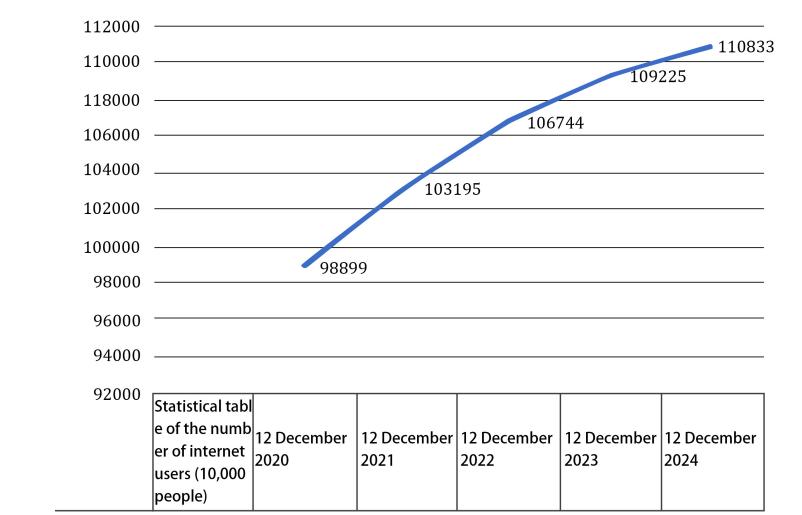
With the wide application and rapid development of the Internet, online virtual property has become an important form of asset, and its protection has attracted more and more attention. At present, there are many deficiencies in the legal protection of online virtual property in China, whether it is legislative, judicial or administrative supervision, and it needs to be improved urgently. This paper first discusses the legal attributes of online virtual property, and analyzes the significance of legal protection of online virtual property based on survey data. Subsequently, the main problems in legal protection in this field in China were analyzed, and some suggestions for improvement were put forward, such as establishing legal status, improving laws and regulations, strengthening supervision and enhancing public awareness. These suggestions aim to build a sound legal protection system for online virtual property and promote its healthy and orderly development.
Graphical Abstract
Keywords
Data Availability Statement
Funding
Conflicts of Interest
Ethical Approval and Consent to Participate
References
- Glushko, B. (2007). Tales of the (virtual) city: governing property disputes in virtual worlds. Berkeley Tech. LJ, 22, 507.
[Google Scholar] - Yin, Z. Y., Huang, A. M., & Huang, Z. Y. (2024). Virtual tourism attributes in cultural heritage: Benefits and values. Tourism Management Perspectives, 53, 101275.
[CrossRef] [Google Scholar] - Zhao, Y., & Chen, H. (2024). Enhancing access to digital justice: digital governance of dispute resolution and dispute prevention in online commercial activities. Journal of International Dispute Settlement, 15(2), 273-304.
[CrossRef] [Google Scholar] - Wang, H. (2023). How to deal with virtual property crime: Judicial dilemma and a theoretical solution from China. Computer Law & Security Review, 49, 105808.
[CrossRef] [Google Scholar] - Ivanov, V. V., Trubnikova, T. V., & Churilov, A. Y. (2023, November). Liability in the World of Games: The Interaction of Positive and Soft Law. In International Conference on Professional Culture of the Specialist of the Future (pp. 134-144). Cham: Springer Nature Switzerland.
[CrossRef] [Google Scholar] - Metthania, A. Z., & Dalimunthe, S. N. I. S. (2022). Legal Protection for Parties in Sale and Purchase Transactions of Virtual Objects. Volksgeist: Jurnal Ilmu Hukum Dan Konstitusi, 267-277.
[CrossRef] [Google Scholar] - Li, X., & Xiao, X. (2023). Research on the legal issues of inheritance of virtual property on the internet. Journal of Humanities, Arts and Social Science, 7(9).
[CrossRef] [Google Scholar] - Bruckermann, C. (2021). Network marketing and state legitimacy in China: Regulating trust from physical workplaces to virtual spaces. Economic Anthropology, 8(1), 86-101.
[CrossRef] [Google Scholar] - Zhang, M. (2024). Property attribute and property ownership of virtual property. Proceedings of Business and Economic Studies, 7(5), 43-48.
[CrossRef] [Google Scholar] - Niu, Z. (2023). Study on the attribute dispute of virtual property and countermeasures. International Journal of Frontiers in Sociology, 5(11).
[CrossRef] [Google Scholar] - Li, Z., Zhang, W., Zhang, H., Gao, R., & Fang, X. (2025). Global digital compact: A mechanism for the governance of online discriminatory and misleading content generation. International Journal of Human–Computer Interaction, 41(2), 1381-1396.
[CrossRef] [Google Scholar] - Gaffar, H., & Albarashdi, S. (2025). Copyright protection for AI-generated works: Exploring originality and ownership in a digital landscape. Asian Journal of International Law, 15(1), 23-46.
[CrossRef] [Google Scholar] - Pandey, D., & Gilmour, P. (2024). Accounting meets metaverse: navigating the intersection between the real and virtual worlds. Journal of Financial Reporting and Accounting, 22(2), 211-226.
[CrossRef] [Google Scholar] - Garcia-Teruel, R. M., & Simón-Moreno, H. (2021). The digital tokenization of property rights. A comparative perspective. Computer Law & Security Review, 41, 105543.
[CrossRef] [Google Scholar] - Fiaz, F., Sajjad, S. M., Iqbal, Z., Yousaf, M., & Muhammad, Z. (2024). Metassi: a framework for personal data protection, enhanced cybersecurity and privacy in metaverse virtual reality platforms. Future Internet, 16(5), 176.
[CrossRef] [Google Scholar]
Cite This Article
TY  - JOUR
AU  - Wu, Wenchi
AU  - Shi, Mengyi
AU  - Nie, Xingping
PY  - 2025
DA  - 2025/07/17
TI  - Analysis and Suggestions on the Legal Protection Dilemma of Online Virtual Property: A Case Study of China
JO  - Journal of Social Systems and Policy Analysis
T2  - Journal of Social Systems and Policy Analysis
JF  - Journal of Social Systems and Policy Analysis
VL  - 2
IS  - 3
SP  - 105
EP  - 110
DO  - 10.62762/JSSPA.2025.232129
UR  - https://www.icck.org/article/abs/JSSPA.2025.232129
KW  - cyber virtual property
KW  - legal attributes
KW  - legal protection
KW  - legal status
KW  - degree of supervision
AB  - With the wide application and rapid development of the Internet, online virtual property has become an important form of asset, and its protection has attracted more and more attention. At present, there are many deficiencies in the legal protection of online virtual property in China, whether it is legislative, judicial or administrative supervision, and it needs to be improved urgently. This paper first discusses the legal attributes of online virtual property, and analyzes the significance of legal protection of online virtual property based on survey data. Subsequently, the main problems in legal protection in this field in China were analyzed, and some suggestions for improvement were put forward, such as establishing legal status, improving laws and regulations, strengthening supervision and enhancing public awareness. These suggestions aim to build a sound legal protection system for online virtual property and promote its healthy and orderly development.
SN  - 3068-5540
PB  - Institute of Central Computation and Knowledge
LA  - English
ER  -
@article{Wu2025Analysis,
  author = {Wenchi Wu and Mengyi Shi and Xingping Nie},
  title = {Analysis and Suggestions on the Legal Protection Dilemma of Online Virtual Property: A Case Study of China},
  journal = {Journal of Social Systems and Policy Analysis},
  year = {2025},
  volume = {2},
  number = {3},
  pages = {105-110},
  doi = {10.62762/JSSPA.2025.232129},
  url = {https://www.icck.org/article/abs/JSSPA.2025.232129},
  abstract = {With the wide application and rapid development of the Internet, online virtual property has become an important form of asset, and its protection has attracted more and more attention. At present, there are many deficiencies in the legal protection of online virtual property in China, whether it is legislative, judicial or administrative supervision, and it needs to be improved urgently. This paper first discusses the legal attributes of online virtual property, and analyzes the significance of legal protection of online virtual property based on survey data. Subsequently, the main problems in legal protection in this field in China were analyzed, and some suggestions for improvement were put forward, such as establishing legal status, improving laws and regulations, strengthening supervision and enhancing public awareness. These suggestions aim to build a sound legal protection system for online virtual property and promote its healthy and orderly development.},
  keywords = {cyber virtual property, legal attributes, legal protection, legal status, degree of supervision},
  issn = {3068-5540},
  publisher = {Institute of Central Computation and Knowledge}
}
Article Metrics
Publisher's Note
ICCK stays neutral with regard to jurisdictional claims in published maps and institutional affiliations.
Rights and Permissions
 Copyright © 2025 by the Author(s). Published by Institute of Central Computation and Knowledge. This article is an open access article distributed under the terms and conditions of the Creative Commons Attribution (CC BY) license (https://creativecommons.org/licenses/by/4.0/), which permits use, sharing, adaptation, distribution and reproduction in any medium or format, as long as you give appropriate credit to the original author(s) and the source, provide a link to the Creative Commons licence, and indicate if changes were made.


Portico
