

Innovation by Constraint: The Unintended Effects of Korean Videogame Governance



Article Information
Abstract
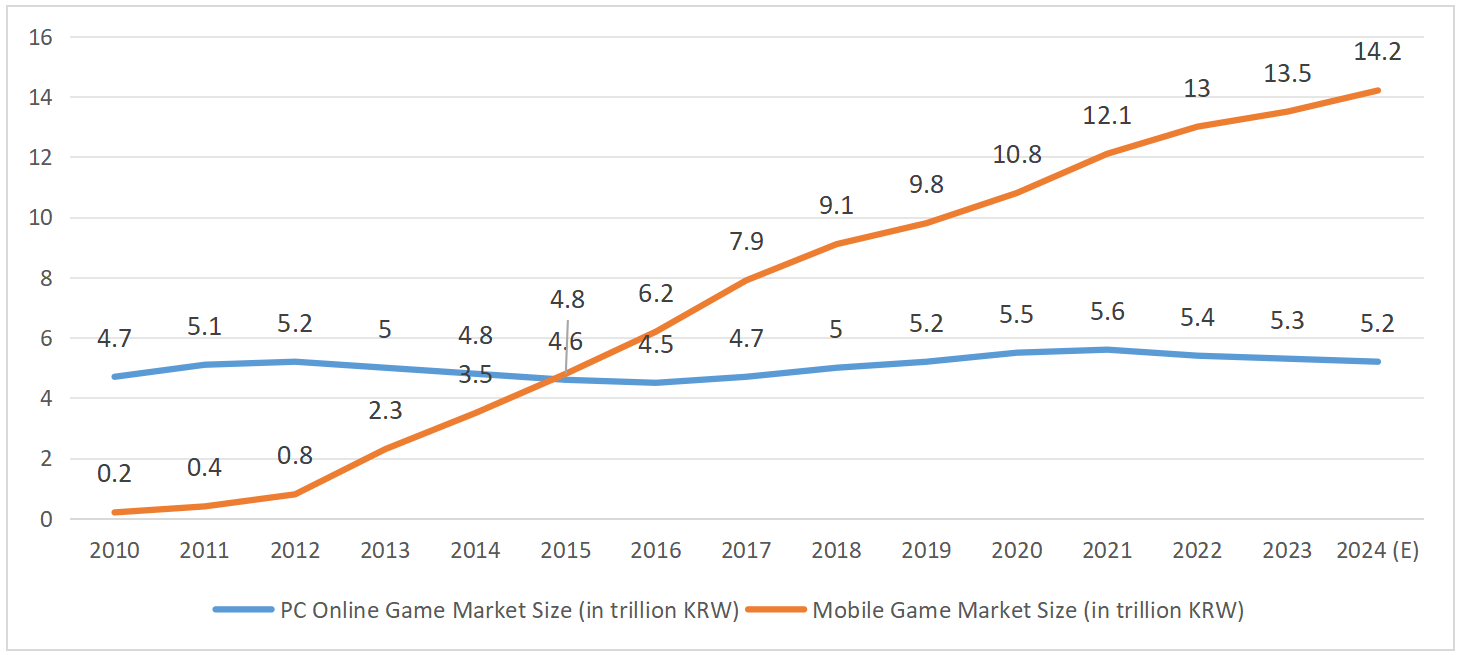
South Korea's ascent as a video game titan is not a simple narrative of state-led industrial success. This paper analyzes the dualistic nature of the Korean government's game policy, from the post-financial crisis ``informatization'' drive and the foundational Game Industry Promotion Act, to restrictive regulations such as the ``Shutdown Law'' and debates on game addiction. The core argument is that this paradoxical policy environment—simultaneously fostering innovation while imposing social controls—created unique evolutionary pressure. This pressure inadvertently accelerated the industry's pivot to mobile platforms, refined hyper-competitive monetization models, and drove an aggressive global export strategy as a hedge against domestic regulatory risks. By examining key legislative milestones, market data, and corporate strategies, this paper demonstrates how the friction between promotion and restriction acted as a catalyst, ultimately shaping today's technologically advanced, commercially aggressive, and resilient South Korean gaming industry.
Graphical Abstract
Keywords
Data Availability Statement
Funding
Conflicts of Interest
AI Use Statement
Ethical Approval and Consent to Participate
References
- Dal Yong Jin, & Chee, F. (2008). Age of new media empires: A critical interpretation of the Korean online game industry. Games and culture, 3(1), 38-58.
[CrossRef] [Google Scholar] - Kwon, S. H., & Kim, J. (2013). From censorship to active support: The Korean state and Korea’s cultural industries. The Economic and Labour Relations Review, 24(4), 517-532.
[CrossRef] [Google Scholar] - Choi, J., Cho, H., Lee, S., Kim, J., & Park, E. C. (2018). Effect of the online game shutdown policy on internet use, internet addiction, and sleeping hours in Korean adolescents. Journal of Adolescent Health, 62(5), 548-555.
[CrossRef] [Google Scholar] - Oh, M., & Larson, J. F. (2020). Digital Development in Korea: Lessons for a Sustainable World (2nd ed.). Routledge. https://www.routledge.com/Digital-Development-in-Korea-Lessons-for-a-Sustainable-World/Oh-Larson/p/book/9781032091389
[Google Scholar] - Song, J. W. (2021). New wine in old bottles? Korean state actors’ policy engagement with the online gaming industry. Competition & Change, 25(1), 97-123.
[CrossRef] [Google Scholar] - Huhh, J. S. (2008). Culture and business of PC bangs in Korea. Games and Culture, 3(1), 26-37.
[CrossRef] [Google Scholar] - Chee, F. (2006). The games we play online and offline: Making Wang-tta in Korea. Popular Communication, 4(3), 225-239.
[CrossRef] [Google Scholar] - Stewart, K., & Choi, H. P. (2003). PC-Bang (Room) culture: a study of Korean college students' private and public use of computers and the Internet. Trends in communication, 11(1), 63-79.
[CrossRef] [Google Scholar] - Park, M., Hatano, K., Nogawa, H., & Otake, H. (2021). The development process and present situation of esports in south korea. Journal of Japan Society of Sports Industry, 31(2), 2_197-2_209. https://web.archive.org/web/20210716194706id_/https://www.jstage.jst.go.jp/article/sposun/31/2/31_2_197/_pdf
[Google Scholar] - Yoshimatsu, H. (2005). The state and industrial evolution: The development of the game industry in Japan and Korea. Pacific Focus, 20(1), 135-178.
[CrossRef] [Google Scholar] - Lee, H. K. (2019). Cultural policy in South Korea: Making a new patron state. Routledge. https://www.routledge.com/Cultural-Policy-in-South-Korea-Making-a-New-Patron-State/Lee/p/book/9780367588557
[Google Scholar] - Peichi, C. (2008). New media for social change: Globalisation and the online gaming industries of South Korea and Singapore. Science, Technology and Society, 13(2), 303-323.
[CrossRef] [Google Scholar] - Tsang, D., & Park, Y. (2013). How culture and government shape entrepreneurial innovation: the case of Korean and UK online gaming firms. Asian Journal of Technology Innovation, 21(2), 237-250.
[CrossRef] [Google Scholar] - Grantham, A. J. (2024). Ready Player Won: A study of e-sports' compatibility with South Korea nation-branding and development of national star power (Doctoral dissertation). The Australian National University.
[CrossRef] [Google Scholar] - Lee, Y. (2016). Developing standards and strategies for globalizing the storytelling of Korean online games. Indian Journal of Science and Technology, 9(46), 1-6.
[CrossRef] [Google Scholar] - Sang, Y., Park, S., & Seo, H. (2016). Mobile game regulation in South Korea: A case study of the shutdown law. In Mobile Gaming in Asia: Politics, Culture and Emerging Technologies (pp. 55-72). Dordrecht: Springer Netherlands.
[CrossRef] [Google Scholar] - Kim, C., & Lee, S. (2020). Fragmented industrial structure and fragmented resistance in Korea’s digital game industry. Global Media and China, 5(4), 354-371.
[CrossRef] [Google Scholar] - Xiao, L. Y., & Park, S. (2025). Better than industry self-regulation: Compliance of Mobile games with newly adopted and actively enforced loot box probability disclosure law in South Korea. Acta Psychologica, 260, 105490.
[CrossRef] [Google Scholar] - Niemczyk, J., Borowski, K., & Nobel, M. (2022). Strategy approaches in the video game industry. The case study of South Korea, the USA and Poland. Informatyka Ekonomiczna, (1), 29-55. https://cejsh.icm.edu.pl/cejsh/element/bwmeta1.element.ojs-doi-10_15611_ie_2022_1_04
[Google Scholar] - Korea Creative Content Agency. (2024). 2023 Game Industry White Paper. KOCCA. https://www.kocca.kr/kocca/bbs/view/B0000146/2005396.do?menuNo=204154
[Google Scholar] - Kim, N. S., & Min, Y. (2016). How the Media Contextualize Computer Games: A Comparative Analysis of the US and Korean Game Coverage. International Journal of Multimedia and Ubiquitous Engineering, 11(11), 291-296. https://www.earticle.net/Article/A292359
[Google Scholar]
Cite This Article
TY  - JOUR
AU  - Yang, Hengran
AU  - Duan, Xingzhao
PY  - 2026
DA  - 2026/05/13
TI  - Innovation by Constraint: The Unintended Effects of Korean Videogame Governance
JO  - Journal of Social Systems and Policy Analysis
T2  - Journal of Social Systems and Policy Analysis
JF  - Journal of Social Systems and Policy Analysis
VL  - 3
IS  - 2
SP  - 100
EP  - 108
DO  - 10.62762/JSSPA.2025.735971
UR  - https://www.icck.org/article/abs/JSSPA.2025.735971
KW  - South Korean game industry
KW  - industrial policy
KW  - game regulation
KW  - shutdown law
KW  - innovation
KW  - mobile gaming
AB  - South Korea's ascent as a video game titan is not a simple narrative of state-led industrial success. This paper analyzes the dualistic nature of the Korean government's game policy, from the post-financial crisis ``informatization'' drive and the foundational Game Industry Promotion Act, to restrictive regulations such as the ``Shutdown Law'' and debates on game addiction. The core argument is that this paradoxical policy environment—simultaneously fostering innovation while imposing social controls—created unique evolutionary pressure. This pressure inadvertently accelerated the industry's pivot to mobile platforms, refined hyper-competitive monetization models, and drove an aggressive global export strategy as a hedge against domestic regulatory risks. By examining key legislative milestones, market data, and corporate strategies, this paper demonstrates how the friction between promotion and restriction acted as a catalyst, ultimately shaping today's technologically advanced, commercially aggressive, and resilient South Korean gaming industry.
SN  - 3068-5540
PB  - Institute of Central Computation and Knowledge
LA  - English
ER  -
@article{Yang2026Innovation,
  author = {Hengran Yang and Xingzhao Duan},
  title = {Innovation by Constraint: The Unintended Effects of Korean Videogame Governance},
  journal = {Journal of Social Systems and Policy Analysis},
  year = {2026},
  volume = {3},
  number = {2},
  pages = {100-108},
  doi = {10.62762/JSSPA.2025.735971},
  url = {https://www.icck.org/article/abs/JSSPA.2025.735971},
  abstract = {South Korea's ascent as a video game titan is not a simple narrative of state-led industrial success. This paper analyzes the dualistic nature of the Korean government's game policy, from the post-financial crisis ``informatization'' drive and the foundational Game Industry Promotion Act, to restrictive regulations such as the ``Shutdown Law'' and debates on game addiction. The core argument is that this paradoxical policy environment—simultaneously fostering innovation while imposing social controls—created unique evolutionary pressure. This pressure inadvertently accelerated the industry's pivot to mobile platforms, refined hyper-competitive monetization models, and drove an aggressive global export strategy as a hedge against domestic regulatory risks. By examining key legislative milestones, market data, and corporate strategies, this paper demonstrates how the friction between promotion and restriction acted as a catalyst, ultimately shaping today's technologically advanced, commercially aggressive, and resilient South Korean gaming industry.},
  keywords = {South Korean game industry, industrial policy, game regulation, shutdown law, innovation, mobile gaming},
  issn = {3068-5540},
  publisher = {Institute of Central Computation and Knowledge}
}
Article Metrics
Publisher's Note
ICCK stays neutral with regard to jurisdictional claims in published maps and institutional affiliations.
Rights and Permissions
 Copyright © 2026 by the Author(s). Published by Institute of Central Computation and Knowledge. This article is an open access article distributed under the terms and conditions of the Creative Commons Attribution (CC BY) license (https://creativecommons.org/licenses/by/4.0/), which permits use, sharing, adaptation, distribution and reproduction in any medium or format, as long as you give appropriate credit to the original author(s) and the source, provide a link to the Creative Commons licence, and indicate if changes were made.


Portico
