

IoT-Integrated Reinforcement Learning-Based Mine Detection System for Military and Humanitarian Applications



Article Information
Abstract
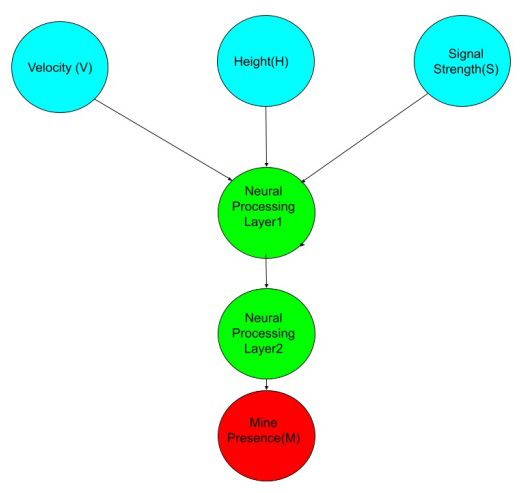
This research proposes an advanced system for landmine detection combining the internet of things and reinforcement learning, which seeks to resolve issues in conventional methods that suffer from high false positive rates, slow reaction times, and poor adaptability across different environmental conditions. Others like metallic detectors and sniffer dogs also pose greater danger for wrong threat identification, more so due to sluggish attempts. The system proposed in this study is novel in that it customizes metal detection by integrating a sensor into military boots, thus permitting constant scanning without the use of hands. A meta-learning-based Machine Learning model improves detection accuracy. It was found that reward-driven reinforcement learning regulation improves mine detection accuracy, increases the analysis attempts in each evaluation phase, and alters the strategic settings. The range of analysis conducted during this study validates the argument in question but this reworking of the system does not fully resolve the issues. The innovation is having that with proper situational awareness this model enables real-time implementation of IoT devices. This adaptable system is not only advantageous for military endeavors but can also be useful for demining activities. More robust multisensory capabilities are essential to facilitate effective and safe landmine inspection all over the globe, so follow-up studies should concentrate on field trials with accompanying iterative improvements.
Graphical Abstract
Keywords
Data Availability Statement
Funding
Conflicts of Interest
Ethical Approval and Consent to Participate
References
- Habib, M. K. (2007). Humanitarian demining: reality and the challenge of technology–the state of the arts. International Journal of Advanced Robotic Systems, 4(2), 19.
[CrossRef] [Google Scholar] - Kasban, H., Zahran, O., Elaraby, S. M., El-Kordy, M., & Abd El-Samie, F. E. (2010). A comparative study of landmine detection techniques. Sensing and Imaging: An International Journal, 11, 89-112.
[CrossRef] [Google Scholar] - Florez, J., & Parra, C. (2016, September). Review of sensors used in robotics for humanitarian demining application. In 2016 IEEE Colombian Conference on Robotics and Automation (CCRA) (pp. 1-6). IEEE.
[CrossRef] [Google Scholar] - Barnawi, A., Kumar, N., Budhiraja, I., Kumar, K., Almansour, A., & Alzahrani, B. (2022). Deep reinforcement learning based trajectory optimization for magnetometer-mounted UAV to landmine detection. Computer Communications, 195, 441-450.
[CrossRef] [Google Scholar] - Camacho-Sanchez, C., Yie-Pinedo, R., & Galindo, G. (2023). Humanitarian demining for the clearance of landmine-affected areas. Socio-Economic Planning Sciences, 88, 101611.
[CrossRef] [Google Scholar] - Barnawi, A., Budhiraja, I., Kumar, K., Kumar, N., Alzahrani, B., Almansour, A., & Noor, A. (2022). A comprehensive review on landmine detection using deep learning techniques in 5G environment: Open issues and challenges. Neural Computing and Applications, 34(24), 21657-21676.
[CrossRef] [Google Scholar] - Kuru, K., Sujit, A., Ansell, D., Pinder, J. M., Jones, D., Watkinson, B. J., ... & Tinker-Mill, C. (2024). Intelligent, automated, rapid, and safe landmine, improvised explosive device and unexploded ordnance detection using maggy. IEEE Access, 12, 165736-165755.
[CrossRef] [Google Scholar] - Bandopadhaya, S., Dey, R., & Suhag, A. (2020). Integrated healthcare monitoring solutions for soldier using the internet of things with distributed computing. Sustainable Computing: Informatics and Systems, 26, 100378.
[CrossRef] [Google Scholar] - Qiu, Z., Guo, H., Hu, J., Jiang, H., & Luo, C. (2023). Joint fusion and detection via deep learning in UAV-borne multispectral sensing of scatterable landmine. Sensors, 23(12), 5693.
[CrossRef] [Google Scholar] - MahmoudZadeh, S., Yazdani, A., Kalantari, Y., Ciftler, B., Aidarus, F., & Al Kadri, M. O. (2024). Holistic review of UAV-centric situational awareness: Applications, limitations, and algorithmic challenges. Robotics, 13(8), 117.
[CrossRef] [Google Scholar] - Ambruš, D., Vasić, D., & Bilas, V. (2020). Innovating on top of I&M fundamentals for safer humanitarian demining. IEEE instrumentation & measurement magazine, 23(3), 35-41.
[CrossRef] [Google Scholar] - Šimić, M., Ambruš, D., & Bilas, V. (2023). Landmine identification from pulse induction metal detector data using machine learning. IEEE sensors letters, 7(9), 1-4.
[CrossRef] [Google Scholar] - Dulce Rubio, M., Zeng, S., Wang, Q., Alvarado, D., Moreno Rivera, F., Heidari, H., & Fang, F. (2024). RELand: risk estimation of landmines via interpretable invariant risk minimization. ACM Journal on Computing and Sustainable Societies, 2(2), 1-29.
[CrossRef] [Google Scholar] - Hutsul, T., Khobzei, M., Tkach, V., Krulikovskyi, O., Moisiuk, O., Ivashko, V., & Samila, A. (2024). Review of approaches to the use of unmanned aerial vehicles, remote sensing and geographic information systems in humanitarian demining: Ukrainian case. Heliyon, 10(7), e29142.
[CrossRef] [Google Scholar] - Barnawi, A., Kumar, K., Kumar, N., Alzahrani, B., & Almansour, A. (2024). A deep learning approach for landmines detection based on airborne magnetometry imaging and edge computing. CMES-Computer Modeling in Engineering and Sciences, 139(2), 2117-2137.
[CrossRef] [Google Scholar] - Safatly, L., Baydoun, M., Alipour, M., Al-Takach, A., Atab, K., Al-Husseini, M., ... & Ghaziri, H. (2021). Detection and classification of landmines using machine learning applied to metal detector data. Journal of Experimental & Theoretical Artificial Intelligence, 33(2), 203-226.
[CrossRef] [Google Scholar] - Wang, X., Shi, H., Zhang, X., Wan, Y., & Wang, P. (2024). MicEMD: Open-source toolbox for electromagnetic modeling, inversion, and classification in underground metal target detection. SoftwareX, 27, 101812.
[CrossRef] [Google Scholar] - Ambruš, D., Šimić, M., Vasić, D., & Bilas, V. (2021). Close-range electromagnetic tracking of pulse induction search coils for subsurface sensing. IEEE transactions on instrumentation and measurement, 70, 1-13.
[CrossRef] [Google Scholar] - Pryshchenko, O. A., Plakhtii, V., Dumin, O. M., Pochanin, G. P., Ruban, V. P., Capineri, L., & Crawford, F. (2022). Implementation of an artificial intelligence approach to GPR systems for landmine detection. Remote Sensing, 14(17), 4421.
[CrossRef] [Google Scholar] - Lee, J., Lee, H., Ko, S., Ji, D., & Hyeon, J. (2023). Modeling and implementation of a joint airborne ground penetrating radar and magnetometer system for landmine detection. Remote Sensing, 15(15), 3813.
[CrossRef] [Google Scholar] - García-Fernández, M., Álvarez-Narciandi, G., Laviada, J., López, Y. Á., & Las-Heras, F. (2024). Towards real-time processing for UAV-mounted GPR-SAR imaging systems. ISPRS Journal of Photogrammetry and Remote Sensing, 212, 1–12.
[CrossRef] [Google Scholar] - Bestagini, P., Lombardi, F., Lualdi, M., Picetti, F., & Tubaro, S. (2020). Landmine detection using autoencoders on multipolarization GPR volumetric data. IEEE Transactions on Geoscience and Remote Sensing, 59(1), 182-195.
[CrossRef] [Google Scholar]
Cited By (9)
-
Shubhani Aggarwal, Arzoo Miglani, Norah Saleh Alghamdi, Gaurav Dhiman. Resilient and decentralized demand-side management in smart grids using blockchain.
Scientific Reports, 2026 , 16 (1).
[CrossRef] -
Gaurav Dhiman, Kiran Deep Singh, Prabh Deep Singh, Norah Saleh Alghamdi, Ghadah Shukri Albakri. A novel approach to reliable and flexible distributed computing with virtualization in smart healthcare applications.
Scientific Reports, 2026 , 16 (1).
[CrossRef] -
İlknur Dönmez, Faruk Bulut. Multidimensional diversity in video recommender systems: a holistic framework of literature gaps and future directions.
Intelligent Systems with Applications, 2026 , 31 .
[CrossRef] -
Bin Sun. Lightweight GIS-based large-scale urban fire spread simulation method.
Journal of Industrial Information Integration, 2026 , 50 .
[CrossRef] -
Niva Tripathy, Sampa Sahoo, Norah Saleh Alghamdi, Wattana Viriyasitavat, Gaurav Dhiman. Energy and makespan optimised task mapping in fog enabled IoT application: a hybrid approach.
Scientific Reports, 2026 , 16 (1).
[CrossRef] -
Ashok Singh Bhandari, Nitin Uniyal, Sukhveer Singh, Abhishek Sharma, Norah Saleh Alghamdi, Gaurav Dhiman. Heterogeneous Component Mixing With Cold Standby for Optimising Reliability and Redundancy.
Expert Systems, 2026 , 43 (3).
[CrossRef] -
Meenakshi Garg, Nor Asilah Wati Abdul Hamid, Dafik, Sunder R.. AI-driven feature descriptor design using CNNs and transfer learning for enhanced image retrieval accuracy and efficiency.
Scientific Reports, 2026 , 16 (1).
[CrossRef] -
Kayalvizhi K R, S V Siddarth, Rupesh K, Sanjay Kumaran A C P. .
2026 International Conference on Innovations in Engineering and Technology (ICIET), 2026 .
[CrossRef] -
Shahad Almansour, Kusum Yadav, Lulwah M. Alkwai, Norah Saleh Alghamdi, Wattana Viriyasitavat, Gaurav Dhiman. Adaptive personalized federated learning with lightweight depthwise convolutional bottleneck network for novel intrusion detection system in internet of vehicles.
Scientific Reports, 2025 , 15 (1).
[CrossRef]
Cite This Article
TY  - JOUR
AU  - Gupta, Subir
AU  - Adhikari, Upasana
AU  - Roy, Dipankar
AU  - Hazra, Sudipta
PY  - 2025
DA  - 2025/05/22
TI  - IoT-Integrated Reinforcement Learning-Based Mine Detection System for Military and Humanitarian Applications
JO  - ICCK Transactions on Machine Intelligence
T2  - ICCK Transactions on Machine Intelligence
JF  - ICCK Transactions on Machine Intelligence
VL  - 1
IS  - 1
SP  - 17
EP  - 28
DO  - 10.62762/TMI.2025.235880
UR  - https://www.icck.org/article/abs/TMI.2025.235880
KW  - landmine detection
KW  - reinforcement learning
KW  - internet of things (IoT)
KW  - sensor fusion
KW  - artificial intelligence
KW  - military safety
AB  - This research proposes an advanced system for landmine detection combining the internet of things and reinforcement learning, which seeks to resolve issues in conventional methods that suffer from high false positive rates, slow reaction times, and poor adaptability across different environmental conditions. Others like metallic detectors and sniffer dogs also pose greater danger for wrong threat identification, more so due to sluggish attempts. The system proposed in this study is novel in that it customizes metal detection by integrating a sensor into military boots, thus permitting constant scanning without the use of hands. A meta-learning-based Machine Learning model improves detection accuracy. It was found that reward-driven reinforcement learning regulation improves mine detection accuracy, increases the analysis attempts in each evaluation phase, and alters the strategic settings. The range of analysis conducted during this study validates the argument in question but this reworking of the system does not fully resolve the issues. The innovation is having that with proper situational awareness this model enables real-time implementation of IoT devices. This adaptable system is not only advantageous for military endeavors but can also be useful for demining activities. More robust multisensory capabilities are essential to facilitate effective and safe landmine inspection all over the globe, so follow-up studies should concentrate on field trials with accompanying iterative improvements.
SN  - 3068-7403
PB  - Institute of Central Computation and Knowledge
LA  - English
ER  -
@article{Gupta2025IoTIntegra,
  author = {Subir Gupta and Upasana Adhikari and Dipankar Roy and Sudipta Hazra},
  title = {IoT-Integrated Reinforcement Learning-Based Mine Detection System for Military and Humanitarian Applications},
  journal = {ICCK Transactions on Machine Intelligence},
  year = {2025},
  volume = {1},
  number = {1},
  pages = {17-28},
  doi = {10.62762/TMI.2025.235880},
  url = {https://www.icck.org/article/abs/TMI.2025.235880},
  abstract = {This research proposes an advanced system for landmine detection combining the internet of things and reinforcement learning, which seeks to resolve issues in conventional methods that suffer from high false positive rates, slow reaction times, and poor adaptability across different environmental conditions. Others like metallic detectors and sniffer dogs also pose greater danger for wrong threat identification, more so due to sluggish attempts. The system proposed in this study is novel in that it customizes metal detection by integrating a sensor into military boots, thus permitting constant scanning without the use of hands. A meta-learning-based Machine Learning model improves detection accuracy. It was found that reward-driven reinforcement learning regulation improves mine detection accuracy, increases the analysis attempts in each evaluation phase, and alters the strategic settings. The range of analysis conducted during this study validates the argument in question but this reworking of the system does not fully resolve the issues. The innovation is having that with proper situational awareness this model enables real-time implementation of IoT devices. This adaptable system is not only advantageous for military endeavors but can also be useful for demining activities. More robust multisensory capabilities are essential to facilitate effective and safe landmine inspection all over the globe, so follow-up studies should concentrate on field trials with accompanying iterative improvements.},
  keywords = {landmine detection, reinforcement learning, internet of things (IoT), sensor fusion, artificial intelligence, military safety},
  issn = {3068-7403},
  publisher = {Institute of Central Computation and Knowledge}
}
Publisher's Note
ICCK stays neutral with regard to jurisdictional claims in published maps and institutional affiliations.
Rights and Permissions


Portico
