

Enhanced Reinforcement Learning-Based Resource Scheduling for Secure Blockchain Networks in IIoT

Article Information
Abstract
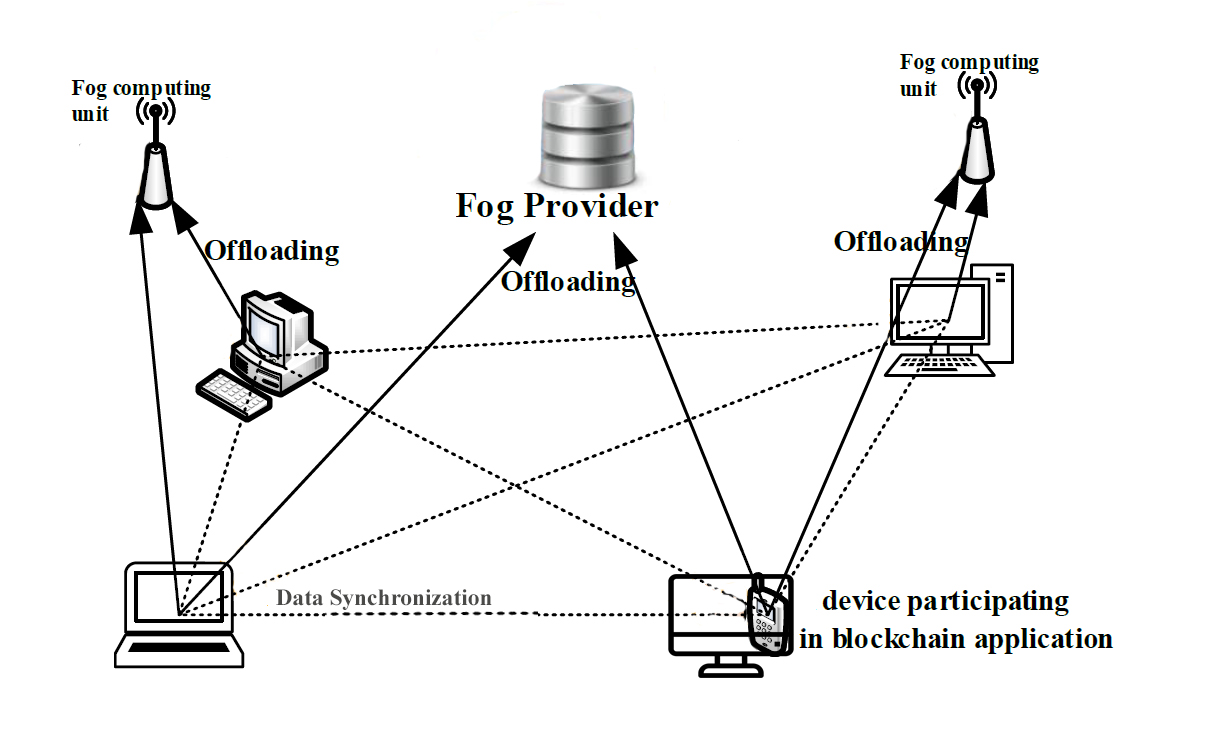
To meet latency constraints, fog computing takes computational assets to the network edge. Blockchain and reinforcement learning are increasingly being integrated into the Industrial Internet of Things (IIoT) to enhance security and efficiency. This study introduces a Reinforcement Learning-based Resource Scheduling Approach for Blockchain Networks in IIoT. Unlike previous studies, which mainly focus on either blockchain security or resource allocation, our approach integrates reinforcement learning for dynamic resource scheduling, improving efficiency while minimizing latency. The methodology is illustrated through a flowchart. Simulation results validate the effectiveness in multiple scenarios. Future work includes enhancing inter-node communication reliability.
Graphical Abstract
Keywords
Data Availability Statement
Funding
Conflicts of Interest
Ethical Approval and Consent to Participate
References
- Chiang, M., & Zhang, T. (2016). Fog and IoT: An overview of research opportunities. IEEE Internet of Things Journal, 3(6), 854–864.
[CrossRef] [Google Scholar] - Alzoubi, Y. I., Gill, A., & Mishra, A. (2022). A systematic review of the purposes of Blockchain and fog computing integration: classification and open issues. Journal of Cloud Computing, 11(1), 80.
[CrossRef] [Google Scholar] - Chen, Y., Liu, Z., Zhang, Y., Wu, Y., Chen, X., & Zhao, L. (2020). Deep reinforcement learning-based dynamic resource management for mobile edge computing in industrial internet of things. IEEE Transactions on Industrial Informatics, 17(7), 4925-4934.
[CrossRef] [Google Scholar] - Mekala, M. S., & Viswanathan, P. (2019). Equilibrium transmission bilevel energy efficient node selection approach for Internet of Things. Wireless Personal Communications, 108(3), 1635-1663.
[CrossRef] [Google Scholar] - Zhao, F., Chen, Y., Zhang, Y., Liu, Z., & Chen, X. (2021). Dynamic offloading and resource scheduling for mobile-edge computing with energy harvesting devices. IEEE Transactions on Network and Service Management, 18(2), 2154-2165.
[CrossRef] [Google Scholar] - Soundararajan, R., Palanisamy, N., Patan, R., Nagasubramanian, G., & Khan, M. S. (2020). Secure and concealed watchdog selection scheme using masked distributed selection approach in wireless sensor networks. IET Communications, 14(6), 948–955.
[CrossRef] [Google Scholar] - Mouradian, C., Naboulsi, D., Yangui, S., Glitho, R. H., Morrow, M. J., & Polakos, P. A. (2018). A comprehensive survey on fog computing: State-of-the-art and research challenges. IEEE Communications Surveys & Tutorials, 20(1), 416–464.
[CrossRef] [Google Scholar] - Aburukba, R. O., Landolsi, T., & Omer, D. (2021). A heuristic scheduling approach for fog-cloud computing environment with stationary IoT devices. Journal of Network and Computer Applications, 180, 102994.
[CrossRef] [Google Scholar] - Do, H. M., Tran, T. P., & Yoo, M. (2023). Deep reinforcement learning-based task offloading and resource allocation for industrial IoT in MEC federation system. IEEE Access, 11, 83150-83170.
[CrossRef] [Google Scholar] - Wan, J., Chen, B., Wang, S., Xia, M., Li, D., & Liu, C. (2018). Fog computing for energy-aware load balancing and scheduling in smart factory. IEEE Transactions on Industrial Informatics, 14(10), 4548-4556.
[CrossRef] [Google Scholar] - Xu, D., Li, Y., Chen, X., Li, J., Hui, P., Chen, S., & Crowcroft, J. (2018). A survey of opportunistic offloading. IEEE Communications Surveys & Tutorials, 20(3), 2198-2236.
[CrossRef] [Google Scholar] - Islam, M. T., Karunasekera, S., & Buyya, R. (2022). Performance and cost-efficient Spark job scheduling based on deep reinforcement learning in cloud computing environments. IEEE Transactions on Parallel and Distributed Systems, 33(7), 1695-1710.
[CrossRef] [Google Scholar] - Sagar, A. S., Haider, A., & Kim, H. S. (2025). A hierarchical adaptive federated reinforcement learning for efficient resource allocation and task scheduling in hierarchical IoT network. Computer Communications, 229, 107969.
[CrossRef] [Google Scholar] - Alipio, M., & Bures, M. (2023). Deep reinforcement learning perspectives on improving reliable transmissions in iot networks: Problem formulation, parameter choices, challenges, and future directions. Internet of Things, 23, 100846.
[CrossRef] [Google Scholar] - Jameel, F., Javaid, U., Khan, W. U., Aman, M. N., Pervaiz, H., & Jäntti, R. (2020). Reinforcement learning in blockchain-enabled IIoT networks: A survey of recent advances and open challenges. Sustainability, 12(12), 5161.
[CrossRef] [Google Scholar] - Song, X., Liu, L., Fu, J., Zhang, X., Feng, J., & Pei, Q. (2023, December). A Reinforcement Learning-based DAG Tasks Scheduling in Edge-Cloud Collaboration Systems. In GLOBECOM 2023-2023 IEEE Global Communications Conference (pp. 1771-1776). IEEE.
[CrossRef] [Google Scholar] - Boateng, G. O., Erbad, A., Seid, A. M., Hamdi, M., Guo, X., & Guizani, M. (2024, December). Coalitional Game-guided Reinforcement Learning for P2P Resource Trading in Sliced IIoT Networks. In GLOBECOM 2024-2024 IEEE Global Communications Conference (pp. 644-649). IEEE.
[CrossRef] [Google Scholar] - You, C., Huang, K., Chae, H., & Kim, B.-H. (2017). Energy-efficient resource allocation for mobile-edge computation offloading. IEEE Transactions on Wireless Communications, 16(3), 1397–1411.
[CrossRef] [Google Scholar] - Yang, Y., Wang, K., Zhang, G., Chen, X., Luo, X., & Zhou, M.-T. (2018). MEETS: Maximal energy efficient task scheduling in homogeneous fog networks. IEEE Internet of Things Journal, 5(5), 4076–4087.
[CrossRef] [Google Scholar] - Alladi, T., Chamola, V., Parizi, R. M., & Choo, K. K. R. (2019). Blockchain applications for industry 4.0 and industrial IoT: A review. IEEE Access, 7, 176935-176951.
[CrossRef] [Google Scholar] - Yang, Y., Zhao, S., Zhang, W., Chen, Y., Luo, X., & Wang, J. (2018). DEBTS: Delay energy balanced task scheduling in homogeneous fog networks. IEEE Internet of Things Journal, 5(3), 2094–2106.
[CrossRef] [Google Scholar] - Tran, T. X., & Pompili, D. (2019). Joint task offloading and resource allocation for multi-server mobile-edge computing networks. IEEE Transactions on Vehicular Technology, 68(1), 856–868.
[CrossRef] [Google Scholar] - El Haber, E., Nguyen, T. M., & Assi, C. (2019). Joint optimization of computational cost and devices energy for task offloading in multi-tier edge-clouds. IEEE Transactions on Communications, 67(5), 3407–3421.
[CrossRef] [Google Scholar] - Zheng, H. N., Xiong, K., Fan, P. Y., Zhou, L., & Zhong, Z. (2018). SWIPT-aware fog information processing: Local computing vs. fog offloading. Sensors, 18(10), 3291–3307.
[CrossRef] [Google Scholar] - Zheng, H., Xiong, K., Fan, P., Zhong, Z., & Letaief, K. B. (2019). Fog-assisted multiuser SWIPT networks: Local computing or offloading. IEEE Internet of Things Journal, 6(3), 5246–5264.
[CrossRef] [Google Scholar] - Mekala, M. S., & Viswanathan, P. (2019). Energy-efficient virtual machine selection based on resource ranking and utilization factor approach in cloud computing for IoT. Computers & Electrical Engineering, 73, 227-244.
[CrossRef] [Google Scholar] - Zhou, A., Wang, S., Cheng, B., Zheng, Z., Yang, F., Chang, R. N., ... & Buyya, R. (2016). Cloud service reliability enhancement via virtual machine placement optimization. IEEE Transactions on Services Computing, 10(6), 902-913.
[CrossRef] [Google Scholar] - Xu, H., Yang, B., Qi, W., & Ahene, E. (2016). A multi-objective optimization approach to workflow scheduling in clouds considering fault recovery. KSII Transactions on Internet and Information Systems, 10(3), 976–995.
[CrossRef] [Google Scholar] - Kiani, A., & Ansari, N. (2017). Toward hierarchical mobile edge computing: An auction-based profit maximization approach. IEEE Internet of Things Journal, 4(6), 2082–2091.
[CrossRef] [Google Scholar] - Fan, Q., & Ansari, N. (2018). Application aware workload allocation for edge computing based IoT. IEEE Internet of Things Journal, 5(3), 2146–2153.
[CrossRef] [Google Scholar] - Rodrigues, T. G., Suto, K., Nishiyama, H., & Kato, N. (2016). Hybrid method for minimizing service delay in edge cloud computing through VM migration and transmission power control. IEEE Transactions on Computers, 66(5), 810-819.
[CrossRef] [Google Scholar] - Yao, J., & Ansari, N. (2019). QoS-aware fog resource provisioning and mobile device power control in IoT networks. IEEE Transactions on Network and Service Management, 16(1), 167–175.
[CrossRef] [Google Scholar] - Chen, N., Yang, Y., Zhang, T., Zhou, M.-T., Luo, X., & Zao, J. K. (2018). Fog as a service technology. IEEE Communications Magazine, 56(11), 95–101.
[CrossRef] [Google Scholar]
Cited By (11)
-
Niva Tripathy, Sampa Sahoo, Norah Saleh Alghamdi, Wattana Viriyasitavat, Gaurav Dhiman. Energy and makespan optimised task mapping in fog enabled IoT application: a hybrid approach.
Scientific Reports, 2026 , 16 (1).
[CrossRef] -
Meenakshi Garg, Nor Asilah Wati Abdul Hamid, Dafik, Sunder R.. AI-driven feature descriptor design using CNNs and transfer learning for enhanced image retrieval accuracy and efficiency.
Scientific Reports, 2026 , 16 (1).
[CrossRef] -
Sufang Zhou, Yifeng Wang, Lin Wang, Liangyi Chen, Yadi Wang. FedDG: An Efficient Federated Learning Framework for IoT Communication Based on Dynamic Fusion and Gradient Compression.
IEEE Transactions on Industrial Informatics, 2026 , 22 (3).
[CrossRef] -
Jinhao Du, Yarong Chen, Jabir Mumtaz, Faisal Alkaabneh, Ziyang Ji, Kaynat Afzal Minhas. Multi-agent deep reinforcement learning for dynamic lot-streaming flow shop problems with unequal sub-lots and capacity constraints.
Journal of Industrial Information Integration, 2026 , 51 .
[CrossRef] -
Gaurav Dhiman, Kiran Deep Singh, Prabh Deep Singh, Norah Saleh Alghamdi, Ghadah Shukri Albakri. A novel approach to reliable and flexible distributed computing with virtualization in smart healthcare applications.
Scientific Reports, 2026 , 16 (1).
[CrossRef] -
Bin Sun. Lightweight GIS-based large-scale urban fire spread simulation method.
Journal of Industrial Information Integration, 2026 , 50 .
[CrossRef] -
Ashok Singh Bhandari, Nitin Uniyal, Sukhveer Singh, Abhishek Sharma, Norah Saleh Alghamdi, Gaurav Dhiman. Heterogeneous Component Mixing With Cold Standby for Optimising Reliability and Redundancy.
Expert Systems, 2026 , 43 (3).
[CrossRef] -
Shubhani Aggarwal, Arzoo Miglani, Norah Saleh Alghamdi, Gaurav Dhiman. Resilient and decentralized demand-side management in smart grids using blockchain.
Scientific Reports, 2026 , 16 (1).
[CrossRef] -
İlknur Dönmez, Faruk Bulut. Multidimensional diversity in video recommender systems: a holistic framework of literature gaps and future directions.
Intelligent Systems with Applications, 2026 , 31 .
[CrossRef] -
Sunny Kuhar, Sukhdip Singh, Devendra Parsad. .
2025 2nd International Conference on Computational Intelligence and Computing Applications (ICCICA), 2025 .
[CrossRef] -
Shahad Almansour, Kusum Yadav, Lulwah M. Alkwai, Norah Saleh Alghamdi, Wattana Viriyasitavat, Gaurav Dhiman. Adaptive personalized federated learning with lightweight depthwise convolutional bottleneck network for novel intrusion detection system in internet of vehicles.
Scientific Reports, 2025 , 15 (1).
[CrossRef]
Cite This Article
TY  - JOUR
AU  - Garg, Meenakshi
PY  - 2025
DA  - 2025/05/23
TI  - Enhanced Reinforcement Learning-Based Resource Scheduling for Secure Blockchain Networks in IIoT
JO  - ICCK Transactions on Machine Intelligence
T2  - ICCK Transactions on Machine Intelligence
JF  - ICCK Transactions on Machine Intelligence
VL  - 1
IS  - 1
SP  - 29
EP  - 41
DO  - 10.62762/TMI.2024.529242
UR  - https://www.icck.org/article/abs/TMI.2024.529242
KW  - fog computing
KW  - blockchain
KW  - measurement models
KW  - reinforcement learning
KW  - IIoT
AB  - To meet latency constraints, fog computing takes computational assets to the network edge. Blockchain and reinforcement learning are increasingly being integrated into the Industrial Internet of Things (IIoT) to enhance security and efficiency. This study introduces a Reinforcement Learning-based Resource Scheduling Approach for Blockchain Networks in IIoT. Unlike previous studies, which mainly focus on either blockchain security or resource allocation, our approach integrates reinforcement learning for dynamic resource scheduling, improving efficiency while minimizing latency. The methodology is illustrated through a flowchart. Simulation results validate the effectiveness in multiple scenarios. Future work includes enhancing inter-node communication reliability.
SN  - 3068-7403
PB  - Institute of Central Computation and Knowledge
LA  - English
ER  -
@article{Garg2025Enhanced,
  author = {Meenakshi Garg},
  title = {Enhanced Reinforcement Learning-Based Resource Scheduling for Secure Blockchain Networks in IIoT},
  journal = {ICCK Transactions on Machine Intelligence},
  year = {2025},
  volume = {1},
  number = {1},
  pages = {29-41},
  doi = {10.62762/TMI.2024.529242},
  url = {https://www.icck.org/article/abs/TMI.2024.529242},
  abstract = {To meet latency constraints, fog computing takes computational assets to the network edge. Blockchain and reinforcement learning are increasingly being integrated into the Industrial Internet of Things (IIoT) to enhance security and efficiency. This study introduces a Reinforcement Learning-based Resource Scheduling Approach for Blockchain Networks in IIoT. Unlike previous studies, which mainly focus on either blockchain security or resource allocation, our approach integrates reinforcement learning for dynamic resource scheduling, improving efficiency while minimizing latency. The methodology is illustrated through a flowchart. Simulation results validate the effectiveness in multiple scenarios. Future work includes enhancing inter-node communication reliability.},
  keywords = {fog computing, blockchain, measurement models, reinforcement learning, IIoT},
  issn = {3068-7403},
  publisher = {Institute of Central Computation and Knowledge}
}
Publisher's Note
ICCK stays neutral with regard to jurisdictional claims in published maps and institutional affiliations.
Rights and Permissions


Portico
