

A Novel Image Captioning Technique Using Deep Learning Methodology


Article Information
Abstract
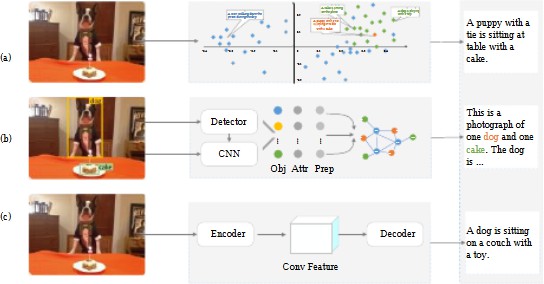
The capacity of AI systems to generate captions for images autonomously represents a significant advancement in artificial intelligence and language understanding. This paper presents an advanced image captioning system that employs deep learning techniques, particularly convolutional neural networks (CNNs) and recurrent neural networks (RNNs), to produce contextually appropriate and meaningful descriptions of visual content. The proposed method extracts features using the DenseNet201 model, enabling a more comprehensive and hierarchical understanding of image components. These extracted features are then fed into a long short-term memory (LSTM) network, a specialized RNN variant designed to capture sequential dependencies in language, yielding coherent and fluent captions. The model is trained and evaluated on the well-known Flickr8k dataset, achieving competitive performance as measured by BLEU score metrics and demonstrating its ability to generate human-like descriptions. This integration of CNNs and RNNs highlights the effectiveness of combining computer vision and natural language processing for automated caption generation. The approach has potential applications across various domains, including assistive technologies for the visually impaired, automated content creation for digital media, enhanced indexing and retrieval of multimedia assets, and improved human-computer interaction. Furthermore, advancements in attention mechanisms and transformer-based models present opportunities to further enhance the accuracy and contextual relevance of image captioning systems. The study underscores the broader implications of machine-generated captions for improving accessibility, boosting searchability in large-scale databases, and enabling seamless AI-human collaboration in content interpretation and storytelling.
Graphical Abstract
Keywords
Data Availability Statement
Funding
Conflicts of Interest
Ethical Approval and Consent to Participate
References
- Aneja, J., Deshpande, A., & Schwing, A. G. (2018). Convolutional image captioning. Proceedings of the IEEE Conference on Computer Vision and Pattern Recognition, 5561–5570.
[CrossRef] [Google Scholar] - Bai, S., & An, S. (2018). A survey on automatic image caption generation. Neurocomputing, 311, 291–304.
[CrossRef] [Google Scholar] - Chen, X., & Zitnick, C. L. (2015). Mind's eye: A recurrent visual representation for image caption generation. In 2015 IEEE Conference on Computer Vision and Pattern Recognition (CVPR), 2422–2431.
[CrossRef] [Google Scholar] - Ghandi, T., Pourreza, H., & Mahyar, H. (2023). Deep learning approaches on image captioning: A review. ACM Computing Surveys, 56(3), 1–39.
[CrossRef] [Google Scholar] - Anderson, P., He, X., Buehler, C., Teney, D., Johnson, M., Gould, S., & Zhang, L. (2017). Bottom-Up and Top-Down Attention for Image Captioning and Visual Question Answering. arXiv preprint arXiv:1707.07998, 2(4), 8.
[CrossRef] [Google Scholar] - Hossain, M. Z., Sohel, F., Shiratuddin, M. F., & Laga, H. (2019). A comprehensive survey of deep learning for image captioning. ACM Computing Surveys (CsUR), 51(6), 1-36.
[CrossRef] [Google Scholar] - Rastogi, R., Rawat, V., & Kaushal, S. (2024). Demonstration and analysing the performance of image caption generator: Efforts for visually impaired candidates for Smart Cities 5.0. International Journal of Advanced Mechatronic Systems, 11(3), 161–178.
[CrossRef] [Google Scholar] - Xu, K., Ba, J., Kiros, R., Cho, K., Courville, A., Salakhudinov, R., ... & Bengio, Y. (2015, June). Show, attend and tell: Neural image caption generation with visual attention. In International conference on machine learning (pp. 2048-2057). PMLR.
[Google Scholar] - Vinyals, O., Toshev, A., Bengio, S., & Erhan, D. (2016). Show and tell: Lessons learned from the 2015 MSCOCO image captioning challenge. IEEE Transactions on Pattern Analysis and Machine Intelligence, 39(4), 652–663.
[CrossRef] [Google Scholar] - Huang, G., Liu, Z., Van Der Maaten, L., & Weinberger, K. Q. (2017). Densely connected convolutional networks. In Proceedings of the IEEE Conference on Computer Vision and Pattern Recognition (pp. 4700–4708).
[CrossRef] [Google Scholar] - Hodosh, M., Young, P., & Hockenmaier, J. (2013). Framing image description as a ranking task: Data, models and evaluation metrics. Journal of Artificial Intelligence Research, 47, 853-899.
[CrossRef] [Google Scholar] - Vedantam, R., Lawrence Zitnick, C., & Parikh, D. (2015). CIDEr: Consensus-based image description evaluation. In Proceedings of the IEEE Conference on Computer Vision and Pattern Recognition (pp. 4566–4575).
[CrossRef] [Google Scholar] - Yin, X., & Ordonez, V. (2017, September). Obj2text: Generating visually descriptive language from object layouts. In Proceedings of the 2017 conference on empirical methods in natural language processing (pp. 177-187).
[CrossRef] [Google Scholar] - Vo-Ho, V. K., Luong, Q. A., Nguyen, D. T., Tran, M. K., & Tran, M. T. (2019). A smart system for text-lifelog generation from wearable cameras in smart environment using concept-augmented image captioning with modified beam search strategy. Applied Sciences, 9(9), 1886.
[CrossRef] [Google Scholar] - Cornia, M., Baraldi, L., & Cucchiara, R. (2019). Show, control and tell: A framework for generating controllable and grounded captions. In Proceedings of the IEEE/CVF Conference on Computer Vision and Pattern Recognition, 8307–8316.
[CrossRef] [Google Scholar] - Chen, L., Jiang, Z., Xiao, J., & Liu, W. (2021). Human-like controllable image captioning with verb-specific semantic roles. In Proceedings of the IEEE/CVF Conference on Computer Vision and Pattern Recognition, 16846–16856.
[CrossRef] [Google Scholar] - Wang, Q., Deng, H., Wu, X., Yang, Z., Liu, Y., Wang, Y., & Hao, G. (2023). LCM-Captioner: A lightweight text-based image captioning method with collaborative mechanism between vision and text. Neural Networks, 162, 318–329.
[CrossRef] [Google Scholar] - Karpathy, A., & Fei-Fei, L. (2015). Deep visual-semantic alignments for generating image descriptions. In Proceedings of the IEEE Conference on Computer Vision and Pattern Recognition, 3128–3137.
[CrossRef] [Google Scholar] - Yang, X., Tang, K., Zhang, H., & Cai, J. (2019). Auto-encoding scene graphs for image captioning. In Proceedings of the IEEE/CVF conference on computer vision and pattern recognition (pp. 10685-10694).
[CrossRef] [Google Scholar] - Yang, X., Yang, Y., Ma, S., Li, Z., Dong, W., & Woz´niak, M. (2024). SAMT-generator: A second-attention for image captioning based on multi-stage transformer network. Neurocomputing, 593, 127823.
[CrossRef] [Google Scholar]
Cited By (12)
-
Gaurav Dhiman, Kiran Deep Singh, Prabh Deep Singh, Norah Saleh Alghamdi, Ghadah Shukri Albakri. A novel approach to reliable and flexible distributed computing with virtualization in smart healthcare applications.
Scientific Reports, 2026 , 16 (1).
[CrossRef] -
Yiding Zhang, Zonghuan Han, Jian Chen, Chang Xu, Yuanze Qin, Bo Wang, Xiaoshuan Zhang, Lingxian Zhang. CropGPT: A large multimodal model for precise and explainable diagnosis of crop pests and diseases.
Journal of Industrial Information Integration, 2026 , 51 .
[CrossRef] -
Bin Sun. Lightweight GIS-based large-scale urban fire spread simulation method.
Journal of Industrial Information Integration, 2026 , 50 .
[CrossRef] -
İlknur Dönmez, Faruk Bulut. Multidimensional diversity in video recommender systems: a holistic framework of literature gaps and future directions.
Intelligent Systems with Applications, 2026 , 31 .
[CrossRef] -
Yingying Jiao. Research on an interactive film and entertainment style generation system based on multimodal input and AI models.
Entertainment Computing, 2026 , 57 .
[CrossRef] -
Shubhani Aggarwal, Arzoo Miglani, Norah Saleh Alghamdi, Gaurav Dhiman. Resilient and decentralized demand-side management in smart grids using blockchain.
Scientific Reports, 2026 , 16 (1).
[CrossRef] -
Ashok Singh Bhandari, Nitin Uniyal, Sukhveer Singh, Abhishek Sharma, Norah Saleh Alghamdi, Gaurav Dhiman. Heterogeneous Component Mixing With Cold Standby for Optimising Reliability and Redundancy.
Expert Systems, 2026 , 43 (3).
[CrossRef] -
Beihua Yang, Peng Song, Yunpeng Zeng. COALN-MvC: A continuous optimized anchor learning network for multi-view clustering.
Knowledge-Based Systems, 2026 , 345 .
[CrossRef] -
Meenakshi Garg, Nor Asilah Wati Abdul Hamid, Dafik, Sunder R.. AI-driven feature descriptor design using CNNs and transfer learning for enhanced image retrieval accuracy and efficiency.
Scientific Reports, 2026 , 16 (1).
[CrossRef] -
Nidhi B. Shah, Amit P. Ganatra. Explainable ViT and SCNN-LSTM Framework for Audio-Assisted Image Captioning.
Journal of Innovative Image Processing, 2026 , 8 (3).
[CrossRef] -
Niva Tripathy, Sampa Sahoo, Norah Saleh Alghamdi, Wattana Viriyasitavat, Gaurav Dhiman. Energy and makespan optimised task mapping in fog enabled IoT application: a hybrid approach.
Scientific Reports, 2026 , 16 (1).
[CrossRef] -
Praveen Kumar Tripathi, Shambhu Bharadwaj. .
2025 14th International Conference on System Modeling & Advancement in Research Trends (SMART), 2025 .
[CrossRef]
Cite This Article
TY  - JOUR
AU  - Khan, Abdullah
AU  - Singh, Jaswinder
PY  - 2025
DA  - 2025/08/01
TI  - A Novel Image Captioning Technique Using Deep Learning Methodology
JO  - ICCK Transactions on Machine Intelligence
T2  - ICCK Transactions on Machine Intelligence
JF  - ICCK Transactions on Machine Intelligence
VL  - 1
IS  - 2
SP  - 52
EP  - 68
DO  - 10.62762/TMI.2025.886122
UR  - https://www.icck.org/article/abs/TMI.2025.886122
KW  - convolutional neural networks (CNN)
KW  - recurrent neural networks (RNN)
KW  - deep learning
KW  - image captioning
KW  - LSTM
KW  - DenseNet201
KW  - attention mechanism
KW  - BLEU scor
KW  - natural language processing (NLP)
KW  - multimodal learning
KW  - content retrieval
AB  - The capacity of AI systems to generate captions for images autonomously represents a significant advancement in artificial intelligence and language understanding. This paper presents an advanced image captioning system that employs deep learning techniques, particularly convolutional neural networks (CNNs) and recurrent neural networks (RNNs), to produce contextually appropriate and meaningful descriptions of visual content. The proposed method extracts features using the DenseNet201 model, enabling a more comprehensive and hierarchical understanding of image components. These extracted features are then fed into a long short-term memory (LSTM) network, a specialized RNN variant designed to capture sequential dependencies in language, yielding coherent and fluent captions. The model is trained and evaluated on the well-known Flickr8k dataset, achieving competitive performance as measured by BLEU score metrics and demonstrating its ability to generate human-like descriptions. This integration of CNNs and RNNs highlights the effectiveness of combining computer vision and natural language processing for automated caption generation. The approach has potential applications across various domains, including assistive technologies for the visually impaired, automated content creation for digital media, enhanced indexing and retrieval of multimedia assets, and improved human-computer interaction. Furthermore, advancements in attention mechanisms and transformer-based models present opportunities to further enhance the accuracy and contextual relevance of image captioning systems. The study underscores the broader implications of machine-generated captions for improving accessibility, boosting searchability in large-scale databases, and enabling seamless AI-human collaboration in content interpretation and storytelling.
SN  - 3068-7403
PB  - Institute of Central Computation and Knowledge
LA  - English
ER  -
@article{Khan2025A,
  author = {Abdullah Khan and Jaswinder Singh},
  title = {A Novel Image Captioning Technique Using Deep Learning Methodology},
  journal = {ICCK Transactions on Machine Intelligence},
  year = {2025},
  volume = {1},
  number = {2},
  pages = {52-68},
  doi = {10.62762/TMI.2025.886122},
  url = {https://www.icck.org/article/abs/TMI.2025.886122},
  abstract = {The capacity of AI systems to generate captions for images autonomously represents a significant advancement in artificial intelligence and language understanding. This paper presents an advanced image captioning system that employs deep learning techniques, particularly convolutional neural networks (CNNs) and recurrent neural networks (RNNs), to produce contextually appropriate and meaningful descriptions of visual content. The proposed method extracts features using the DenseNet201 model, enabling a more comprehensive and hierarchical understanding of image components. These extracted features are then fed into a long short-term memory (LSTM) network, a specialized RNN variant designed to capture sequential dependencies in language, yielding coherent and fluent captions. The model is trained and evaluated on the well-known Flickr8k dataset, achieving competitive performance as measured by BLEU score metrics and demonstrating its ability to generate human-like descriptions. This integration of CNNs and RNNs highlights the effectiveness of combining computer vision and natural language processing for automated caption generation. The approach has potential applications across various domains, including assistive technologies for the visually impaired, automated content creation for digital media, enhanced indexing and retrieval of multimedia assets, and improved human-computer interaction. Furthermore, advancements in attention mechanisms and transformer-based models present opportunities to further enhance the accuracy and contextual relevance of image captioning systems. The study underscores the broader implications of machine-generated captions for improving accessibility, boosting searchability in large-scale databases, and enabling seamless AI-human collaboration in content interpretation and storytelling.},
  keywords = {convolutional neural networks (CNN), recurrent neural networks (RNN), deep learning, image captioning, LSTM, DenseNet201, attention mechanism, BLEU scor, natural language processing (NLP), multimodal learning, content retrieval},
  issn = {3068-7403},
  publisher = {Institute of Central Computation and Knowledge}
}
Publisher's Note
ICCK stays neutral with regard to jurisdictional claims in published maps and institutional affiliations.
Rights and Permissions


Portico
