

Frontiers in Biomedical Signal Processing

Publishing Model:
ISSN:
ISSN: request pending (online) | request pending (print)
Frontiers in Biomedical Signal Processing aims to serve as a leading platform for disseminating high-quality, peer-reviewed research in the field of biomedical signal processing.
DOI Prefix: 10.62762/FBSP

Journal Metrics

-
Impact Factor
-
CiteScore

Recent Articles

Open Access | Research Article | 02 March 2026
Adaptive Manifold Concept with Regularized Autoencoders (AMRAE) for Effective Dimensionality Reduction
Frontiers in Biomedical Signal Processing | Volume 1, Issue 2: 79-104, 2026 | DOI: 10.62762/FBSP.2025.800185
Abstract
The Adaptive Manifold Concept with Regularized Autoencoders (AMRAE) algorithm is introduced as a novel dimensionality reduction technique that integrates manifold learning with autoencoders to capture the intrinsic geometry of high-dimensional data effectively. The study evaluates the impact of various adjustments and enhancements within the "Manifold Adjustment Box," including different regularization techniques, activation functions, and architectural choices, across diverse datasets. Key findings demonstrate that configurations such as Leaky ReLU Activation and Batch Norm Layer consistently improve accuracy, results highlight the flexibility and robustness of AMRAE. The results underscore... More >

Graphical Abstract
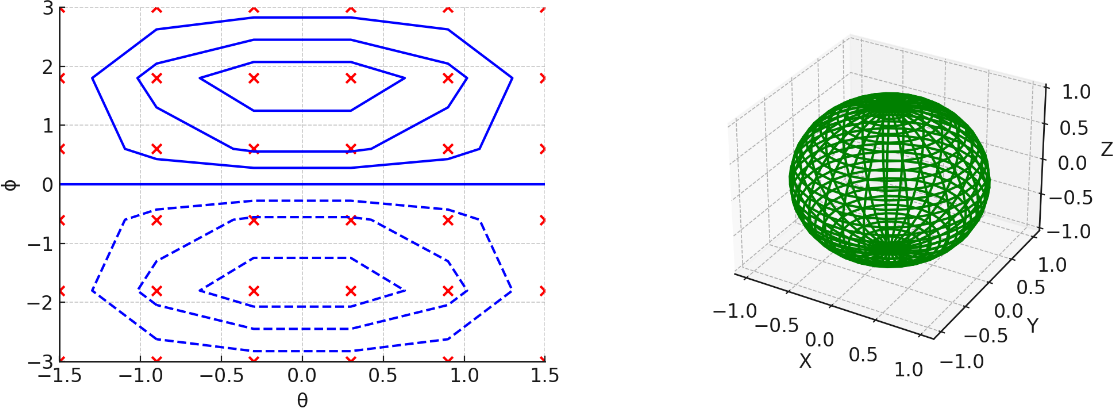
Adaptive Manifold Concept with Regularized Autoencoders (AMRAE) for Effective Dimensionality Reduction
Open Access | Research Article | 01 March 2026
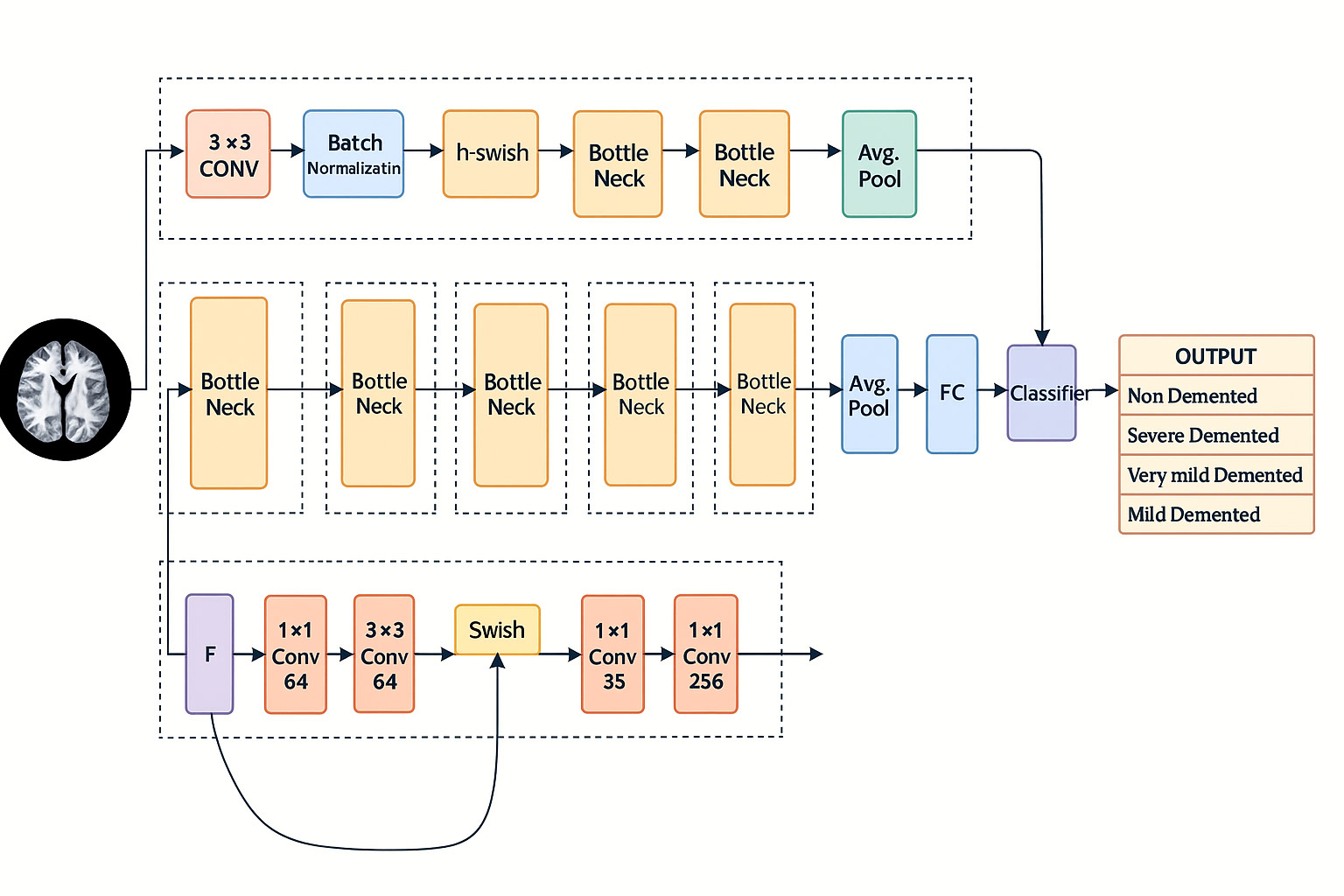
NES-Net: Neuro-Synergy Based Alzheimer’s Detection Using MRI Images
Frontiers in Biomedical Signal Processing | Volume 1, Issue 1: 71-78, 2026 | DOI: 10.62762/FBSP.2025.463290
Abstract
Alzheimer disease (AD) is a progressive neurodegenerative disorder that impairs memory and cognitive function in older adults, placing a substantial burden on global healthcare systems. Early and accurate diagnosis is crucial for timely intervention, yet manual interpretation of magnetic resonance imaging (MRI) scans is often subjective, time-consuming, and prone to inter-observer variability and bias. To overcome these challenges, we propose NES-Net (Neuro-Synergy Network), a novel deep learning model for automated Alzheimer's detection from MRI data. NES-Net employs a multi-branch hybrid architecture that simultaneously captures structural, spatial, and semantic features of brain images. B... More >

Graphical Abstract
NES-Net: Neuro-Synergy Based Alzheimer’s Detection Using MRI Images
Open Access | Research Article | 26 February 2026
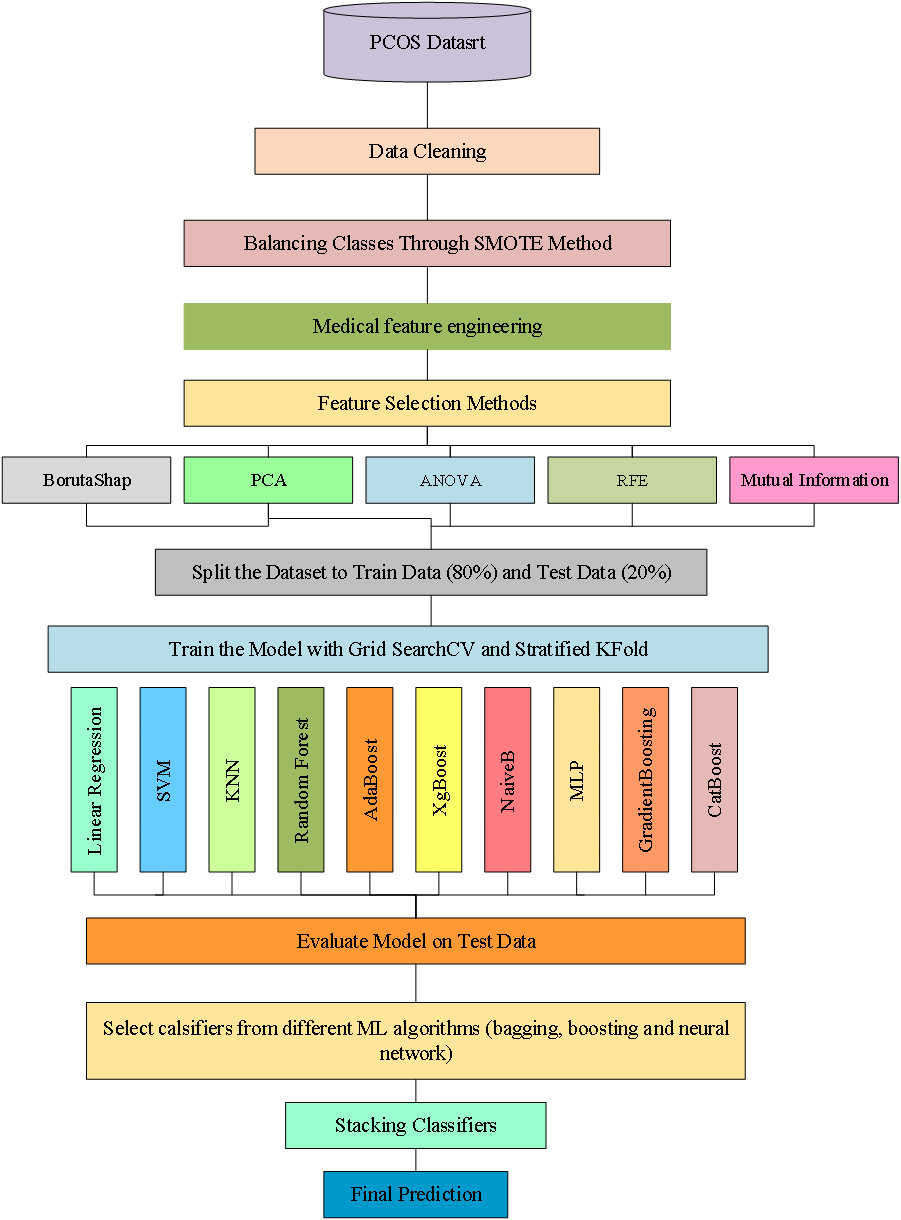
Advancing PCOS Diagnosis: Harnessing the Power of AI and Machine Learning for Enhanced Accuracy and Efficiency
Frontiers in Biomedical Signal Processing | Volume 1, Issue 1: 49-70, 2026 | DOI: 10.62762/FBSP.2025.529389
Abstract
This research presents a diagnostic method for Polycystic Ovary Syndrome (PCOS), a common hormonal disorder among women of childbearing age. The study applied machine learning classifiers—Random Forest, CatBoost, and MLP—to the Kaggle PCOS dataset, enhanced by BorutaShap and SMOTE feature selection methods. The ensemble classifier achieved an F1 score of 93.54% and an accuracy of 96.71%. These results demonstrate AI's potential to improve PCOS diagnosis for broader clinical applications. Future research should integrate genetic and epigenetic factors into AI models, validated through clinical trials. Key contributions include: using an ensemble of machine learning classifiers, advanced f... More >

Graphical Abstract
Advancing PCOS Diagnosis: Harnessing the Power of AI and Machine Learning for Enhanced Accuracy and Efficiency
Open Access | Research Article | 08 November 2025
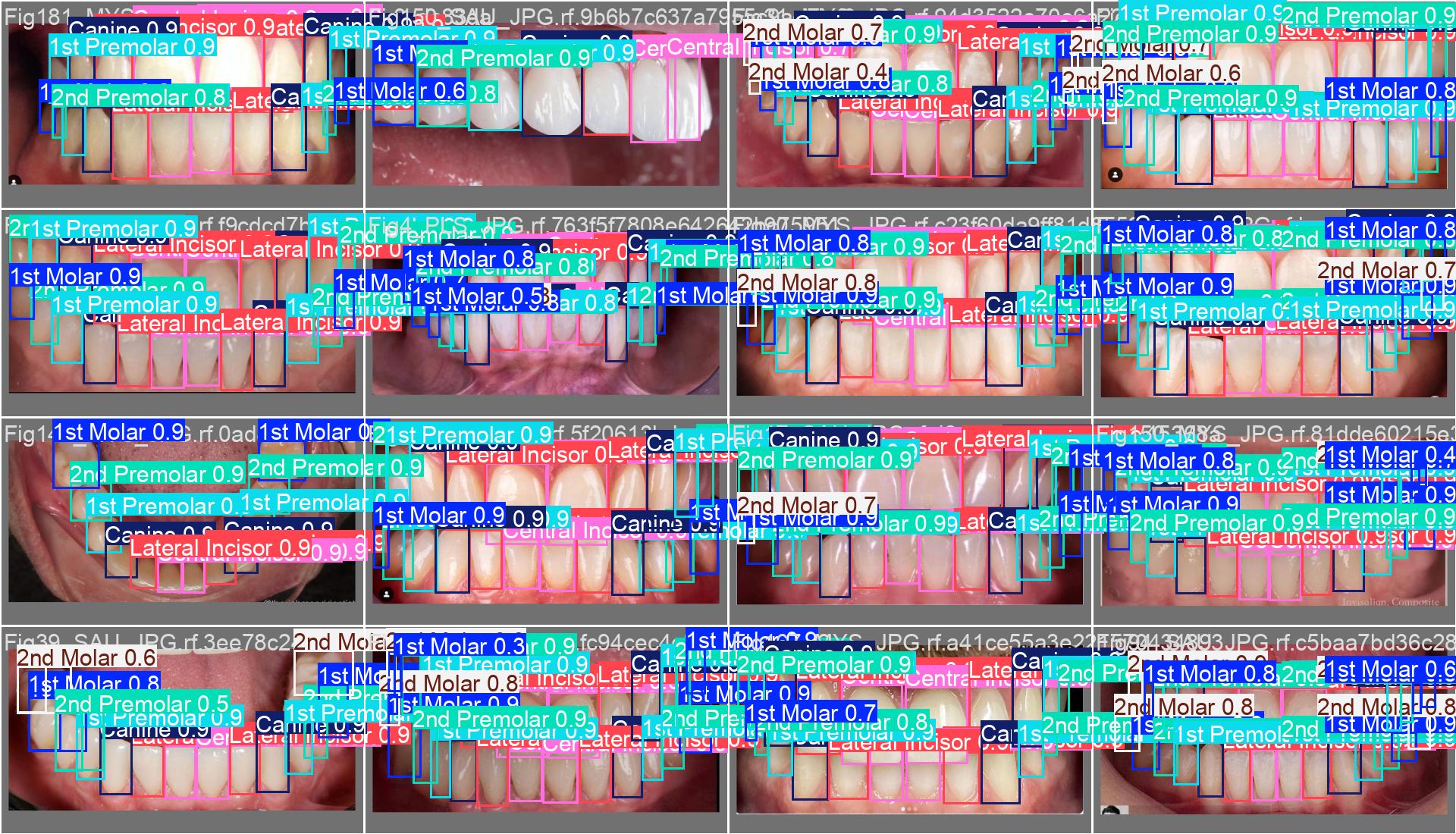
Dental Classes Classification using TEYOLOv8 Network
Frontiers in Biomedical Signal Processing | Volume 1, Issue 1: 37-48, 2026 | DOI: 10.62762/FBSP.2025.431958
Abstract
Accurate and automated detection of dental anatomy is essential for diagnosis and treatment planning. This study proposes a Transformer-Embedded YOLOv8 (TEYOLOv8) network to improve detection and classification of seven dental classes. The model enhances localization and segmentation accuracy by embedding an attentive transformer mechanism into the YOLOv8 framework. The TEYOLOv8 architecture integrates data augmentation, feature localization, segmentation, and classification. It employs C2f (Cross-Stage Partial Focus) convolutional blocks to preserve partial segmentation features and introduces a C2fAttn (Cross-Stage Feature Attention) module to capture fine-grained spatial details such as s... More >

Graphical Abstract
Dental Classes Classification using TEYOLOv8 Network
Open Access | Research Article | 06 July 2025
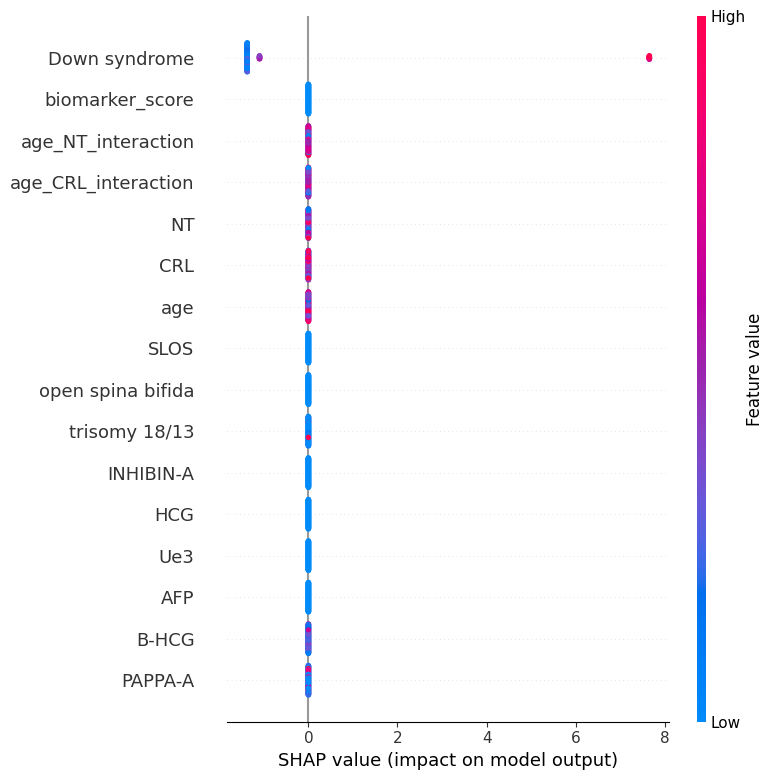
Multi-Task Machine Learning for Prenatal Risk Stratification: Integrating Biomarkers, Maternal Age, and Ultrasound Measurements to Predict the Risk of Down Syndrome, Trisomy 18, Trisomy 13, and Neural Tube Defects
Frontiers in Biomedical Signal Processing | Volume 1, Issue 1: 24-36, 2026 | DOI: 10.62762/FBSP.2025.954863
Abstract
This study developed a machine learning model for early risk stratification of Down syndrome by integrating maternal serum biomarkers and ultrasound measurements. A retrospective multicentre dataset was used, including maternal age, AFP, HCG, INHIBIN-A, and ultrasound parameters (NT, CRL). After imputing missing data and engineering features (e.g., Age_NT_interaction), a Gradient Boosting Machine (GBM) was trained and evaluated using AUROC, precision, recall, and F1-score. The model achieved high performance (AUROC: 0.9921; precision: 1.00; F1-score: 0.91; accuracy: 0.97). SHAP analysis identified key interactions—particularly Age_NT, Age_HCG, and Age_PAPP-A—as major contributors. High m... More >

Graphical Abstract
Multi-Task Machine Learning for Prenatal Risk Stratification: Integrating Biomarkers, Maternal Age, and Ultrasound Measurements to Predict the Risk of Down Syndrome, Trisomy 18, Trisomy 13, and Neural Tube Defects
Open Access | Research Article | 16 May 2025
Clustering Analysis of Long-Term Cardiovascular Complications in COVID-19 Patients
Frontiers in Biomedical Signal Processing | Volume 1, Issue 1: 1-23, 2026 | DOI: 10.62762/FBSP.2025.731159
Abstract
This study employs K-means clustering to analyze long-term cardiovascular complications in COVID-19 patients through ECG parameters, demographics, comorbidities, and hospitalization data. Three distinct clusters emerged: Cluster 0 (moderate heart rate variability/ICU admissions), Cluster 1 (lower variability/admissions), and Cluster 2 (higher variability/admissions, indicating elevated risk). Bootstrap validation confirmed model robustness, supported by high silhouette scores and consistent cluster labels. The novel integration of multimodal data with machine learning revealed hidden cardiovascular outcome patterns, demonstrating clinical utility for risk stratification. Findings underscore... More >

Graphical Abstract

Clustering Analysis of Long-Term Cardiovascular Complications in COVID-19 Patients

Journal Statistics

29
Authors
5
Countries / Regions
6
Articles
0
(Scopus: 0)
Citations
2025
Published Since
0
Special Issues
2,433
Article Views
830
Article Downloads
Frontiers in Biomedical Signal Processing
eISSN: request pending | pISSN: request pending
Crossref
Crossref
Member of Crossref
Visit Crossref →