
A Method for Determining Crude Oil Concentration in Drilling Fluid Based on Laser Raman Spectroscopy Technology




Article Information
Abstract
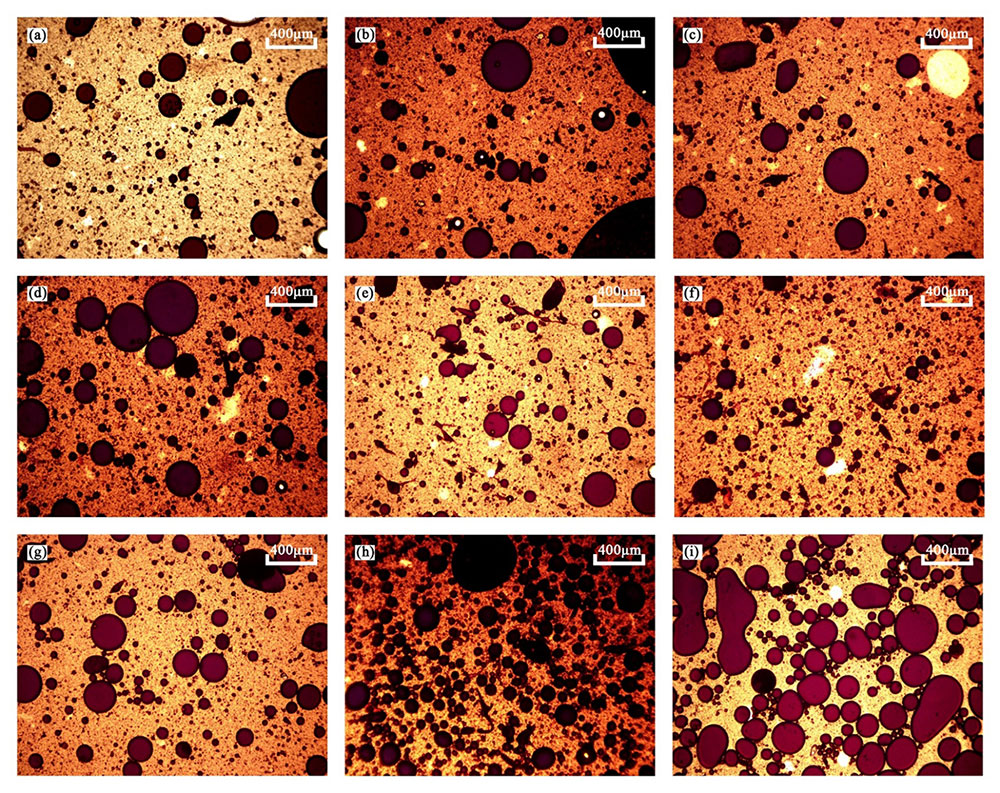
Laser Raman spectroscopy is a promising technique for real-time oil and gas detection in drilling fluids during drilling operations; however, the distribution of crude oil and its coupling with Raman spectral responses under varying temperature conditions remain insufficiently understood, which limits its quantitative applications in downhole environments. This study investigates the temperature- and concentration-dependent behavior of crude oil in oil-containing drilling fluids and develops a quantitative analytical method based on Raman spectroscopy for geological guidance. Crude oil is modeled as dispersed droplets within a continuous fluid phase, and Raman spectra are collected under different temperature and concentration conditions to establish a quantitative relationship between spectral intensity and crude oil concentration. Results show that crude oil exists as dispersed droplets whose size decreases with increasing temperature, accompanied by an increase in interfacial visibility, while higher concentrations lead to a more uniform volume distribution at constant temperature. Raman shifts within 1000–3000cm$^{-1}$ effectively characterize crude oil, with a dominant peak at 1519cm$^{-1}$, and a positive correlation between peak intensity and crude oil concentration is observed, particularly at elevated temperatures. Based on this relationship, a quantitative model for crude oil detection is established. The proposed method enables accurate real-time identification of oil-bearing formations with minimal influence from concentration variation or formation thickness, providing theoretical support and practical guidance for the application of Raman spectroscopy in LWD systems and improving drilling precision and reservoir evaluation efficiency.
Graphical Abstract
Keywords
Data Availability Statement
Funding
Conflicts of Interest
AI Use Statement
Ethical Approval and Consent to Participate
References
- Sviridov, M., Belyaeva, O., Podberezhnyy, M., Zverev, V., Mosin, A., & Antonov, Y. (2018). First application of logging-while-drilling deep-azimuthal resistivity tool and advanced data-interpretation software for reservoir navigation at west salym field in Russia. SPE Reservoir Evaluation & Engineering, 21(03), 593-608.
[CrossRef] [Google Scholar] - Tan, B., Zhang, K., Su, Y., Li, S., & Zhang, L. (2022). Research on acoustic logging while drilling transmitting technologies. Journal of Geophysics and Engineering, 19(3), 511-520.
[CrossRef] [Google Scholar] - Ge, Y., Luo, Q., Chen, H., & Wang, J. (2022). A new porosity evaluation parameter based on neutron porosity logging. Applied Radiation and Isotopes, 190, 110481.
[CrossRef] [Google Scholar] - Luycx, M., & Torres-Verdín, C. (2018). Rapid forward modeling of logging-while-drilling neutron-gamma density measurements. Geophysics, 83(6), D231-D246.
[CrossRef] [Google Scholar] - Jain, V., Saumya, S., Vij, J., Singh, J., Singh, B., Pattnaik, S., ... & Collett, T. S. (2019). New technique for accurate porosity estimation from logging-while-drilling nuclear magnetic resonance data, NGHP-02 expedition, offshore, India. Marine and Petroleum Geology, 108, 570-580.
[CrossRef] [Google Scholar] - Liang, H., & Liu, G. (2022). Research on quantitative analysis method of PLS hydrocarbon gas infrared spectroscopy based on net signal analysis and density peak clustering. Measurement, 188, 110392.
[CrossRef] [Google Scholar] - Hashemi-Nasab, F. S., & Parastar, H. (2020). Pattern recognition analysis of gas chromatographic and infrared spectroscopic fingerprints of crude oil for source identification. Microchemical Journal, 153, 104326.
[CrossRef] [Google Scholar] - Li, Z., Pang, W., Liang, H., Chen, G., Ni, P., Duan, H., & Jiang, C. (2022). A novel method to realize multicomponent infrared spectroscopy gas logging based on PSO-split peak fitting-SVM. Journal of Natural Gas Science and Engineering, 101, 104496.
[CrossRef] [Google Scholar] - Liang, H., Liu, G., Zhongbing, L., & Ren, W. (2023). Improved SVR based on CARS and BAS for hydrocarbon concentration detection. Vibrational Spectroscopy, 125, 103494.
[CrossRef] [Google Scholar] - Liang, H., Chen, H., Guo, J., & Zuo, X. (2022). Detection and identification method of drilling total hydrocarbon gas based on infrared spectroscopy and KL+ BP-RBF algorithm. IEEE Transactions on Instrumentation and Measurement, 71, 1-10.
[CrossRef] [Google Scholar] - Blomberg, J., Schoenmakers, P. J., & Brinkman, U. A. T. (2002). Gas chromatographic methods for oil analysis. Journal of Chromatography A, 972(2), 137-173.
[CrossRef] [Google Scholar] - Wang, G., & Wang, Y. (2021, May). Qualitative Analysis and Quantitative Calculation of Crude Oil Drilling Fluid Mixtures Based on Raman Spectroscopy. In 2021 IEEE 10th Data Driven Control and Learning Systems Conference (DDCLS) (pp. 1106-1111). IEEE.
[CrossRef] [Google Scholar] - Ying, G., Lian-Kui, D. A. I., Hua-Dong, Z., & others. (2019). Quantitative analysis of main components of natural gas based on Raman spectroscopy. Chinese Journal of Analytical Chemistry, 47(1), 67-76.
[CrossRef] [Google Scholar] - Jianmei, L., Cunlei, L., Peng, G., & others. (2018). Identification method of crude oil in petroleum pipeline based on laser Raman detection technology. Journal of Applied Optics, 39(3), 436-441. https://dx.doi.org/10.5768/JAO201839.0307002
[Google Scholar] - Larkin, P. (2017). Infrared and Raman spectroscopy: principles and spectral interpretation. Elsevier.
[Google Scholar] - Hannigan, J., Greig, F., Freeborn, S. S., & MacKenzie, H. A. (1999). A pulsed photoacoustic system for the spectroscopy and monitoring of hydrocarbon liquids using stimulated Raman scattering in a silica fibre as a near-infrared source. Measurement Science and Technology, 10(2), 93-99.
[CrossRef] [Google Scholar] - Mumm, A. S., & İnan, S. (2016). Microscale organic maturity determination of graptolites using Raman spectroscopy. International Journal of Coal Geology, 162, 96-107.
[CrossRef] [Google Scholar] - AlHumaidan, F. S., & Rana, M. S. (2021). Determination of asphaltene structural parameters by Raman spectroscopy. Journal of Raman Spectroscopy, 52(11), 1878-1891.
[CrossRef] [Google Scholar] - Miranda, A. M., Castilho-Almeida, E. W., Ferreira, E. H. M., Moreira, G. F., Achete, C. A., Armond, R. A., ... & Jorio, A. (2014). Line shape analysis of the Raman spectra from pure and mixed biofuels esters compounds. Fuel, 115, 118-125.
[CrossRef] [Google Scholar] - Wu, X., Lu, W., Ou, W., Caumon, M. C., & Dubessy, J. (2017). Temperature and salinity effects on the Raman scattering cross section of the water OH‐stretching vibration band in NaCl aqueous solutions from 0 to 300 C. Journal of Raman Spectroscopy, 48(2), 314-322.
[CrossRef] [Google Scholar] - Kalasinsky, K. S., Minyard Jr, J. P., Kalasinsky, V. F., & Durig, J. R. (1989). Quantitative analysis of kerosines by Raman spectroscopy. Energy & fuels, 3(3), 304-307.
[CrossRef] [Google Scholar] - Pelletier, M. J. (2003). Quantitative analysis using Raman spectrometry. Applied spectroscopy, 57(1), 20A-42A.
[CrossRef] [Google Scholar] - Wang, M., Wang, J., Wang, P., Wang, Z., Tang, S., Qian, G., ... & Chen, W. (2025). Multi-pass cavity-enhanced Raman spectroscopy of complex natural gas components. Analytica Chimica Acta, 1336, 343463.
[CrossRef] [Google Scholar] - Wartewig, S. (2006). IR and Raman spectroscopy: fundamental processing. John Wiley & Sons.
[CrossRef] [Google Scholar] - Feng, Y., Zhang, T., Zhao, M., Zhang, X., Tang, H., & Sheng, Q. (2020). Raman-infrared spectral fusion combined with partial least squares (PLS) for quantitative analysis of polycyclic aromatic hydrocarbons in soil. Analytical Methods, 12(9), 1203-1211.
[CrossRef] [Google Scholar]
Cited By (9)
-
Li Li, Yuqiang Jiang, Tao Wang, Xun Zhu, Miao Li, Hancheng Wang, Yifan Gu, Hu Li. Characterization of Pore Structure and Fluid Mobility in Tight Sandstones Using Fractal Theory.
Chemistry and Technology of Fuels and Oils, 2026 .
[CrossRef] -
Hao Ma, Junbin Chen, Nianfeng Li, Hua Chen, Bin Liu, Siqi Xiao. Sedimentary Characteristics of the Wufeng–Longmaxi Formation Shales and Their Controlling Mechanisms on Shale Gas Accumulation in the Mugan Syncline, Northeastern Yunnan, China.
Processes, 2026 , 14 (11).
[CrossRef] -
Xianhua Huang, Jianru Tang, Jialin Zhao, Jin Li, Shuai Yin, Shaoke Feng, Hu Li. Comprehensive evaluation of gas-bearing properties in ultra-deep basement reservoirs based on an optimizable support vector machine.
Scientific Reports, 2026 , 16 (1).
[CrossRef] -
Yongxue Wei, Jianhua Huang, Huanhuan Xu, Chunyu Tan, Chenglei Hu, Xiaohui Hu. Quantitative characterization and controlling factors of organic pores in deep marine shale: A case study of Wufeng–Longmaxi Formation, South Sichuan Basin.
Applied Earth Science: Transactions of the Institutions of Mining and Metallurgy, 2026 .
[CrossRef] -
Jinfeng Zhang, Chenggang Liang, Yiwei Chen, Tianlu Xu, Jinhua Liu, Weishi Tang, Hangfeng Gou. Reservoir characteristics and sweet spot prediction of mixed tight oil reservoirs in the saline lacustrine Lucaogou Formation, Jimusaer Sag, Junggar Basin, China.
Applied Earth Science: Transactions of the Institutions of Mining and Metallurgy, 2026 .
[CrossRef] -
Jing Li, Wenping Liu, Yadong Yang, Xunxi Qiu, Xin Gong, Hu Li, Jia He, Xing Liu, Zhi Gao, Ang Luo, Cheng Yang. Main Controlling Factors and Three-Dimensional Development Potential of Deep to Ultra-Deep Shale Gas in the Luzhou Area, Sichuan Basin.
Processes, 2026 , 14 (9).
[CrossRef] -
Huanshan Shi, Wangshui Hu, Yibo Li, Danyang Lu, Hu Li. Pore-structure controls on absolute permeability of 1-mm digital sandstone subsamples under a fixed CT field of view.
Scientific Reports, 2026 , 16 (1).
[CrossRef] -
Haifeng Pan, Shuangzhan Sheng, Liping Feng, Fuyou Pan, Hu Li. Accumulation Conditions and Models of Jurassic Tight Sandstone Reservoirs from a Coal-Measure Whole Petroleum System Perspective: A Case Study of the Sangonghe Formation, Taibei Sag, Turpan–Hami Basin, China.
Applied Earth Science: Transactions of the Institutions of Mining and Metallurgy, 2026 .
[CrossRef] -
Tianbiao Zhao, Hu Li. Gas Disaster Mechanisms in Bitumen‐Bearing Sandstone Tunnels: Structural–Lithological Coupling Controls and Excavation‐Triggered Chain Evolution.
Journal of Petroleum Geology, 2026 .
[CrossRef]
Cite This Article
TY  - JOUR
AU  - Li, Cunlei
AU  - Wang, Chengchi
AU  - Chen, Panpan
AU  - Jing, Yawen
AU  - Su, Dongrui
AU  - Yu, Guixin
AU  - Li, Mingxuan
PY  - 2026
DA  - 2026/04/15
TI  - A Method for Determining Crude Oil Concentration in Drilling Fluid Based on Laser Raman Spectroscopy Technology
JO  - Journal of Geo-Energy and Environment
T2  - Journal of Geo-Energy and Environment
JF  - Journal of Geo-Energy and Environment
VL  - 2
IS  - 2
SP  - 118
EP  - 131
DO  - 10.62762/JGEE.2026.666728
UR  - https://www.icck.org/article/abs/jgee.2026.666728
KW  - logging-while-drilling
KW  - oil-containing drilling fluid
KW  - raman spectrum
KW  - visual ratio
KW  - linear equation
AB  - Laser Raman spectroscopy is a promising technique for real-time oil and gas detection in drilling fluids during drilling operations; however, the distribution of crude oil and its coupling with Raman spectral responses under varying temperature conditions remain insufficiently understood, which limits its quantitative applications in downhole environments. This study investigates the temperature- and concentration-dependent behavior of crude oil in oil-containing drilling fluids and develops a quantitative analytical method based on Raman spectroscopy for geological guidance. Crude oil is modeled as dispersed droplets within a continuous fluid phase, and Raman spectra are collected under different temperature and concentration conditions to establish a quantitative relationship between spectral intensity and crude oil concentration. Results show that crude oil exists as dispersed droplets whose size decreases with increasing temperature, accompanied by an increase in interfacial visibility, while higher concentrations lead to a more uniform volume distribution at constant temperature. Raman shifts within 1000–3000cm$^{-1}$ effectively characterize crude oil, with a dominant peak at 1519cm$^{-1}$, and a positive correlation between peak intensity and crude oil concentration is observed, particularly at elevated temperatures. Based on this relationship, a quantitative model for crude oil detection is established. The proposed method enables accurate real-time identification of oil-bearing formations with minimal influence from concentration variation or formation thickness, providing theoretical support and practical guidance for the application of Raman spectroscopy in LWD systems and improving drilling precision and reservoir evaluation efficiency.
SN  - 3069-3268
PB  - Institute of Central Computation and Knowledge
LA  - English
ER  -
@article{Li2026A,
  author = {Cunlei Li and Chengchi Wang and Panpan Chen and Yawen Jing and Dongrui Su and Guixin Yu and Mingxuan Li},
  title = {A Method for Determining Crude Oil Concentration in Drilling Fluid Based on Laser Raman Spectroscopy Technology},
  journal = {Journal of Geo-Energy and Environment},
  year = {2026},
  volume = {2},
  number = {2},
  pages = {118-131},
  doi = {10.62762/JGEE.2026.666728},
  url = {https://www.icck.org/article/abs/jgee.2026.666728},
  abstract = {Laser Raman spectroscopy is a promising technique for real-time oil and gas detection in drilling fluids during drilling operations; however, the distribution of crude oil and its coupling with Raman spectral responses under varying temperature conditions remain insufficiently understood, which limits its quantitative applications in downhole environments. This study investigates the temperature- and concentration-dependent behavior of crude oil in oil-containing drilling fluids and develops a quantitative analytical method based on Raman spectroscopy for geological guidance. Crude oil is modeled as dispersed droplets within a continuous fluid phase, and Raman spectra are collected under different temperature and concentration conditions to establish a quantitative relationship between spectral intensity and crude oil concentration. Results show that crude oil exists as dispersed droplets whose size decreases with increasing temperature, accompanied by an increase in interfacial visibility, while higher concentrations lead to a more uniform volume distribution at constant temperature. Raman shifts within 1000–3000cm\$^{-1}\$ effectively characterize crude oil, with a dominant peak at 1519cm\$^{-1}\$, and a positive correlation between peak intensity and crude oil concentration is observed, particularly at elevated temperatures. Based on this relationship, a quantitative model for crude oil detection is established. The proposed method enables accurate real-time identification of oil-bearing formations with minimal influence from concentration variation or formation thickness, providing theoretical support and practical guidance for the application of Raman spectroscopy in LWD systems and improving drilling precision and reservoir evaluation efficiency.},
  keywords = {logging-while-drilling, oil-containing drilling fluid, raman spectrum, visual ratio, linear equation},
  issn = {3069-3268},
  publisher = {Institute of Central Computation and Knowledge}
}
Publisher's Note
ICCK stays neutral with regard to jurisdictional claims in published maps and institutional affiliations.
Rights and Permissions
 Copyright © 2026 by the Author(s). Published by Institute of Central Computation and Knowledge. This article is an open access article distributed under the terms and conditions of the Creative Commons Attribution (CC BY) license (https://creativecommons.org/licenses/by/4.0/), which permits use, sharing, adaptation, distribution and reproduction in any medium or format, as long as you give appropriate credit to the original author(s) and the source, provide a link to the Creative Commons licence, and indicate if changes were made.


Portico
